+92 312 7493940

Treatment Programs: Comprehensive Addiction Recovery and Mental Health Support

Treatment Programs: Comprehensive Addiction Recovery and Mental Health Support

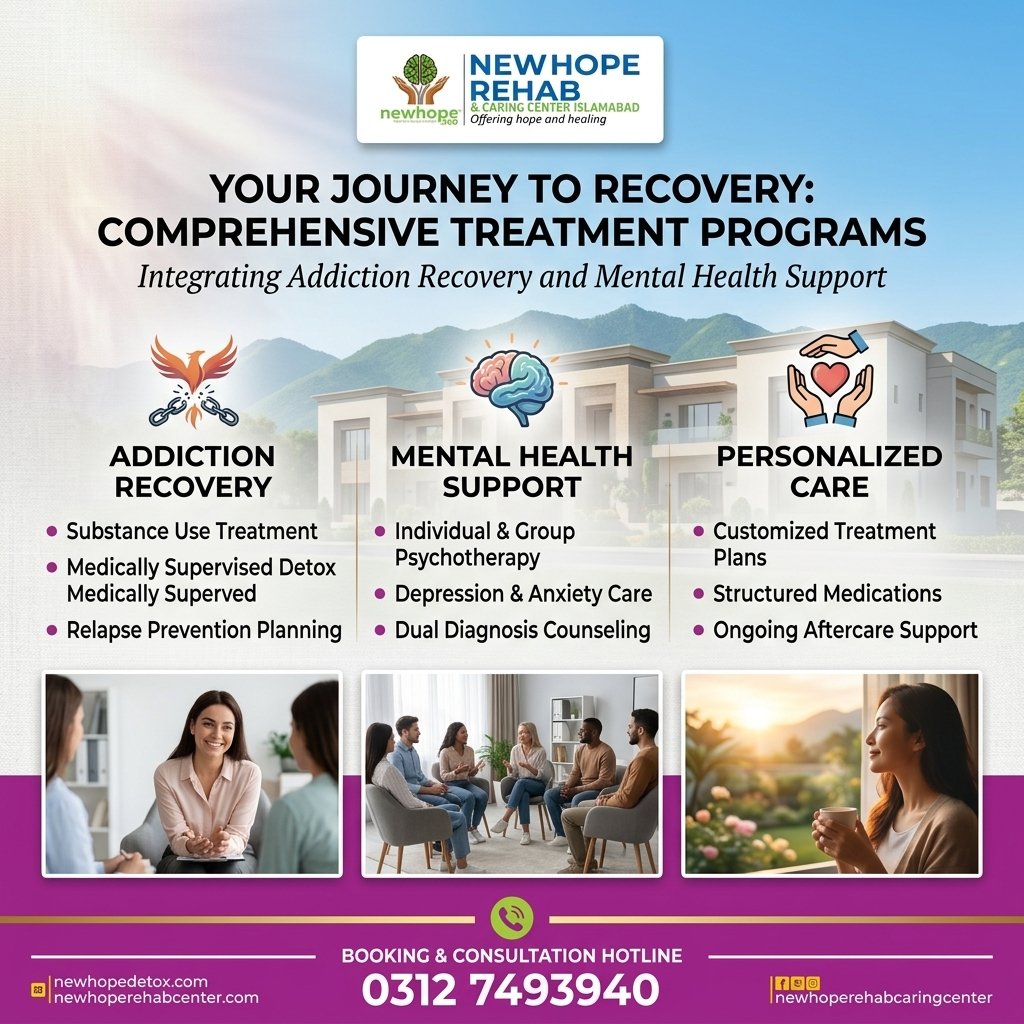
Treatment Programs offer a safe and organized environment for people who are struggling with substance abuse, alcoholism, mental health problems, and co-occurring disorders. With addiction affecting each person uniquely, it is important for a treatment plan to be developed and implemented based on the individual needs of a patient rather than using the same approach on everyone in need.

Other treatments involve assessments, detoxification, counseling and therapy (usually cognitive behavioral), psychiatry and medication for co-occurring disorders, families and individual users in treatment together, relapse prevention training, or aftercare. The specific mix, however, relies on the material involved, degree of your problem, bodily fitness, mental health records, preceding treatment and lifestyles things to consider.

New Hope Rehab and Caring Centre Islamabad is structured assistance for women, men and family members affected by substance misuse as well as exchanging mental health issues.

What Are Addiction Treatment Programs?

A carefully planned and implemented treatment program that helps an individual to replace their use of substances with a healthier way of living.

A program can include:

  • Initial medical and psychological assessment
  • Detoxification or withdrawal management
  • Individual counseling
  • Group therapy
  • Behavioral therapy
  • Psychiatric support
  • Dual diagnosis treatment
  • Family counseling
  • Relapse prevention
  • Aftercare and continuing support

The objective is not solely to interrupt substance use for a few months. Addiction is a complex disease; therefore, comprehensive treatment also addresses service that may be factors in the addiction and trains individuals on strategies to remain sober.

Why Individualized Treatment Matters

No one treatment program is suitable for everyone.

Treatment planning may consider:

  • Type of substance used
  • Frequency and duration of use
  • Severity of dependence
  • Previous treatment attempts
  • Withdrawal history
  • Physical health
  • Mental health
  • Family circumstances
  • Social environment
  • Risk of relapse

A personal approach lets providers make changes to care when the person or people they are supporting change or grow.

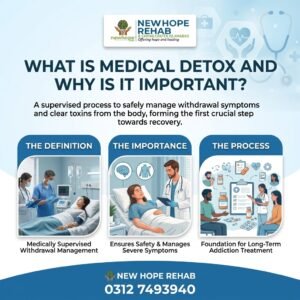
Detoxification and Withdrawal Management

In some cases, detoxification is the initial step in treatment. Detoxification is letting the body become accustomed to no longer using substances while withdrawal symptoms are monitored and managed.

Withdrawal is extremely variable depending on the particular substance being used. Possible symptoms include:

  • Anxiety
  • Irritability
  • Tremors
  • Sweating
  • Nausea
  • Fatigue
  • Sleep difficulties
  • Muscle aches
  • Changes in appetite
  • Strong cravings

Medically supervised withdrawal from a select few substances, like alcohol and some sedative medications, can be dangerous. So, if example, you stop something determine this straight aired the mission that peaceful from someone is suffering and long-term weighing heavy usages sub joining suddenly.

Recuperation only consists of detoxing. Continued treatment for behavior and psychological issues associated with addiction is also important.

Individual Counseling

Individual counseling provides an opportunity for people to talk about their substance use, feelings, relationships, problems, and goals of recovery in a professional yet private environment.

Therapy may help individuals:

  • Identify substance-use triggers
  • Understand patterns of addiction
  • Manage cravings
  • Develop healthier coping strategies
  • Improve emotional regulation
  • Address relationship difficulties
  • Strengthen motivation for recovery
  • Develop relapse-prevention skills

Adaptations of treatment can be made according to the individual.

Group Therapy and Peer Support
Treatment Programs: Comprehensive Addiction Recovery and Mental Health Support

Treatment in a group (be it individual, homes or professional acts) setting allows for openness and support to speak about the difficulties of recovery and learn from others who are also battling addiction.

Group sessions may focus on:

  • Addiction education
  • Coping skills
  • Emotional regulation
  • Communication
  • Relapse prevention
  • Recovery planning
  • Social support

The extent of participation should be aligned with the person’s clinical needs and comfort level.

Behavioral Therapy

Behavioral therapies help individuals understand the connection between thoughts, emotions, and behaviors related to substance use.

People may benefit from doing cognitive behavioral approaches:

  • Identify unhelpful thinking patterns
  • Recognize high-risk situations
  • Develop alternative behaviors
  • Manage cravings
  • Improve decision-making
  • Handle stress more effectively

Depending on the specificities of the individual, other evidence-informed behavioral strategies may also be sought.

Dual Diagnosis Treatment

Some people have both addiction and mental health problems such as depression, anxiety, post-traumatic stress disorder (PTSD), bipolar disorder or another mental health condition.

The simultaneous occurrence of substance uses and mental health problems is sometimes known as a dual diagnosis or co-occurring disorder.

Mental health should be screened when relevant and care ought to be coordinated for both situations as part of therapy programs. A focus on only the addiction while missing important psychological symptoms could result in continued unmet needs of recovery.

Family Support Programs

Spouses, parents, kids, and siblings can all be impacted by addiction. Family support aids as a way for relatives to understand addiction, and discover better coping mechanisms.

Family-focused treatment may include:

  • Addiction education
  • Communication guidance
  • Family counseling
  • Boundary-setting
  • Relapse-warning education
  • Support for caregivers

The degree of family involvement should remain governed by clinical necessity, privacy and safety.

Relapse Prevention Programs

After the first course of treatment, recovery continues. Relapse-prevention programs train people to identify situations or triggers that may lead them back to use.

A personalized plan may include:

  1. Identifying triggers
  2. Managing cravings
  3. Developing healthy routines
  4. Continuing counseling
  5. Building supportive relationships
  6. Avoiding high-risk environments
  7. Managing stress
  8. Maintaining follow-up care
  9. How to know when you need assistance

If a person returns to using substances, it should lead to reassessment by the professional instead of being treated as evidence that recovery is not possible.

Home-Based and Outpatient Treatment

Not everyone requires residential rehabilitation. Outpatient or home-based services may be appropriate depending on the person’s health, substance use, safety needs and home environment.

These may enable individuals to receive professional help, while still able to manage different at-home responsibilities.

In patients with a high risk of withdrawal, very severe medical illness or psychiatric symptoms, or who are at home in an unsafe environment, a more intensive level of care may be necessary.

The voice of a trained professional can determine the best setting for you.

Online Treatment Sessions

It can offer supplementary access to counseling and follow-up support for some.

Bringing you online treatment sessions can be beneficial for:

  • Counseling
  • Follow-up appointments
  • Relapse-prevention support
  • Family education
  • Mental health consultations

Online treatment is maybe not suitable for all forms of desperate situations — at least where an individual inquired emergency medical help, medication-assisted detoxification also intensive psychiatric care.

Choosing the Right Treatment Program

Rather than claims of guaranteed recovery, when comparing Treatment Programs individuals and families should look for the type and quality of professional care.

Useful questions include:

  • Is a comprehensive assessment provided?
  • Is the person a qualified medical and mental health professional?
  • Is withdrawal risk evaluated?
  • Are treatment plans individualized?
  • Is counseling available?
  • Are mental health conditions assessed?
  • Is family support provided?
  • Is relapse prevention included?
  • Is aftercare available?
  • What is the procedure to handle medical and psychiatric emergencies?

An effective treatment plan should align with the needs of a person and change when one or other circumstances arise.

New Hope Rehab and Caring Centre Islamabad

New Hope Rehab and Caring Centre Islamabad offer organized therapy for individuals and families that are affected with issues related to drug abuse and mental health.

Treatment can consist of evaluation, detoxification, counselling, psychotherapy, family members counseling and also aftercare.

Those considering treatment should undergo an assessment by a professional to evaluate which treatments and type of care are most suitable.

Frequently Asked Questions

1.     What treatment programs are available for addiction?

Some of these programs can incorporate detox, residential treatment, outpatient services, individual therapy sessions, group therapy sessions, behavioral therapies dual diagnosis treatment family intervention relapse prevention aftercare.

2.     Is detoxification sufficient to treat addiction?

Nah. Detox only has to do with withdrawal and immediate physical symptoms of cessation from a substance To address cravings, behavior patterns, mental health impacts, and relapse potential treatment might continue through an outpatient program.

3.     The Dual Diagnosis Rehabilitation aims to treat Addiction and Mental Health Problems at the same time.

Yes. Integrated or dual diagnosis treatment works with a coordinated treatment plan to address substance use and mental health concerns when both conditions exist.

4.     How long do addiction treatment programs remain effective?

There is no standard treatment duration. Patient-dependent, factors that impact the right length of treatment include the patient relevant substance, history and severity of the addiction, general health (both physical and mental), previous treatments received, adapting with such kind of therapy or not and subsequent requirements.

5.     Will family members be included in the treatment?

Family involvement, when appropriate, can help. Identifying data up to October 2023, this can include family education and counseling that teach them about many aspects in addiction such as effective communication, boundaries during the recovery process, coping skills and support.

Conclusion

Treatment Programs are specialized programs for individuals struggling with addiction, alcohol dependence, mental health conditions and co-occurring disorders where structured and professional support is provided. Preventive measures can include a combination of medical care, counseling, behavior therapy or adjustment group and religious support to prevent relapse after treatment.

Each person is in a different situation so what may be the best treatment setting and services for one person will certainly not be great for another. Assessments for plotting the path of care is an important first step taken professionally.

This content is intended for informational purposes only and should not be used as a substitute for professional medical advice, diagnosis, or treatment and should not be relied on to make decisions about your health or the health of others. New Hope Rehab and Caring Centre Islamabad have been set up to help the individuals or families looking for the recovery services related to addiction or mental health in a structured manner.

Latest Post

Newsletter

Signup our newsletter to get free update, news or insight. 

Related Article

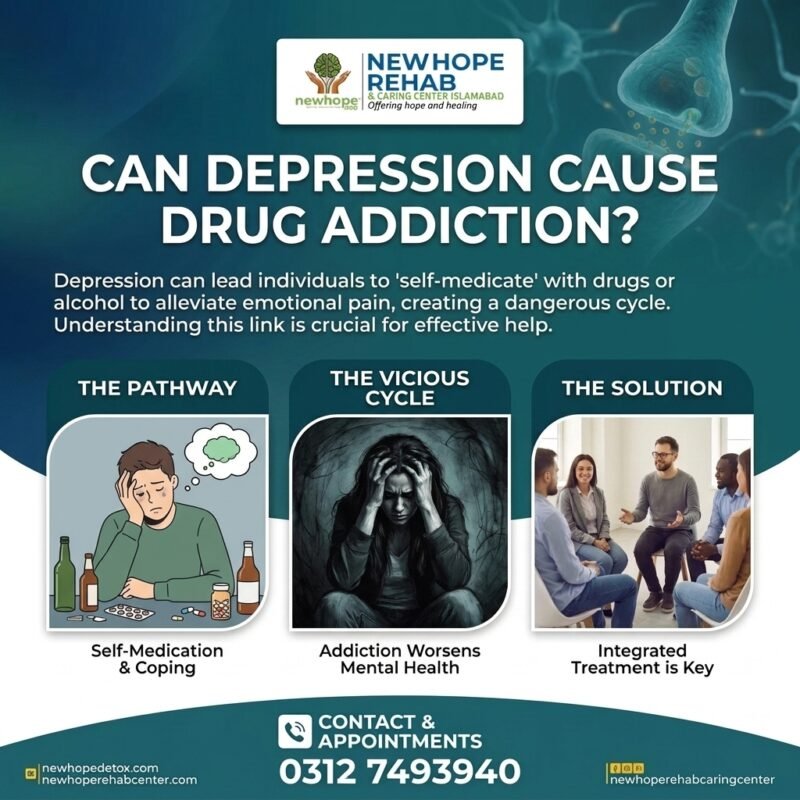
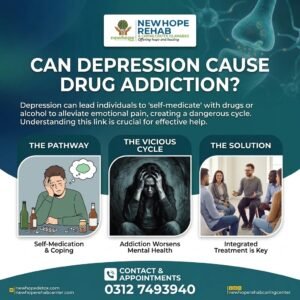
Can Depression Cause Drug Addiction? Understanding the Link
Can Depression Cause Drug Addiction

Can Depression Cause Drug Addiction? Understanding the Link

Depression and drug addiction are two serious health conditions that can affect a person’s emotions, relationships, physical health, and everyday life. People experiencing depression may struggle with sadness, hopelessness, low energy, or a loss of interest in activities they once enjoyed. Some may turn to drugs or alcohol in an attempt to escape these feelings or find temporary relief. Can depression cause drug addiction? Depression does not automatically lead to addiction, but it can increase the risk of substance misuse for some people. At the same time, drug use can worsen depressive symptoms or contribute to the development of depression. When both conditions occur together, they can create a difficult cycle that may require professional treatment. Understanding the connection between depression and addiction is an important step toward recognizing warning signs, finding appropriate care, and supporting long-term recovery. What Is the Connection Between Depression and Drug Addiction? Depression is a mental health condition that can affect mood, motivation, sleep, appetite, concentration, and the ability to enjoy daily activities. It is more than feeling sad for a short period and may interfere with work, education, relationships, and personal responsibilities. Drug addiction, clinically known as a substance use disorder, involves difficulty controlling substance use despite harmful consequences. These conditions can influence each other in several ways. A person experiencing depression may use drugs to temporarily change their mood, increase energy, reduce emotional pain, or escape distressing thoughts. However, the effects may be short-lived, and repeated substance use can lead to cravings, dependence, and further emotional difficulties. Drug use can also disrupt sleep, affect brain function, increase social isolation, and create financial or relationship problems that contribute to worsening depression. This relationship is complex. Depression can increase vulnerability to substance misuse, but addiction can also contribute to depression. In some cases, both conditions develop because of shared risk factors, such as trauma, chronic stress, or family history. Can Depression Increase the Risk of Drug Addiction? Yes. Depression can increase the risk of substance misuse, particularly when a person has limited access to support or struggles to manage emotional distress. 1. Using Drugs to Escape Emotional Pain People experiencing depression may feel overwhelmed by sadness, emptiness, guilt, or hopelessness. Some turn to drugs or alcohol because they believe these substances will help them feel better. Although a substance may temporarily change how someone feels, it does not address the underlying depression. Repeated use can create a pattern in which the person relies on drugs whenever difficult emotions arise. 2. Seeking Temporary Relief or Energy Depression can cause fatigue, low motivation, and difficulty concentrating. Some people misuse stimulants or other substances in an attempt to feel more energetic or productive. These substances can have serious risks and may cause anxiety, sleep disruption, mood changes, or dependence. When their effects wear off, a person may feel even more exhausted or emotionally distressed. 3. Coping With Loneliness and Isolation Depression can make social interaction feel difficult. People may withdraw from friends and family or lose interest in activities they once enjoyed. Isolation can reduce access to emotional support and increase the risk of using substances alone. Rebuilding social connections and seeking mental health care can help address this vulnerability. 4. Dealing With Trauma or Chronic Stress People who have experienced abuse, grief, family conflict, or other traumatic events may face an increased risk of depression and substance use problems. Drugs or alcohol may become a way to avoid painful memories or manage overwhelming emotions. Trauma-informed mental health treatment can help individuals develop safer coping strategies. Can Drug Addiction Cause Depression? Yes. Substance use can contribute to depressive symptoms, worsen existing depression, or complicate the treatment of a mental health condition. The effects depend on the substance, how often it is used, the person’s health, and other circumstances. Alcohol: Heavy drinking can disrupt sleep, affect mood, and worsen depressive symptoms. Stimulants: Cocaine and methamphetamine may cause low mood, exhaustion, and emotional distress as their effects wear off. Opioids: Opioid misuse can affect daily functioning, relationships, and emotional well-being. Withdrawal may also involve anxiety, sleep problems, and low mood. Cannabis: Cannabis affects people differently, and frequent use may be associated with mental health difficulties in some individuals. Sedatives: Misuse of sedative medications can contribute to cognitive and emotional problems, while withdrawal may cause severe symptoms. It is also important to recognize that depression can occur independently of substance use. A healthcare professional can help determine whether symptoms are related to depression, substance effects, withdrawal, or a combination of factors. Warning Signs of Depression and Drug Addiction Recognizing the signs of both conditions can help individuals and families seek support before the problems become more severe. Common Signs of Depression Possible symptoms include: Persistent sadness, emptiness, or hopelessness. Loss of interest in hobbies or social activities. Low energy or ongoing fatigue. Changes in sleep or appetite. Difficulty concentrating or making decisions. Feelings of guilt, worthlessness, or helplessness. Withdrawing from family and friends. Thoughts of death or suicide. Depression symptoms that persist or significantly interfere with daily life should be assessed by a qualified healthcare professional. Common Signs of Drug Addiction Possible warning signs include: Strong cravings or frequent thoughts about using drugs. Taking more of a substance than intended. Repeated unsuccessful attempts to stop. Continuing to use despite physical, emotional, or relationship problems. Neglecting work, education, or family responsibilities. Spending substantial time obtaining or recovering from substances. Experiencing withdrawal symptoms when reducing or stopping use. These signs do not establish a diagnosis on their own. Professional assessment can help clarify what is happening and identify appropriate treatment options. Why Depression and Addiction Should Be Treated Together When depression and substance use disorder occur together, they are often described as co-occurring disorders. Treating both conditions is important because each may affect the other. For example, a person may stop using drugs but continue to experience untreated depression. Emotional distress may then make recovery more difficult. Alternatively, treating depression without addressing ongoing substance misuse may leave important triggers and health risks

How Family Support Can Help Prevent Relapse
Family Support

How Family Support Can Help Prevent Relapse

Recovery from drug or alcohol addiction is an ongoing process that often involves more than stopping substance use. People in recovery may face stress, cravings, emotional challenges, and situations that remind them of past substance use. During these difficult moments, family support can make a meaningful difference. A caring and supportive family can encourage healthy habits, help recognise early warning signs, and motivate a loved one to continue treatment. However, supporting someone through addiction recovery is not always easy. Families may experience worry, frustration, or uncertainty about what to say and do. Understanding how family support can help prevent relapse allows loved ones to provide encouragement without blame or pressure. With patience, healthy boundaries, and appropriate professional guidance, families can become an important part of the recovery process. What Is Relapse in Addiction Recovery? Relapse refers to a return to substance use after a period of reduced use or abstinence. It can happen during recovery from alcohol, opioids, prescription medication misuse, or other substance use disorders. Recovery is different for everyone. Some people maintain long-term recovery without returning to substance use, while others experience setbacks and need changes to their treatment plan. A return to substance use does not mean a person has failed or that recovery is impossible. It is a sign that additional support, reassessment, or treatment may be needed. Relapse prevention focuses on recognizing personal triggers, developing coping skills, maintaining treatment, and responding early when difficulties arise. Why Is Family Support Important in Relapse Prevention? Addiction can affect relationships, trust, finances, and emotional well-being. During recovery, a supportive home environment can help reduce stress and make healthy routines easier to maintain. Family members may help by encouraging treatment attendance, listening without judgment, recognizing changes in behavior, and helping a loved one connect with professional care when needed. Family support can also reduce feelings of loneliness and shame. When people feel safe discussing cravings or emotional difficulties, they may be more willing to seek help before a situation becomes more serious. However, family members cannot control another person’s recovery. Their role is to provide encouragement, maintain appropriate boundaries, and support access to effective treatment. 7 Ways Family Support Can Help Prevent Relapse 1. Create a Safe and Supportive Home Environment A calm and respectful home environment can help a person focus on recovery. Frequent arguments, threats, humiliation, or constant criticism may increase stress and make it harder to discuss challenges honestly. Families can support recovery by communicating respectfully, keeping expectations realistic, and avoiding unnecessary conflict where possible. If alcohol or drugs have been a major source of difficulty, family members can discuss practical steps to reduce exposure to substances and situations that may trigger cravings. A supportive environment does not mean ignoring harmful behavior. Families can remain caring while setting clear expectations about safety and respect. 2. Recognize Relapse Warning Signs Early Relapse may develop gradually. Changes in mood, behavior, routines, or social connections can sometimes signal that a person is struggling. Possible warning signs include: Increasing isolation from family and supportive friends. Missing treatment appointments or support meetings. Returning to people or places closely associated with past substance use. Increased anxiety, irritability, or emotional distress. Changes in sleep patterns or daily routines. Expressing hopelessness or losing interest in recovery goals. Talking more frequently about using substances or minimizing previous problems. These signs do not prove that a relapse will occur. They may reflect other difficulties, including depression, stress, or physical illness. When concerns arise, approach the person calmly. Ask how they are feeling and whether they need additional support rather than making accusations. 3. Encourage Continued Treatment Completing a rehabilitation program is an important milestone, but ongoing care may still be necessary. Depending on the person’s needs, continued treatment may include counseling, medical appointments, prescribed medication, peer support, or structured outpatient care. Family members can help by encouraging attendance, assisting with transportation when appropriate, and respecting the person’s treatment decisions. For some substance use disorders, medication is an important part of effective treatment. Families should avoid pressuring a loved one to stop prescribed addiction medication without medical advice. If the person begins missing appointments or withdrawing from treatment, a supportive conversation may help identify barriers and encourage them to reconnect with care. 4. Help Manage Stress and Emotional Triggers Stress can increase cravings and make recovery more challenging. Family members can help by creating opportunities for healthy activities and offering practical support during difficult periods. Helpful activities may include taking walks together, sharing meals, participating in hobbies, or maintaining regular sleep and daily routines. Families should also understand that a loved one may experience anxiety, depression, grief, or other emotional difficulties during recovery. Encouraging professional mental health support can be important when these problems persist or worsen. The goal is not to remove every source of stress. It is to help the person develop healthier ways to respond to difficult situations. 5. Build Trust Through Honest Communication Trust may take time to rebuild after addiction has affected a family. Loved ones may feel hurt or uncertain, while the person in recovery may fear judgment or rejection. Open communication can help both sides express concerns and establish realistic expectations. Families can support healthier conversations by: Listening without interrupting. Expressing concerns without insults or threats. Asking what kind of support would be helpful. Acknowledging progress and positive changes. Discussing boundaries clearly and consistently. Avoiding the use of past mistakes as a weapon during disagreements. Trust develops through consistent actions over time. It is reasonable for family members to need time to feel secure again, and rebuilding relationships should not be rushed. 6. Encourage Healthy Routines and Positive Activities Daily routines can provide structure during recovery. Families can encourage activities that support physical health, emotional balance, and a sense of purpose. These may include regular exercise, preparing meals together, returning to education or work, practicing relaxation techniques, and maintaining hobbies. Social connections also matter. Spending time with supportive people can reduce isolation and provide alternatives to environments associated with

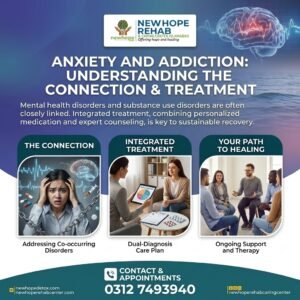
Anxiety and Addiction: Understanding the Connection and Treatment
Anxiety and Addiction

Anxiety and Addiction: Understanding the Connection and Treatment

Anxiety and addiction are two health concerns that can affect a person’s thoughts, emotions, relationships, and daily life. Although anxiety is a common response to stress, ongoing anxiety can become difficult to manage. Some people turn to alcohol, drugs, or other addictive substances to feel calmer or escape uncomfortable emotions. Over time, this pattern can lead to dependence and make anxiety harder to manage. The relationship between anxiety and addiction is complex. Anxiety may contribute to substance use, while substance use, intoxication, and withdrawal can worsen anxiety symptoms. When both conditions occur together, treating only one may not fully address the person’s needs. The good news is that anxiety and addiction are treatable. With appropriate mental health care, addiction treatment, and ongoing support, people can learn healthier coping skills and work toward lasting recovery. What Is the Connection Between Anxiety and Addiction? Anxiety is the body’s natural response to stress or a perceived threat. It can cause worry, nervousness, restlessness, and physical symptoms such as a racing heart or muscle tension. An anxiety disorder develops when anxiety becomes persistent, difficult to control, or severe enough to interfere with everyday life. Common anxiety disorders include generalized anxiety disorder, panic disorder, and social anxiety disorder. Addiction, often referred to clinically as a substance use disorder, involves difficulty controlling the use of a substance despite harmful consequences. These conditions can influence one another in several ways. A person experiencing anxiety may use alcohol or drugs to seek temporary relief. However, that relief may not last. As the substance wears off, anxiety can return or become more intense, encouraging further use. This cycle can gradually increase dependence and make it more difficult to manage emotions without substances. How Anxiety Can Lead to Substance Use People cope with anxiety in different ways. Some seek professional help, while others may try to manage their symptoms without medical support. When anxiety becomes overwhelming, alcohol, cannabis, sedatives, or other substances may seem like an easy way to relax. A person might drink before social situations, use drugs to escape persistent worry, or rely on substances to fall asleep. Although these substances may temporarily change how someone feels, they do not address the underlying causes of anxiety. Repeated use can create additional problems, including: Increased anxiety between episodes of substance use. Difficulty sleeping without alcohol or drugs. Strong cravings during stressful situations. Growing tolerance or physical dependence. Problems with work, education, finances, or relationships. Delays in seeking appropriate mental health treatment. Using substances to cope with anxiety does not mean someone lacks willpower. It may indicate that the person needs safer, more effective ways to manage distress. Can Addiction Make Anxiety Worse? Yes. Substance use can trigger anxiety, intensify existing symptoms, or contribute to anxiety during withdrawal. Alcohol and Anxiety Alcohol may initially create a feeling of relaxation, but its effects can disrupt sleep and affect brain processes involved in mood regulation. Anxiety may increase as alcohol leaves the body. People who drink heavily or regularly may experience significant anxiety during withdrawal. Severe alcohol withdrawal can cause seizures, hallucinations, and other life-threatening complications. Anyone who may be physically dependent on alcohol should seek medical advice before stopping suddenly. Cannabis and Anxiety Cannabis affects people differently. Some experience relaxation, while others develop panic, paranoia, or increased anxiety. Frequent use may also be associated with ongoing mental health difficulties in some individuals. Stimulants and Anxiety Stimulants such as cocaine and methamphetamine can increase alertness and energy, but they may also cause agitation, rapid heartbeat, panic, and suspicious thoughts. Anxiety and low mood can occur as their effects wear off. Sedatives and Anxiety Certain sedative medications can reduce anxiety when used appropriately under medical supervision. However, misuse or prolonged use can lead to dependence. Withdrawal from benzodiazepines and some other sedatives can be dangerous and may cause seizures. These risks make professional assessment especially important when anxiety and substance use occur together. Common Signs of Anxiety and Addiction Recognizing the warning signs can help individuals and families seek support before the problems become more severe. Signs of Anxiety Common symptoms include: Persistent worry or fear. Feeling restless, tense, or easily overwhelmed. Difficulty concentrating. Trouble falling asleep or staying asleep. Rapid heartbeat, sweating, or trembling. Avoiding situations because of fear or nervousness. Experiencing panic attacks or sudden intense fear. Signs of Addiction Possible signs include: Strong cravings for alcohol or drugs. Using more of a substance than intended. Repeated unsuccessful attempts to stop. Continuing to use despite physical, emotional, or relationship problems. Neglecting responsibilities because of substance use. Experiencing withdrawal symptoms when reducing or stopping use. Relying on substances to cope with everyday stress or anxiety. These symptoms do not automatically establish a diagnosis. A qualified healthcare professional can assess the person’s experiences, substance use patterns, and overall health. Why Anxiety and Addiction Should Be Treated Together When anxiety and addiction occur at the same time, they may be described as co-occurring disorders. Some people may also have depression, trauma-related symptoms, or other mental health concerns. Treating both conditions is important because each can affect the other. If substance use continues to trigger anxiety, managing anxiety alone may not be enough. Similarly, if untreated anxiety contributes to substance use, stopping the substance without addressing anxiety may make recovery more challenging. An integrated treatment plan can help address emotional distress, substance use, withdrawal risks, and the situations that contribute to both conditions. Treatment should be individualized. A person’s symptoms, medical history, substance use, and personal circumstances all influence which approaches may be appropriate. Treatment Options for Anxiety and Addiction Effective treatment may involve a combination of mental health care, addiction treatment, medication when appropriate, and practical recovery support. 1. Professional Assessment The first step is a comprehensive assessment by an appropriate healthcare professional. This may include reviewing anxiety symptoms, substance use, prescribed medications, physical health, sleep, and previous treatment experiences. Because intoxication and withdrawal can resemble or worsen anxiety disorders, clinicians may need to assess how symptoms change over time. 2. Cognitive Behavioral

Best Drug Rehabilitation Centre in Pakistan: How to Choose
Best Drug Rehabilitation Centre

Best Drug Rehabilitation Centre in Pakistan: How to Choose

If you are a drug addict or loved one of a drug addict, selecting the best drug rehabilitation center in Pakistan is crucial. Drugs Effects Landslides can have serious consequences on physical health, mental health and well-being, family relations and all areas of life including education and work. But getting into proper treatment can also help people get started on their road to recovery and learn how to create good habits going forward. But like everything else, not every rehabilitation center offers the same care as others. Some specialize in outpatient care, medical detox coordination, or continuing support following treatment; others offer advice on residential treatment. Being aware of the differences can guide families in making an educated decision. A good drug rehabilitation center is not the most expensive or hugely advertised. Is an example of the right service to create when balanced properly, this is a controlled environment in which all appropriate safe ethical care reflecting persons needs can be provided. The Importance of Picking the Right Substance Abuse Rehabilitation Centre This makes addiction a complex health illness affected on almost all levels by biological, psychological, and social factors. Effective treatment should do more than just stop drug use It also needs to assure you that it takes into account withdrawal risks, mental health, physical health, personal circumstances and the realities of sustained recovery. By opting for a suitable rehabilitation center, a person can: Get proper evaluation and treatment planning. Overcome withdrawal safely and medically, without risk of danger. Get to know what leads towards use of substance. Adopt new coping mechanisms and practices Address related mental health concerns. Construct an ongoing recovery plan following treatment. The appropriate level of care is not the same for everyone. An evaluation by a professional can help establish if inpatient rehabilitation, outpatient treatment, or combo of services fits the bill. What to Consider When Selecting the One of Best Drug Rehabilitation Centre in the Pakistan So, before you select your facility, here are some important things to think about. 1.     Medical and Mental Health Professionals who are qualified. A trusted rehabilitation center would be transparent about the experience of the professionals in treatment. Care is also often designed in such a way that it needs the presence of one or more doctors, psychiatrists, psychologists, nurses, addiction counselors or other trained professionals from the health profession. Inquire who overs a patient, who monitors for withdrawal complications and how to react in the event of a medical emergency. If there is a history of severe alcohol or sedative withdrawal, seizures, major medical illness, or other serious health problems, be sure the site can provide necessary service level and/or timely systematic hospital reference. 2.     Individualized Treatment Plans Addiction affects people differently. Treatment must be tailored to the individual’s substance use history, physical health, mental health, family situations, and recovery goals. These factors should be assessed by a suitable centre before they recommend a program. Ask if the treatment plan is reviewed when needs change and whether they person has a voice in the care decisions. Scam alert: If the facility guarantees that everyone at their center receives the same treatment or top level therapy without an appropriate, comprehensive assessment—run in another direction. 3.     Safe and Appropriate Detoxification Others require medical help while quitting drugs or alcohol. Risk of withdrawal is highly variable depending on the substance, route and frequency/duration of use, concomitant medications and medical conditions. Withdrawal from alcohol or benzodiazepines can be lethal. Withdrawal from illicit opioids can also be acutely distressing and even dangerous, especially for the associated dehydration that vomiting or diarrhea may cause. Inquire about medically supervised withdrawal management, medical availability and how emergencies are handled. Explain how transfers or referrals are done for individuals that do not have medical detox on the premises. That is why detox alone, in general, does not provide adequate treatment of the addiction itself. Should be tied to a continuous recovery plan 4.     Evidence-Based Addiction Treatment Search for a center, which can provide rationale behind each of the treatments it reproduces and what makes them suitable for individual patients. Treatment may include, depending on a person’s needs: Individual counseling and behavioral therapies. Group counseling or peer support. Family education and counseling. Medications for certain substance use disorders, as needed and appropriate. Mental health assessment and treatment. Relapse-prevention planning and continued follow-up. For Opioid Use Disorder, ascertain whether evidence-based medications such as buprenorphine or Methadone are available or can be arranged through appropriate medical providers. These treatments are no less effective than placing people on a waiting list in the hospital and should never be discounted solely because they involve medication, which can help alleviate cravings and overdose risk. 5.     Help for More Than One Mental Health Condition at the Same Time Depression, anxiety, trauma related symptoms or other mental health problems are all also experienced alongside addiction by some people. May require attention when these conditions occur together. Inquire if the center attempts to evaluate psychological health requirements and is able to offer the necessary procedure or alternate recommendations. Integrated care is the answer to these questions, and it’s an important part of helping people overcome their need to use substances in order to cope with emotional pain. A facility should also have a clear process for the response to suicidal thoughts, severe psychological distress or other psychiatric emergencies. 6.     A Safe, Respectful Environment Their dignity and safety must always stay at the heart of treatment. If possible, go for a visit and ask about the daily routine of the facility, how private it is, what staff is available during certain hours or whether you can bring up a complaint. A supportive environment must be an enabling one that is free from humiliating, threatening, violent or degrading treatment. Inquire how the here center safeguards patient confidentiality, provides a disease explanation of treatment options, and ensures that informed consent is received. Families should know what went in to when updates were released and the privacy