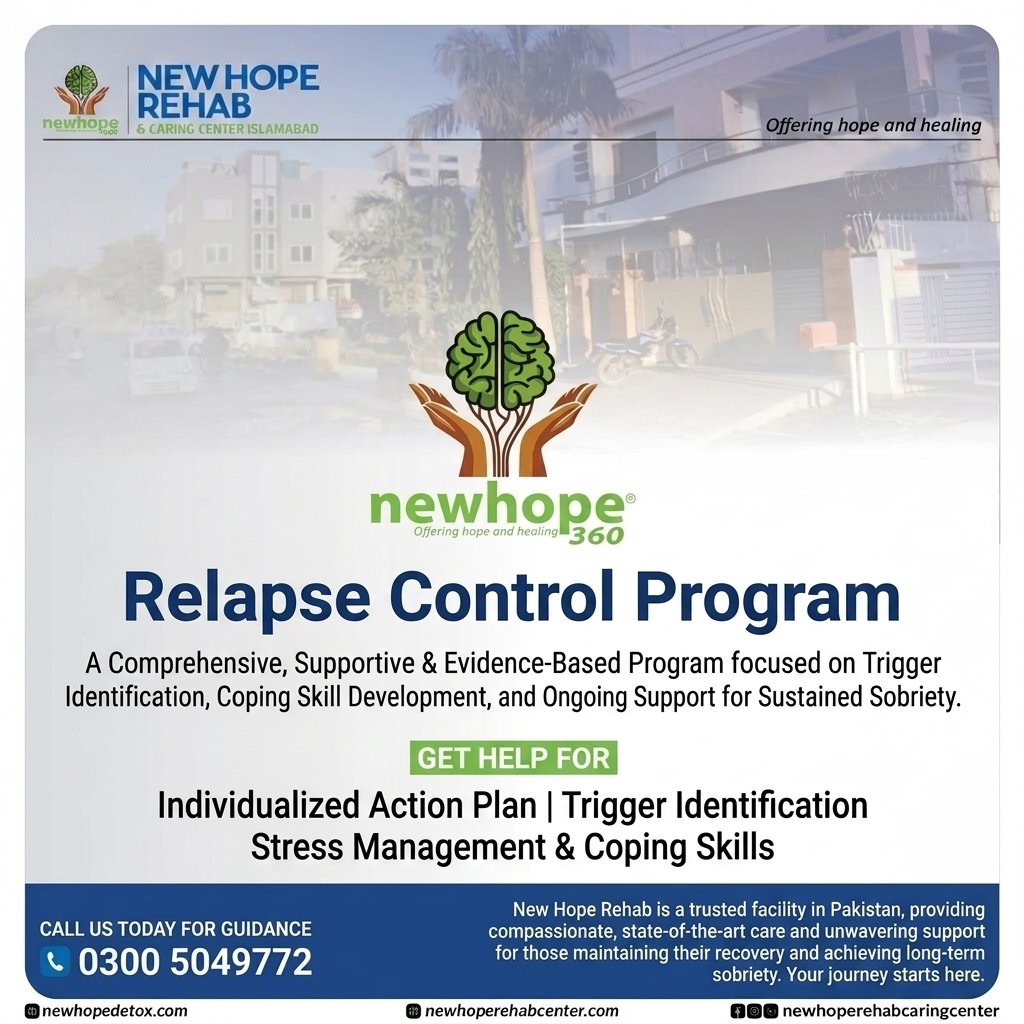
Recovery from addiction doesn’t necessarily end when a person completes detoxification or rehabilitation. Returning to substance use can happen during recovery, particularly when cravings, stress, emotional difficulties, social pressure, or familiar environments create challenges. A structured Relapse Control Program in Islamabad, Pakistan can help individuals understand their personal triggers and develop practical strategies for maintaining recovery.
Relapse should be viewed as a health and treatment concern rather than a personal failure. Early support can help identify what contributed to a setback and whether the recovery plan needs to be adjusted. At New Hope Rehab and Caring Centre Islamabad, relapse prevention can be incorporated into individualized addiction and mental health care.
What Is a Relapse Control Program?
A relapse control program is a structured approach designed to help people maintain recovery from substance use and respond appropriately to warning signs.
Depending on individual needs, the program may include:
- Individual counseling
- Behavioral therapy
- Craving management
- Trigger identification
- Family support
- Mental health care
- Lifestyle planning
- Continuing treatment
- Aftercare and follow-up
The goal isn’t to promise that relapse can never occur. Instead, treatment focuses on reducing risk, strengthening coping skills, and ensuring that individuals know when and how to seek additional support.
Why Does Relapse Happen?
Relapse can have many contributing factors. It isn’t always caused by a single event.
Common risk factors may include:
- Emotional distress
- Anxiety or depression
- Family conflict
- Social pressure
- Exposure to previous drug-use environments
- Unmanaged cravings
- Poor sleep
- Isolation
- Overconfidence about recovery
- Returning to old routines
- Untreated mental health conditions
Understanding these factors can help individuals create a realistic and personalized prevention plan.
Recognizing Early Warning Signs
Relapse may develop through changes in thoughts, emotions, and behavior before substance use actually occurs.
Potential warning signs include:
- Increasingly thinking about substance use
- Romanticizing previous drug or alcohol use
- Avoiding counseling or support
- Isolating from supportive people
- Returning to high-risk social environments
- Increased irritability or anxiety
- Neglecting healthy routines
- Stopping prescribed or recommended treatment
- Believing that occasional substance use would be harmless
Recognizing these signs early provides an opportunity to seek professional support before the situation becomes more serious.
How a Relapse Control Program Works
Individual Assessment
A relapse-prevention plan should be based on the individual’s history and circumstances. Professionals may assess substance use, previous relapses, mental health, family relationships, triggers, and current support systems.
Trigger Identification
Triggers are situations, people, emotions, or environments that can increase cravings or the desire to use substances.
Triggers may include:
- Stress
- Certain friendships
- Specific locations
- Arguments
- Loneliness
- Financial pressure
- Traumatic memories
- Celebrations or social events
Understanding personal triggers makes it easier to plan safer responses.
Coping Skills
Counseling can help individuals develop healthier ways to respond to cravings and difficult emotions. Techniques may include relaxation exercises, problem-solving, physical activity, structured routines, and reaching out to supportive people.
Cognitive Behavioral Therapy
CBT can help people recognize thought patterns that contribute to substance use and replace them with more constructive responses.
For example, an individual may learn to challenge thoughts such as “I can’t cope without using” and develop practical alternatives for managing stress.
The Role of Family Support
Family members can play an important role in recovery when their involvement is appropriate.
A family support component may help relatives:
- Understand addiction and relapse
- Recognize warning signs
- Communicate without unnecessary judgment
- Establish healthy boundaries
- Encourage treatment participation
- Avoid behaviors that unintentionally enable substance use
At New Hope Rehab and Caring Centre Islamabad, family involvement can be included when clinically appropriate and consistent with the individual’s treatment plan and privacy.
Mental Health and Relapse Prevention
Depression, anxiety, trauma, and other mental health concerns can affect relapse risk. Some individuals may return to substance use as an attempt to cope with difficult emotions.
For this reason, relapse prevention may need to address both substance use and mental health. Integrated care can help individuals identify emotional triggers and develop healthier coping strategies.
If someone develops severe depression, psychosis, suicidal thoughts, or an immediate risk of harming themselves or someone else, urgent professional or emergency assistance is necessary.
Aftercare and Long-Term Recovery
Relapse prevention works best when it continues beyond the initial rehabilitation period. An aftercare plan may include:
- Regular counseling
- Follow-up assessments
- Family support
- Peer support
- Healthy sleep and exercise
- Meaningful daily activities
- Stress-management strategies
- Avoidance of high-risk environments
- Appropriate medication management
Long-term recovery is an ongoing process. Support needs may change as an individual’s circumstances change.
What Happens After a Relapse?
A relapse doesn’t mean that treatment has failed. It can provide important information about unresolved triggers, treatment gaps, or changing circumstances.
After a relapse, professional reassessment can examine:
- What happened before substance use occurred?
- Which emotional or environmental triggers were present?
- Was treatment or aftercare interrupted?
- Are there untreated mental health concerns?
- Does the individual require a different level of care?
The treatment plan can then be adjusted according to the person’s needs.
Frequently Asked Questions (FAQs)
1. What is a Relapse Control Program?
It is a structured recovery service that helps individuals identify relapse risks, manage cravings, develop coping skills, and maintain continuing support after addiction treatment.
2. Does relapse mean that recovery has failed?
No. Relapse can indicate that additional support or changes to a treatment plan may be needed. Professional reassessment can help identify contributing factors.
3. How can someone prevent relapse?
Identifying triggers, maintaining treatment, developing healthy routines, managing stress, avoiding high-risk situations, and staying connected with supportive people can help reduce relapse risk.
4. Can families participate in relapse prevention?
Yes. When appropriate, families can learn about warning signs, communication strategies, healthy boundaries, and ways to provide constructive support.
5. How long should relapse prevention continue?
There is no universal timeframe. Continuing support can be adjusted according to the individual’s substance use history, mental health, recovery progress, and personal circumstances.
Conclusion
A Relapse Control Program in Islamabad, Pakistan can provide valuable ongoing support for individuals working to maintain recovery from addiction. By identifying triggers, strengthening coping skills, addressing mental health concerns, involving supportive family members, and maintaining aftercare, individuals can better prepare for the challenges that may arise during recovery.
At New Hope Rehab and Caring Centre Islamabad, relapse prevention can form part of an individualized treatment approach focused on safety, dignity, psychological well-being, and sustainable recovery. Seeking professional support early when warning signs appear can be an important part of protecting progress and maintaining long-term health.