Drug addiction is a complex disease that influences the mind, body, personality, other relationships and day to day functions. It can be a struggle to not fall back into using drugs as you previously have easy access, but along with this comes cravings, tolerance, dependence and inability to stop despite serious problems developing because of it. With proper clinical support, individuals struggling with substance use disorders can learn to live free from drugs and alcohol.
Selecting an acceptable treatment level for drug addiction therapy in Islamabad, Pakistan is actually the preliminary step among human beings and households who want Drug Addiction Treatment in Islamabad. New Hope Rehab and Caring Centre Islamabad offers treatment based on individual needs that encompass physical health, mental health, family situations, as well as long-term recovery goals.
What Is Drug Addiction Treatment?
Drug addiction treatment is the process of medical or psychotherapeutic intervention, for dependency on substances such as alcohol and prescription drugs.
They can involve assessment, medically managed withdrawal, counselling, behavioral therapy, family support and/or relapse prevention aftercare. How this breaks down depends on the drug in question, as well as one’s medical and psychological needs.
Some of the most common substances associated with substance use disorder include:
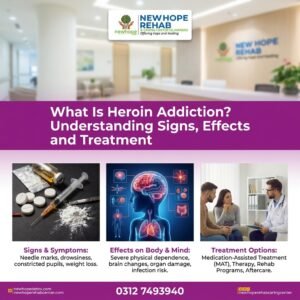
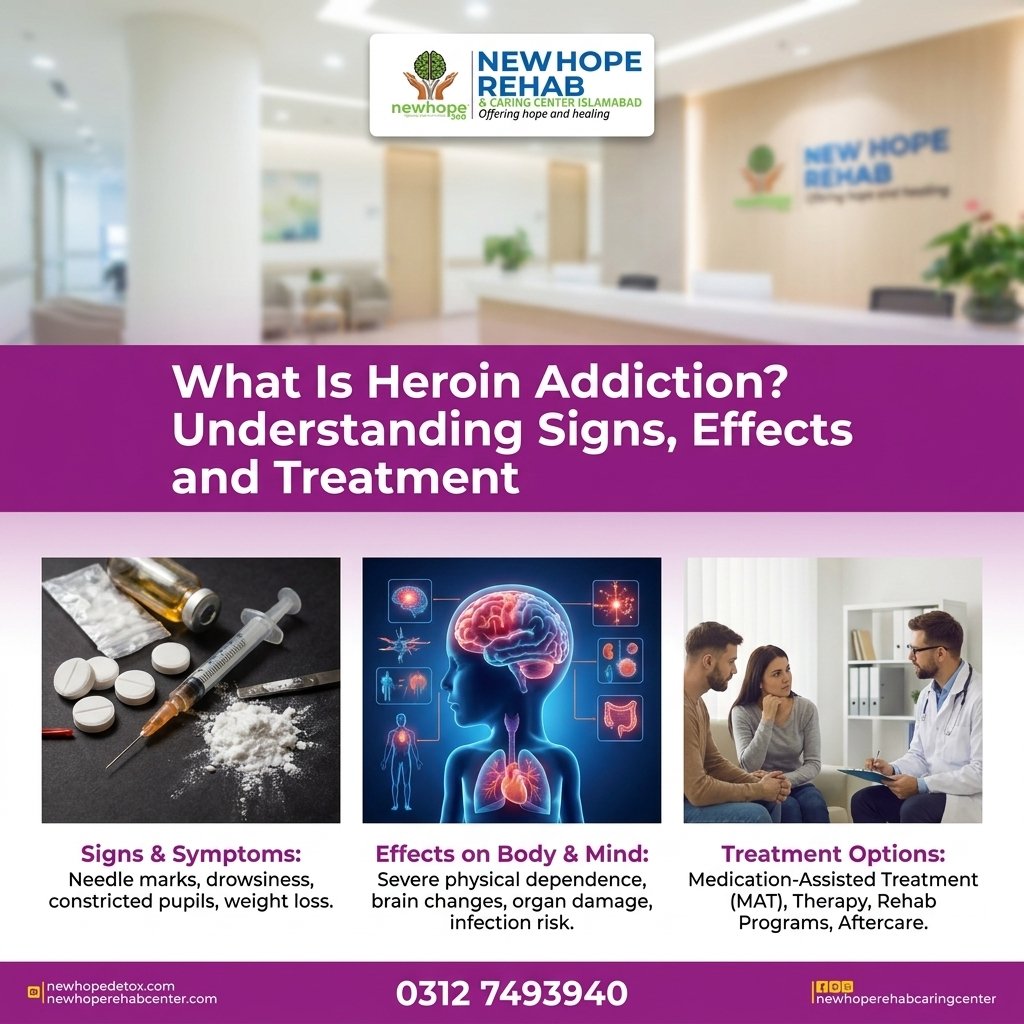
- Heroin and other opioids
- Crystal methamphetamine or ICE
- Cocaine
- Cannabis or marijuana
- Prescription medications
- Benzodiazepines
- Other stimulants or illicit drugs
Professional evaluation is required prior to establishing a plan of treatment.
When To Seek Professional Help
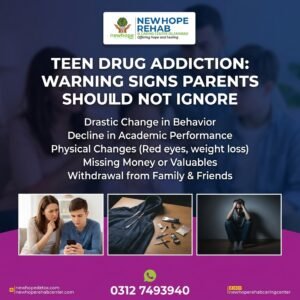
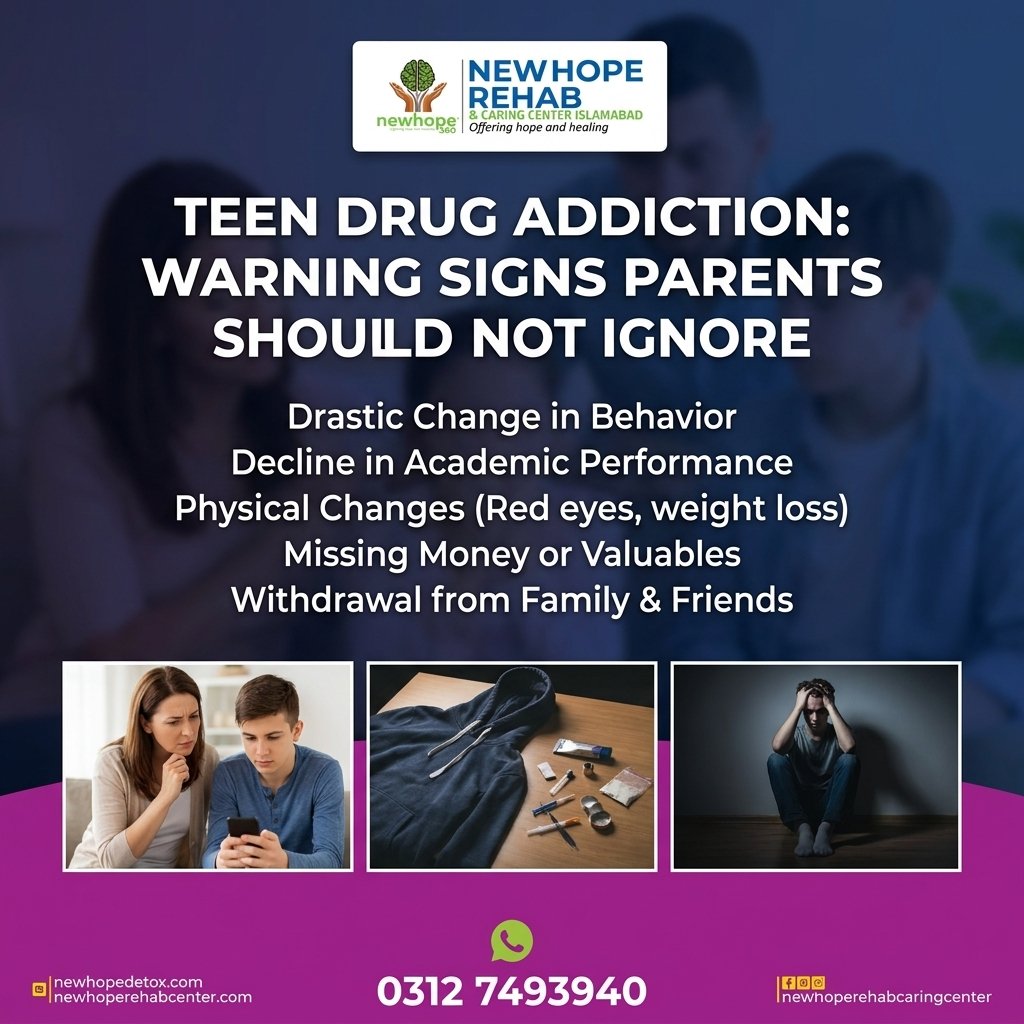
Drug addiction can have an onset over a long period of time, and several warning signs may be ignored at first. Potential signs include:
- Strong or frequent cravings
- Increasing tolerance
- Using more than intended
- Repeated unsuccessful attempts to stop
- Letting work, school or family responsibilities slide
- Withdrawing from friends and family
- Money or legal problems over drug use
- Using despite health problems
- Experiencing withdrawal symptoms
Disinterest in activities or hobbies that were once important to us
These symptoms alone do not diagnose a condition. You should be assessed by a qualified health professional.
How Drug Addiction Treatment Works
Comprehensive Assessment
The first step of treatment typically involves an evaluation of substance use, physical health status, mental health status; the need for further medications; prior treatments; and family or social circumstances.
This data identifies if treatment does not require residential, outpatient, home-based or medically supervised care.
Detoxification and Withdrawal Management
Some people are not able to start rehabilitation without medical detox. The withdrawal symptoms if any for a medically supervised detox, depend on the type of substance, length of time it was used, its addictive potential, degree of physical dependence and general patient health.
A number of substances, particularly alcohol and some sedative drugs, can result in life-threatening withdrawal syndromes. Those who are heavily reliant should consult a doctor instead of withdrawing safely without medications.
Comprehensive Assessment
One-to-one counseling offers a confidential environment in which to examine triggers, emotional struggles, behavioral patterns and individual goals for recovery.
Cognitive Behavioral Therapy (CBT)
CBT — Cognitive Behavioral Therapy is an evidence-based psychological strategy that offers a means for individuals to recognize unproductive thought patterns regarding relapse and essentially build new coping responses to cravings, high-risk situations or stressors.
Group Therapy
Alternatively, group therapy can also provide peer support and the chance to learn from others who have encountered similar recovery challenges.
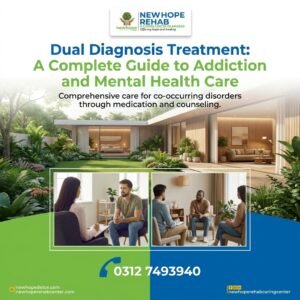
Disorders are the families of dual diagnosis and mental health-based care.
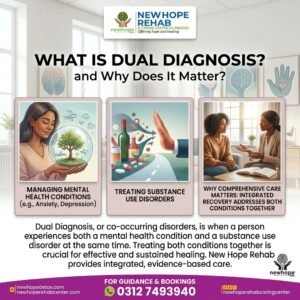
There are also cases where a substance use disorder occurs along with (a pattern of) depression, anxiety, trauma-related conditions or other mental health issues. This phenomenon is sometimes referred to as a dual diagnosis, as the patient is diagnosed with both alcohol addiction and a mental disorder.
So, if both are present, it’s a clinical reason to make it part of addressing together! Untreated psychological problems could impede recovery, while ongoing substance abuse might exacerbate the mental illness.
The New Hope Rehab and Caring Centre Islamabad also provide mental health assessment and psychological support as a part of treatment if clinically significant.
The Role of Family Support
Addiction does not only impact individuals, it also impacts families. Relatives will feel worried, frustrated, broke or confused on how to help.
Family support can involve:
- Education about addiction
- Family counseling
- Improved communication
- Healthy boundaries
- Relapse-prevention education
- Encouragement for continued treatment
Families need to promote recovery but not take the blame for their loved one treatment.
Relapse Prevention and Aftercare
Even when a person successfully completes detoxification or residential treatment, recovery does not end. Relapse risk is greater if you return home to a previous environment (unmanaged stress), become emotionally overwhelmed, or possibly encounter triggers.
A relapse-prevention plan may include:
- Identifying personal triggers
- Continuing counseling
- Building healthy routines
- Developing stress-management skills
- Avoiding high-risk situations
- Maintaining supportive relationships
- Attending follow-up appointments
- Having a plan for how you will act on your cravings.
A professional reassessment following a relapse can identify what went wrong and whether or not treatment needs to be adjusted.
Why Individualized Treatment Matters
But there is a no one-size-fits-all treatment plan. Good care accounts for things like kind of drug, degree of use and physical health, as well as the mental health status, past treatment experience, family support and environment.
For example, a person dependent on opioids needs a different management than someone with stimulant use disorder or cannabis use disorder. More importantly, it has further added that generalized programs should not be practiced to treat this but rather the treatment relies on clinical assessment.
Frequently Asked Questions (FAQs)
1. What is drug addiction treatment?
Drug abuse therapy is a way of life action that treats difficult sexual utilization via proper medicinal care, advising, behavioral treatment, family support, resistance avoidance and continuing care.
2. Does detoxification alone address drug addiction?
However, typically detoxification is just the first step. It alleviates withdrawal but doesn’t treat the emotional, psychological and social aspects of addiction. And staying with therapy can be critical for the long-haul.
3. Is drug addiction a co-occurring condition with depression or anxiety?
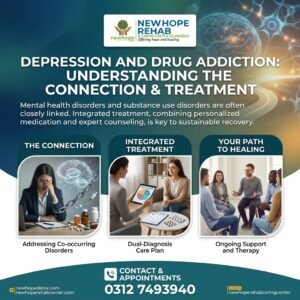
Yes. Integrated care is particularly useful when someone with the same concern to treat two conditions: an addiction and a mental health condition at the same time, integrated care can work wonders.
4. Do families have options for addiction treatment?
When indicated and consistent with the written treatment plan and privacy concerns of the individual, families may be included in education, counseling, communication aid, and relapse-prevention planning.
5. Content How Long Does Drug Addiction Treatment Take?
There is no standard treatment time. Length of component will depend on these addicting material, seriousness addiction, health and wellness requirements, treatment reaction, and also proceeding treatment demands.
Conclusion
Drug Addiction Treatment Islamabad Pakistan consists of structured professional support needed to address individuals from problematic use, and in which one can find more about the physical, psychological and social challenges they face through substance faє recovery. Remember, though, that recovery takes time and the right drug treatment may involve more than just quitting drugs or alcohol.
New Hope Rehab & Caring Centre Islamabad provides personalized care: assessment, withdrawal management, counseling and behavioral therapy, family support services, mental health care and relapse prevention as part of aftercare. Given correct professional guidance and ongoing help, people can begin moving toward health, stability and eventual recovery.