Addiction is not just an issue for individuals who are dealing with a drug problem. There are other areas of an individual’s life that may be impacted by addiction, such as family relationships, emotional health, and building trust. A family support program provides families with the opportunity to gain knowledge about addiction, develop improved communication skills, and assist their loved ones as they work towards recovering from addiction.
Education, counseling and hands-on help will allow families to develop an atmosphere of wellness which supports sustained recovery.
What Is a Family Support Program?
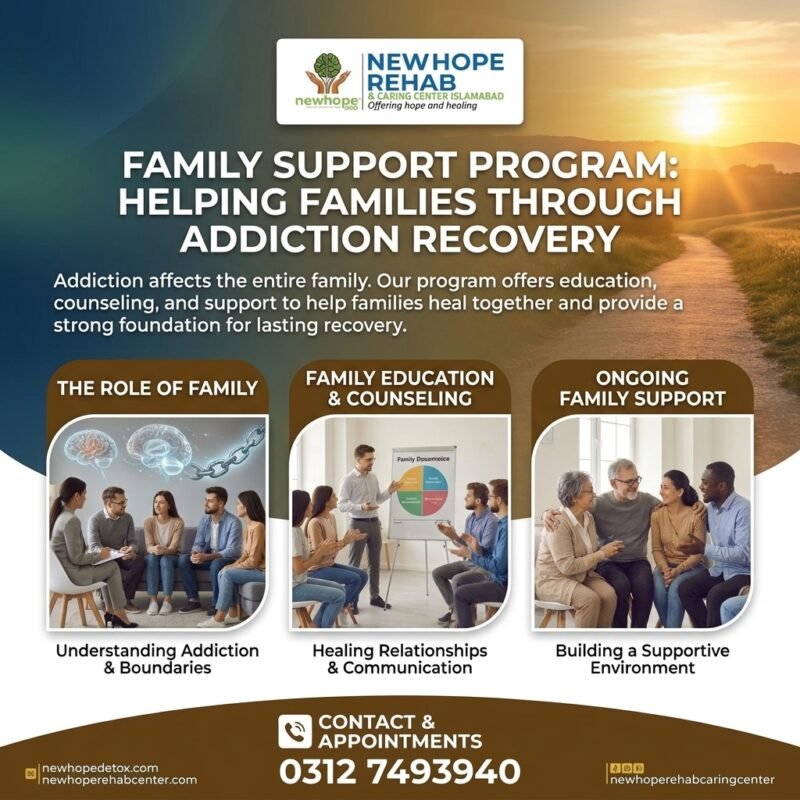
The Family Support Program offers support and information to families who are experiencing problems with addiction or other mental health issues. The program supports the family member’s understanding of what part he/she plays in the recovery process, as well as teaching them how to maintain their personal well-being.
Depending on individual needs, a program may include:
- Family counseling sessions.
- Education about addiction and recovery.
- Communication and conflict-resolution skills.
- Guidance on setting healthy boundaries.
- Strategies for recognizing relapse warning signs.
- Emotional support for family members.
The exact services provided differ among various providers, and you need to contact them directly for clarification.
Why Is Family Support Important in Addiction Recovery?
In addition to creating stress, misinterpretations, and emotional distance in families, the use of family support may be able to help resolve many of the problems associated with addiction and promote better family interactions.
Improves Communication
Family members will be able to share their thoughts and opinions about things they feel need attention through open and respectful communication. By listening to what others have to say, and then responding in a calm manner, you may be able to lower conflicts and regain the confidence of your family.
Encourages Treatment Participation
When there are supportive family members who are encouraging their loved ones to seek treatment and/or to stick with a plan of action toward recovery, this is a great thing. However, when making decisions regarding what types of treatment to use, it is best to consult with a professional in order to determine which type of treatment will be most beneficial for the person seeking help.
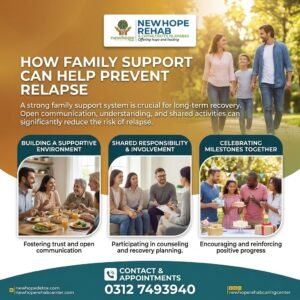
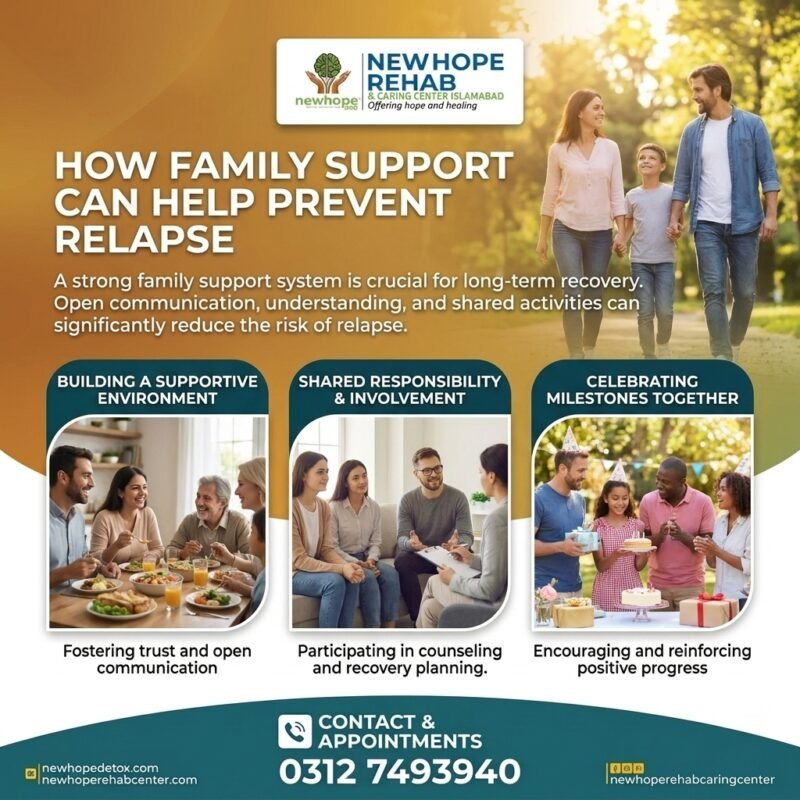
Helps Prevent Relapse
Families can be taught to identify the early warning signs that indicate something may be wrong; what are the typical causes of these types of problems; and how to get help from a professional as soon as possible after they notice a problem.
Supports Family Wellbeing
Loved ones may experience anxiety, frustration, or exhaustion as they provide support to an individual who has an addiction. These feelings can be managed by using counseling and/or peer support to establish and maintain healthy boundaries.
How Can Families Support a Loved One After Rehab?
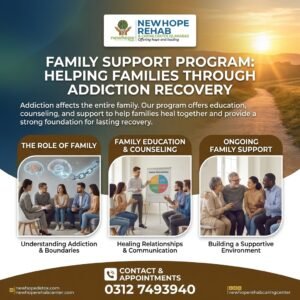
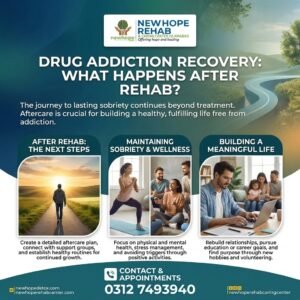
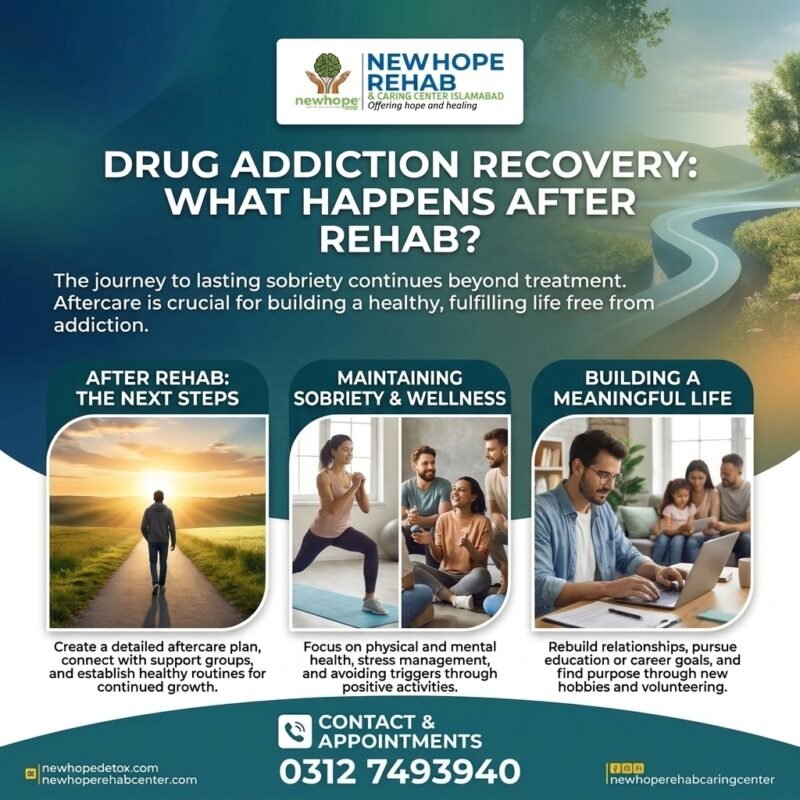
After the end of formal treatment, families can continue to support their loved one in their recovery process by developing a supportive environment, and establishing healthy daily habits.
Helpful steps include:
- Avoiding judgmental or shaming language.
- Encouraging follow-up appointments and counseling.
- Supporting healthy daily habits.
- Recognizing progress and effort.
- Maintaining clear boundaries around unsafe behavior.
- Seeking professional help when challenges become difficult to manage.
Families need to be aware of the fact that they are not able to control the recovery process for an individual. The family has the responsibility to support the individual appropriately, and protect themselves emotionally and physically.
Family Support Program at New Hope Rehab and Caring Centre Islamabad
New Hope Rehab & Caring Centre Islamabad is a service that provides support for people who are experiencing problems related to drug/alcohol use. If you wish to seek out help with respect to either your family’s experience with addiction, or if you would like to find some direction regarding how to begin the process of recovering from an addiction, then you may call the center to verify what services they provide, as well as discuss what you need.
The professional input can assist families in developing an understanding of addiction, identify the most appropriate support systems available to them, and acquire the knowledge required to pursue a course of recovery with one another.
Frequently Asked Questions
1. What is the purpose of a Family Support Program?
This program’s primary objective is to assist families in understanding addiction, enhancing their ability to communicate with each other, establishing appropriate boundaries within the family unit and supporting each member’s recovery process.
2. Can family support help prevent relapse?
Family support can be helpful in many ways such as encouraging family members to seek out and participate in treatment programs, identifying potential warning signs of possible relapse, and providing a positive/supportive environment at home. However, family support does not provide an absolute guarantee that a relapse will not occur.
3. Should family members attend addiction counseling?
When families have experienced problems due to an addiction, family counseling may be beneficial. An experienced counselor will assist you in determining if family counseling would be suitable for your family’s situation.
4. How can families support someone after rehab?
These people will provide encouragement for the individual to receive continued treatment, help establish a regular pattern of healthy behaviors, use respectful communication, and obtain professional advice as necessary.
5. Can family members receive support even if their loved one refuses treatment?
Yes. Family members can obtain independent counseling or other types of support to assist them with developing effective coping mechanisms, establishing healthy boundaries and protecting their individual well-being.
Conclusion
The Family Support Program is a critical part of the recovery process for individuals with addictions. It provides families with tools to enhance communication, restore trust, and handle problems more effectively. Through education, healthy boundaries, and proper professional assistance, families are able to help their family member recover, and also take care of themselves.