+92 312 7493940

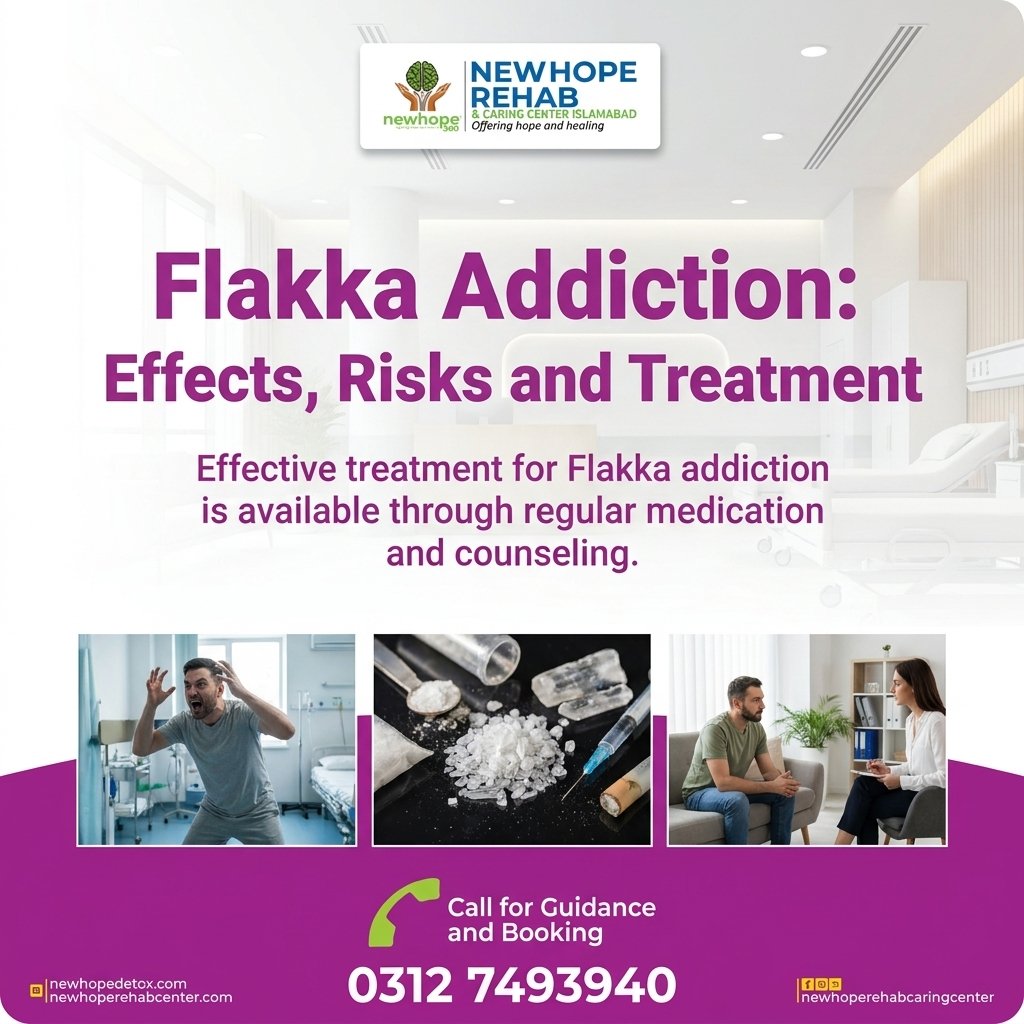
Flakka Addiction: Effects, Risks and Treatment

Flakka Addiction: Effects, Risks and Treatment

Addiction to flakka is linked with a variety of severe physical, psychosocial and behavioral disorders. In this case, flakka would be the street name of one of the new synthetic stimulants-based drugs called alpha-PVP. It can cause extreme stimulation and may result in agitation, paranoia, hallucinations, and harmful changes to body temperature and heart rate.

Media stories about flakka have suggested very extreme behavior but the actual effects depend on the drug, the dose can vary and most importantly also on how & why it was used together with other drugs. People who understand the risks of flakka and also notice subtle signs of problematic use may obtain treatment sooner.

What Is Flakka?

Flakka is the street name for alpha-PVP, a synthetic stimulant of the cathinone class. These compounds have a potent effect on the reward system and stimulation systems of the brain.

It could be found in a powder or crystal form and you can take it in many different ways. Users may not know what they are consuming because illicitly produced substances may contain unidentified ingredients or different concentrations.

Unpredictability may pose a higher chance of poisoning, overdose and other medical problems.

How Does Flakka Affect the Body and Brain?

Flakka has potent stimulant effects. It has potential to boost neurotransmitters that enhance alertness, reward, and arousal.

Possible short-term effects include:

  • Increased energy and alertness
  • Rapid heartbeat
  • Increased blood pressure
  • Restlessness and agitation
  • Anxiety and panic
  • Sweating
  • Dilated pupils
  • Reduced appetite
  • Insomnia
  • Confusion
  • Paranoia
  • Hallucinations

In the most serious circumstances, it can lead to extremes of agitation, fits, and hyperthermia (high body temperature), abnormal heart rhythms or loss of consciousness.

Flakka Addiction and Dependence

Cycle of stimulation use could add to mental obsession. Cravings increase in individual and may have a need to take the drug in order to feel pleasure, energy, confidence or alertness.

When use is frequent, a person will continue to take flakka even when resulting in medical issues, relationship problems, trouble at work or school flooding home.

Signs of flakka addiction may include:

  • Strong cravings
  • Repeated unsuccessful attempts to stop
  • A lot of time spent obtaining or using the drug
  • Neglecting responsibilities
  • Using despite inhaling potential detrimental consequences
  • Social withdrawal
  • Increasing secrecy
  • Sleep and appetite changes
  • Mood instability
  • Complementing flakka effects with other substances

PHYSICAL EFFECTS AND HEALTH RISKS OF FLAKKA

Flakka also puts the cardiovascular system and nervous system under strain.

Potential complications include:

Heart Problems

Stimulant-induced delirium is another form of intoxication overdose that can lead to increased heart rate and high blood pressure, especially from illicit amphetamines. Severe reactions can lead to deadly heartbeat disturbances and cardiovascular issues.

Dangerous Overheating

Hyperthermia, or dangerously high body temperature, can result from severe stimulant toxicity. However, extreme overheating and its dangerous consequences on muscles and organs NEEE emergency medical attention.

Seizures

Too much stimulation from drugs can result in seizures, especially if very high doses are taken or multiple substances are used together.

Kidney and Muscle Damage

Extreme exertion and heat, panorama are cited as contributory factors in rhabdomyolysis, or muscle breakdown that injures the kidneys.

Mental Health Effects
Flakka Addiction: Effects, Risks and Treatment

Numerous psychiatric symptoms such as anxiety, paranoia, confusion and hallucination may be caused by Flakka. These effects can be especially dangerous when a person feels threatened or disoriented.

Flakka Withdrawal

Stimulants are less likely to cause a dangerous physical withdrawal syndrome like some depressant drugs, but more often Cocaine Tablets (or any other drug) withdrawal symptoms are psychological and emotional.

A person who has stopped using flakka may experience:

  • Fatigue
  • Increased sleep
  • Low mood
  • Irritability
  • Anxiety
  • Difficulty concentrating
  • Strong cravings
  • Increased appetite
  • Reduced motivation

A lot of people become depressed. Anyone reading this who is experiencing suicidal thoughts or severe mental distress needs help urgently.

Why Flakka Can Be Difficult to Treat

Illicit products can differ quite a lot in content and strength, meaning that synthetic stimulants can be an unpredictable option. Other drugs such as alcohol, opioids, cannabis, benzodiazepines or other stimulants may be used by individuals that use flakka.

Polysubstance use may also make some assessments and treatments more complex. Assessment is important because it can determine all the substances being used and also any comorbid mental health issues.

Treatment for Flakka Addiction

Stimulant addiction is not one size fits all. Treatment is typically designed around the individuals habits in substance use, physical health, mental health and social standings.

Medical Assessment

It usually starts with a physical and psychological evaluation. Patterns of substance use, cardiovascular risks, mental health symptoms, sleep and nutrition concerns are among the medical issues that clinicians may be assessing.

Behavioral Therapy

Behavioral therapies are effective in modifying patients’ attitudes and behaviors related to drug use, as well as increasing the effectiveness of various interventions.

Cognitive-behavioral approaches can help identify thoughts and behaviours that perpetuate drug use.

Mental Health Treatment

Individuals suffering from depression, anxiety, psychosis, post-traumatic symptoms or any other mental health disorder may need combined psychiatric and psychological treatment.

When it comes to lasting recovery, treating co-occurring challenges is an integral step.

Family Support

Addiction education and counseling for family members enables relatives to provide supportive assistance. Similarly, a supportive environment may support the maintenance of treatment and recovery goals.

Relapse Prevention

This recovery does not stop when acute symptoms fade. The tools that are involved in relapse prevention may include an awareness of triggers, the rebuilding of a healthy lifestyle, curating a solid support system, and continuing with counseling if needed.

At What Points Does Flakka Intoxication Become a Medical Emergency?

Life threatening levels of acute overdose toxicity may occur with severe stimulants. If someone who has taken flakka experiences:

  • Chest pain
  • Difficulty breathing
  • Seizures
  • Severe confusion or agitation
  • Loss of consciousness
  • Extremely high body temperature
  • Severe hallucinations or dangerous behavior
  • Indications of a serious medical emergency

Never try to handle a serious case of intoxicated at home.

Depressed with flakka | New Hope Rehab and Caring Centre Islamabad

New Hope Rehab and Caring Centre Islamabad are a leading addiction treatment center for people who are struggling with substance abuse.

Flakka addiction treatment may go beyond just discontinuation of the drug for an individual. A formal treatment plan would look for treating substance misuse, mental health issues, dysfunctional behaviors, family dynamics and preventing relapse.

The appropriate level of care depends on the person’s individual condition and should be determined through professional assessment.

Frequently Asked Questions

1.     Is flakka addictive?

Yes. Recurrent usage of flakka (principally alpha-PVP) may produce psychological dependence resulting in a compulsion to take additional, extreme amounts despite awareness or experience of adverse ramifications.

2.     Flakka effects and its prevalence: What does flakka feel like?

Read More: Flakka-Increased energy and alertness (through sympathetic stimulation), rapid heartbeat, agitation, anxiety, insomnia, paranoia and hallucinations to say the least. Alcohol poisoning can result in seizures, dangerously high body temperature, heart problems, or loss of consciousness.

3.     The psychological symptoms include How long flakka stays in the system?

People report feelings of general fatigue, low mood, irritability, increased sleep or appetite, anxiety and poor concentration along with strong cravings. This is not meant to replace professional help; if you are experiencing significant depression or suicidal thoughts, please seek immediate help.

4.     How is flakka addiction treated?

Treatment may involve medical evaluation, psychotherapy, psychiatric care, family therapy, and help with recovery Planning so that the patient does not return to substance abuse. While some people may be able to detox at home, ideally a person undergoes the correct course of treatment based on their health and drug use issues.

5.     Can flakka overdose be fatal?

The severe form of this syndrome can be fatal. Harmful high temp, seizures, cardiovascular issues, serious turmoil and loss of awareness require crisis clinical consideration.

Conclusion

Flakka addiction has profound effects on physical well-being and mental health. However, the composition and potency of illicit-level synthetic stimulants can differ widely, leading to unpredictable and possibly dangerous results.

For families, being able to recognize signs of cravings, compulsive use, mood changes, psychological symptoms and physical complications can help them utilize the professional support on hand. Stimulant dependence is treatable with careful evaluation, behavioral therapy, antidepressants or other mental health treatment and long-term recovery support services.

Latest Post

Newsletter

Signup our newsletter to get free update, news or insight. 

Related Article

Flakka Addiction: Effects, Risks and Treatment
Flakka Addiction

Flakka Addiction: Effects, Risks and Treatment

Addiction to flakka is linked with a variety of severe physical, psychosocial and behavioral disorders. In this case, flakka would be the street name of one of the new synthetic stimulants-based drugs called alpha-PVP. It can cause extreme stimulation and may result in agitation, paranoia, hallucinations, and harmful changes to body temperature and heart rate. Media stories about flakka have suggested very extreme behavior but the actual effects depend on the drug, the dose can vary and most importantly also on how & why it was used together with other drugs. People who understand the risks of flakka and also notice subtle signs of problematic use may obtain treatment sooner. What Is Flakka? Flakka is the street name for alpha-PVP, a synthetic stimulant of the cathinone class. These compounds have a potent effect on the reward system and stimulation systems of the brain. It could be found in a powder or crystal form and you can take it in many different ways. Users may not know what they are consuming because illicitly produced substances may contain unidentified ingredients or different concentrations. Unpredictability may pose a higher chance of poisoning, overdose and other medical problems. How Does Flakka Affect the Body and Brain? Flakka has potent stimulant effects. It has potential to boost neurotransmitters that enhance alertness, reward, and arousal. Possible short-term effects include: Increased energy and alertness Rapid heartbeat Increased blood pressure Restlessness and agitation Anxiety and panic Sweating Dilated pupils Reduced appetite Insomnia Confusion Paranoia Hallucinations In the most serious circumstances, it can lead to extremes of agitation, fits, and hyperthermia (high body temperature), abnormal heart rhythms or loss of consciousness. Flakka Addiction and Dependence Cycle of stimulation use could add to mental obsession. Cravings increase in individual and may have a need to take the drug in order to feel pleasure, energy, confidence or alertness. When use is frequent, a person will continue to take flakka even when resulting in medical issues, relationship problems, trouble at work or school flooding home. Signs of flakka addiction may include: Strong cravings Repeated unsuccessful attempts to stop A lot of time spent obtaining or using the drug Neglecting responsibilities Using despite inhaling potential detrimental consequences Social withdrawal Increasing secrecy Sleep and appetite changes Mood instability Complementing flakka effects with other substances PHYSICAL EFFECTS AND HEALTH RISKS OF FLAKKA Flakka also puts the cardiovascular system and nervous system under strain. Potential complications include: Heart Problems Stimulant-induced delirium is another form of intoxication overdose that can lead to increased heart rate and high blood pressure, especially from illicit amphetamines. Severe reactions can lead to deadly heartbeat disturbances and cardiovascular issues. Dangerous Overheating Hyperthermia, or dangerously high body temperature, can result from severe stimulant toxicity. However, extreme overheating and its dangerous consequences on muscles and organs NEEE emergency medical attention. Seizures Too much stimulation from drugs can result in seizures, especially if very high doses are taken or multiple substances are used together. Kidney and Muscle Damage Extreme exertion and heat, panorama are cited as contributory factors in rhabdomyolysis, or muscle breakdown that injures the kidneys. Mental Health Effects Numerous psychiatric symptoms such as anxiety, paranoia, confusion and hallucination may be caused by Flakka. These effects can be especially dangerous when a person feels threatened or disoriented. Flakka Withdrawal Stimulants are less likely to cause a dangerous physical withdrawal syndrome like some depressant drugs, but more often Cocaine Tablets (or any other drug) withdrawal symptoms are psychological and emotional. A person who has stopped using flakka may experience: Fatigue Increased sleep Low mood Irritability Anxiety Difficulty concentrating Strong cravings Increased appetite Reduced motivation A lot of people become depressed. Anyone reading this who is experiencing suicidal thoughts or severe mental distress needs help urgently. Why Flakka Can Be Difficult to Treat Illicit products can differ quite a lot in content and strength, meaning that synthetic stimulants can be an unpredictable option. Other drugs such as alcohol, opioids, cannabis, benzodiazepines or other stimulants may be used by individuals that use flakka. Polysubstance use may also make some assessments and treatments more complex. Assessment is important because it can determine all the substances being used and also any comorbid mental health issues. Treatment for Flakka Addiction Stimulant addiction is not one size fits all. Treatment is typically designed around the individuals habits in substance use, physical health, mental health and social standings. Medical Assessment It usually starts with a physical and psychological evaluation. Patterns of substance use, cardiovascular risks, mental health symptoms, sleep and nutrition concerns are among the medical issues that clinicians may be assessing. Behavioral Therapy Behavioral therapies are effective in modifying patients’ attitudes and behaviors related to drug use, as well as increasing the effectiveness of various interventions. Cognitive-behavioral approaches can help identify thoughts and behaviours that perpetuate drug use. Mental Health Treatment Individuals suffering from depression, anxiety, psychosis, post-traumatic symptoms or any other mental health disorder may need combined psychiatric and psychological treatment. When it comes to lasting recovery, treating co-occurring challenges is an integral step. Family Support Addiction education and counseling for family members enables relatives to provide supportive assistance. Similarly, a supportive environment may support the maintenance of treatment and recovery goals. Relapse Prevention This recovery does not stop when acute symptoms fade. The tools that are involved in relapse prevention may include an awareness of triggers, the rebuilding of a healthy lifestyle, curating a solid support system, and continuing with counseling if needed. At What Points Does Flakka Intoxication Become a Medical Emergency? Life threatening levels of acute overdose toxicity may occur with severe stimulants. If someone who has taken flakka experiences: Chest pain Difficulty breathing Seizures Severe confusion or agitation Loss of consciousness Extremely high body temperature Severe hallucinations or dangerous behavior Indications of a serious medical emergency Never try to handle a serious case of intoxicated at home. Depressed with flakka | New Hope Rehab and Caring Centre Islamabad New Hope Rehab and Caring Centre Islamabad are a leading addiction treatment center for people who are

Teen Drug Addiction: Warning Signs Parents Should Not Ignore
Teen Drug Addiction

Teen Drug Addiction: Warning Signs Parents Should Not Ignore

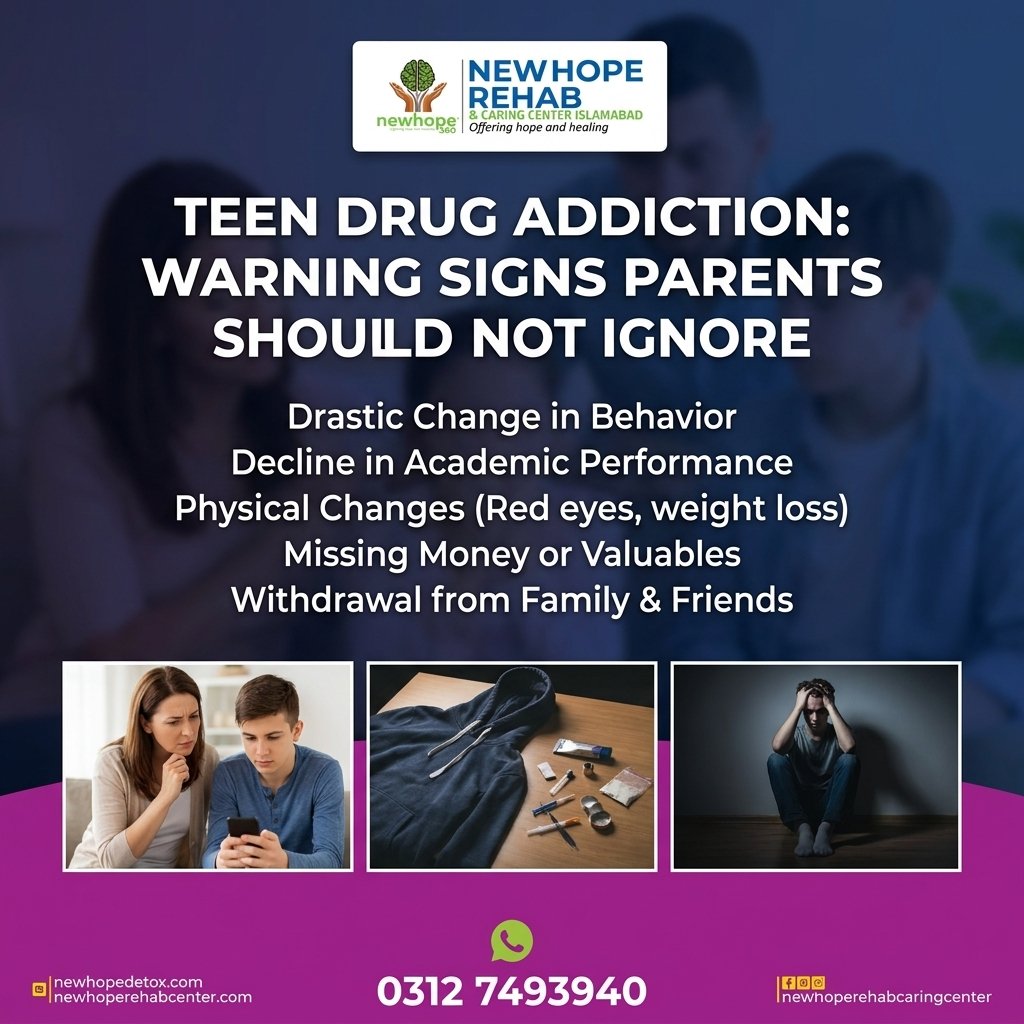
Teen drug addiction can develop gradually, and the early warning signs are not always obvious. Changes in mood, behavior, school performance, friendships, or daily routines may be dismissed as normal teenage behaviour. However, when several changes happen together or become more severe, they may indicate a substance use problem that needs attention. Understanding the warning signs of teen drug addiction can help parents respond early. Early support may reduce health risks, prevent addiction from becoming more severe, and help a teenager access appropriate treatment and mental health care. What Is Teen Drug Addiction? Teen drug addiction refers to a pattern of compulsive drug use in an adolescent despite negative consequences. It can involve substances such as cannabis, opioids, stimulants, sedatives, prescription medications used without medical direction, or multiple substances. Teenagers may be particularly vulnerable because the brain continues developing throughout adolescence. Peer pressure, stress, trauma, mental health conditions, family difficulties, and easy access to substances can contribute to problematic drug use. Experimentation does not always mean addiction, but repeated use, loss of control, cravings, and problems at home or school should be taken seriously. Warning Signs of Drug Use in Teenagers Parents should look for patterns rather than relying on one isolated behavior. Common warning signs may include: Sudden Changes in Behavior A teenager who becomes unusually secretive, irritable, aggressive, withdrawn, or emotionally unpredictable may be experiencing a problem. Sudden changes that persist over time deserve attention. Declining School Performance Drug use can affect concentration, motivation, memory, and attendance. Falling grades, frequent absences, disciplinary problems, or losing interest in previously enjoyable activities can be warning signs. Changes in Friends and Social Circles A teenager may suddenly stop spending time with longtime friends and begin associating with a new group. Changes in social relationships are not automatically evidence of drug use, but they can be concerning when combined with other signs. Changes in Sleep and Appetite Some substances can significantly affect sleep and appetite. Sleeping much more or less than usual, staying awake at unusual hours, or experiencing major changes in eating habits may indicate a health or substance-related problem. Neglecting Personal Responsibilities Missing household responsibilities, ignoring personal hygiene, abandoning hobbies, or losing interest in sports and activities may indicate that something is wrong. Unexplained Money or Missing Belongings Repeatedly asking for money, stealing money, selling possessions, or having unexplained purchases may occur when a teenager is trying to obtain drugs. Physical Changes Depending on the substance, parents may notice bloodshot eyes, unusual pupils, poor coordination, slurred speech, unexplained injuries, changes in weight, or frequent complaints of feeling unwell. No single physical sign proves drug use, so parents should consider the overall pattern. Emotional and Mental Health Warning Signs Teen drug addiction may occur alongside anxiety, depression, trauma, ADHD, or other mental health concerns. Watch for persistent sadness, severe anxiety, hopelessness, extreme mood changes, social isolation, or significant changes in personality. Drug use can sometimes be an attempt to cope with emotional pain. At the same time, substance use can make existing mental health symptoms worse. This relationship is one reason professional assessment is important. If a teenager talks about suicide, self-harm, or wanting to die, parents should treat the situation as urgent and seek immediate professional or emergency help. Why Parents Should Not Ignore These Signs Ignoring concerning behavior does not necessarily make the problem disappear. Substance use can interfere with education, relationships, physical health, emotional development, and future opportunities. Early intervention can provide an opportunity to understand what is happening before drug use becomes more established. It can also identify underlying issues such as depression, anxiety, trauma, or family stress. How Should Parents Talk to a Teenager About Drug Use? A calm conversation is usually more productive than accusations or threats. Choose a private time when the teenager is sober and relatively calm. Explain the specific changes you have noticed and focus on concern for their health rather than immediately assigning blame. Parents can ask open-ended questions such as: “I have noticed that you have been missing school more often. Is something bothering you?” “You seem different lately, and I am worried about you. Can we talk?” “Have you been using anything to help you cope with stress?” Listening carefully can encourage a teenager to communicate honestly. Professional Assessment for Teen Drug Addiction If drug use is suspected, a healthcare professional or addiction specialist can assess the teenager’s physical health, substance use, emotional wellbeing, and family circumstances. An assessment may consider: Which substances are being used Frequency and amount of use Signs of dependence or withdrawal School and family difficulties Mental health symptoms Physical health concerns Risk of overdose or other complications Previous treatment attempts A professional assessment helps determine what level of support is appropriate. Treatment for Teen Drug Addiction Treatment should be appropriate for the teenager’s age, health, substance use, and individual circumstances. Depending on the situation, treatment may include counseling, behavioral therapies, family therapy, mental health care, medical monitoring, or treatment for withdrawal. For teenagers with co-occurring mental health conditions, addressing both substance use and mental health is important. Treating only one problem may leave the other unresolved. In some cases, a structured residential or inpatient program may be considered. Others may benefit from outpatient treatment while continuing school and family life. The Role of Family Support Family involvement can be an important part of recovery. Parents can help by establishing reasonable boundaries, maintaining communication, supporting healthy routines, and participating in recommended counseling or family therapy. Recovery is rarely an overnight process. Relapse can occur, but it does not mean treatment has failed. It may indicate that the treatment plan needs to be reassessed and strengthened. Teen Drug Addiction Treatment at New Hope Rehab and Caring Centre Islamabad New Hope Rehab and Caring Centre Islamabad provides addiction-related support and treatment services. Families concerned about teen drug use can seek a professional assessment to better understand the situation and determine suitable next steps. The most appropriate approach depends on the teenager’s substance use, physical health, mental

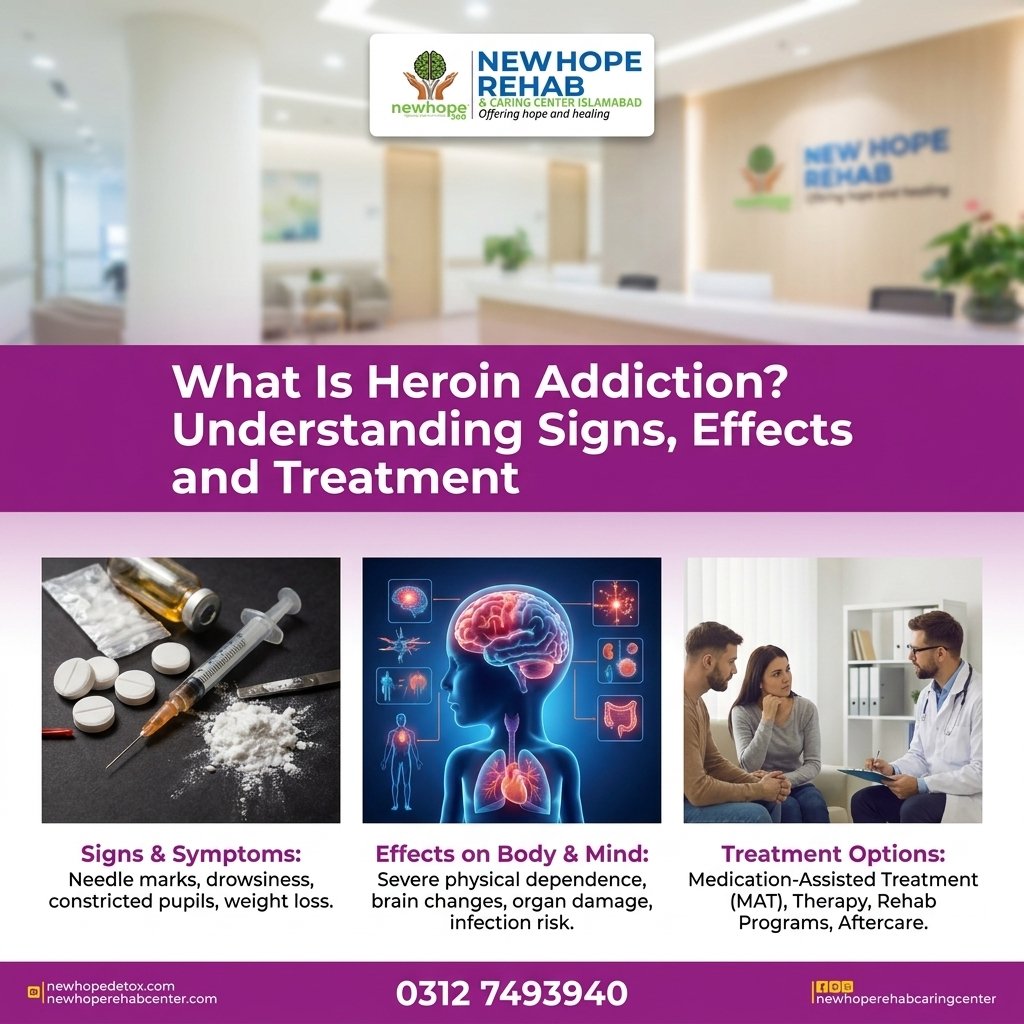
What Is Heroin Addiction? Understanding Signs, Effects and Treatment
Heroin Addiction

What Is Heroin Addiction? Understanding Signs, Effects and Treatment

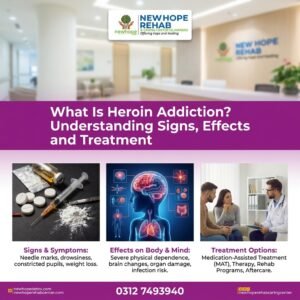
Heroin addiction is a Brain Disease that Is characterized by compulsive, or uncontrollable, drug seeking despite harmful consequences. Heroin is an opioid that creates intense feelings of pleasure and relaxation, but over time repeated use of heroin can lead to tolerance, physical dependence, cravings, and addiction. Heroin addiction can take a toll on the brain, body, mind, social life, and day-to-day functioning. Professional evaluation and treatment are important for those using heroin since opioid overdose can be deadly. New Hope Rehab and Caring Centre Islamabad offer structured help with substance use problems for Users and families affected. What Is Heroin? Heroin: Heroin is an opioid drug made from morphine. It can quickly travel to the brain and begin acting on opioid receptors that affect pain, reward, and pleasure. Heroin is a recreational narcotic that people use for its euphoric and relaxing effects. But with repeated use, the brain and body can adapt to the drug. This can lead to: Increased tolerance Strong cravings Physical dependence Difficulty controlling use Withdrawal symptoms Continued use despite negative consequences Many people will develop a dependence on heroin within the first few uses because of its highly addictive nature. What Is Heroin Addiction? Heroin use can become difficult to control and can cause many problems in a person’s life, including consequences such addiction. Clinically it’s called an opioid use disorder (OUD), Possible signs include: Consuming more or for longer than intended on heroin Strong cravings Unsuccessful attempts to stop Being away a lot of the time getting or using opioids Missing work, school or home Because of gambling Continuing to use even when it causes health and relationship issues Developing tolerance Going through heroin withdrawal once the drug is no longer used An assessment by a healthcare provider can determine if there is an opioid use disorder. Common Signs of Heroin Use Different people experience different signs of heroin addiction, and signs depend on the method being used in these ways. Possible signs include: Extreme drowsiness Slow or unclear speech Constricted pupils Reduced alertness Sudden changes in behavior Withdrawal from family and friends Changes in sleeping patterns Neglect of personal responsibilities Frequent requests for money Increased secrecy In some cases, the injection marks can be seen Not all heroin addicts will show these signs, so they shouldn’t be relied on solely to diagnose the addiction. Effects of Heroin Addiction Effects of long-term heroin use on health Potential consequences include: Increased risk of overdose Respiratory problems Constipation and gastrointestinal problems Physical dependence Malnutrition Infections Vein damage from injection Higher risk of blood born infection when using shared injecting equipment Having depression and other mental health issues Relationship and financial problems The dangers are greater still when heroin is taken with alcohol, benzodiazepines or other drugs that also slow down breathing. Heroin Overdose One of the effects it has on the body is suppression of breathing that is controlled by the brain. Therefore, an overdose can in that sense be fatal. Possible overdose signs include: Very slow or stopped breathing Inability to wake the person Extreme drowsiness Very small pupils Limp body Pale, clammy, or bluish skin Suspected opioid overdose — considered medical emergency Immediately call emergency medical services. When given appropriately, this opioid overdose reversal medication can quickly reverse the effects of an opioid and potentially save a person’s life. Heroin Withdrawal Individuals who are physically dependent on heroin may experience withdrawal symptoms when they cease using the drug. Common symptoms include: Anxiety Restlessness Muscle and bone aches Sweating Runny nose Watery eyes Insomnia Abdominal cramps Nausea Vomiting Diarrhea Strong cravings Opioid withdrawal itself is rarely life-threatening, but it can be ghastly and is intricately tied to the chance of resuming opioid use again. Opioid tolerance reduces after a period of abstinence. This means that going back to a previously taken dose can lead you to overdose. Professional Heroin Addiction Treatment Heroin addiction treatment should be tailored to the needs of each patient. To include medical care, medication, counseling, behavioral therapy, family support and continuing recovery services depending on their unique situation. Medical Assessment A professional assessment can examine: Heroin-use pattern Other substance use Physical health Mental health Previous withdrawal experiences Previous treatment Current medications Overdose risk Withdrawal Management Healthcare providers can give adequate treatment for opioid withdrawal. If the clinical situation allows, medication-based treatment is an option. Medication Treatment Medications for opioid use disorder that are evidence based include methadone and buprenorphine. Similarly, Naltrexone is sometimes used in those who have already been treated for opioid withdrawal and meet the relative clinical criteria. Medications prescribe and monitored by the specialist health professional. Counseling and Behavioral Therapy Therapy provides the tools to help people learn triggers, cope with cravings, deal with emotional challenges and have a relapse-prevention plan. Dual Diagnosis and Heroin Addiction They may also suffer from depression, anxiety, trauma-related conditions or other mental health problems along with their heroin abuse. A substance use disorder with a co-occurring mental health condition is referred to as a dual diagnosis. Integrated treatment can treat both disorders at the same time, including psychiatric evaluation, counseling, behavioral therapy, medication if needed and ongoing support. Family Support Heroin addiction is not just an individual plight- its devastation will ripple out to the whole family. There will be fear, there will be stress about having to help them and things such as finance or even panic on which way I should go. Family counseling and education can assist loved ones: Understand opioid addiction Recognize overdose warning signs Encourage professional treatment Establish healthy boundaries Avoid enabling harmful behavior Support recovery routines Families too must seek professional help for their own well-being when required. Relapse Prevention and Recovery Heroin addiction is a condition that can be treated, but often requires prolonged care. A relapse-prevention plan can include: Continuing appropriate treatment Managing cravings Identifying personal triggers Avoiding high-risk situations Building supportive relationships Addressing mental health concerns Maintaining healthy routines Attending follow-up appointments For situations where it is indicated, training in the use of

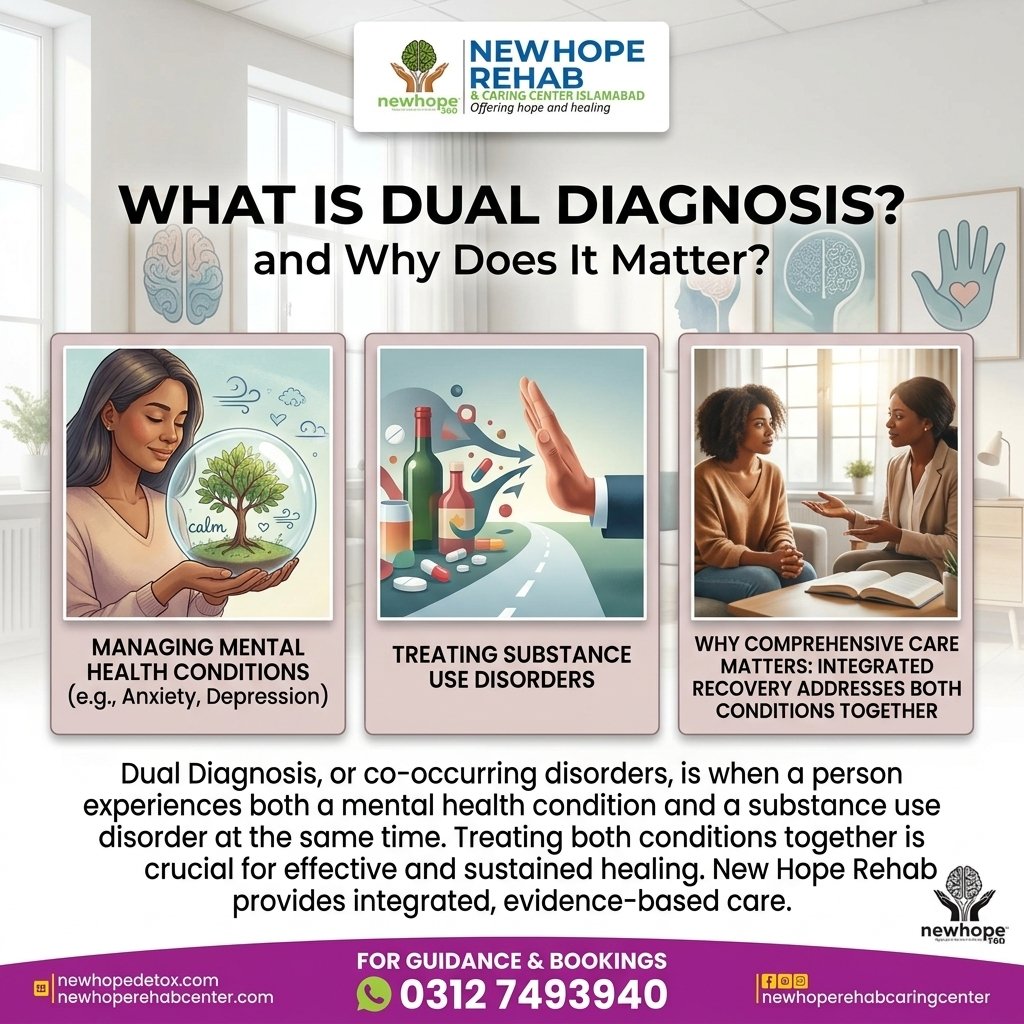
What Is Dual Diagnosis and Why Does It Matter?
Dual Diagnosis

What Is Dual Diagnosis and Why Does It Matter?

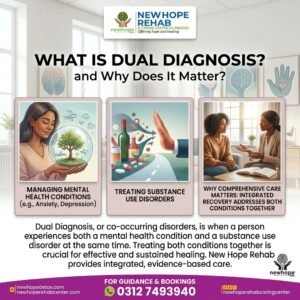
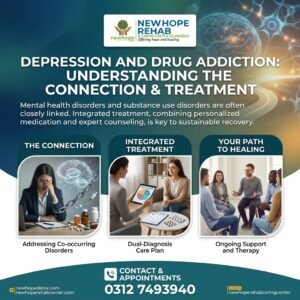
Dual diagnosis refers to the presence of both a mental health condition and a substance use disorder in the same person. It is also commonly described as a co-occurring disorder. These conditions can influence each other and may make diagnosis, treatment, and recovery more complex. For example, a person may experience depression while struggling with alcohol addiction, or anxiety alongside drug addiction. In some cases, substance use may worsen existing mental health symptoms. In others, untreated psychological problems may contribute to continued substance use. Understanding dual diagnosis matters because treating only addiction or only mental health symptoms may leave important recovery needs unresolved. New Hope Rehab and Caring Centre Islamabad provides structured addiction and mental health support for individuals and families dealing with substance-use and psychological concerns. What Does Dual Diagnosis Mean? Dual diagnosis does not refer to one specific combination of conditions. It can involve many different mental health and substance-use disorders. Examples include: Depression and alcohol use disorder Anxiety and drug addiction Bipolar disorder and substance use disorder Post-traumatic stress disorder and alcohol addiction Trauma-related symptoms and drug use Psychotic disorders and substance use Other mental health conditions occurring alongside problematic substance use The two conditions can develop independently or influence one another over time. Why Do Mental Health and Addiction Occur Together? There is no single explanation for why someone develops co-occurring conditions. Several factors may contribute, including: Shared Risk Factors Genetics, trauma, chronic stress, social circumstances, and environmental factors can increase the risk of both mental health problems and substance use. Self-Medication Some people use alcohol or drugs to temporarily manage sadness, anxiety, trauma symptoms, insomnia, or other emotional difficulties. Although substance use may provide short-term relief, it can create additional problems over time. Effects of Substance Use Repeated use of certain substances can contribute to changes in mood, sleep, anxiety, perception, and behavior. In some people, substance use may worsen existing mental health symptoms. Mental Health Conditions and Addiction Some individuals with untreated mental health conditions may be more vulnerable to developing problematic substance use, particularly when they lack effective coping strategies or appropriate support. Common Signs of a Dual Diagnosis Symptoms vary depending on the conditions involved. Possible warning signs include: Persistent sadness or hopelessness Excessive anxiety or panic Major changes in sleep Social withdrawal Irritability or mood instability Difficulty concentrating Strong cravings Increasing substance use Neglect of responsibilities Continued substance use despite negative consequences Changes in behavior or personality Paranoia or unusual perceptions These symptoms do not automatically indicate dual diagnosis. A qualified healthcare professional should conduct an appropriate assessment. Why Dual Diagnosis Can Be Difficult to Identify Substance use and mental health symptoms can overlap. For example, sleep problems, anxiety, irritability, depression, or changes in concentration may occur during substance intoxication or withdrawal as well as during a psychiatric disorder. Professionals may therefore need to consider: When symptoms first appeared Whether symptoms existed before substance use How symptoms change during periods without substance use Which substances are involved Frequency and quantity of use Previous mental health history Family history Current medications Physical health A detailed assessment can help distinguish substance-related symptoms from an independent or co-occurring mental health condition. Why Treating Dual Diagnosis Matters Treating only one condition can leave the other untreated. For example, if someone receives addiction treatment but significant depression remains unaddressed, depressive symptoms may continue to affect motivation, coping, and relapse risk. Similarly, treating depression without addressing ongoing substance use may make it difficult to achieve stable mental health. Integrated treatment aims to address both conditions as part of a coordinated recovery plan. What Does Dual Diagnosis Treatment Include? Treatment varies according to individual needs, but may include several components. Comprehensive Assessment The process generally begins with an assessment of substance use, mental health, physical health, medications, and recovery circumstances. Withdrawal Management If physical dependence is present, medically appropriate withdrawal management may be necessary. Withdrawal from alcohol or certain sedative medications can be dangerous and may require medical supervision. Psychiatric Care A qualified mental health professional may evaluate symptoms and determine whether psychiatric medication or other mental health interventions are appropriate. Individual Counseling Therapy can help individuals explore emotional difficulties, substance-use triggers, coping patterns, relationships, and recovery goals. Behavioral Therapy Evidence-informed behavioral approaches can help people recognize unhealthy thought and behavior patterns and develop more effective coping strategies. Relapse Prevention A dual diagnosis treatment plan should consider mental health triggers as well as substance-related triggers. Dual Diagnosis and Medication Some people with co-occurring mental health conditions may benefit from medication. The appropriate medication depends on the diagnosis, symptoms, physical health, current substance use, and other medications. Medication should be prescribed and monitored by a qualified healthcare professional. People should not stop psychiatric medication suddenly without medical advice. Family Support in Dual Diagnosis Treatment Mental health problems and addiction can affect the entire family. Family education and counseling may help relatives understand: The relationship between addiction and mental health Warning signs of relapse Healthy communication Appropriate boundaries How to encourage treatment How to avoid enabling harmful behaviors Families can be an important source of support, but they should not be expected to manage serious psychiatric or addiction problems without professional assistance. Relapse Prevention for Co-Occurring Disorders Relapse prevention can be more effective when it considers both substance use and mental health. A personalized plan may include: Identifying emotional and substance-use triggers Continuing mental health treatment Attending addiction counseling Taking prescribed medication as directed Maintaining healthy sleep and daily routines Managing stress Building supportive relationships Avoiding high-risk environments Seeking professional help when warning signs appear Recovery is an ongoing process, and treatment plans may need to change as a person’s circumstances change. When Dual Diagnosis Requires Urgent Help Some mental health and substance-use situations require immediate professional or emergency assistance. Urgent help is especially important when someone: Has suicidal thoughts or intentions Has seriously harmed themselves Presents an immediate danger to themselves or others Experiences severe psychosis Becomes severely confused or disoriented Experiences a serious medical reaction or overdose