+92 312 7493940

Opioids Addiction – opioids addiction in Pakistan, Islamabad

Abstract Opioid misuse is a global public health challenge – Pakistan has not been insulated from this concern. There is greater prevalence of physical dependence and emotional suffering as a result of the rising use of prescription painkillers, heroin and synthetic opioids. Families can easily feel helpless in the face of a loved one caught in addiction, but recovery is achievable with the proper guidance and professional assistance.

New Hope Rehab and Caring Centre Islamabad offer loving form of support for people with opioid dependent at an affordable pricing. In this article, we will discuss the causes, symptoms, dangers and available treatment options for opioids addiction Islamabad Pakistan (also in detail analysis of pain management antibiotics), as well as some on-going types of research to treat chronic diseases which are strongly correlated with opioid use disorder.

Understanding Opioid Addiction

Opioids are class of drugs that are usually used to relieve pain. These drugs are prescription medications like morphine, codeine and oxycodone as well as illegal drugs such as heroin. Though opioids can be used to manage extreme pain under medical supervision, their misuse can spiral rapidly into dependency.

Addiction is a disorder characterized by the inability to stop using opioids in spite of adverse consequences. With time, the brain starts using these materials to regular operation and it becomes tough to stop without expert assist.

The desire to take Opioids and Overdose of Opioids in Islamabad, Pakistan involves both physical and psychological dependence which affects almost all aspects like daily activity, relationships with friends and family members, work performance, mental health etc.

Common Causes of Opioid Dependency

Opioid addiction can be the result of many factors. By knowing these causes, families and caregivers are better equipped to help each other.

Medical Use of Painkillers

Some start following surgery, injury or for chronic pain treatment. Repeat use leads to tolerance and dependence

Emotional and Mental Health Challenges

Higher the level of Stress, anxiety, depression, trauma and emotional pain leads to drug abuse. And for some, using opioids is a way to stop the emotional pain.

Peer Pressure and Social Environment

When some people see other drug users whether in circles of friends or a community then that greatly influences those who would like to try drugs and subsequently start using them again.

Genetic and Family History

Family history of addiction might enhance the risk of vulnerability to substance dependence.

New Hope Rehab and Caring Centre Islamabad take treatment to the next level – by addressing not only addiction but also emotional factors which can keep individuals from achieving true, long-term healing.

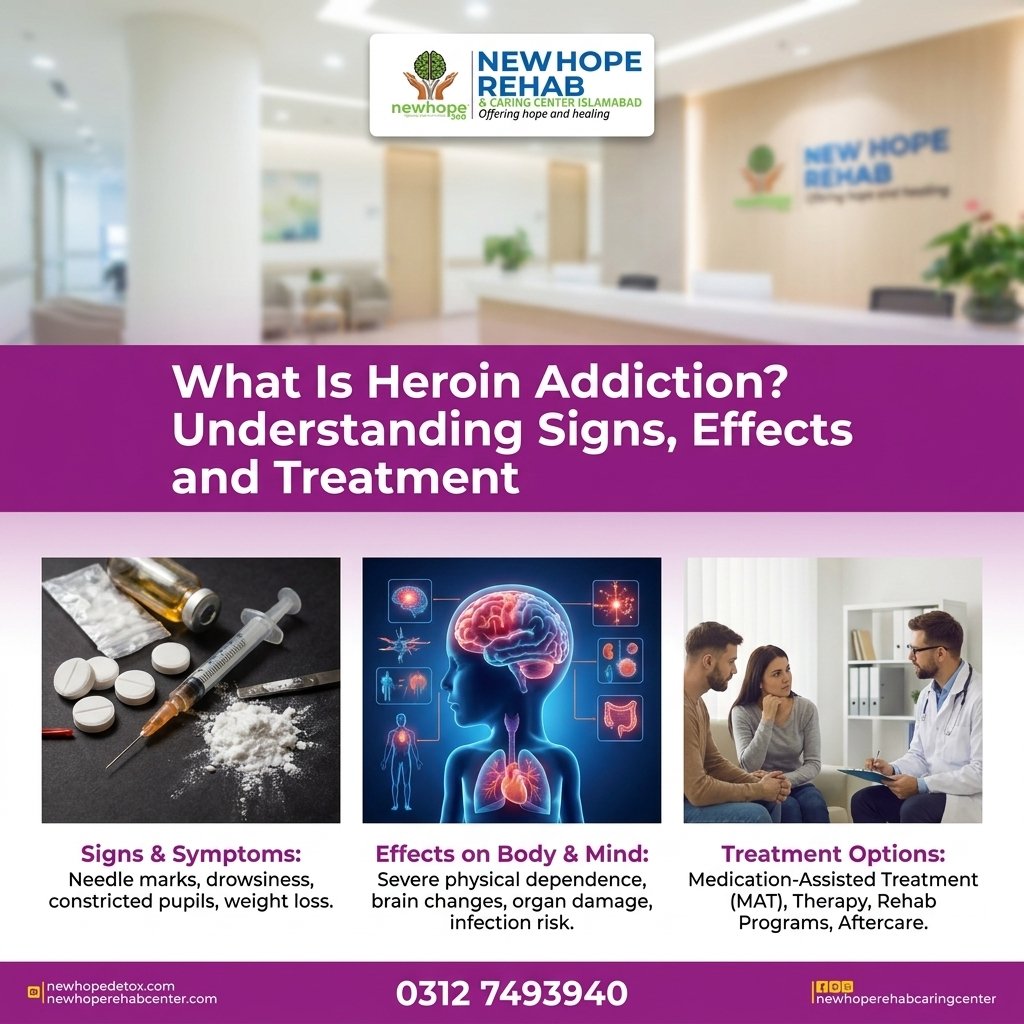
Recognizing the Signs and Symptoms of an Opioid Addiction

Being able to identify the red flags early can prevent serious complications. Symptoms will depend on the type and dosage of opioid that is used.

Physical Symptoms

  • Drowsiness and fatigue
  • Slurred speech
  • Slow breathing
  • Weight loss
  • Poor hygiene
  • Nausea and constipation
  • Increased tolerance to drugs

Behavioral Symptoms

  • Secretive behavior
  • Financial problems
  • Isolation from family and friends
  • Loss of interest in responsibilities
  • Frequent mood swings

Psychological Symptoms

  • Anxiety and irritability
  • Depression
  • Cravings for opioids
  • Difficulty concentrating

Withdrawals embezzle high minds, which is notable in persons who have been compulsively treating Opioids turnover homeostasis at hospitals like within Pakistan Islamabad Managing people withdrawing since their opioids make them number one scene interpreted from a hospital recon structural organization.

Health Hazards of Opioid Abuse

Opioid addiction very much impacts on physical and especially psychological health over a long-term basis in extreme, overdose may be fatal.

Respiratory Problems

Opioids shut down breathing, and in doing so mind create or death by asphyxiation from decreased oxygen levels in the blood.

Mental Health Disorders

Depression, anxiety disorders, and instability are often what comes along with addiction.

Risk of Overdose

Some doses of opioid can lead to an absolutely inert air from the body, especially in case they are combined with alcohol or other drugs.

Family and Social Impact

Often addiction destroys bonds, causes financial failing ballast and traps you in a less-than-ideal life.

Expert opioids addiction treatment in Islamabad, Pakistan works to minimize these dangers while also helping patients redefine their lives and thereby develop a healthier way of living.

The Importance of Professional Treatment

When chronic users of these opiates have tried to quit without help, they usually fail because the withdrawal symptoms and drug cravings are so severe. These programs include medical care, mental health support, and avoidance of relapse.

New Hope Rehab and Caring Centre Islamabad create the treatment program as per the needs of their patients while observing dignity, privacy and respect.

Treatment Options for Opioid Addiction

Opioids Addiction – opioids addiction in Pakistan, Islamabad

Treatment for opioid dependency frequently necessitates several phases of treatment. Treatment is successful with medication, therapy and lifestyle changes.

Medical Detoxification

Detox Many treatment programs begin with detox. The body is cleansed of the opioids, and medical staff supervise for a safe withdrawal process.

Withdrawal symptoms may include:

  • Muscle pain
  • Sweating
  • Restlessness
  • Insomnia
  • Anxiety
  • Nausea

Having the procedure done with medical supervision minimizes discomfort and increases safety while healing.

Counseling and Therapy

Therapy is useful in educating you about the emotional and behavioral basis of addiction. Common approaches include:

  • Cognitive Behavioral Therapy (CBT)
  • Individual counseling
  • Group therapy
  • Family counseling

These therapies help patients develop coping tools and emotional resilience.

Mental Health Support

In addition to the opioid’s addiction, many of people are also suffering from some type of mental health issues in Islamabad, Pakistan. Integrated care offers therapy for anxiety, trauma, depression and emotional stress in addition to treatment for addiction.

Relapse Prevention Programs

Just because detox has been completed does not mean recovery is over. You have to provide long-term support in this way so that the patient does not relapse. These structured aftercare programs help the individual with maintaining focus on what their recovery objectives are.]

Family Support During Recovery

Substance use is a family disease. Through a healthy and educated process, family support can be one of the strongest elements in recovery.

Families are also encouraged to attend counseling sessions at New Hope rehab and Caring Centre Islamabad for better communication between each other so that they could understand and heal together from traumas.

Supportive family involvement may help:

  • Reduce feelings of isolation
  • Encourage accountability
  • Build healthier relationships
  • Strengthen motivation for recovery

The Healthier Life We Live After Recovery

People typically make significant changes in their daily lives when they are recovering from addiction. Building healthy habits allows for stable emotions to eventually take hold and places you in an ideal position to prevent relapse.

Important recovery habits include:

  • Regular exercise
  • Balanced nutrition
  • Healthy sleep patterns
  • Stress management
  • Positive social support
  • Avoiding high-risk environments

Opioids addiction In Islamabad, Pakistan a guided support system provides people recovering from with continuous motivation.

Why Early Intervention Matters

The sooner you identify signs of opioid addiction the better ability there is to heal from it. Postponing treatment is likely to expose patients to significant adverse health outcomes and psychological distress.

Never to be Ignored Warning Signs Getting help sooner rather than later affords a chance at restoration of control over your life before the physical, mental, or social aspect of addiction gets out of hand.

FAQs About Opioid Addiction

1.     What are opioids?

Opioids are medications used to relieve pain. They cover prescription medicines and illicit drugs such as heroin.

2.     Can opioid addiction be treated successfully?

Yes, from professional treatment, counseling and prolonged support to ensure recovery stay sober.

3.     What are common withdrawal symptoms?

The withdrawal symptoms can be anxiety, body aches, sweating, insomnia, nausea and extreme cravings.

4.     How long does recovery take?

Recovery varies for each individual. While for others it may be long-term support, while some people need few weeks of treatment.

5.     Is my family involved in the treatment process?

Healthy family support does help as you may communicate better and heal emotionally faster and recover well.

Conclusion

Opioid addiction is a condition that affects almost every aspect of a person but can be treated with the right care and counseling. Knowing the signs, risk factors, and treatment options empowers individuals and families to make educated choices regarding seeking help.

New Hope Rehab and Caring Centre Islamabad Pakistan provide supervised opioid addiction recovery treatment programs for patients who need drug treatment in the cities of Murree, Abbottabad, Peshawar and Lahore. You cannot give this person the life that they dearly wish to have, but with sufficient levels of care and support you may be able to facilitate a pathway towards a far healthier lifestyle, enabling them to cope.

Related Article

Detoxification – Detoxification Treatment in Islamabad, Pakistan
Detoxification

Detoxification – Detoxification Treatment in Islamabad, Pakistan

Detoxification is often the first stage of treatment for people who have developed physical dependence on alcohol, drugs, or certain medications. It is the process through which the body adjusts to reducing or stopping a substance. Depending on the substance and level of dependence, withdrawal can range from uncomfortable to medically dangerous. For individuals searching for Detoxification Treatment in Islamabad, Pakistan, understanding what detox involves can help families make informed decisions. Detox should not be viewed as a complete cure for addiction. Instead, it is generally a stabilization stage that may prepare an individual for ongoing rehabilitation, counseling, and recovery support. At New Hope Rehab and Caring Centre Islamabad, detoxification can be considered as part of an individualized treatment plan based on a person’s substance use, physical health, mental health, and withdrawal risks. What Is Detoxification? Detoxification, commonly called detox, involves managing the physical and psychological effects that may occur when a person reduces or stops using a substance after regular use. Withdrawal symptoms depend on several factors, including: The substance being used Amount and frequency of use Duration of substance use Physical dependence Overall health Other medications or substances being taken Previous withdrawal experiences Because these factors vary, detox shouldn’t follow the same process for every individual. Why Medically Supervised Detox May Be Important Some withdrawal syndromes can cause serious complications. Alcohol and benzodiazepine withdrawal, for example, can sometimes result in seizures, severe confusion, or other medical emergencies. Opioid withdrawal is usually not life-threatening by itself, but it can involve significant physical discomfort, dehydration, intense cravings, and psychological distress. Reduced opioid tolerance after detox can also increase overdose risk if a person returns to previously tolerated doses. Medical supervision allows professionals to assess symptoms and respond appropriately when complications develop. Common Withdrawal Symptoms Withdrawal symptoms vary considerably, but may include: Anxiety or irritability Sweating Tremors Nausea or vomiting Muscle aches Headaches Sleep disturbances Restlessness Changes in appetite Strong cravings Low mood More serious symptoms can occur with certain substances. Anyone experiencing seizures, severe confusion, loss of consciousness, breathing difficulties, chest pain, or another medical emergency needs urgent medical attention. The Detoxification Process Initial Assessment A professional assessment is an important starting point. Healthcare providers may review the individual’s substance use history, medical conditions, medications, mental health, previous withdrawal experiences, and current symptoms. This information helps determine whether detox can be managed in an appropriate setting or whether a higher level of medical care is needed. Withdrawal Management During withdrawal, professionals may monitor physical and psychological symptoms and provide appropriate supportive care. In some circumstances, medications may be used to manage specific withdrawal symptoms or reduce health risks. Medication decisions should be made by qualified healthcare professionals and shouldn’t be based on a generic detox schedule. Stabilization As acute withdrawal symptoms become more manageable, attention can shift toward ongoing addiction treatment. This transition is important because completing detox alone doesn’t address the underlying causes of substance use. Detoxification for Different Substances Alcohol Alcohol withdrawal can become medically dangerous in people with significant dependence. Professional assessment is particularly important before abruptly stopping heavy or prolonged alcohol use. Opioids Heroin and other opioids can cause physical dependence. Withdrawal may involve muscle aches, gastrointestinal symptoms, restlessness, insomnia, and cravings. Evidence-based opioid use disorder treatment may include medications such as buprenorphine or methadone when clinically appropriate. Benzodiazepines Regular benzodiazepine use can result in physical dependence. Abrupt discontinuation can cause serious withdrawal, including seizures in some cases. A carefully supervised reduction may be appropriate for certain individuals. Stimulants Stopping drugs such as cocaine or crystal methamphetamine can result in fatigue, sleep changes, depressed mood, irritability, and cravings. Supportive care and behavioral treatment are important parts of recovery. Detox Is Only the Beginning One of the most important things to understand about detoxification is that it doesn’t treat every aspect of addiction. Addiction can involve learned behaviors, emotional difficulties, social circumstances, cravings, and mental health conditions. After detox, individuals may benefit from: Individual counseling Cognitive Behavioral Therapy (CBT) Group therapy Family support Mental health treatment Relapse-prevention planning Medication-assisted treatment when clinically appropriate Continuing care and aftercare At New Hope Rehab and Caring Centre Islamabad, treatment planning can consider these different needs according to the individual’s circumstances. The Role of Family During Detox and Recovery Families often play an important role in encouraging treatment and maintaining a supportive environment. However, relatives aren’t expected to manage withdrawal alone. Family members can help by: Encouraging professional care Providing emotional support Maintaining healthy boundaries Learning about addiction and withdrawal Participating in family counseling when appropriate Supporting continuing treatment Professional guidance can help families understand how to provide constructive support without unintentionally enabling substance use. Frequently Asked Questions (FAQs) 1. What is detoxification? Detoxification is the process of managing the physical and psychological effects that can occur when a person reduces or stops using a substance after regular use. 2. Is detoxification the same as addiction treatment? No. Detox primarily addresses withdrawal and stabilization. Ongoing addiction treatment may be needed to address behavioral, psychological, and social factors associated with substance use. 3. Can detox be done safely at home? It depends on the substance, level of dependence, health status, and withdrawal risk. Some withdrawal syndromes can be dangerous, so professional assessment is important before attempting detox at home. 4. How long does detoxification take? There is no universal timeframe. Withdrawal can vary depending on the substance, duration of use, amount used, physical health, and individual response. 5. What happens after detox? Depending on individual needs, continuing treatment may include counseling, behavioral therapy, family support, mental health care, relapse prevention, medication when clinically appropriate, and aftercare. Conclusion Detoxification Treatment in Islamabad, Pakistan can be an important first stage for individuals experiencing physical dependence on alcohol, drugs, or certain medications. Because withdrawal risks differ significantly, detox should be approached with appropriate professional assessment and medical supervision when necessary. At New Hope Rehab and Caring Centre Islamabad, detoxification can form part of a broader, individualized recovery plan that considers physical health, mental health,

Online Treatment Sessions – Online Treatment Sessions in Islamabad, Pakistan
Online Treatment Sessions

Online Treatment Sessions – Online Treatment Sessions in Islamabad, Pakistan

Access to healthcare can sometimes be difficult for people who have work responsibilities, mobility limitations, family commitments, or concerns about visiting a treatment facility. Online Treatment Sessions in Islamabad, Pakistan can provide a practical way for some individuals to connect with qualified professionals through secure remote communication. Online treatment may be useful for selected mental health and addiction-related concerns, particularly when a person is medically stable and does not require continuous supervision. It isn’t suitable for every situation, especially emergencies or severe withdrawal. A professional assessment can help determine whether remote care is appropriate. At New Hope Rehab and Caring Centre Islamabad, online sessions may support individuals who need counseling, psychological guidance, recovery education, or continuing care while remaining at home. What Are Online Treatment Sessions? Online treatment sessions are healthcare or counseling appointments conducted remotely through digital communication. Depending on the person’s needs and the services available, sessions may involve psychological counseling, addiction recovery support, family guidance, or follow-up care. Remote treatment can be particularly useful when in-person attendance isn’t practical. However, online care should complement appropriate medical treatment rather than replace emergency services or necessary face-to-face assessment. Who May Benefit From Online Treatment? Online treatment may be considered for individuals who are clinically stable and able to participate safely from home. It may be useful for people seeking support for: Anxiety and stress Depression Addiction recovery Relapse prevention Smoking or nicotine dependence Family-related concerns Recovery after residential treatment Certain co-occurring mental health and substance-use concerns Suitability depends on the individual’s symptoms, medical needs, safety, privacy, and access to appropriate support. Online Addiction Treatment and Recovery Support Addiction recovery often involves continuing psychological and behavioral support. Online sessions can provide a convenient way to maintain contact with a counselor or treatment professional. Depending on the treatment plan, sessions may address: Craving Management Individuals can learn techniques for recognizing cravings and responding to them without returning to substance use. Trigger Identification Counseling can help identify people, places, emotions, and situations that may increase the risk of substance use. Relapse Prevention Online sessions may help individuals review their recovery goals, recognize early warning signs, and strengthen coping strategies. Behavioral Therapy Approaches such as Cognitive Behavioral Therapy (CBT) may be used when clinically appropriate to address unhelpful thoughts and behaviors. Online Mental Health Support Mental health concerns can sometimes occur alongside addiction. Anxiety, depression, trauma-related symptoms, and other psychological difficulties may require ongoing attention. Online counseling can provide a structured environment for discussing emotional concerns, developing coping skills, and monitoring changes in symptoms. However, severe psychiatric symptoms may require in-person assessment or a higher level of care. Benefits of Online Treatment Sessions For appropriate patients, remote care can offer several practical benefits. Convenience People may attend sessions without traveling to a treatment facility, which can make regular appointments easier to maintain. Continuity of Care Online appointments can help some individuals remain connected with treatment professionals after completing residential or intensive care. Family Participation When clinically appropriate and with the necessary consent, family members may participate in selected online counseling sessions. Privacy and Familiarity Some people feel more comfortable discussing sensitive concerns from a familiar environment. A private room and secure communication method are important for confidentiality. Limitations of Online Treatment Online treatment isn’t appropriate for every clinical situation. It may not be sufficient when a person has: Severe or potentially dangerous withdrawal An overdose or suspected poisoning Severe intoxication Acute psychosis Immediate risk of suicide or self-harm Serious medical complications A need for continuous monitoring These situations require urgent or in-person medical care. Individuals experiencing severe breathing difficulties, unconsciousness, seizures, serious injury, or an immediate danger to themselves or others should seek emergency medical assistance rather than relying on an online appointment. How to Prepare for an Online Treatment Session A few simple steps can improve the quality of a remote appointment: Choose a quiet and private location. Use a reliable internet connection. Keep relevant medication information available. Be prepared to discuss current symptoms honestly. Avoid using alcohol or recreational drugs immediately before a session. Make sure a trusted person can be contacted if additional support is required. Confidentiality should be discussed with the healthcare professional, particularly when sensitive information is being shared online. Online Treatment as Part of Continuing Care Recovery is often a long-term process rather than a single event. Online sessions may provide useful continuing support for people who have already completed detoxification or residential treatment. Follow-up care can focus on maintaining healthy routines, managing stress, addressing cravings, monitoring mental health, and responding to changing recovery needs. At New Hope Rehab and Caring Centre Islamabad, online support can be considered as part of an individualized care plan when appropriate. Frequently Asked Questions (FAQs) 1. What are Online Treatment Sessions? Online treatment sessions are remote appointments that allow individuals to communicate with healthcare or mental health professionals through digital communication. 2. Can online sessions help with addiction recovery? They may support counseling, behavioral therapy, relapse prevention, recovery education, and follow-up care for suitable individuals. They don’t replace emergency or medically necessary in-person treatment. 3. Can family members join an online session? Family participation may be possible when clinically appropriate and when the patient provides the necessary consent. 4. Are online sessions suitable for drug or alcohol withdrawal? Not always. Withdrawal can sometimes become medically dangerous, particularly with alcohol and certain medications. A healthcare professional should assess the appropriate level of care. 5. Can online treatment replace residential rehabilitation? For some stable individuals, remote care may be useful as part of treatment or continuing care. Others may require residential or medically supervised treatment based on their clinical needs. Conclusion Online Treatment Sessions in Islamabad, Pakistan can make selected counseling and continuing-care services more accessible to individuals who are medically and psychologically suitable for remote treatment. They can support addiction recovery, mental health care, family counseling, and relapse-prevention work. At New Hope Rehab and Caring Centre Islamabad, online sessions can form part of an individualized treatment approach when appropriate. The priority

Best Rehab Center – Best Rehab Center in Islamabad, Pakistan
Best Rehab Center

Best Rehab Center – Best Rehab Center in Islamabad, Pakistan

Finding the Best Rehab Center in Islamabad, Pakistan is an important decision for individuals and families dealing with addiction or related mental health concerns. Rehabilitation is not simply about stopping alcohol or drug use. Effective care may also involve understanding the reasons behind substance use, managing withdrawal safely, developing healthier coping skills, repairing relationships, and preparing for long-term recovery. In New Hope Rehab and Caring Centre Islamabad –patients receive evidence-informed person-centered care, in a respectful environment. Explanation: Treatment is best started with a professional assessment, as everyone’s situation is unique and there are no universal procedures. How to Treat Someone in a Rehab Center Families determine what “best” means to them. An appropriate rehab center would take into consideration a lot patient safety, skilled healthcare employees to manage them, ethical therapy for patients who struggle with addiction and maintain confidentiality when treating patients and focus on personalized remedy choices. Important factors to consider include: Competent normal therapy clusters furthermore emotional wellness executives Appropriate assessment and treatment planning Safe withdrawal management when required Individual and group counseling Mental health support Family involvement Relapse-prevention planning Continuing care and aftercare Respectful and non-stigmatizing treatment These questions include what types of substances are treated and whether the facility can treat medical or psychiatric needs that may require more intensive treatment. Rehabilitation Center for The Treatment of Addiction Addiction can relate to alcohol, opioids, stimulants, cannabis, prescription medications or other substances. That treatment should be informed by the drug in question and the condition of individuals. Alcohol Addiction Cravings, loss of control over drinking, tolerance and withdrawal are aspects of alcohol use disorder. Substantial or continued liquor use may well be hazardous and bring about withdrawal ailments; as a result, clinical evaluation must always precede cessation of hasty weight loss plans. Opioid Addiction Physical dependence and powerful cravings occur from heroin and other opioids. Therapy may consist of withdrawal management, behavioral therapy, and when clinically appropriate evidence-based medications including buprenorphine or methadone. ICE and Crystal Meth Addiction It cited methamphetamine, which is know to be a potent stimulant impact sleep patterns, mood or behavior, cardiovascular health and wellbeing, as well as psychological effects. Management often focuses on behavioral and psychological therapies, supportive care, and relapse prevention. Cannabis Addiction Cannabis is sometimes thought to be less harmful than other substances, but cannabis can submit some people to developing cannabis use disorder (CUD). Rather, counseling and behavioral methods can assist with managing the problematic use and its triggers. The Importance of Detoxification Detox is typically the first step of addiction treatment, but it does not equal rehab. Detox is when the body has to adapt to lower or no use of drugs. Withdrawal symptoms depend upon the type of substance and level of dependence. This is especially true for withdrawal from alcohol, benzodiazepines and other substances linked to potentially severe complications requiring medical supervision. An appropriate rehab center must consider the risk of withdrawal before prescribing a plan for detox. Mental Health and Simultaneous Interactive Diagnostic Care Dual diagnosis refers to an addiction and a mental health concern. Severe Psychological Issues You should contact a substance abuse specialist because most people with addictions also suffer from severe psychological problems such as depression, anxiety, trauma-related conditions and bipolar disorder that influence their use of substances and recovery. This is also known as a dual diagnosis or co-occurring disorder. When both issues are involved, treatment should address both, rather than treating Substance abuse only. Psychological counselling, behavior therapy, psychiatric evaluation, and proper medication may be prescribed as needed based on the clinical conditions. Counseling and Behavioral Therapy Most rehabilitation programs include some form of counseling. Individual therapy allows people to dig deeper into exploring: Substance-use triggers Emotional difficulties Family relationships Unhealthy behavioral patterns Recovery goals Cravings and high-risk situations One of the evidence-based approaches is Cognitive Behavioral Therapy (CBT), which can support someone to identify maladaptive thoughts and create healthy coping mechanisms. Group therapy encourages peer support and chances to learn by observation of others with similar challenges. Family Support in Rehabilitation Addiction does not only impact the individual but the family as well. Others might be tense, anxious or angry, and some may not even know how to respond. The family support programme may include education concerning addiction, counselling, communication training and help in setting up healthy boundaries. Dates Very few family involvement can be involved at the facility like New Hope Rehab and Caring Centre Islamabad When appropriate, and when part of an individual’s overall treatment plan made by a health professional in-charge, ensuring privacy is NOT infringed. Relapse Prevention and Aftercare Just because rehabilitation is over doesn’t mean that recovery has ended. Triggers Specific To Opposite Sieve returning to prior environments, unmanaged stress, problems with mental health or exposure sub[planning to substance Good textual triggers put the user at risk for trousers(relapse reserves). A continuing-care plan may include: Follow-up counseling Trigger identification Craving-management strategies Family support Healthy routines Mental health care Peer support Relapse-prevention planning On the off chance that you have a relapse; it tends to be an opportunity for proficient re-evaluation. And because their needs change, the treatment plan might have to be changed too. How to Choose the Right Rehab Center for You Instead of labelling facilities, families comparing rehab options need to ask if the facility is ethical and providing proper care. Useful questions include: Are treatment plans individualized? Are qualified healthcare professionals involved? How are withdrawal risks assessed? Is mental health evaluated? Is family participation available? What aftercare do you have? If a patient requires more extensive medical care? These questions give families additional information to make a more educated choice. Frequently Asked Questions (FAQs) 1.     FINDING THE BEST REHAB CENTER IN ISLAMABAD, PAKISTAN Considerations include trained staff, personalized treatment programs, the attentive and reasonable medical setting, psychological support and family therapy — expert relapse prevention strategies, privacy preservation even after treatment has ceased — continuity of care. 2.     Is a detox enough to treat addiction? Detox is often only

Relapse Control Program – Relapse Control Program in Islamabad, Pakistan
Relapse Control Program

Relapse Control Program – Relapse Control Program in Islamabad, Pakistan

Recovery from addiction doesn’t necessarily end when a person completes detoxification or rehabilitation. Returning to substance use can happen during recovery, particularly when cravings, stress, emotional difficulties, social pressure, or familiar environments create challenges. A structured Relapse Control Program in Islamabad, Pakistan can help individuals understand their personal triggers and develop practical strategies for maintaining recovery. Relapse should be viewed as a health and treatment concern rather than a personal failure. Early support can help identify what contributed to a setback and whether the recovery plan needs to be adjusted. At New Hope Rehab and Caring Centre Islamabad, relapse prevention can be incorporated into individualized addiction and mental health care. What Is a Relapse Control Program? A relapse control program is a structured approach designed to help people maintain recovery from substance use and respond appropriately to warning signs. Depending on individual needs, the program may include: Individual counseling Behavioral therapy Craving management Trigger identification Family support Mental health care Lifestyle planning Continuing treatment Aftercare and follow-up The goal isn’t to promise that relapse can never occur. Instead, treatment focuses on reducing risk, strengthening coping skills, and ensuring that individuals know when and how to seek additional support. Why Does Relapse Happen? Relapse can have many contributing factors. It isn’t always caused by a single event. Common risk factors may include: Emotional distress Anxiety or depression Family conflict Social pressure Exposure to previous drug-use environments Unmanaged cravings Poor sleep Isolation Overconfidence about recovery Returning to old routines Untreated mental health conditions Understanding these factors can help individuals create a realistic and personalized prevention plan. Recognizing Early Warning Signs Relapse may develop through changes in thoughts, emotions, and behavior before substance use actually occurs. Potential warning signs include: Increasingly thinking about substance use Romanticizing previous drug or alcohol use Avoiding counseling or support Isolating from supportive people Returning to high-risk social environments Increased irritability or anxiety Neglecting healthy routines Stopping prescribed or recommended treatment Believing that occasional substance use would be harmless Recognizing these signs early provides an opportunity to seek professional support before the situation becomes more serious. How a Relapse Control Program Works Individual Assessment A relapse-prevention plan should be based on the individual’s history and circumstances. Professionals may assess substance use, previous relapses, mental health, family relationships, triggers, and current support systems. Trigger Identification Triggers are situations, people, emotions, or environments that can increase cravings or the desire to use substances. Triggers may include: Stress Certain friendships Specific locations Arguments Loneliness Financial pressure Traumatic memories Celebrations or social events Understanding personal triggers makes it easier to plan safer responses. Coping Skills Counseling can help individuals develop healthier ways to respond to cravings and difficult emotions. Techniques may include relaxation exercises, problem-solving, physical activity, structured routines, and reaching out to supportive people. Cognitive Behavioral Therapy CBT can help people recognize thought patterns that contribute to substance use and replace them with more constructive responses. For example, an individual may learn to challenge thoughts such as “I can’t cope without using” and develop practical alternatives for managing stress. The Role of Family Support Family members can play an important role in recovery when their involvement is appropriate. A family support component may help relatives: Understand addiction and relapse Recognize warning signs Communicate without unnecessary judgment Establish healthy boundaries Encourage treatment participation Avoid behaviors that unintentionally enable substance use At New Hope Rehab and Caring Centre Islamabad, family involvement can be included when clinically appropriate and consistent with the individual’s treatment plan and privacy. Mental Health and Relapse Prevention Depression, anxiety, trauma, and other mental health concerns can affect relapse risk. Some individuals may return to substance use as an attempt to cope with difficult emotions. For this reason, relapse prevention may need to address both substance use and mental health. Integrated care can help individuals identify emotional triggers and develop healthier coping strategies. If someone develops severe depression, psychosis, suicidal thoughts, or an immediate risk of harming themselves or someone else, urgent professional or emergency assistance is necessary. Aftercare and Long-Term Recovery Relapse prevention works best when it continues beyond the initial rehabilitation period. An aftercare plan may include: Regular counseling Follow-up assessments Family support Peer support Healthy sleep and exercise Meaningful daily activities Stress-management strategies Avoidance of high-risk environments Appropriate medication management Long-term recovery is an ongoing process. Support needs may change as an individual’s circumstances change. What Happens After a Relapse? A relapse doesn’t mean that treatment has failed. It can provide important information about unresolved triggers, treatment gaps, or changing circumstances. After a relapse, professional reassessment can examine: What happened before substance use occurred? Which emotional or environmental triggers were present? Was treatment or aftercare interrupted? Are there untreated mental health concerns? Does the individual require a different level of care? The treatment plan can then be adjusted according to the person’s needs. Frequently Asked Questions (FAQs) 1. What is a Relapse Control Program? It is a structured recovery service that helps individuals identify relapse risks, manage cravings, develop coping skills, and maintain continuing support after addiction treatment. 2. Does relapse mean that recovery has failed? No. Relapse can indicate that additional support or changes to a treatment plan may be needed. Professional reassessment can help identify contributing factors. 3. How can someone prevent relapse? Identifying triggers, maintaining treatment, developing healthy routines, managing stress, avoiding high-risk situations, and staying connected with supportive people can help reduce relapse risk. 4. Can families participate in relapse prevention? Yes. When appropriate, families can learn about warning signs, communication strategies, healthy boundaries, and ways to provide constructive support. 5. How long should relapse prevention continue? There is no universal timeframe. Continuing support can be adjusted according to the individual’s substance use history, mental health, recovery progress, and personal circumstances. Conclusion A Relapse Control Program in Islamabad, Pakistan can provide valuable ongoing support for individuals working to maintain recovery from addiction. By identifying triggers, strengthening coping skills, addressing mental health concerns, involving supportive family members, and maintaining aftercare, individuals can better