+92 312 7493940

Smoking Addiction – Smoking Addiction in Islamabad, Pakistan

Like Smoking Addiction main particular help, a drug that will undoubtedly be used almost any globe and addicted to cigarette but extremely tough admixture for the individual. It does not just impact physical health; it impacts mental health and daily life. Nicotine is an extremely addictive substance, and if a person has been smoking for some time, the habit may already be established as part of their lifestyle but quitting can be harder. Professional help for Smoking addiction in Islamabad, Pakistan can be the structured guidance and support needed for a healthy new life.

That’s why New Hope Rehab and Caring Centre Islamabad provide individuals with evidence-based approaches that address the physical and psychological aspects of smoking addiction. To allow those that suffer to come off smoking in a safe, non-judgement atmosphere almost naturally by taking small steps toward a smoke free life.

Understanding Smoking Addiction

Nicotine dependency is the purest form of addictive smoking addiction. Nicotine is a chemical in tobacco that works on the reward system of your brain, giving you a feeling of relief and pleasure that only lasts for a while. The body grows addicted to nicotine within the time, creating that it is hard to kick the habit without assist.

Some of the common indicators for smoking addiction include:

  • Strong cravings for cigarettes
  • Immutable response against harm despite knowledge of hazards
  • Feeling tensed or nervous without smoking
  • Increased tolerance over time

In Islamabad, Pakistan an organized program for Smoking addiction helps a person understand these patterns and work on them accordingly.

Health Risks Associated with Smoking

In fact, smoking has very serious long-term consequences for health. It affects nearly every organ in the body and raises the risk of many serious illnesses.

Physical Health Risks

  • Chronic cough and difficulty in breathing
  • Increased risk of heart disease
  • Reduced immune function
  • Long-term lung damage

Mental and Emotional Impact

In addition to this, smoking addiction can have impact on your mental health because excess stress, anxiety and dependency are crucial aspects that also are the part of drinking habit.

New Hope Rehab and Caring Centre Islamabad provides training to individuals on such risks, which ultimately directs them to get a progressive lifestyle.

Why Professional Help is Important

Smoking Addiction – Smoking Addiction in Islamabad, Pakistan

It is hard to quit smoking without help, due to the withdrawal symptoms and behavioral habits. Structure of professional treatment maintains these challenges under control.

1.     Medical and Behavioral Support

The clinical method of Smoking Addiction in Islamabad, Pakistan contains the quantity of medical and behavioral treatment to cope with dependency.

2.     Personalized Treatment Plans

The way smoking addiction affects individuals is very different from person to person. With personalization, treatment will fit specific needs and challenges.

3.     Safe Management of Withdrawal Symptoms

Withdrawal symptoms, including mood swings, insomnia, and cravings can become overwhelming on your own. Professional support assists those who suffer to do so safely.

Effective Treatment Approaches

A well-rounded program incorporates different approaches to aid recovery.

Cognitive Behavioral Therapy (CBT)

CBT Builds Your Skills to Identify Triggers and Replace Them with Healthy Coping Skills It targets thought processes and behaviours associated with tobacco use.

Counseling and Emotional Support

Individual counselling sessions offer a private environment to talk about issues, confidence in quitting

Lifestyle Modification

In addition to this, addiction is also overcome due to the good and healthy habits one adopts. This includes:

  • Regular physical activity
  • Balanced nutrition
  • Stress management techniques

At New Hope Rehab and Caring Centre Islamabad, these methodologies form an essential part of the treatment plans to aid recovery.

Benefits of Quitting Smoking

The benefits of quitting smoking are both immediate and long term.

Short-Term Benefits

  • Improved breathing and energy levels
  • A better sense of taste and smell
  • Reduced stress levels over time

Long-Term Benefits

  • Lower risk of chronic diseases
  • Improved heart and lung health
  • Enhanced overall quality of life

Your structured Pakistani smoking addiction program assists for takes place in for achieve these avoided for gradual.

Family and Social Support Elements

This type of initiative can also provide much-needed support from family when people want to stop smoking. Quantitative encouragement and understanding from loved ones simplify the process.

Families can help by:

  • Offering emotional support
  • Encouraging healthy habits
  • Out of the triggers in his house climate

Family engagement is encouraged at all levels to extend recovery outcomes, and family members are an integral part of treatment here at New Hope Rehab and Caring Centre Islamabad.

Preventing Relapse

Often people relapse when they quit smoking. Managing your triggers is half the battle and if you want to be happy (and successful) for the long term, you need to learn how.

Effective strategies include:

  • Identifying high-risk situations
  • Practicing stress management techniques
  • Seeking ongoing support and counseling
  • Maintaining a structured daily routine

Relapse prevention is an essential aspect of Smoking addiction programs in Islamabad; Pakistan aimed at sustaining the process.

Frequently Asked Questions (FAQs)

1.     What causes smoking addiction?

The majority of lap smoking addiction are due to a dependence on tobacco nicotine which has an effect on the brain reward system.

2.     No one teaches you how to stop smoking for life

And yes, you can give up smoking for good if you get the help and stick to it!

3.     What are common withdrawal symptoms?

Some examples are cravings, irritability, anxiety and lack of concentration.

4.     When will my smoke addiction go away?

Timeline differs between individuals as well, primarily per severity of dependence and method towards recovery.

5.     Can Therapy Stop Me from Smoking?

Therapy teaches you about what triggers you, and how to cope in a healthier way.

Conclusion

The addiction to smoking can cause a great deal of damage both physically and mentally, although quitting is very much achievable through guidance. This structure and the tools to help manage cravings, push through struggles, and establish healthier habits can all be offered by professional care.

New Hope rehab and caring center Islamabad provides total care with love for the males & females Smoking addiction in Islamabad Pakistan. Centered on behavioral therapy, mental use, and aftercare preventing relapse procedures, smokers can also move towards a smoke-free and wellness-driven future.

 

Related Article

Drug Detoxification in Pakistan — What You Should Know to Get Well
Drug Addiction

Drug Detoxification in Pakistan — What You Should Know to Get Well

When a person decides to stop taking an addictive substance, drug detoxification is often the first significant step. Drug Detoxification in Pakistan aids in the managing of withdrawal whilst your body repairs itself and become adjusted to living with less or no substance. But detox is more than just halting drugs. Withdrawal can range from uncomfortable to medically dangerous, depending on the substance and how long it has been used, as well as the health of the person. Safe detox starts with proper assessment followed by matching addiction treatment. New Hope Rehabilitation | Caring Centre Islamabad offers structure for people and families who are working to overcome substance use as a means of recovery. What Is Drug Detoxification? Drug detoxification, simply known as addiction detox, refers to the complete procedure of clearing a substance from the body while monitoring and managing withdrawal symptoms. With regular use, the body & brain adapts to that presence of drugs. And thus, abruptly discontinuation can lead to not just physical but also psychological symptoms. Common withdrawal symptoms can include: Anxiety and irritability Sweating and shaking Nausea or vomiting Muscle aches Headaches Sleep problems Changes in appetite Strong drug cravings Low mood or restlessness The type and severity of withdrawal is very much dependent on the substance. Why Professional Assessment Matters Our detoxes are not the same for everyone. A healthcare provider may assess the substance used, the amount and frequency of use, past withdrawal experiences, physical health, mental health status and other medications. This evaluation determines whether an individual can get care through an outpatient program or whether they require residential or medically supervised treatment. The Medical Necessity of Drug Detoxification Certain types of withdrawal can even become serious. Long-term use of alcohol and some sedating drugs, such as benzodiazepines, can lead to potentially life-threatening withdrawal syndromes if their use is suddenly terminated. Opioid withdrawal (opioid withdrawal syndrome), e.g. withdrawal from heroin or other opioids, is usually not immediately life-threatening in itself but can be severe and increase the risk of opioid relapse. Tolerance can drop during an opioid-free period, meaning someone who relapses by returning to a dosage they previously took could overdose. Methamphetamine, for example, produces a severe “crash” marked by fatigue, sleep deprivation, movement changes and depression — not to mention significant cravings. Long story short, the potential danger in detoxing alone. What is Drug Detoxification — What Happens During Drug. The detox process is unique to the individual and the drug in question. There could be multiple phases to the professional way in a program seniormost. Initial Medical and Psychological Assessment They may go over the following prior to withdrawal management beginning: Substance use history Current medications Physical health Mental health symptoms Previous treatment experiences Withdrawal history Risk of complications The data guides what is developed for an individual plan. Withdrawal Monitoring Staff will monitor symptoms and overall health during detox. To detect complications early and to provide suitable supportive care. In certain situations, medications can be used to address withdrawal or help avoid cravings. The choice is determined by the substance, personal history, and clinical judgement. Emotional and Psychological Support Detox can be emotionally difficult. This is easier said than done when anxiety, irritability, low mood and cravings are mixed in with the fact you have no idea what to do about work in future. Supportive counseling can guide a person to understand what they are experiencing and how to prepare for the next step in recovery. Addiction treatment is not detox A big thing to get about Drug Detoxification in Pakistan is that detox does not address the addiction itself. Detox refers to the physical process of quitting or reducing the number you use. Addiction treatment focuses on the underlying causes of addiction like trauma or mental illness and certain behaviors that lead to continued use. Following detox, the treatment and aftercare may include: Individual counseling Behavioral therapy Group support Mental health treatment Family counseling Craving-management strategies Relapse-prevention planning Continuing or aftercare support If the follow-up is not done and properly executed, the subject could stay with very good chances of return to use. The Importance of Dual Diagnosis Treatment Co-occurring disorders include depression, anxiety, trauma-related conditions or other mental health concerns in addition to substance use disorders. In this situation, both diseases should be addressed in treatment. An example could be that an individual uses drugs to cope with mental distress, and the drug use itself is making their mental health worse. Pinpointing these problems is the key to a more comprehensive recovery strategy. Provide Family Support During Detox and Recovery It is not just individuals — families are also impacted by addiction. Family members may feel anxious, angry and confused as to how best to respond. Family members may be supportive in the following ways: Encouraging professional care Avoiding judgment and unnecessary confrontation Learning about addiction and withdrawal Supporting healthy routines Maintaining appropriate boundaries Watching for warning signs Encouraging continued treatment after detox Something families need to keep in mind is that offering support does not mean doing everything for them in their recovery. The Way to Choose a Drug Detox Center in Pakistan Deciding on a detoxification facility is certainly not an easy task. An appropriate provider should focus on safety, individualized assessment and professional monitoring, and ongoing treatment rather than a quick fix. Families may ask before selecting a facility: Is medical assessment available? How are withdrawal symptoms monitored? Is a mental health program addressed in the program? What happens after detox? Is counseling included? Is family support available? Relapse Prevention Neal — what is the plan? How are emergencies handled? Those seeking structured addiction and detox-related treatment options can consider a center like New Hope Rehab and Caring Centre Islamabad for themselves or their loved ones. Frequently Asked Questions 1.     Is drug detoxification safe? Detox is the safe place when treated with the right level of supervision. The safety of detoxing off particular substances, the risk of withdrawal, medical history and personal

Drug Addiction in Pakistan: 7 Powerful Facts About Causes, Effects, Treatment and Recovery
Drug Addiction

Drug Addiction in Pakistan: 7 Powerful Facts About Causes, Effects, Treatment and Recovery

Drug addiction is a serious health and social concern that can affect people of every age and background. Drug Addiction in Pakistan can involve substances such as heroin, methamphetamine, cannabis, opioids, cocaine, prescription medicines, and other addictive drugs. Continued substance use can affect the brain and body while also creating problems at home, at work, in education, and within the wider community. Addiction is not simply a lack of willpower. It is a complex health condition that can involve changes in brain function, mental health, environment, and behavior. With professional treatment and ongoing support, many people can make meaningful progress toward recovery. What Is Drug Addiction? Drug addiction, also called a substance use disorder, occurs when a person continues using a substance despite harmful consequences. The person may develop strong cravings, lose control over use, or spend increasing amounts of time obtaining and using the drug. Some common warning signs include: Strong or frequent cravings Increasing tolerance Withdrawal symptoms after stopping or reducing use Neglecting family, work, or education Financial or legal problems related to substance use Changes in behavior or social circles Repeated unsuccessful attempts to stop Continued use despite physical or psychological harm Recognizing these signs early can encourage a person or family to seek professional help. Causes of Drug Addiction in Pakistan There isn’t one single cause of addiction. Usually, several personal, psychological, social, and environmental factors interact. Peer Pressure and Social Influence Young people may experiment with drugs because of peer pressure or a desire to fit into a particular social group. Easy exposure to substance use can make experimentation more likely. Stress, Trauma and Mental Health Chronic stress, trauma, depression, anxiety, and other mental health difficulties can increase vulnerability to problematic substance use. Some individuals initially use drugs as an attempt to escape emotional distress. Family and Environmental Factors Family conflict, poor supervision, social instability, and exposure to substance use can contribute to risk. A supportive family environment, on the other hand, can become an important protective factor. Availability and Accessibility The availability of addictive substances can influence patterns of use. Prescription medicines can also become problematic when they are misused or taken without appropriate medical supervision. Effects of Drug Addiction on Health The effects of drugs depend on the substance, dose, frequency of use, method of administration, and the person’s overall health. Possible physical effects include: Sleep disturbances Appetite and weight changes Heart and blood-pressure problems Liver or kidney complications Weakened physical health Increased risk of infections Accidental injuries Overdose Some drugs can also cause severe psychological effects, including anxiety, depression, paranoia, confusion, or psychosis. Effects on Families and Society Addiction rarely affects only one person. Families may experience emotional stress, financial difficulties, conflict, and loss of trust. Education and employment may also suffer. For this reason, effective addiction treatment benefits not only the individual but also their family and community. Drug Addiction Treatment in Pakistan Treatment should be based on an individual’s substance use, physical condition, mental health, family circumstances, and recovery goals. A professional treatment plan may include several stages. Assessment and Diagnosis The first step is usually a comprehensive assessment. Healthcare professionals may evaluate substance use patterns, withdrawal risks, physical health, psychological symptoms, and other factors that could affect treatment. This assessment helps determine whether outpatient, residential, or medically supervised care is most appropriate. Detoxification and Withdrawal Management Some substances can produce significant withdrawal symptoms when use is stopped suddenly. Depending on the substance and the person’s health, withdrawal may require medical monitoring and, in some cases, medication. Detoxification is important for managing withdrawal safely, but detox alone isn’t a complete addiction treatment. Continuing care is often needed to address cravings, behaviors, mental health, and relapse risks. Counseling and Behavioral Therapy Counseling can help individuals understand why they use drugs and identify situations that increase cravings. Evidence-informed behavioral therapies can teach practical skills for managing triggers, stress, and high-risk situations. Treatment may include individual counseling, group support, motivational approaches, and cognitive behavioral strategies. Dual Diagnosis and Mental Health Care Some people with addiction also experience depression, anxiety, trauma-related disorders, or other psychiatric conditions. This is sometimes described as a co-occurring disorder or dual diagnosis. Treating both conditions together can be important. If underlying mental health problems remain unaddressed, they may continue to create challenges during recovery. A comprehensive program should therefore consider emotional and psychological health alongside substance use. Family Support During Recovery Family involvement can make a meaningful difference when it is handled in a healthy and informed way. Families can support recovery by: Encouraging professional treatment Learning about addiction and relapse Maintaining respectful communication Setting appropriate boundaries Supporting healthy routines Avoiding behaviors that enable continued substance use Encouraging follow-up care Family members may also benefit from counseling or educational support of their own. Relapse Prevention and Long-Term Recovery Recovery doesn’t end when a person completes detox or leaves a residential program. Addiction can involve long-term changes in behavior and brain function, so continued support may be necessary. A relapse-prevention plan can include: Identifying personal triggers Avoiding high-risk environments Continuing counseling Building positive relationships Maintaining healthy sleep and exercise habits Learning stress-management techniques Attending follow-up appointments Seeking help quickly when cravings become difficult to manage A return to substance use should be taken seriously, but it doesn’t mean recovery has failed. It can indicate that the treatment plan needs to be reviewed and strengthened. Finding a Drug Rehabilitation Center in Pakistan Choosing an addiction treatment center is an important decision. Families should look for professional, ethical, individualized care rather than promises of instant or guaranteed recovery. Before selecting a facility, consider asking: Is there a medical and psychological assessment? Are withdrawal risks properly evaluated? Is counseling provided? Are co-occurring mental health conditions addressed? Is family involvement available? Does the program include relapse prevention? Is aftercare provided? How are medical or psychiatric emergencies handled? New Hope Rehab and Caring Centre Islamabad provides structured addiction recovery support for individuals and families seeking professional help in Islamabad. Frequently Asked Questions About Drug

Heroin Addiction – Effective Treatment and Recovery Support in Islamabad, Pakistan
Heroin Addiction

Heroin Addiction – Effective Treatment and Recovery Support in Islamabad, Pakistan

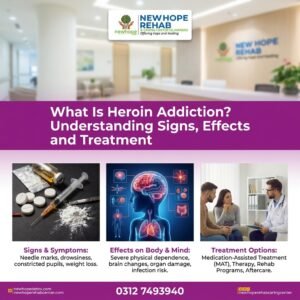
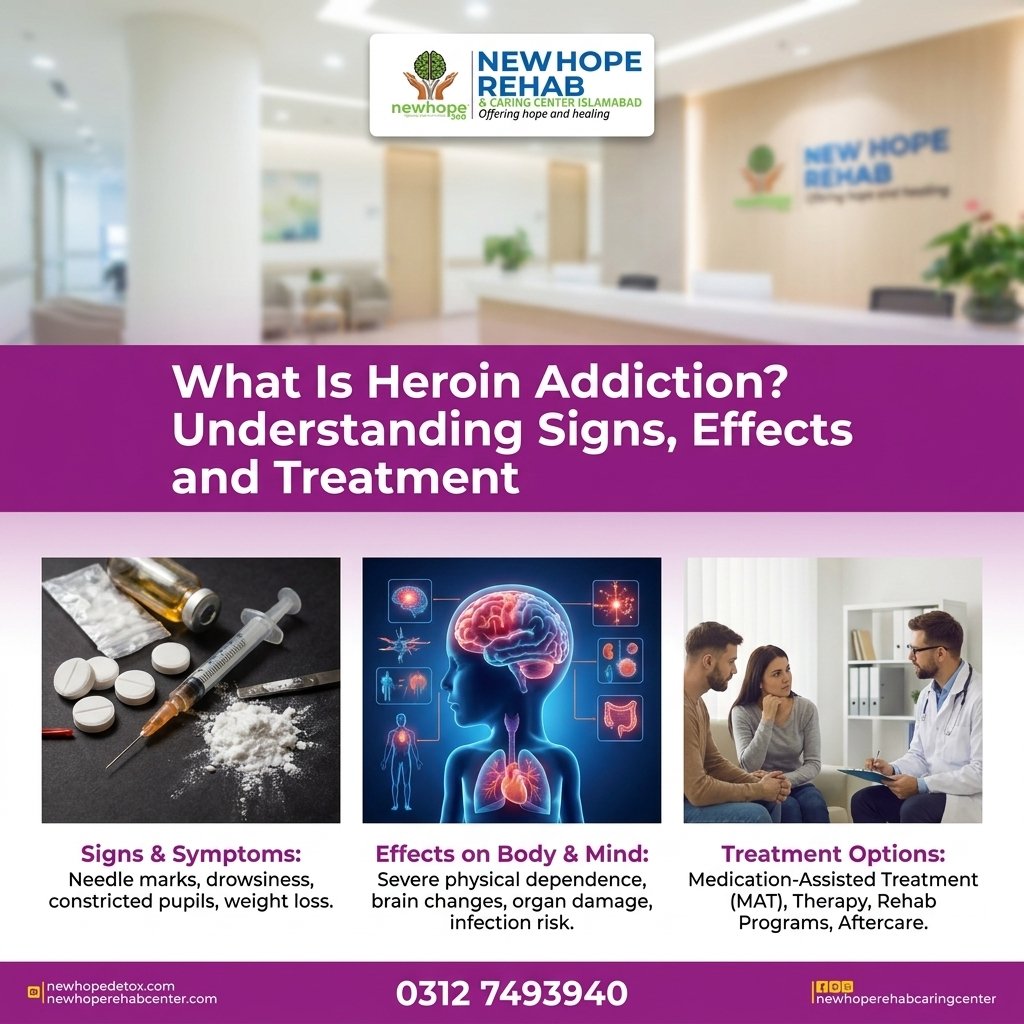
Heroin is a highly addictive opioid that can quickly affect a person’s physical health, mental well-being, relationships, and daily life. Heroin addiction may develop after repeated use as the brain becomes increasingly dependent on the drug. Over time, a person may continue using heroin even when they understand the serious harm it is causing. Professional treatment can provide a safer and more structured path toward recovery. With appropriate medical assessment, counselling, psychological support, family involvement, and relapse-prevention planning, people struggling with heroin dependence can work toward healthier and more stable lives. New Hope Rehab and Caring Centre Islamabad provides structured support for individuals and families affected by substance use disorders. What Is Heroin Addiction? Heroin is an opioid derived from morphine. It can produce feelings of pleasure, relaxation, and drowsiness, but it also carries a high risk of dependence and overdose. Repeated heroin use can lead to tolerance, meaning a person may need more of the drug to achieve the same effects. Dependence can also develop, causing withdrawal symptoms when heroin use is reduced or stopped. Possible signs include: Strong cravings for heroin Increasing tolerance or dependence Spending significant time obtaining or using the drug Neglecting work, education, or family responsibilities Changes in friends or social activities Financial difficulties Continued use despite physical or emotional problems Withdrawal symptoms when heroin is unavailable Recognizing these signs early can make it easier to seek professional help. Why Does Heroin Dependence Develop? Heroin affects brain systems involved in reward, pleasure, and pain. With repeated exposure, the brain can adapt to the drug, making it increasingly difficult for some people to stop without support. Several factors may contribute to opioid addiction, including: Repeated or prolonged opioid exposure Mental health difficulties Trauma or chronic stress Social and environmental influences Family history of substance use disorders Previous substance use Limited access to healthy coping strategies Addiction isn’t simply a matter of willpower. It is a complex health condition that can require comprehensive treatment. Heroin Addiction Treatment in Islamabad, Pakistan Treatment should be tailored to the individual’s medical, psychological, and social needs. A professional assessment can help determine the appropriate level of care. Medical Assessment and Withdrawal Management When someone who is physically dependent on heroin stops taking it, withdrawal can begin. Symptoms may include muscle aches, sweating, restlessness, nausea, diarrhea, abdominal cramps, anxiety, and strong cravings. Although opioid withdrawal is often not life-threatening by itself, it can be extremely uncomfortable and may increase the risk of returning to opioid use. Medical professionals can assess withdrawal severity and determine whether medication-assisted treatment or other medical support is appropriate. People with severe symptoms, significant health conditions, pregnancy, or other safety concerns may need a higher level of medical supervision. Counseling and Behavioral Support Stopping heroin use is only one part of recovery. Counseling can help individuals understand triggers, manage cravings, improve decision-making, and develop healthier ways to cope with stress. Therapeutic approaches may include cognitive behavioral strategies, motivational interventions, individual counseling, and other evidence-informed behavioral therapies. Treatment works best when it addresses the whole person rather than focusing only on the substance. Mental Health and Dual Diagnosis Care Heroin addiction may occur alongside depression, anxiety, trauma-related conditions, or other mental health concerns. In these situations, treating only the substance use problem may leave important recovery barriers unresolved. A comprehensive assessment can help identify co-occurring conditions. When appropriate, mental health treatment can be integrated with addiction care. This approach may help individuals better understand the connection between emotional distress, triggers, cravings, and substance use. The Importance of Family Support Heroin addiction can deeply affect parents, spouses, children, and other loved ones. Families may experience fear, frustration, financial stress, or uncertainty about what to do next. Family support can become an important part of recovery when it is balanced with appropriate boundaries. Families can help by: Encouraging professional treatment Listening without unnecessary judgment Learning about opioid addiction Supporting healthy routines Recognizing warning signs Avoiding behaviors that unintentionally enable substance use Encouraging continued treatment and follow-up Family members should also protect their own physical and emotional well-being. Overdose Awareness and Safety Heroin carries a serious risk of opioid overdose, particularly when tolerance has fallen after a period of abstinence. Using heroin after detoxification can therefore be especially dangerous. Signs of an opioid overdose can include: Very slow or stopped breathing Inability to wake the person Extreme sleepiness or unconsciousness Pinpoint pupils Pale, clammy, or bluish skin An opioid overdose is an emergency. Contact local emergency medical services immediately. Where available, naloxone can rapidly reverse an opioid overdose and should be administered according to local guidance. Relapse Prevention and Long-Term Recovery Recovery doesn’t end after detoxification. Continued support can help people maintain progress and respond to cravings or difficult situations before they become overwhelming. A personalized relapse-prevention plan may include: Identifying high-risk people, places, and situations Continuing counseling or treatment Building a reliable support system Following prescribed medications when applicable Maintaining healthy sleep and daily routines Avoiding environments associated with previous drug use Developing practical stress-management skills Seeking professional help quickly if cravings or substance use return A return to drug use should be treated as a reason to reassess the treatment plan, not as evidence that recovery is impossible. How to Choose a Heroin Treatment Center Families should look for a treatment provider that offers individualized care rather than promising a quick or guaranteed cure. Consider asking: Is there a complete medical and psychological assessment? How is opioid withdrawal managed? Are evidence-based medications available when clinically appropriate? Is counseling included? Are co-occurring mental health conditions assessed? Does the program involve families? Is relapse prevention part of treatment? What type of aftercare is available? New Hope Rehab and Caring Centre Islamabad can be considered by individuals and families looking for structured addiction treatment and recovery support in Islamabad. Frequently Asked Questions 1. Can heroin addiction be treated? Yes. Heroin addiction is treatable. A comprehensive plan may combine medication, counseling, behavioral therapies, medical monitoring, and continuing recovery support. 2. Is heroin withdrawal

ICE | METH Addiction – Powerful Treatment Options for Lasting Recovery in Islamabad, Pakistan
ICE | METH Addiction

ICE | METH Addiction – Powerful Treatment Options for Lasting Recovery in Islamabad, Pakistan

Ice (aka crystal meth or methamphetamine) is a very powerful and highly addictive stimulant that can severely impact the brain, body, social life, as well as aspects of everyday life. ICE | METH Addiction can start off with sporadic use but could lead to a full-blown substance use disorder where professional assistance is required. With the proper mix of medical intervention, counseling, therapy for behavior modification and other therapy forms coupled with family support and relapse prevention planning recovery is possible. About New Hope Rehab and Caring Centre Islamabad are providing patients with a really structured addiction recovery process within a caring atmosphere for individuals or families in need of some help. Ice or Crystal Meth Addiction? Ice is a potent central nervous system stimulant being a type of methamphetamine. It can make you full of energy, be alert, feel confident and euphoric. Nevertheless, these effects are accompanied by considerable physical and psychosocial risks. Chronic Methamphetamine Exposure Alters the Neural Circuitry of Reward At some point; the individual cannot function normally without the drug anymore. Below are twenty signs that you may be addicted to meth. Strong cravings for meth Increasing tolerance Resting for an abnormally extended amount of time Considerable weight loss or appetite changes Anxiety, irritability, or aggression Poor concentration and memory Skipping work, school or family obligations Financial or relationship problems Using despite negative consequences ICE | METH Addiction Is So Hard to Overcome: Why? Meth creates very strong psychological dependencies. Such a person might feel powerful cravings to take the drug no matter how thoroughly they understood how bad it is. Chronic use can also lead to insomnia, in addition to mood disturbances, anxiety, paranoia, and other mental health symptoms. Others may have debilitating confusion or even develop minor psychosis. This is why treatment cannot just be about stopping drug use. Lastly, you need a wider recovery plan — one that includes: Physical health Mental health Behavioral patterns Family relationships Triggers and cravings Relapse prevention Healthy daily routines The last meth addiction treatment in Islamabad, Pakistan. A comprehensive assessment typically kicks off treatment. Treatment providers will assess patterns of substance use, physical health, mental health and the individual status of their current living situation. Medical Assessment and Detox Support Once a person stops using methamphetamine, they may experience a “crash” followed by fatigue, increased appetite associated with disturbed sleep, depressed mood and strong drug cravings. Certain individuals may also have serious psychological distress. Complications can be prevented or identified with the aid of professional supervision, which will assist in determining whether such person requires a greater degree of medical care or psychiatric treatment. Counseling and Behavioral Therapy Similarly, Behavioral treatment helps in the recovery from of stimulant addiction. With support from counseling, it becomes easier to identify what triggers substance abuse, how unhealthy ways of thinking can contribute, and what skills are needed to cope in the moment with life’s stressors—a much safer way of deciding how to act when faced with a challenging situation. Cognitive-behavioral techniques may be particularly useful for understanding how to integrate thoughts, feelings, and behaviors. Mental Health Support Combination of meth addiction and mental illness This could be an indication that depression and anxiety or trauma-related symptoms, or simply needs psychiatric assessment and treatment for other causes. In cases where substance use and mental health problems co-exist, both activities are usually important components of a sustainable recovery strategy. Family Is Important for Overcoming Meth Addiction Substance abuse goes beyond what the individual abusing drugs does. Anxiety, stress, rage, or helplessness could be what parents, spouses, children and others near and dear to the heart. Family members can provide crucial and necessary emotional support, but they can also help instill boundaries. Families can learn how to: Communicate without constant confrontation Recognize warning signs of relapse Encourage professional treatment Avoid unintentionally enabling harmful behavior Support healthy routines Protect their own emotional well-being Relapse Prevention After Meth Treatment Just because someone has completed an initial programmed of treatment does not mean they have recovered. Cravings and triggers can return, especially under stress or if someone is in the presence of people, places, or events linked to a former drug use site. A relapse-prevention plan may include: Continuing counseling Identifying personal triggers Building a reliable support network Maintaining healthy sleep habits Avoiding high-risk environments Developing stress-management skills Attending follow-up appointments Getting help early when craving increases It should be taken as a sign that the recovery plan needs outlining, and not as evidence that it cannot recover. Opting for Professional Treatment of Meth Dependency Families looking for ICE | METH Addiction treatment should avoid promises of quick fixes Addiction care of quality should be tailored, evidence based, compassionate and solution focused to the longer term. These are some of the key questions to ask a treatment provider: Is there a preliminary medical and psychiatric evaluation? How are withdrawal and mental health symptoms treated? What counseling is offered? Is family support available? How is relapse prevention addressed? Is aftercare provided? What do you do with emergencies or acute psychiatric symptoms? Families dealing with substance use and associated mental health issues if you are looking for a plan rehabilitation center then new hope rehab and caring center Islamabad on will make weighted an consideration. Frequently Asked Questions 1.     What is ice addiction? Methamphetamine addiction is a type of substance use disorder characterized by the compulsive use of meth-amphetamine, also known as ice. It can escalate to compulsive use, cravings, tolerance and severe impairments in physical/mental health, social obligations and functioning. 2.     The answer is yes; a person can recover from meth addiction. Yes. Recovery is possible. It is advisable to go through a treatment programme, which can help an individual to overcome dependence on meth and the problems associated with it, learn managing skills to avoid using meth again, as well as preventing the risk of relapse. 3.     What occurs during the cessation of ice? For others, the fatigue turns to exhaustion, they sleep far more