+92 312 7493940

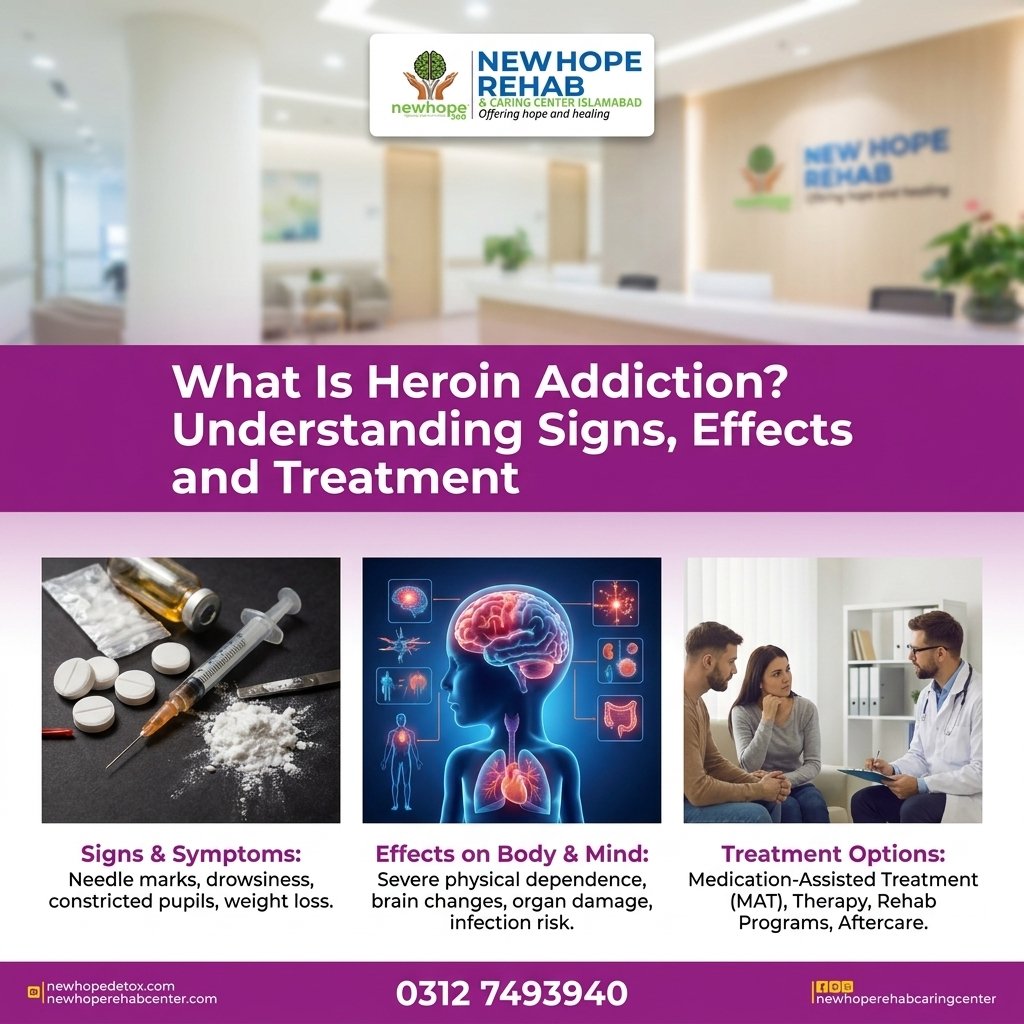
What Is Heroin Addiction? Understanding Signs, Effects and Treatment

What Is Heroin Addiction? Understanding Signs, Effects and Treatment

Heroin addiction is a Brain Disease that Is characterized by compulsive, or uncontrollable, drug seeking despite harmful consequences. Heroin is an opioid that creates intense feelings of pleasure and relaxation, but over time repeated use of heroin can lead to tolerance, physical dependence, cravings, and addiction.

Heroin addiction can take a toll on the brain, body, mind, social life, and day-to-day functioning. Professional evaluation and treatment are important for those using heroin since opioid overdose can be deadly.

New Hope Rehab and Caring Centre Islamabad offer structured help with substance use problems for Users and families affected.

What Is Heroin?

Heroin: Heroin is an opioid drug made from morphine. It can quickly travel to the brain and begin acting on opioid receptors that affect pain, reward, and pleasure.

Heroin is a recreational narcotic that people use for its euphoric and relaxing effects. But with repeated use, the brain and body can adapt to the drug.

This can lead to:

  • Increased tolerance
  • Strong cravings
  • Physical dependence
  • Difficulty controlling use
  • Withdrawal symptoms
  • Continued use despite negative consequences

Many people will develop a dependence on heroin within the first few uses because of its highly addictive nature.

What Is Heroin Addiction?

Heroin use can become difficult to control and can cause many problems in a person’s life, including consequences such addiction. Clinically it’s called an opioid use disorder (OUD),

Possible signs include:

  • Consuming more or for longer than intended on heroin
  • Strong cravings
  • Unsuccessful attempts to stop
  • Being away a lot of the time getting or using opioids
  • Missing work, school or home Because of gambling
  • Continuing to use even when it causes health and relationship issues
  • Developing tolerance
  • Going through heroin withdrawal once the drug is no longer used

An assessment by a healthcare provider can determine if there is an opioid use disorder.

Common Signs of Heroin Use

Different people experience different signs of heroin addiction, and signs depend on the method being used in these ways.

Possible signs include:

  • Extreme drowsiness
  • Slow or unclear speech
  • Constricted pupils
  • Reduced alertness
  • Sudden changes in behavior
  • Withdrawal from family and friends
  • Changes in sleeping patterns
  • Neglect of personal responsibilities
  • Frequent requests for money
  • Increased secrecy
  • In some cases, the injection marks can be seen

Not all heroin addicts will show these signs, so they shouldn’t be relied on solely to diagnose the addiction.

Effects of Heroin Addiction

Effects of long-term heroin use on health

Potential consequences include:

  • Increased risk of overdose
  • Respiratory problems
  • Constipation and gastrointestinal problems
  • Physical dependence
  • Malnutrition
  • Infections
  • Vein damage from injection
  • Higher risk of blood born infection when using shared injecting equipment
  • Having depression and other mental health issues
  • Relationship and financial problems

The dangers are greater still when heroin is taken with alcohol, benzodiazepines or other drugs that also slow down breathing.

Heroin Overdose

One of the effects it has on the body is suppression of breathing that is controlled by the brain. Therefore, an overdose can in that sense be fatal.

Possible overdose signs include:

  • Very slow or stopped breathing
  • Inability to wake the person
  • Extreme drowsiness
  • Very small pupils
  • Limp body
  • Pale, clammy, or bluish skin

Suspected opioid overdose — considered medical emergency Immediately call emergency medical services. When given appropriately, this opioid overdose reversal medication can quickly reverse the effects of an opioid and potentially save a person’s life.

Heroin Withdrawal

What Is Heroin Addiction? Understanding Signs, Effects and Treatment

Individuals who are physically dependent on heroin may experience withdrawal symptoms when they cease using the drug.

Common symptoms include:

  • Anxiety
  • Restlessness
  • Muscle and bone aches
  • Sweating
  • Runny nose
  • Watery eyes
  • Insomnia
  • Abdominal cramps
  • Nausea
  • Vomiting
  • Diarrhea
  • Strong cravings

Opioid withdrawal itself is rarely life-threatening, but it can be ghastly and is intricately tied to the chance of resuming opioid use again.

Opioid tolerance reduces after a period of abstinence. This means that going back to a previously taken dose can lead you to overdose.

Professional Heroin Addiction Treatment

Heroin addiction treatment should be tailored to the needs of each patient. To include medical care, medication, counseling, behavioral therapy, family support and continuing recovery services depending on their unique situation.

Medical Assessment

A professional assessment can examine:

  • Heroin-use pattern
  • Other substance use
  • Physical health
  • Mental health
  • Previous withdrawal experiences
  • Previous treatment
  • Current medications
  • Overdose risk

Withdrawal Management

Healthcare providers can give adequate treatment for opioid withdrawal. If the clinical situation allows, medication-based treatment is an option.

Medication Treatment

Medications for opioid use disorder that are evidence based include methadone and buprenorphine. Similarly, Naltrexone is sometimes used in those who have already been treated for opioid withdrawal and meet the relative clinical criteria.

Medications prescribe and monitored by the specialist health professional.

Counseling and Behavioral Therapy

Therapy provides the tools to help people learn triggers, cope with cravings, deal with emotional challenges and have a relapse-prevention plan.

Dual Diagnosis and Heroin Addiction

They may also suffer from depression, anxiety, trauma-related conditions or other mental health problems along with their heroin abuse.

A substance use disorder with a co-occurring mental health condition is referred to as a dual diagnosis.

Integrated treatment can treat both disorders at the same time, including psychiatric evaluation, counseling, behavioral therapy, medication if needed and ongoing support.

Family Support

Heroin addiction is not just an individual plight- its devastation will ripple out to the whole family. There will be fear, there will be stress about having to help them and things such as finance or even panic on which way I should go.

Family counseling and education can assist loved ones:

  • Understand opioid addiction
  • Recognize overdose warning signs
  • Encourage professional treatment
  • Establish healthy boundaries
  • Avoid enabling harmful behavior
  • Support recovery routines

Families too must seek professional help for their own well-being when required.

Relapse Prevention and Recovery

Heroin addiction is a condition that can be treated, but often requires prolonged care.

A relapse-prevention plan can include:

  • Continuing appropriate treatment
  • Managing cravings
  • Identifying personal triggers
  • Avoiding high-risk situations
  • Building supportive relationships
  • Addressing mental health concerns
  • Maintaining healthy routines
  • Attending follow-up appointments
  • For situations where it is indicated, training in the use of takeaway naloxone or having an emergency overdose-response plan

A return should trigger a re-evaluation and supplement of active supports—not be automatically viewed as a failure.

How to Decide on a Heroin Dependence Treatment Centre

So, you need to consider when selecting treatment and try to assess whether they will be able to offer appropriate care for opioid addiction.

Important questions include:

  • Do you offer a full and thorough medical exam?
  • Are qualified addiction professionals involved?
  • Is withdrawal risk evaluated?
  • Is there access to appropriate evidence-based medications?
  • Is counseling provided?
  • Are mental health conditions assessed?
  • Is family support available?
  • Is relapse prevention included?
  • Is continuing care available?
  • Can the facility respond to an overdose or some other emergency?

Steer clear of promises that one will definitely, or at least immediately, get better. Treatment should be individualized and based on the medical needs.

New Hope Rehab and Caring Centre Islamabad Heroin Addiction Treatment

Individuals and families facing addiction and co-occurring mental health challenges can find structured support at New Hope Rehab and Caring Centre Islamabad.

There are different components to a treatment plan, reported by your needs for addiction assessment, outpatient or inpatient withdrawal management, counseling and psychological support, family education and therapy, relapse prevention and continuing care after programs.

Individuals facing heroin addiction are also candidates for professional assessment to find the safest and most suitable level of care.

Frequently Asked Questions

1.     What is heroin addiction?

Heroin addiction is a substance use disorder characterized by compulsive heroin use, or extensive craving for the drug, and inability to control its used (addiction docs). That is most often labeled an opioid use disorder.

2.     How do you know if someone has a heroin addiction?

Indicators might include urges, growing tolerance, failed attempts to quit using heavier doses, withdrawal indications and the neglect of obligations or continued employment notwithstanding difficulties and adverse consequences attributable to heroin use — all matters which indicate a compulsive pattern of behavior around obtaining or utilizing heroin.

3.     Can heroin addiction be treated?

Yes. It may consist of medicine for opioid use disorder, withdrawal management, therapy or counseling, behavioral changes drug testing and/or mental health care along with household support and continuous healing solutions.

4.     Is heroin withdrawal dangerous?

Opioid withdrawal is not life threatening for most people, but it can be severe cumulatively causing dehydration and possible return to opioid use. Withdrawal can also be safer and more tolerable with professional support.

5.     What to do if you suspect a heroin overdose?

Suspected opioid overdoses are medical emergencies. Call emergency services; administer naloxone if trained/instructed to do so. Be with the people and don’t let them alone.

Conclusion

What Is Heroin Addiction? Heroin addiction is a devastating but treatable substance use disorder, affecting nearly every aspect of a person’s life. Heroin use becomes problematic when a person develops a tolerance, dependent on it in order to avoid withdrawal symptoms and intense cravings as well health problems such as heart infections or deterioration of the nasal membrane with overdose often being fatal.

Depending on the situation, this can include withdrawal management, the use of evidence-based medication, counseling—both individual and group—behavioral therapy, mental health care professionals working in conjunction with addiction treatment programs, family support for people in recovery and relapse prevention. The sooner you have a professional involvement, the lesser the risks and the better it is for long-term recovery.

If you are or a loved one is addicted to heroin, do not attempt to manage acute addiction on your own but rather turn toward professional substance abuse treatment. New Hope Rehab and Caring Centre Islamabad are a drug rehab, health clinic and treatment center for families.

Latest Post

Newsletter

Signup our newsletter to get free update, news or insight. 

Related Article

What Is Heroin Addiction? Understanding Signs, Effects and Treatment
Heroin Addiction

What Is Heroin Addiction? Understanding Signs, Effects and Treatment

Heroin addiction is a Brain Disease that Is characterized by compulsive, or uncontrollable, drug seeking despite harmful consequences. Heroin is an opioid that creates intense feelings of pleasure and relaxation, but over time repeated use of heroin can lead to tolerance, physical dependence, cravings, and addiction. Heroin addiction can take a toll on the brain, body, mind, social life, and day-to-day functioning. Professional evaluation and treatment are important for those using heroin since opioid overdose can be deadly. New Hope Rehab and Caring Centre Islamabad offer structured help with substance use problems for Users and families affected. What Is Heroin? Heroin: Heroin is an opioid drug made from morphine. It can quickly travel to the brain and begin acting on opioid receptors that affect pain, reward, and pleasure. Heroin is a recreational narcotic that people use for its euphoric and relaxing effects. But with repeated use, the brain and body can adapt to the drug. This can lead to: Increased tolerance Strong cravings Physical dependence Difficulty controlling use Withdrawal symptoms Continued use despite negative consequences Many people will develop a dependence on heroin within the first few uses because of its highly addictive nature. What Is Heroin Addiction? Heroin use can become difficult to control and can cause many problems in a person’s life, including consequences such addiction. Clinically it’s called an opioid use disorder (OUD), Possible signs include: Consuming more or for longer than intended on heroin Strong cravings Unsuccessful attempts to stop Being away a lot of the time getting or using opioids Missing work, school or home Because of gambling Continuing to use even when it causes health and relationship issues Developing tolerance Going through heroin withdrawal once the drug is no longer used An assessment by a healthcare provider can determine if there is an opioid use disorder. Common Signs of Heroin Use Different people experience different signs of heroin addiction, and signs depend on the method being used in these ways. Possible signs include: Extreme drowsiness Slow or unclear speech Constricted pupils Reduced alertness Sudden changes in behavior Withdrawal from family and friends Changes in sleeping patterns Neglect of personal responsibilities Frequent requests for money Increased secrecy In some cases, the injection marks can be seen Not all heroin addicts will show these signs, so they shouldn’t be relied on solely to diagnose the addiction. Effects of Heroin Addiction Effects of long-term heroin use on health Potential consequences include: Increased risk of overdose Respiratory problems Constipation and gastrointestinal problems Physical dependence Malnutrition Infections Vein damage from injection Higher risk of blood born infection when using shared injecting equipment Having depression and other mental health issues Relationship and financial problems The dangers are greater still when heroin is taken with alcohol, benzodiazepines or other drugs that also slow down breathing. Heroin Overdose One of the effects it has on the body is suppression of breathing that is controlled by the brain. Therefore, an overdose can in that sense be fatal. Possible overdose signs include: Very slow or stopped breathing Inability to wake the person Extreme drowsiness Very small pupils Limp body Pale, clammy, or bluish skin Suspected opioid overdose — considered medical emergency Immediately call emergency medical services. When given appropriately, this opioid overdose reversal medication can quickly reverse the effects of an opioid and potentially save a person’s life. Heroin Withdrawal Individuals who are physically dependent on heroin may experience withdrawal symptoms when they cease using the drug. Common symptoms include: Anxiety Restlessness Muscle and bone aches Sweating Runny nose Watery eyes Insomnia Abdominal cramps Nausea Vomiting Diarrhea Strong cravings Opioid withdrawal itself is rarely life-threatening, but it can be ghastly and is intricately tied to the chance of resuming opioid use again. Opioid tolerance reduces after a period of abstinence. This means that going back to a previously taken dose can lead you to overdose. Professional Heroin Addiction Treatment Heroin addiction treatment should be tailored to the needs of each patient. To include medical care, medication, counseling, behavioral therapy, family support and continuing recovery services depending on their unique situation. Medical Assessment A professional assessment can examine: Heroin-use pattern Other substance use Physical health Mental health Previous withdrawal experiences Previous treatment Current medications Overdose risk Withdrawal Management Healthcare providers can give adequate treatment for opioid withdrawal. If the clinical situation allows, medication-based treatment is an option. Medication Treatment Medications for opioid use disorder that are evidence based include methadone and buprenorphine. Similarly, Naltrexone is sometimes used in those who have already been treated for opioid withdrawal and meet the relative clinical criteria. Medications prescribe and monitored by the specialist health professional. Counseling and Behavioral Therapy Therapy provides the tools to help people learn triggers, cope with cravings, deal with emotional challenges and have a relapse-prevention plan. Dual Diagnosis and Heroin Addiction They may also suffer from depression, anxiety, trauma-related conditions or other mental health problems along with their heroin abuse. A substance use disorder with a co-occurring mental health condition is referred to as a dual diagnosis. Integrated treatment can treat both disorders at the same time, including psychiatric evaluation, counseling, behavioral therapy, medication if needed and ongoing support. Family Support Heroin addiction is not just an individual plight- its devastation will ripple out to the whole family. There will be fear, there will be stress about having to help them and things such as finance or even panic on which way I should go. Family counseling and education can assist loved ones: Understand opioid addiction Recognize overdose warning signs Encourage professional treatment Establish healthy boundaries Avoid enabling harmful behavior Support recovery routines Families too must seek professional help for their own well-being when required. Relapse Prevention and Recovery Heroin addiction is a condition that can be treated, but often requires prolonged care. A relapse-prevention plan can include: Continuing appropriate treatment Managing cravings Identifying personal triggers Avoiding high-risk situations Building supportive relationships Addressing mental health concerns Maintaining healthy routines Attending follow-up appointments For situations where it is indicated, training in the use of

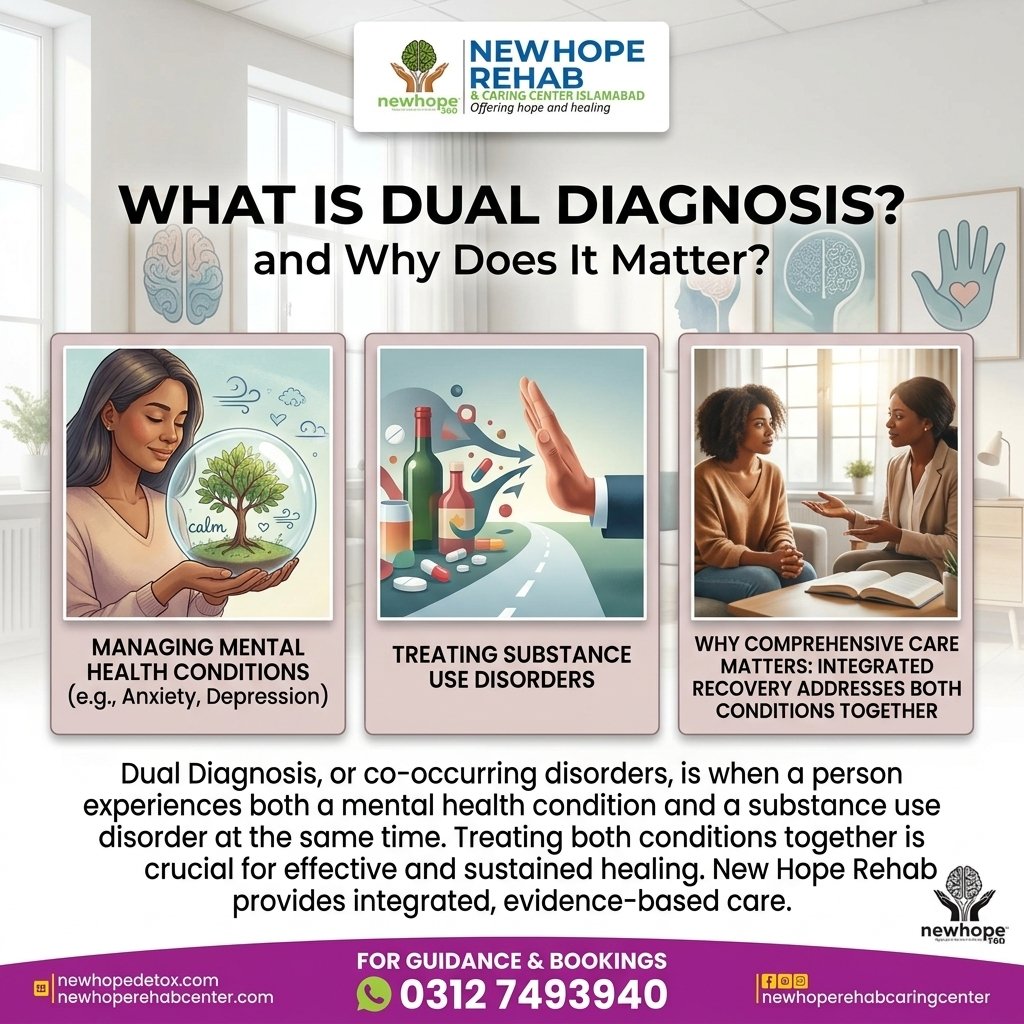
What Is Dual Diagnosis and Why Does It Matter?
Dual Diagnosis

What Is Dual Diagnosis and Why Does It Matter?

Dual diagnosis refers to the presence of both a mental health condition and a substance use disorder in the same person. It is also commonly described as a co-occurring disorder. These conditions can influence each other and may make diagnosis, treatment, and recovery more complex. For example, a person may experience depression while struggling with alcohol addiction, or anxiety alongside drug addiction. In some cases, substance use may worsen existing mental health symptoms. In others, untreated psychological problems may contribute to continued substance use. Understanding dual diagnosis matters because treating only addiction or only mental health symptoms may leave important recovery needs unresolved. New Hope Rehab and Caring Centre Islamabad provides structured addiction and mental health support for individuals and families dealing with substance-use and psychological concerns. What Does Dual Diagnosis Mean? Dual diagnosis does not refer to one specific combination of conditions. It can involve many different mental health and substance-use disorders. Examples include: Depression and alcohol use disorder Anxiety and drug addiction Bipolar disorder and substance use disorder Post-traumatic stress disorder and alcohol addiction Trauma-related symptoms and drug use Psychotic disorders and substance use Other mental health conditions occurring alongside problematic substance use The two conditions can develop independently or influence one another over time. Why Do Mental Health and Addiction Occur Together? There is no single explanation for why someone develops co-occurring conditions. Several factors may contribute, including: Shared Risk Factors Genetics, trauma, chronic stress, social circumstances, and environmental factors can increase the risk of both mental health problems and substance use. Self-Medication Some people use alcohol or drugs to temporarily manage sadness, anxiety, trauma symptoms, insomnia, or other emotional difficulties. Although substance use may provide short-term relief, it can create additional problems over time. Effects of Substance Use Repeated use of certain substances can contribute to changes in mood, sleep, anxiety, perception, and behavior. In some people, substance use may worsen existing mental health symptoms. Mental Health Conditions and Addiction Some individuals with untreated mental health conditions may be more vulnerable to developing problematic substance use, particularly when they lack effective coping strategies or appropriate support. Common Signs of a Dual Diagnosis Symptoms vary depending on the conditions involved. Possible warning signs include: Persistent sadness or hopelessness Excessive anxiety or panic Major changes in sleep Social withdrawal Irritability or mood instability Difficulty concentrating Strong cravings Increasing substance use Neglect of responsibilities Continued substance use despite negative consequences Changes in behavior or personality Paranoia or unusual perceptions These symptoms do not automatically indicate dual diagnosis. A qualified healthcare professional should conduct an appropriate assessment. Why Dual Diagnosis Can Be Difficult to Identify Substance use and mental health symptoms can overlap. For example, sleep problems, anxiety, irritability, depression, or changes in concentration may occur during substance intoxication or withdrawal as well as during a psychiatric disorder. Professionals may therefore need to consider: When symptoms first appeared Whether symptoms existed before substance use How symptoms change during periods without substance use Which substances are involved Frequency and quantity of use Previous mental health history Family history Current medications Physical health A detailed assessment can help distinguish substance-related symptoms from an independent or co-occurring mental health condition. Why Treating Dual Diagnosis Matters Treating only one condition can leave the other untreated. For example, if someone receives addiction treatment but significant depression remains unaddressed, depressive symptoms may continue to affect motivation, coping, and relapse risk. Similarly, treating depression without addressing ongoing substance use may make it difficult to achieve stable mental health. Integrated treatment aims to address both conditions as part of a coordinated recovery plan. What Does Dual Diagnosis Treatment Include? Treatment varies according to individual needs, but may include several components. Comprehensive Assessment The process generally begins with an assessment of substance use, mental health, physical health, medications, and recovery circumstances. Withdrawal Management If physical dependence is present, medically appropriate withdrawal management may be necessary. Withdrawal from alcohol or certain sedative medications can be dangerous and may require medical supervision. Psychiatric Care A qualified mental health professional may evaluate symptoms and determine whether psychiatric medication or other mental health interventions are appropriate. Individual Counseling Therapy can help individuals explore emotional difficulties, substance-use triggers, coping patterns, relationships, and recovery goals. Behavioral Therapy Evidence-informed behavioral approaches can help people recognize unhealthy thought and behavior patterns and develop more effective coping strategies. Relapse Prevention A dual diagnosis treatment plan should consider mental health triggers as well as substance-related triggers. Dual Diagnosis and Medication Some people with co-occurring mental health conditions may benefit from medication. The appropriate medication depends on the diagnosis, symptoms, physical health, current substance use, and other medications. Medication should be prescribed and monitored by a qualified healthcare professional. People should not stop psychiatric medication suddenly without medical advice. Family Support in Dual Diagnosis Treatment Mental health problems and addiction can affect the entire family. Family education and counseling may help relatives understand: The relationship between addiction and mental health Warning signs of relapse Healthy communication Appropriate boundaries How to encourage treatment How to avoid enabling harmful behaviors Families can be an important source of support, but they should not be expected to manage serious psychiatric or addiction problems without professional assistance. Relapse Prevention for Co-Occurring Disorders Relapse prevention can be more effective when it considers both substance use and mental health. A personalized plan may include: Identifying emotional and substance-use triggers Continuing mental health treatment Attending addiction counseling Taking prescribed medication as directed Maintaining healthy sleep and daily routines Managing stress Building supportive relationships Avoiding high-risk environments Seeking professional help when warning signs appear Recovery is an ongoing process, and treatment plans may need to change as a person’s circumstances change. When Dual Diagnosis Requires Urgent Help Some mental health and substance-use situations require immediate professional or emergency assistance. Urgent help is especially important when someone: Has suicidal thoughts or intentions Has seriously harmed themselves Presents an immediate danger to themselves or others Experiences severe psychosis Becomes severely confused or disoriented Experiences a serious medical reaction or overdose

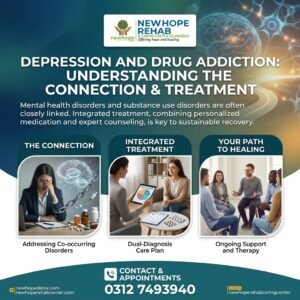
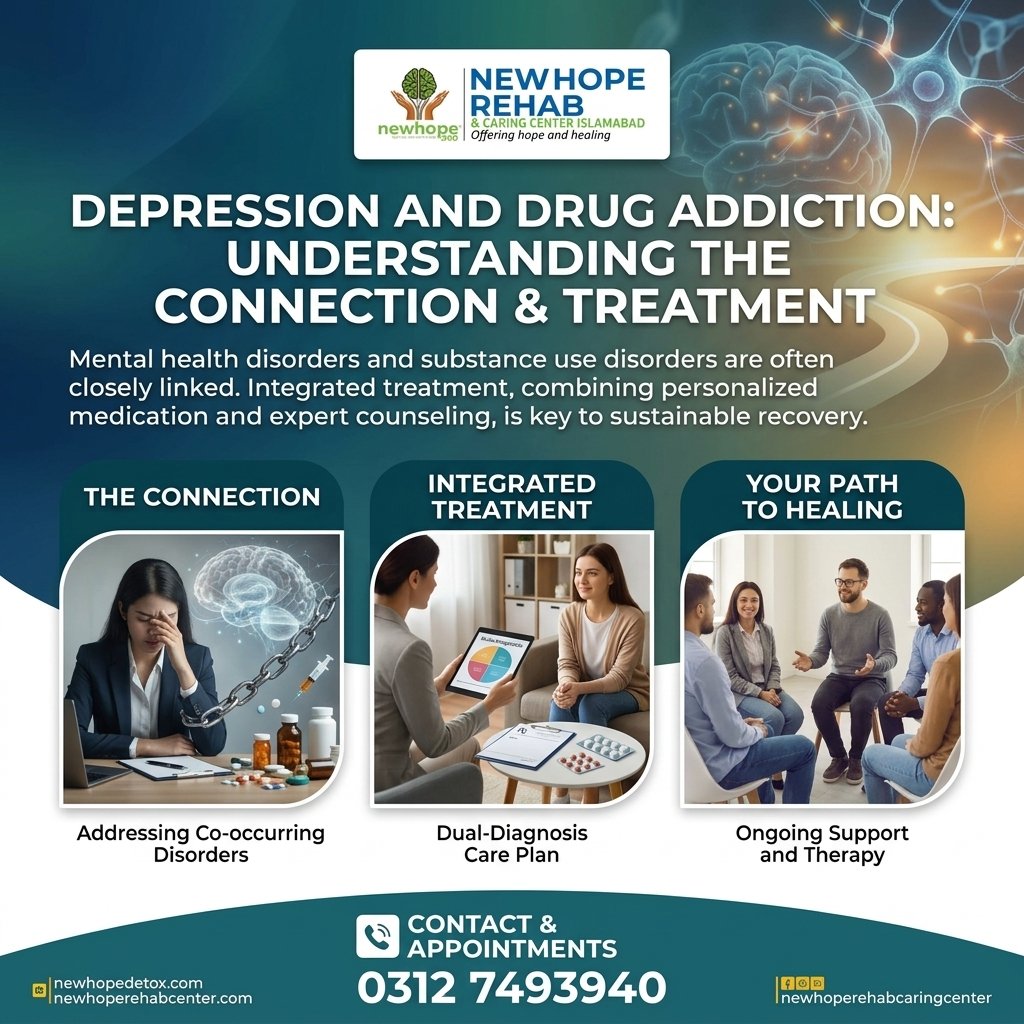
Depression and Drug Addiction: Understanding the Connection and Treatment
Depression and Drug Addiction

Depression and Drug Addiction: Understanding the Connection and Treatment

Co-occurrence of depression and drug addiction is challenging and can affect individuals physically, socially, and emotionally. While some turn to drugs during depression in an effort to escape or numb from sadness, anxiety, stressor trauma and emotional pain. In some instances, continued use of drugs may also play a role in the development or worsening of depressive symptoms. If both conditions are present treating either condition alone may fail to address important recovery needs. An integrated assessment can evaluate cooccurring substance use and mental health problems and create a personalized treatment plan. New hope rehab and caring center Islamabad is a private, professional rehabilitation center that specializes in providing organized substance-use and other mental health services for individuals with such behavioral disorders and their families. How Are Depression and Drug Addiction Related? Depression can include a range of mental health problems involved in low mood, loss of interest and changes in sleep or appetite, fatigue, trouble concentrating, thoughts of death or suicide. Substance use disorder (SUD), also known as drug addiction, is a disease characterized by compulsive drug seeking, continued use despite harmful consequences. The correlation between both could be a cocktail of complexities. Depression can precede drug use, emerge along with ongoing substance abuse or develop during withdrawal from drug use and recovery. Many factors which can drive both possibly include: Genetics and family history Trauma or prolonged stress Social isolation Environmental factors Chronic health problems Previous mental health difficulties Effects of repeated substance use A professional assessment can assist in identifying how the conditions might be interacting. How drug use can impact on depression Other substances might affect neurotransmitter activity, alter mood (adjusted within hours) or provide a short-term sense of relief. These effects may be accompanied by changes in mood, sleep, motivation and emotional stability. Substance use can progress to: Increased isolation Sleep disruption Financial and relationship problems Reduced motivation Emotional instability Increased anxiety Worsening depressive symptoms Greater dependence on the substance It depends upon the substance will you use, the amount used and how often it’s used as well as your health at the time. Is Drug Addiction a Result of Depression? Depression boarders on earliest part and not all addicts have addiction to it but some of them, who want go away from this feeling are definitely using substances. Someone who suffers from continued sad moods, for example, may be using drugs as a distraction from pain. Repeated use can become a pattern that is not easy to stop over time. This can create a cycle: Depression → use of drugs/alcohol → some short-term relief → bad consequences (big or small) → more depression ⇒ uses drug more It often takes treatment for both the mental health condition and substance-use disorder to break this cycle. Symptoms of Co-Occurring Depression and Drug Addiction Due to overlap in symptoms, identifying co-occurring conditions can be challenging. Possible warning signs include: Persistent sadness or hopelessness losing interest in usual activities Major changes in sleep Changes in appetite Social withdrawal Difficulty concentrating Strong drug cravings Increasing drug use Neglecting responsibilities Continued use despite negative consequences Irritability or mood changes Feelings of guilt or worthlessness These symptoms alone do not constitute a diagnosis. An appropriate evaluation can be performed by a qualified individual. Dual Diagnosis Treatment If a person has a depression and substance-use disorder at the same time, professionals may say that she or he has a dual diagnosis or co-occurring disorder. Management needs to address both conditions, and one should not assume that treatment of one will lead to the other resolving. A comprehensive treatment plan can entail: Psychiatric assessment Addiction assessment Counseling Behavioral therapy Medication when clinically appropriate Withdrawal management Family support Relapse prevention Continuing care The specific combination is tailored to the individualized symptoms and clinical picture of each patient. Depression Assessment During Addiction Treatment Screening for mental health should be conducted when patients are not experiencing intoxication or withdrawal, as depression may present during these phases. Professionals may assess: When depressive symptoms began Whether there had been symptoms prior to using drugs Fluctuations in mood during the abstinent window Pattern and type of substance use Previous mental health treatment Family mental health history Suicidal thoughts or self-harm risk Current medications Physical health This information may help the clinicians subsequently devise a more suitable treatment plan(s). Counseling and Behavioral Therapy Psychological treatment may simplify the explaining not only of substance use also vacantia symptoms. Therapy may focus on: Identifying triggers Managing difficult emotions Challenging unhelpful thought patterns Developing healthier coping skills Improving motivation Managing cravings Building daily routines Improving communication Preventing relapse Studies of cognitive behavioral therapies and other evidence-based therapies may be adapted to individual needs. Medication for Depression and Addiction Medication may help certain individuals dealing with depression. These treatment decisions should be made by a qualified medical professional after thorough evaluation of your symptoms, substance use, physical health and other medications. This medication can be an element of a wider treatment which includes counseling and/or addiction treatment. People do not start, stop or change psychiatric medication or addiction-related medication without guidance from a professional. Detox and Depression Withdrawal management may be a critical first step for someone who is physically dependent on drugs. But detoxification does not, by itself, treat depression or the roots of addiction. Withdrawal may also cause mood, anxiety, sleep or other psychological symptoms to worsen temporarily. Mood disorders could be treated a little better if detected early, and professional monitoring can help with this. Medically dangerous withdrawal occurs in particular with alcohol and some sedative medications. It is necessary to get a professional decision in advance of discontinuing substances when dependence is suspected. Family Support The family is not just the person with depression and addiction. Family members might not understand behavioral changes or how to help. Family-focused treatment can help relatives: Understand addiction and depression Communicate more effectively Establish healthy boundaries Recognize warning signs Avoid enabling harmful substance use Encourage appropriate professional care Support healthy recovery routines So,

Rapid Detox Treatment in Islamabad, Pakistan: What You Need to Know
Rapid Detox Treatment

Rapid Detox Treatment in Islamabad, Pakistan: What You Need to Know

Rapid Detox Treatment refers to approaches intended to manage or shorten the acute phase of withdrawal from certain substances. The term is sometimes used in connection with accelerated opioid detoxification methods, including approaches involving medications that rapidly displace opioids from their receptors. Although the idea of completing detox quickly may sound appealing, rapid detox is not appropriate for everyone and can carry significant medical risks. Detoxification should be based on an individualized medical assessment and conducted by appropriately qualified professionals. New Hope Rehab and Caring Centre Islamabad provides structured addiction treatment and recovery support for individuals and families dealing with substance-use and related mental health concerns. What Is Rapid Detox Treatment? Rapid detox generally refers to an accelerated approach to withdrawal management. In some settings, medications may be used to accelerate the onset of opioid withdrawal while the patient is medically monitored. The exact meaning of “rapid detox” varies between treatment providers. Patients should therefore ask specifically: Which substance is being treated? What medications are used? Who supervises the procedure? What level of medical monitoring is provided? What complications can occur? What treatment is provided after detox? The goal should not simply be to complete withdrawal quickly. Safe and appropriate treatment should also address the individual’s longer-term recovery needs. Who May Need Detoxification? Detoxification may be considered for people who have developed physical dependence on substances such as: Heroin Prescription opioids Other opioids Alcohol Benzodiazepines Certain other drugs The safest approach depends on the substance and the person’s medical and psychological condition. Not every person who uses drugs requires a rapid detox procedure. A healthcare professional should determine the appropriate level and type of withdrawal management. Rapid Opioid Detoxification Rapid detox has historically been associated with opioid dependence. Some accelerated approaches use an opioid antagonist, such as naltrexone, to rapidly block opioid receptors. This can cause withdrawal to begin quickly and potentially intensify symptoms. Because of this, appropriate medical supervision and careful patient selection are essential. Rapid opioid detox should not be considered a simple shortcut to recovery. Evidence and clinical guidance have raised concerns about the risks and limited long-term advantages of some accelerated detox approaches compared with established opioid withdrawal treatments. Risks of Rapid Detox Rapid withdrawal can place considerable stress on the body. Potential complications may include: Severe withdrawal symptoms Dehydration Vomiting or diarrhea Changes in blood pressure or heart rate Aspiration Electrolyte disturbances Psychological distress Complications related to anesthesia or sedation, when used The risk profile depends on the specific procedure, medications, patient health, and level of monitoring. For this reason, people should not attempt to reproduce rapid detox procedures outside a properly equipped medical setting. Medical Assessment Before Detox Before considering any accelerated detoxification procedure, a healthcare professional should evaluate the person’s overall condition. Assessment may include: Substance-use history Amount and frequency of use Last substance use Previous withdrawal experiences Physical health Heart and respiratory health Current medications Other substances being used Mental health Previous addiction treatment Current opioid tolerance, when applicable This information helps determine whether detoxification is appropriate and what level of medical supervision may be required. Rapid Detox Is Not the Same as Addiction Treatment One of the most important things to understand is that detoxification does not by itself treat addiction. After withdrawal, individuals may still experience: Cravings Psychological dependence Substance-use triggers Stress Relationship difficulties Mental health symptoms Relapse risk Long-term treatment may include counseling, behavioral therapy, medication-assisted treatment when appropriate, family support, relapse prevention, and continuing care. Treatment After Rapid Detox A recovery plan should begin before or during detox rather than waiting until withdrawal has ended. Depending on the individual’s needs, continuing treatment may involve: Counseling Therapy can help individuals understand the factors contributing to substance use and develop healthier coping strategies. Behavioral Treatment Behavioral approaches can help identify triggers, manage cravings, and change patterns associated with substance use. Medication For certain substance-use disorders, evidence-based medications may be appropriate. A qualified clinician can assess whether medication is suitable. Relapse Prevention Patients can develop a personalized plan for recognizing warning signs, avoiding high-risk situations, and seeking help when cravings increase. Family Support Education and counseling can help families understand addiction and provide constructive support while maintaining appropriate boundaries. Rapid Detox and Opioid Overdose Risk After opioid detoxification, tolerance can decrease. If a person returns to a previously used opioid dose, the risk of overdose may be higher because the body may no longer tolerate the previous amount. This makes continuing treatment and overdose-prevention education particularly important after opioid detox. People prescribed or using opioids should discuss overdose-prevention measures with a qualified healthcare professional. Rapid Detox and Mental Health Addiction can occur alongside depression, anxiety, trauma-related conditions, or other mental health problems. Mental health assessment is important when someone undergoing detox experiences: Severe depression Extreme anxiety Psychosis Suicidal thoughts Severe agitation Significant changes in behavior When substance use and mental health conditions occur together, professionals may refer to this as a dual diagnosis or co-occurring disorder. Treatment should consider both conditions when appropriate. How to Choose a Rapid Detox Treatment Centre If you are considering Rapid Detox Treatment in Islamabad, ask the treatment provider detailed questions before making a decision. Important questions include: Is a physician involved in the assessment? What type of detox procedure is being offered? What medications are used? Is continuous medical monitoring available when required? What happens if complications occur? Is emergency equipment available? Are mental health concerns assessed? What treatment is provided after detox? Is relapse prevention included? Is continuing addiction treatment available? A reputable treatment provider should explain both potential benefits and risks rather than presenting rapid detox as a guaranteed or instant cure. Rapid Detox Treatment at New Hope Rehab and Caring Centre Islamabad New Hope Rehab and Caring Centre Islamabad provides structured addiction and mental health support for individuals and families seeking professional treatment. Treatment planning can be based on the individual’s substance-use history, physical health, mental health, withdrawal risk, and recovery requirements. Depending on clinical needs, care may include assessment, withdrawal