Alcohol addiction is a serious health condition that can affect physical health, emotional well-being, family relationships, work, and everyday responsibilities. Also known as alcohol use disorder (AUD), it can develop gradually as repeated alcohol use changes the brain’s reward and stress systems. Some people may find themselves drinking more frequently or in larger amounts despite experiencing negative consequences.
For individuals and families seeking Alcohol Addiction Treatment in Islamabad, Pakistan, professional assessment and individualized care can provide an important foundation for recovery. At New Hope Rehab and Caring Centre Islamabad, treatment is approached with compassion, confidentiality, and respect for each person’s circumstances and recovery needs.
What Is Alcohol Addiction?
Alcohol addiction occurs when a person has difficulty controlling alcohol use and continues drinking despite physical, psychological, social, or occupational problems.
Dependence may develop over time. A person who has become physically dependent on alcohol can experience withdrawal symptoms after reducing or stopping consumption. Because alcohol withdrawal can sometimes become medically serious, professional assessment is particularly important before attempting to stop heavy or prolonged drinking.
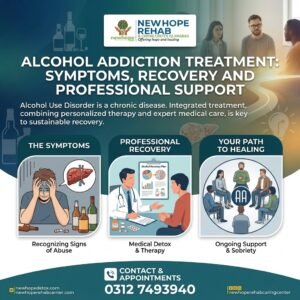
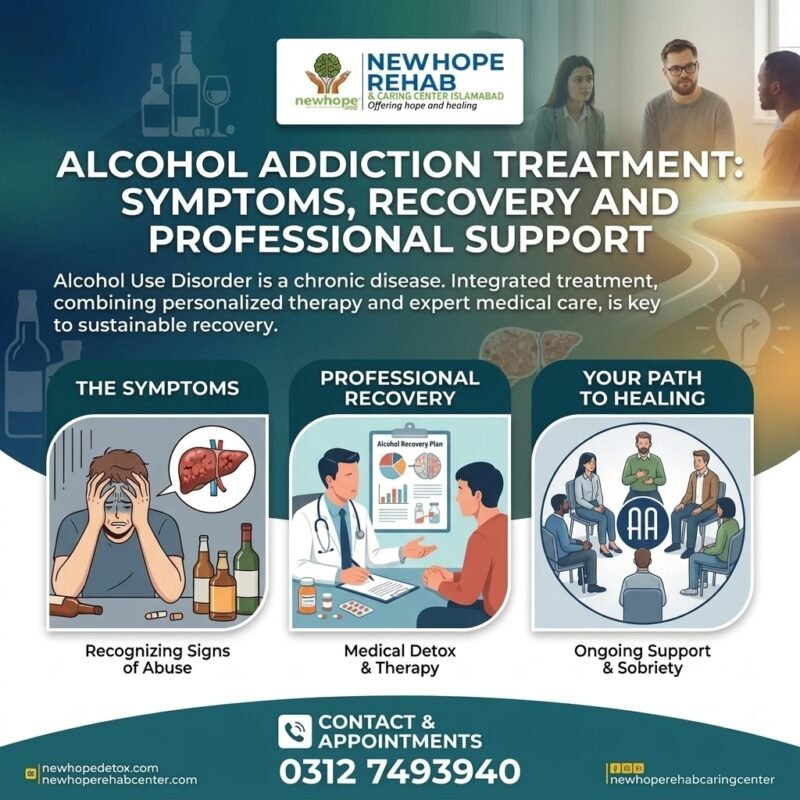
Signs and Symptoms of Alcohol Addiction
Alcohol use disorder can present differently from person to person. Potential warning signs include:
- Strong cravings for alcohol
- Drinking more or for longer than intended
- Repeated unsuccessful attempts to reduce drinking
- Increasing tolerance
- Withdrawal symptoms after stopping
- Neglecting family, work, or educational responsibilities
- Continuing to drink despite health or relationship problems
- Spending substantial time obtaining or consuming alcohol
- Losing interest in previously enjoyable activities
- Using alcohol to cope with stress or difficult emotions
A healthcare professional should evaluate these symptoms before making a diagnosis.
Factors That May Contribute to Alcohol Addiction
Alcohol addiction doesn’t have one single cause. Biological, psychological, and environmental factors can all play a role.
Genetic and Family Factors
A family history of alcohol use disorder may increase a person’s vulnerability, although genetics alone don’t determine whether someone will develop an addiction.
Mental Health Challenges
Depression, anxiety, trauma, and chronic stress may contribute to problematic drinking. Some people may initially use alcohol as a way of coping with emotional distress.
Social Environment
Peer pressure, social drinking patterns, and environments where heavy alcohol consumption is normalized can contribute to increased use.
Stress and Life Difficulties
Relationship problems, financial pressure, grief, workplace stress, and other challenges may increase the risk of unhealthy drinking patterns.
Health Effects of Alcohol Addiction
Long-term heavy alcohol use can affect many parts of the body.
Potential physical complications include:
- Liver disease
- High blood pressure
- Cardiovascular problems
- Digestive problems
- Nutritional deficiencies
- Sleep disturbances
- Weakened immune function
- Increased risk of accidents and injuries
Alcohol can also affect mental health, potentially contributing to depression, anxiety, memory difficulties, and emotional instability.
Why Professional Alcohol Addiction Treatment Matters
Recovery from alcohol dependence can involve both physical and psychological challenges. Professional treatment provides an opportunity to assess a person’s health, withdrawal risk, mental health, and treatment needs.
For people considering Alcohol Addiction Treatment in Islamabad, Pakistan, a comprehensive treatment plan may include:
- Clinical assessment
- Medically supervised withdrawal management when required
- Individual counseling
- Behavioral therapy
- Family support
- Relapse prevention
- Continuing care
The appropriate treatment level depends on the individual’s circumstances.
Treatment Approaches for Alcohol Addiction
Medical Detoxification
Detoxification allows the body to adjust after alcohol use is stopped or reduced. Medical supervision can be important because severe alcohol withdrawal can include complications such as seizures or delirium.
Individuals with a history of heavy drinking should seek professional medical advice before attempting sudden withdrawal.
Individual Counseling
Counseling provides a confidential environment for exploring drinking patterns, emotional triggers, personal challenges, and recovery goals.
Cognitive Behavioral Therapy
CBT can help individuals identify thoughts and behaviors associated with alcohol use and develop healthier strategies for managing cravings, stress, and difficult situations.
Group Therapy
Group therapy can provide peer encouragement, accountability, and opportunities to learn from others with similar experiences.
Family Support
Alcohol addiction can affect the entire household. Family counseling can help improve communication, establish healthy boundaries, and educate relatives about recovery.
Dual Diagnosis and Mental Health Care
Some individuals with alcohol use disorder also experience depression, anxiety, trauma-related conditions, or other mental health concerns. When these conditions occur together, treating both can be important for sustainable recovery.
At New Hope Rehab and Caring Centre Islamabad, mental health considerations can be incorporated into treatment planning when clinically appropriate.
Relapse Prevention and Aftercare
Recovery continues beyond detoxification or residential treatment. Relapse prevention helps individuals recognize warning signs and prepare for situations that may increase the risk of returning to alcohol use.
A continuing-care plan may include:
- Ongoing counseling
- Family involvement
- Stress-management strategies
- Healthy sleep and exercise routines
- Support groups
- Follow-up assessments
- Identification of personal triggers
- Development of an emergency support plan
A return to alcohol use doesn’t mean that treatment has failed. It may indicate that the individual needs additional assessment or changes to their recovery plan.
Frequently Asked Questions (FAQs)
1. What is alcohol addiction?
Alcohol addiction, or alcohol use disorder, is a medical condition in which a person has difficulty controlling alcohol use despite harmful consequences.
2. Can alcohol addiction be treated?
Yes. Treatment can include medically supervised withdrawal management, counseling, behavioral therapies, family support, and ongoing recovery care.
3. Is it safe to suddenly stop drinking?
It depends on the person’s drinking history and level of physical dependence. Sudden withdrawal after prolonged heavy drinking can sometimes be dangerous, so professional medical assessment is recommended.
4. Can therapy help with alcohol addiction?
Yes. Therapies such as CBT can help individuals understand triggers, change harmful behavioral patterns, develop coping skills, and manage cravings.
5. How can families support recovery from alcohol addiction?
Families can offer respectful encouragement, participate in appropriate counseling, maintain healthy boundaries, and support continued professional treatment without judgment or blame.
Conclusion
Alcohol addiction is a treatable health condition that can affect physical health, mental well-being, relationships, and everyday life. Recognizing the problem and seeking appropriate professional support can be an important step toward recovery.
For individuals seeking Alcohol Addiction Treatment in Islamabad, Pakistan, New Hope Rehab and Caring Centre Islamabad provides individualized care that may include assessment, medically appropriate detoxification, counseling, behavioral therapy, family support, and relapse prevention. Recovery takes time, but with appropriate treatment and continued support, individuals can work toward healthier routines and improved quality of life.