+92 312 7493940

Family Support Program – Family Support Program in Islamabad, Pakistan

Family Support Program – Family Support Program in Islamabad, Pakistan

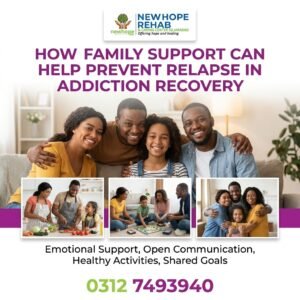
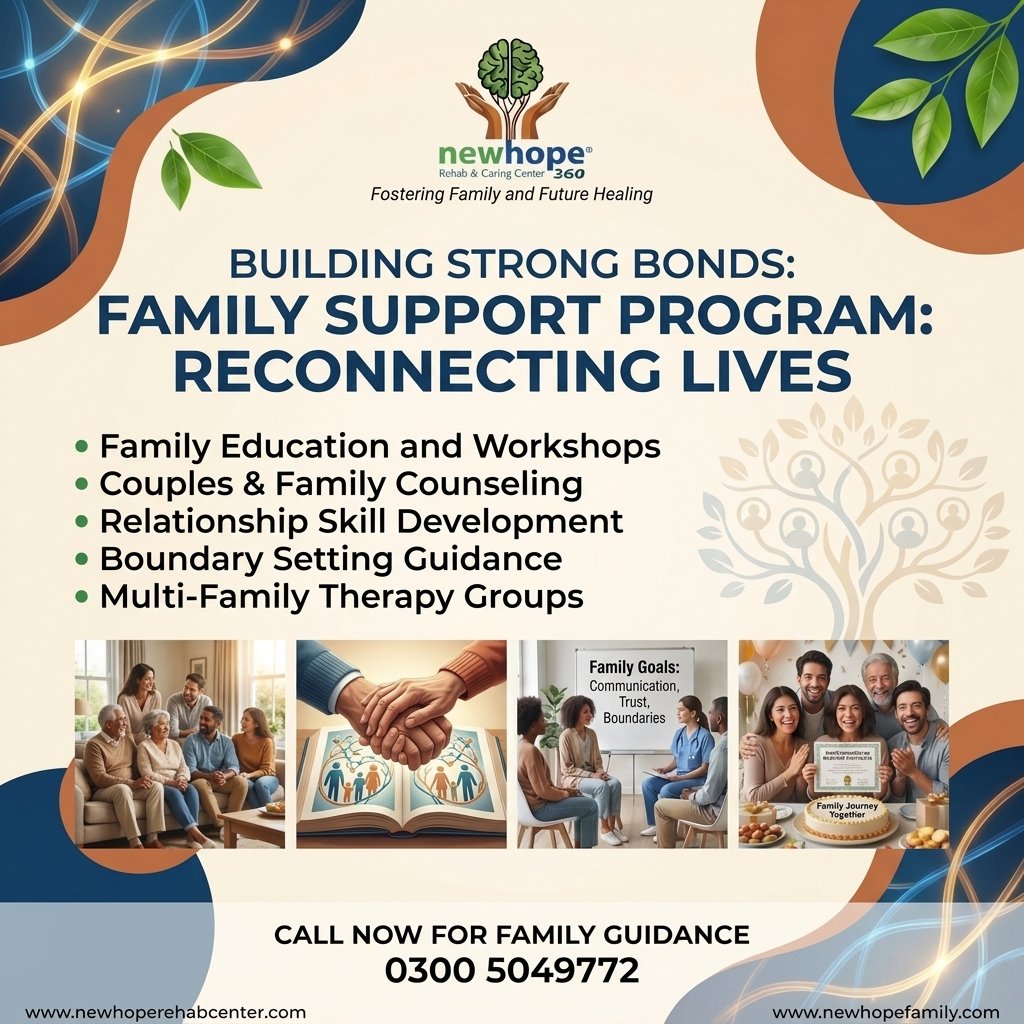
Addiction and mental health difficulties can affect more than the person experiencing them. Parents, spouses, children, siblings, and caregivers may also experience worry, stress, confusion, financial pressure, and emotional exhaustion. A structured Family Support Program in Islamabad, Pakistan can help relatives understand these challenges and learn practical ways to provide healthy, respectful support.

Family involvement doesn’t mean that relatives are responsible for another person’s recovery. Instead, family support can help create better communication, clearer boundaries, and a more stable environment. At New Hope Rehab and Caring Centre Islamabad, family-focused services can be considered as part of an individualized treatment plan when appropriate.

What Is a Family Support Program?

A Family Support Program is a structured approach that provides education, counseling, and guidance to people supporting a loved one with addiction or mental health concerns.

Depending on individual circumstances, family support may include:

  • Family counseling
  • Addiction education
  • Mental health awareness
  • Communication guidance
  • Boundary-setting strategies
  • Relapse-prevention education
  • Emotional support
  • Guidance about continuing care

The specific services should be adapted to the family’s needs and the individual’s treatment plan.

Why Family Support Matters in Recovery

Addiction can create misunderstandings within families. A relative may interpret changes in behavior as a lack of responsibility, while the person experiencing addiction may feel judged or misunderstood.

Education can help families recognize that substance use disorders are health conditions involving behavioral, psychological, and physical factors.

A supportive family environment may help by encouraging treatment, reducing unnecessary conflict, and providing appropriate emotional encouragement.

However, families should also understand that support doesn’t mean accepting unsafe or harmful behavior.

Family Support Program in Islamabad, Pakistan: What Can It Include?

Family Counseling

Family counseling provides a structured setting where relatives can discuss concerns with professional guidance. It may help address communication problems, conflict, expectations, and relationship difficulties.

Education About Addiction

Families can learn about cravings, tolerance, dependence, withdrawal, triggers, relapse, and recovery. Understanding these concepts can reduce stigma and unrealistic expectations.

Communication Skills

Healthy communication involves listening, expressing concerns respectfully, and avoiding unnecessary blame or shame.

Family members can learn how to discuss treatment and recovery without turning every conversation into an argument.

Healthy Boundaries

Boundaries help families define what behavior they can and cannot accept. They can provide structure while allowing relatives to remain compassionate.

Relapse-Prevention Education

Families can learn about potential warning signs and appropriate responses. The goal is to encourage timely professional support rather than blame a person for a setback.

Supporting a Loved One Without Enabling Substance Use

One of the most difficult challenges for families is distinguishing support from enabling.

Healthy support may include:

  • Encouraging professional treatment
  • Providing emotional encouragement
  • Supporting healthy routines
  • Maintaining reasonable boundaries
  • Listening without unnecessary judgment
  • Encouraging follow-up care

Enabling can involve repeatedly making excuses for harmful behavior, covering up serious consequences, or providing money or resources that facilitate continued substance use.

Every family situation is different, so professional guidance can be useful when relatives aren’t sure how to respond.

Family Support and Mental Health

Family Support Program – Family Support Program in Islamabad, Pakistan

Addiction may occur alongside depression, anxiety, trauma-related conditions, or other mental health concerns. These co-occurring conditions can create additional challenges for both the individual and the family.

For example, a person may use substances to cope with emotional distress, while continued substance use may worsen mood, sleep, anxiety, or other symptoms.

A family support program can help relatives understand the importance of addressing both mental health and substance use when they occur together.

At New Hope Rehab and Caring Centre Islamabad, family involvement can be considered alongside addiction and mental health care when clinically appropriate.

The Family’s Own Well-Being Matters

Supporting someone with addiction can be emotionally demanding. Relatives may experience anxiety, anger, guilt, sadness, or burnout.

Family members should therefore look after their own health as well.

Helpful strategies may include:

  • Maintaining healthy sleep and eating routines
  • Staying connected with trusted people
  • Taking appropriate breaks from caregiving
  • Seeking counseling when needed
  • Learning about addiction
  • Setting realistic expectations
  • Maintaining healthy personal boundaries

A family member doesn’t have to manage addiction alone.

Family Support During Long-Term Recovery

Recovery is usually an ongoing process. After residential treatment or an intensive program, individuals may continue to face cravings, stress, relationship difficulties, or exposure to previous triggers.

Families can provide constructive support by encouraging:

  • Follow-up appointments
  • Counseling
  • Healthy routines
  • Appropriate medication use
  • Positive social connections
  • Relapse-prevention strategies

If a relapse occurs, families should avoid viewing it simply as a moral failure. Professional reassessment may help identify what contributed to the setback and whether the treatment plan needs adjustment.

Respecting Privacy and Individual Choice

Family participation should respect confidentiality and the individual’s rights. Not every treatment detail needs to be shared with every relative.

Healthcare professionals can help determine what information may appropriately be discussed and how family involvement can support treatment without compromising privacy.

Frequently Asked Questions (FAQs)

1. What is a Family Support Program?

A Family Support Program provides education, counseling, and practical guidance to relatives supporting someone with addiction or mental health difficulties.

2. Why is family involvement important in recovery?

Family involvement can improve communication, reduce misunderstanding, encourage healthy boundaries, and provide appropriate emotional support during recovery.

3. Can family members attend counseling sessions?

In appropriate circumstances, family counseling may be included in a person’s treatment plan. Participation should respect clinical considerations, confidentiality, and the individual’s consent.

4. How can families avoid enabling addiction?

Families can maintain healthy boundaries, avoid covering up harmful behavior, encourage professional treatment, and provide emotional support without facilitating substance use.

5. Should families seek support for themselves?

Yes. Supporting someone with addiction can be stressful. Family members may benefit from counseling, education, trusted social support, and strategies for protecting their own emotional well-being.

Conclusion

A Family Support Program in Islamabad, Pakistan can help relatives better understand addiction and mental health concerns while developing healthier communication, boundaries, and coping strategies. Family support isn’t about controlling another person’s recovery; it’s about creating informed and constructive support while protecting the well-being of everyone involved.

At New Hope Rehab and Caring Centre Islamabad, family-focused care can complement addiction and mental health treatment through counseling, education, communication support, and recovery planning. A respectful family approach can help individuals and their loved ones navigate recovery with greater understanding, patience, and dignity.

Related Article

Treatment Programs – Treatment Programs in Islamabad, Pakistan
Treatment Programs

Treatment Programs – Treatment Programs in Islamabad, Pakistan

Addiction and mental health are the core components that create a cycle of addiction, impacting almost every part of people’s lives; physical health, relationships, work life, daily life. Due to the variance between individual circumstances, care should be devised with an individualized assessment as opposed to a final treatment option. Structured Treatment Programs in Islamabad, Pakistan offer varying levels of expert care based on physical and psychological necessities as well as obtainment goals. At New Hope Rehab and Caring Centre Islamabad, a treatment plan that emphasizes tailored care and dignity through respect. Programs may be based on drug addiction, alcohol addiction, behavioral problems, mental health disorders, relapse prevention and co-occurring disorders depending on what the clinical needs are. What Are Treatment Programs? Treatment programs are systematically organized and delivered healthcare systems to remedy a specific disease or recovery need. For instance, in the case of addiction care, treatment may start with assessment and withdrawal management before transitioning to counseling, behavioral therapy, rehabilitation, or ongoing continuing care. A treatment plan may include: Medical assessment Detoxification and withdrawal management Individual counseling Group therapy Cognitive Behavioral Therapy (CBT) Family support Mental health care Relapse-prevention planning Aftercare and follow-up Every individual is not applicable for every service; The correct blend is contextual. Treatment Programs at Different Levels There are multiple settings for how treatment can be delivered. The threshold is influenced by safety, medical issues, psychological signs and symptoms, domestic conditions, and substance use severity. Residential Rehabilitation Residential Treatment traditional residential treatment center is a structured setting where the individual with addiction can safely stabilize, away from some of the triggers and habits that accompany substance use. It also should be taken into account for persons who need more structure or whose home environment is not conducive to an early recovery. Outpatient Treatment For well-suited candidates, outpatient care enables individuals to get the treatment they need on a planned basis, while at home. This could involve counselling, therapies, appropriate medication management and potential review appointments. Home-Based Treatment Specific recovery services may occur at home for selected medically stable patients. Provides services such as counseling, family support other recovery education and continuing-care services. It is not appropriate for individuals who need ongoing medical monitoring or have moderate-severe withdrawal or psychiatric risks. Detoxification and Withdrawal Management Detoxification: For individuals who have developed physical dependence on alcohol, drugs or certain medications, detoxification may be the first step in treatment. Withdrawal symptoms can vary from relatively minor to medically severe. Especially alcohol and benzodiazepine withdrawal which can be hazardous at times. A professional assessment assesses whether you need medical assisted withdrawal management. Detoxification is never a solution in itself to beat addiction. Psychological and behavioral care continues after the withdrawal phase. Individual Counseling and Behavioral Therapy Counseling helps the person learn to understand substance use and instead turn to other examples on how to cope in a healthy way. Therapy may address: Cravings Emotional distress Stress Negative thought patterns Relationship difficulties Substance-use triggers Unhealthy behaviors Recovery goals Cognitive Behavioral Therapy Cognitive behavioral therapy (CBT) is a type of psychological therapy that focuses on changing patterns associated with maladaptive thoughts and behaviors, enabling individuals to identify unhelpful thoughts and behaviors and learn new ways of coping. Mental Health Treatment Mental health issues can be present with or without addiction. How depression, anxiety, trauma-related conditions and neurological problems affect recovery. This is typically what is known as a dual diagnosis or co-occurring disorder—when an addiction happens at the same time as a mental health condition. An integrated Mira of concern rather being solely focused on isolating substance use. If clinically appropriate, mental health needs can be addressed in an individualized treatment plan at New Hope Rehab and Caring Centre Islamabad. Family Support Programs At the same time, addiction is a family issue. Stress, fear, frustration and uncertainty of how to help can be faced by relatives. Family support may include: Education about addiction Family counseling Communication guidance Healthy boundary setting Relapse-prevention education Support for caregivers Incorporation of family involvement must be performed with respect to privacy, consent and treatment needs of the individual. Relapse Prevention and Aftercare This process doesn’t end with the initial treatment period. Returning to prior environments, unmanaged stress and emotional challenges, along with exposure to substance-based triggers put the individual at high risk of relapse. A continuing-care plan may include: Follow-up counseling Trigger identification Craving-management strategies Healthy daily routines Family support Mental health follow-up Relapse-prevention planning Appropriate peer or community support In the event of a relapse, this process can be used to assess what factors contributed to it and if treatment needs to be adjusted. A guide on selecting a suitable treatment program When selecting a treatment center, the focus should not be simply on facilities or program names. They can also ask practical questions like? The qualifications of healthcare professionals How patients are assessed How withdrawal risks are managed Whether mental health is evaluated Available counseling approaches Family involvement Continuing-care arrangements Protocols have been established for medical or psychological emergencies. The correct program is one that meets the individual’s clinical needs and offers an appropriate balance of safety and structure. Frequently Asked Questions (FAQs) 1.     Why are Treatment Programs for addiction? In this, treatment programmed is a type of structure based services which may include assessment withdrawal management two recovery types and other education bundle like recommendation in fair Treatment Centers with counseling used to provide behavioral therapy family support relapse prevention care etc. 2.     How long does it take to do addiction treatment? There is no standard duration. Average treatment lengths vary with the substance used, severity of use disorder, co-occurring mental and physical conditions, response to treatment, and ongoing care needs. 3.     Detoxication is not enough for addiction recovery No. Detox is the physical withdrawal process, but it does not directly help with the psychological, behavioral and social components of addiction. 4.     Does treatment work for both addiction and mental health? Yes. Integrated or dual-diagnosis care may target both issues as

Family Support Program – Family Support Program in Islamabad, Pakistan
Family Support Program

Family Support Program – Family Support Program in Islamabad, Pakistan

Addiction and mental health difficulties can affect more than the person experiencing them. Parents, spouses, children, siblings, and caregivers may also experience worry, stress, confusion, financial pressure, and emotional exhaustion. A structured Family Support Program in Islamabad, Pakistan can help relatives understand these challenges and learn practical ways to provide healthy, respectful support. Family involvement doesn’t mean that relatives are responsible for another person’s recovery. Instead, family support can help create better communication, clearer boundaries, and a more stable environment. At New Hope Rehab and Caring Centre Islamabad, family-focused services can be considered as part of an individualized treatment plan when appropriate. What Is a Family Support Program? A Family Support Program is a structured approach that provides education, counseling, and guidance to people supporting a loved one with addiction or mental health concerns. Depending on individual circumstances, family support may include: Family counseling Addiction education Mental health awareness Communication guidance Boundary-setting strategies Relapse-prevention education Emotional support Guidance about continuing care The specific services should be adapted to the family’s needs and the individual’s treatment plan. Why Family Support Matters in Recovery Addiction can create misunderstandings within families. A relative may interpret changes in behavior as a lack of responsibility, while the person experiencing addiction may feel judged or misunderstood. Education can help families recognize that substance use disorders are health conditions involving behavioral, psychological, and physical factors. A supportive family environment may help by encouraging treatment, reducing unnecessary conflict, and providing appropriate emotional encouragement. However, families should also understand that support doesn’t mean accepting unsafe or harmful behavior. Family Support Program in Islamabad, Pakistan: What Can It Include? Family Counseling Family counseling provides a structured setting where relatives can discuss concerns with professional guidance. It may help address communication problems, conflict, expectations, and relationship difficulties. Education About Addiction Families can learn about cravings, tolerance, dependence, withdrawal, triggers, relapse, and recovery. Understanding these concepts can reduce stigma and unrealistic expectations. Communication Skills Healthy communication involves listening, expressing concerns respectfully, and avoiding unnecessary blame or shame. Family members can learn how to discuss treatment and recovery without turning every conversation into an argument. Healthy Boundaries Boundaries help families define what behavior they can and cannot accept. They can provide structure while allowing relatives to remain compassionate. Relapse-Prevention Education Families can learn about potential warning signs and appropriate responses. The goal is to encourage timely professional support rather than blame a person for a setback. Supporting a Loved One Without Enabling Substance Use One of the most difficult challenges for families is distinguishing support from enabling. Healthy support may include: Encouraging professional treatment Providing emotional encouragement Supporting healthy routines Maintaining reasonable boundaries Listening without unnecessary judgment Encouraging follow-up care Enabling can involve repeatedly making excuses for harmful behavior, covering up serious consequences, or providing money or resources that facilitate continued substance use. Every family situation is different, so professional guidance can be useful when relatives aren’t sure how to respond. Family Support and Mental Health Addiction may occur alongside depression, anxiety, trauma-related conditions, or other mental health concerns. These co-occurring conditions can create additional challenges for both the individual and the family. For example, a person may use substances to cope with emotional distress, while continued substance use may worsen mood, sleep, anxiety, or other symptoms. A family support program can help relatives understand the importance of addressing both mental health and substance use when they occur together. At New Hope Rehab and Caring Centre Islamabad, family involvement can be considered alongside addiction and mental health care when clinically appropriate. The Family’s Own Well-Being Matters Supporting someone with addiction can be emotionally demanding. Relatives may experience anxiety, anger, guilt, sadness, or burnout. Family members should therefore look after their own health as well. Helpful strategies may include: Maintaining healthy sleep and eating routines Staying connected with trusted people Taking appropriate breaks from caregiving Seeking counseling when needed Learning about addiction Setting realistic expectations Maintaining healthy personal boundaries A family member doesn’t have to manage addiction alone. Family Support During Long-Term Recovery Recovery is usually an ongoing process. After residential treatment or an intensive program, individuals may continue to face cravings, stress, relationship difficulties, or exposure to previous triggers. Families can provide constructive support by encouraging: Follow-up appointments Counseling Healthy routines Appropriate medication use Positive social connections Relapse-prevention strategies If a relapse occurs, families should avoid viewing it simply as a moral failure. Professional reassessment may help identify what contributed to the setback and whether the treatment plan needs adjustment. Respecting Privacy and Individual Choice Family participation should respect confidentiality and the individual’s rights. Not every treatment detail needs to be shared with every relative. Healthcare professionals can help determine what information may appropriately be discussed and how family involvement can support treatment without compromising privacy. Frequently Asked Questions (FAQs) 1. What is a Family Support Program? A Family Support Program provides education, counseling, and practical guidance to relatives supporting someone with addiction or mental health difficulties. 2. Why is family involvement important in recovery? Family involvement can improve communication, reduce misunderstanding, encourage healthy boundaries, and provide appropriate emotional support during recovery. 3. Can family members attend counseling sessions? In appropriate circumstances, family counseling may be included in a person’s treatment plan. Participation should respect clinical considerations, confidentiality, and the individual’s consent. 4. How can families avoid enabling addiction? Families can maintain healthy boundaries, avoid covering up harmful behavior, encourage professional treatment, and provide emotional support without facilitating substance use. 5. Should families seek support for themselves? Yes. Supporting someone with addiction can be stressful. Family members may benefit from counseling, education, trusted social support, and strategies for protecting their own emotional well-being. Conclusion A Family Support Program in Islamabad, Pakistan can help relatives better understand addiction and mental health concerns while developing healthier communication, boundaries, and coping strategies. Family support isn’t about controlling another person’s recovery; it’s about creating informed and constructive support while protecting the well-being of everyone involved. At New Hope Rehab and Caring Centre Islamabad, family-focused care can

Detoxification – Detoxification Treatment in Islamabad, Pakistan
Detoxification

Detoxification – Detoxification Treatment in Islamabad, Pakistan

Detoxification is often the first stage of treatment for people who have developed physical dependence on alcohol, drugs, or certain medications. It is the process through which the body adjusts to reducing or stopping a substance. Depending on the substance and level of dependence, withdrawal can range from uncomfortable to medically dangerous. For individuals searching for Detoxification Treatment in Islamabad, Pakistan, understanding what detox involves can help families make informed decisions. Detox should not be viewed as a complete cure for addiction. Instead, it is generally a stabilization stage that may prepare an individual for ongoing rehabilitation, counseling, and recovery support. At New Hope Rehab and Caring Centre Islamabad, detoxification can be considered as part of an individualized treatment plan based on a person’s substance use, physical health, mental health, and withdrawal risks. What Is Detoxification? Detoxification, commonly called detox, involves managing the physical and psychological effects that may occur when a person reduces or stops using a substance after regular use. Withdrawal symptoms depend on several factors, including: The substance being used Amount and frequency of use Duration of substance use Physical dependence Overall health Other medications or substances being taken Previous withdrawal experiences Because these factors vary, detox shouldn’t follow the same process for every individual. Why Medically Supervised Detox May Be Important Some withdrawal syndromes can cause serious complications. Alcohol and benzodiazepine withdrawal, for example, can sometimes result in seizures, severe confusion, or other medical emergencies. Opioid withdrawal is usually not life-threatening by itself, but it can involve significant physical discomfort, dehydration, intense cravings, and psychological distress. Reduced opioid tolerance after detox can also increase overdose risk if a person returns to previously tolerated doses. Medical supervision allows professionals to assess symptoms and respond appropriately when complications develop. Common Withdrawal Symptoms Withdrawal symptoms vary considerably, but may include: Anxiety or irritability Sweating Tremors Nausea or vomiting Muscle aches Headaches Sleep disturbances Restlessness Changes in appetite Strong cravings Low mood More serious symptoms can occur with certain substances. Anyone experiencing seizures, severe confusion, loss of consciousness, breathing difficulties, chest pain, or another medical emergency needs urgent medical attention. The Detoxification Process Initial Assessment A professional assessment is an important starting point. Healthcare providers may review the individual’s substance use history, medical conditions, medications, mental health, previous withdrawal experiences, and current symptoms. This information helps determine whether detox can be managed in an appropriate setting or whether a higher level of medical care is needed. Withdrawal Management During withdrawal, professionals may monitor physical and psychological symptoms and provide appropriate supportive care. In some circumstances, medications may be used to manage specific withdrawal symptoms or reduce health risks. Medication decisions should be made by qualified healthcare professionals and shouldn’t be based on a generic detox schedule. Stabilization As acute withdrawal symptoms become more manageable, attention can shift toward ongoing addiction treatment. This transition is important because completing detox alone doesn’t address the underlying causes of substance use. Detoxification for Different Substances Alcohol Alcohol withdrawal can become medically dangerous in people with significant dependence. Professional assessment is particularly important before abruptly stopping heavy or prolonged alcohol use. Opioids Heroin and other opioids can cause physical dependence. Withdrawal may involve muscle aches, gastrointestinal symptoms, restlessness, insomnia, and cravings. Evidence-based opioid use disorder treatment may include medications such as buprenorphine or methadone when clinically appropriate. Benzodiazepines Regular benzodiazepine use can result in physical dependence. Abrupt discontinuation can cause serious withdrawal, including seizures in some cases. A carefully supervised reduction may be appropriate for certain individuals. Stimulants Stopping drugs such as cocaine or crystal methamphetamine can result in fatigue, sleep changes, depressed mood, irritability, and cravings. Supportive care and behavioral treatment are important parts of recovery. Detox Is Only the Beginning One of the most important things to understand about detoxification is that it doesn’t treat every aspect of addiction. Addiction can involve learned behaviors, emotional difficulties, social circumstances, cravings, and mental health conditions. After detox, individuals may benefit from: Individual counseling Cognitive Behavioral Therapy (CBT) Group therapy Family support Mental health treatment Relapse-prevention planning Medication-assisted treatment when clinically appropriate Continuing care and aftercare At New Hope Rehab and Caring Centre Islamabad, treatment planning can consider these different needs according to the individual’s circumstances. The Role of Family During Detox and Recovery Families often play an important role in encouraging treatment and maintaining a supportive environment. However, relatives aren’t expected to manage withdrawal alone. Family members can help by: Encouraging professional care Providing emotional support Maintaining healthy boundaries Learning about addiction and withdrawal Participating in family counseling when appropriate Supporting continuing treatment Professional guidance can help families understand how to provide constructive support without unintentionally enabling substance use. Frequently Asked Questions (FAQs) 1. What is detoxification? Detoxification is the process of managing the physical and psychological effects that can occur when a person reduces or stops using a substance after regular use. 2. Is detoxification the same as addiction treatment? No. Detox primarily addresses withdrawal and stabilization. Ongoing addiction treatment may be needed to address behavioral, psychological, and social factors associated with substance use. 3. Can detox be done safely at home? It depends on the substance, level of dependence, health status, and withdrawal risk. Some withdrawal syndromes can be dangerous, so professional assessment is important before attempting detox at home. 4. How long does detoxification take? There is no universal timeframe. Withdrawal can vary depending on the substance, duration of use, amount used, physical health, and individual response. 5. What happens after detox? Depending on individual needs, continuing treatment may include counseling, behavioral therapy, family support, mental health care, relapse prevention, medication when clinically appropriate, and aftercare. Conclusion Detoxification Treatment in Islamabad, Pakistan can be an important first stage for individuals experiencing physical dependence on alcohol, drugs, or certain medications. Because withdrawal risks differ significantly, detox should be approached with appropriate professional assessment and medical supervision when necessary. At New Hope Rehab and Caring Centre Islamabad, detoxification can form part of a broader, individualized recovery plan that considers physical health, mental health,

Online Treatment Sessions – Online Treatment Sessions in Islamabad, Pakistan
Online Treatment Sessions

Online Treatment Sessions – Online Treatment Sessions in Islamabad, Pakistan

Access to healthcare can sometimes be difficult for people who have work responsibilities, mobility limitations, family commitments, or concerns about visiting a treatment facility. Online Treatment Sessions in Islamabad, Pakistan can provide a practical way for some individuals to connect with qualified professionals through secure remote communication. Online treatment may be useful for selected mental health and addiction-related concerns, particularly when a person is medically stable and does not require continuous supervision. It isn’t suitable for every situation, especially emergencies or severe withdrawal. A professional assessment can help determine whether remote care is appropriate. At New Hope Rehab and Caring Centre Islamabad, online sessions may support individuals who need counseling, psychological guidance, recovery education, or continuing care while remaining at home. What Are Online Treatment Sessions? Online treatment sessions are healthcare or counseling appointments conducted remotely through digital communication. Depending on the person’s needs and the services available, sessions may involve psychological counseling, addiction recovery support, family guidance, or follow-up care. Remote treatment can be particularly useful when in-person attendance isn’t practical. However, online care should complement appropriate medical treatment rather than replace emergency services or necessary face-to-face assessment. Who May Benefit From Online Treatment? Online treatment may be considered for individuals who are clinically stable and able to participate safely from home. It may be useful for people seeking support for: Anxiety and stress Depression Addiction recovery Relapse prevention Smoking or nicotine dependence Family-related concerns Recovery after residential treatment Certain co-occurring mental health and substance-use concerns Suitability depends on the individual’s symptoms, medical needs, safety, privacy, and access to appropriate support. Online Addiction Treatment and Recovery Support Addiction recovery often involves continuing psychological and behavioral support. Online sessions can provide a convenient way to maintain contact with a counselor or treatment professional. Depending on the treatment plan, sessions may address: Craving Management Individuals can learn techniques for recognizing cravings and responding to them without returning to substance use. Trigger Identification Counseling can help identify people, places, emotions, and situations that may increase the risk of substance use. Relapse Prevention Online sessions may help individuals review their recovery goals, recognize early warning signs, and strengthen coping strategies. Behavioral Therapy Approaches such as Cognitive Behavioral Therapy (CBT) may be used when clinically appropriate to address unhelpful thoughts and behaviors. Online Mental Health Support Mental health concerns can sometimes occur alongside addiction. Anxiety, depression, trauma-related symptoms, and other psychological difficulties may require ongoing attention. Online counseling can provide a structured environment for discussing emotional concerns, developing coping skills, and monitoring changes in symptoms. However, severe psychiatric symptoms may require in-person assessment or a higher level of care. Benefits of Online Treatment Sessions For appropriate patients, remote care can offer several practical benefits. Convenience People may attend sessions without traveling to a treatment facility, which can make regular appointments easier to maintain. Continuity of Care Online appointments can help some individuals remain connected with treatment professionals after completing residential or intensive care. Family Participation When clinically appropriate and with the necessary consent, family members may participate in selected online counseling sessions. Privacy and Familiarity Some people feel more comfortable discussing sensitive concerns from a familiar environment. A private room and secure communication method are important for confidentiality. Limitations of Online Treatment Online treatment isn’t appropriate for every clinical situation. It may not be sufficient when a person has: Severe or potentially dangerous withdrawal An overdose or suspected poisoning Severe intoxication Acute psychosis Immediate risk of suicide or self-harm Serious medical complications A need for continuous monitoring These situations require urgent or in-person medical care. Individuals experiencing severe breathing difficulties, unconsciousness, seizures, serious injury, or an immediate danger to themselves or others should seek emergency medical assistance rather than relying on an online appointment. How to Prepare for an Online Treatment Session A few simple steps can improve the quality of a remote appointment: Choose a quiet and private location. Use a reliable internet connection. Keep relevant medication information available. Be prepared to discuss current symptoms honestly. Avoid using alcohol or recreational drugs immediately before a session. Make sure a trusted person can be contacted if additional support is required. Confidentiality should be discussed with the healthcare professional, particularly when sensitive information is being shared online. Online Treatment as Part of Continuing Care Recovery is often a long-term process rather than a single event. Online sessions may provide useful continuing support for people who have already completed detoxification or residential treatment. Follow-up care can focus on maintaining healthy routines, managing stress, addressing cravings, monitoring mental health, and responding to changing recovery needs. At New Hope Rehab and Caring Centre Islamabad, online support can be considered as part of an individualized care plan when appropriate. Frequently Asked Questions (FAQs) 1. What are Online Treatment Sessions? Online treatment sessions are remote appointments that allow individuals to communicate with healthcare or mental health professionals through digital communication. 2. Can online sessions help with addiction recovery? They may support counseling, behavioral therapy, relapse prevention, recovery education, and follow-up care for suitable individuals. They don’t replace emergency or medically necessary in-person treatment. 3. Can family members join an online session? Family participation may be possible when clinically appropriate and when the patient provides the necessary consent. 4. Are online sessions suitable for drug or alcohol withdrawal? Not always. Withdrawal can sometimes become medically dangerous, particularly with alcohol and certain medications. A healthcare professional should assess the appropriate level of care. 5. Can online treatment replace residential rehabilitation? For some stable individuals, remote care may be useful as part of treatment or continuing care. Others may require residential or medically supervised treatment based on their clinical needs. Conclusion Online Treatment Sessions in Islamabad, Pakistan can make selected counseling and continuing-care services more accessible to individuals who are medically and psychologically suitable for remote treatment. They can support addiction recovery, mental health care, family counseling, and relapse-prevention work. At New Hope Rehab and Caring Centre Islamabad, online sessions can form part of an individualized treatment approach when appropriate. The priority