Inspiring patients to take their mental health treatment seriously is one of the most critical — and sometimes one of the more difficult — parts of recovery care. Treatment often starts at a disadvantage; people enter therapy uncertain, resistant or overwhelmed by the prospect of change. This is where motivational interviewing (MI) comes in. At New Hope Rehab and Caring Center Islamabad, motivational interviewing is respected as an evidence-informed way to ensure that patients feel heard, understood and self-efficient in their journey of recovery at a Mental Health Rehab Center.
Motivational interviewing operates from a spirit of partnership, rather than confrontation. Rather than simply instructing people on what they should do, it allows them to explore their personal reasons for change. It provides momentum for more active treatment participation, improved communication and sustained commitment to recovery goals.
Understanding Motivational Interviewing in Mental Health Care
Motivational interviewing is a directive, client-centred counselling style for eliciting behaviour change by helping clients to explore and resolve ambivalence. It seems particularly useful in the mentally ill and addicted who often have mixed feelings about their condition.
This approach does not use authority or coercion, but involves empathy, listening actively and respectful conversation. Well-trained professionals using this method can do the work participants need in order to consider their values, challenges and aspirations in a way that makes motivation intrinsic.
At a Mental Health Rehab Center standards and practice are very similar to that of this principle as in there staffs recognize patients being always treated with respect even when they do not know the consequences of their decisions.
Why Patient Engagement is Important at a Mental Health Rehab Center
Engagement with treatment is the degree to which an individual attends to their care in a consistent and timely manner. Higher engagement predicts increased emotional stability, better coping strategies, and greater adherence to the treatment regimen.
However, many patients in mental health service rehabilitation will have:
- Fear or uncertainty about treatment
- Stigma-related concerns
- Low personal agency to do something differently
- Past negative healthcare experiences
Such barriers can be breached through motivational interviewing, which provides this extra lubricant, enabling the interview to take place in a safe and non-judgemental setting. At New Hope Rehab and Care Centre Islamabad, this approach assists people in their recovery journey to feel like active participants rather than passive recipients of care.
Core Principles of Motivational Interviewing
MI operates according to four core principles that produce excellent results in mental health:
1. Expressing Empathy
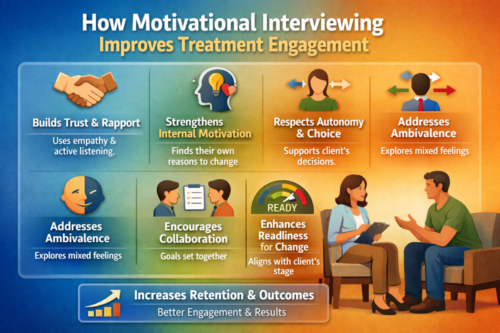
Empathy builds trust. Therapists listen intently and validate emotions without judging. This instills a sense of being respected and accepted in each person, which is crucial when you want to have an environment at your Mental Health Rehab Center.
2. Developing Discrepancy
Clients are subtly nudged to see the contrast between where they are and what is theirs. This consciousness then serves as a strong internal push towards change.
3. Rolling With Resistance
There is no resistance to challenge or confront. Instead, it’s been so thoroughly studied and discussed that people can talk candidly about being torn without being considered failures.
4. Supporting Self-Efficacy
In motivational interviewing, we never give up hope that people can change. The little victories are celebrated, allowing people to gain confidence in their ability to keep going.
Why Motivational Interviewing Enhances Engagement in Treatment
Encourages Active Participation
When people feel that they’re being heard, they are much more likely to fully engage in their therapy sessions, group discussions and recovery planning. Motivational interview changes treatment from something that is being imposed into a joint venture.
Reduces Dropout Rates
The reason is that many people don’t feel a personal connection or understand their mental health treatment. Therapeutischer Allianz von Nutzen Strengthening the Therapeutic Alliance can prevent early dropout and foster longer-term attendance.
Enhances Commitment to Recovery Goals
Rather than complying with directions passively, individuals self-generate personally relevant goals. This sense of belonging promotes the feelings of use and value, which keeps a person come back to an Mental Rehab Center.
Improves Communication Between Clients and Providers
Transparent, empathetic communication results in fewer misunderstandings and more open discussions about problems and progress.
How Motivational Interviewing Works at New Hope Rehab and Caring Center in Islamabad
At New Hope Rehab and Caring Center Islamabad, motivational interviewing is used as a component of client-centered care to facilitate ethical treatment. Mental Health Professionals who have been taught this intervention work with it to:
- Lay the foundation for trust in early treatment periods
- Explore mixed feelings about therapy or meds
- Encourage openness during counseling sessions
- Support gradual, sustainable behavior change
This type of cure supports other forms of healing in a Mental Health Rehab Center so that treatment is all-is-inclusive, respectful and sensitive to every side.
Motivational Interviewing and Long-Term Recovery
True recovery is long-term and it’s not only about managing the symptoms it’s about gaining insight, resiliency, and self awareness. Why motivational interviewing is beneficial towards sustaining recovery long term With the right intervention, such as motivational interviewing, long-term recovery can be achieved by facilitating:
- Have a better understanding of their mental health struggles
- Identify personal strengths and values
- Develop healthier coping strategies
- Keep interest alive even during less positive cycles
By promoting “intrinsic motivation,” the approach helps people stay engage with treatment long after they have completed transitional rehabilitation services.
Moral Gains of Motivational Interviewing in Psychiatry
Yes, then it is your duty to have a look at what ethical mental health care means: an emphasis on informed choice, respect and collaboration. Motivational interviewing is consistent with such values in the sense that clients are not manipulated into changes, but neither coerced nor pressured. In a Mental Health Rehab center, this is useful for:
- Patient autonomy
- Transparent decision-making
- Respecting the degree of readiness for change in each person
- Trust-based therapeutic relationships
Such ethical bases are necessary for the provision of ethically viable and caring mental health care.
Frequently Asked Questions (FAQs)
1. Is motivational interviewing appropriate for any mental health disorder?
Motivational Interviewing is a flexible model and can be applied to many mental health issues. It is especially useful when patients are hesitant to get involved in treatment, or they feel ambivalence about proceeding.
2. What is the difference between motivational interviewing and counselling?
Unlike directive methods, motivational interviewing (MI) is a counseling style that emphasizes collaboration and evocation rather than teaching or advice-giving.
3. Is motivational interviewing used with other treatments?
Yes. In a Mental Health Rehab Center, motivational interviewing is frequently used in conjunction with cognitive and behavioral therapies to improve participation.
4. Is motivational interviewing coercive?
No. The method is based on free decision and will of every single person to test what kind of changes suit that one best.
5. What is the importance of motivational interviewing when initiating treatment?
The sooner we get out of this mess, the better. Motivational interviewing promotes trust and openness as care begins.
Conclusion
Motivational Interviewing for the Treatment of Mental Health Rehab Center. By cultivating empathy, personal drive and cooperation among people, it makes getting through the recovery process feel empowering instead of intimidating. At New Hope Rehab and Caring Center Islamabad, it underlines ethical, evidence-based patient care centered on trust, respect and over all wellness.
Then patients are more motivated and treatment is more pertinent, long-lasting and successful.” Motivational interviewing is more than just a skill, as it is an alliance that promotes the seriousness of mental health services.