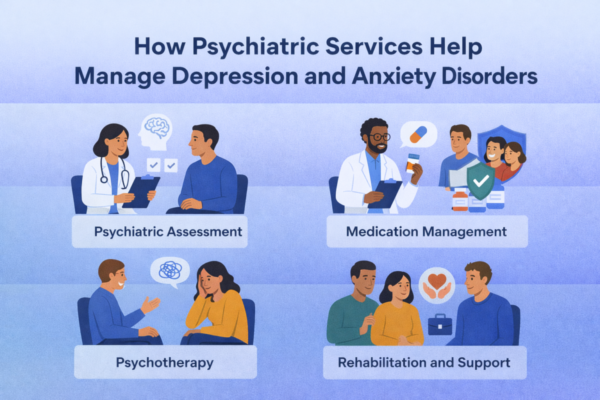
How Psychiatric Services Help Manage Depression and Anxiety Disorders – Best Rehabilitation Center in Islamabad, Pakistan

Depression and Anxiety Disorders

Depression and Anxiety Disorders

Depression and anxiety disorders are among the most common mental health conditions affecting individuals of all ages. They can interfere with daily life, relationships, work performance, and overall well-being. While occasional stress or sadness is normal, persistent emotional distress may require professional attention. Psychiatric services play a critical role in diagnosing, treating, and managing these conditions in a structured and evidence-based manner.

At New Hope Rehab and Caring Centre Islamabad, mental health care is delivered through ethical, patient-centered practices designed to support recovery and long-term stability. As a facility recognised among the Best rehabilitation Center in Islamabad, Pakistan, the focus remains on compassionate psychiatric care, structured therapy programs, and holistic mental health support.

This article explores how psychiatric services help manage depression and anxiety disorders and why professional guidance is essential for sustainable emotional wellness.


Understanding Depression and Anxiety Disorders

Depression is more than temporary sadness. It is a medical condition that may include:

  • Persistent low mood

  • Loss of interest in daily activities

  • Fatigue and low energy

  • Sleep disturbances

  • Feelings of worthlessness

Anxiety disorders, on the other hand, involve excessive worry, fear, or nervousness that can disrupt daily functioning. Common symptoms include:

  • Restlessness

  • Rapid heartbeat

  • Difficulty concentrating

  • Panic attacks

  • Irritability

Without appropriate treatment, these conditions may worsen over time. Professional psychiatric evaluation ensures accurate diagnosis and appropriate care planning.


The Role of Psychiatric Services in Mental Health Management

Psychiatric services combine medical knowledge with psychological support. At the Best rehabilitation Center in Islamabad, Pakistan, psychiatric care involves:

  • Comprehensive mental health assessments

  • Diagnosis of mood and anxiety disorders

  • Medication management when necessary

  • Structured psychotherapy sessions

  • Ongoing progress monitoring

Psychiatrists are trained medical doctors who understand the biological, psychological, and social factors influencing mental health. This expertise allows for safe and personalized treatment strategies.


Comprehensive Mental Health Assessment

Effective treatment begins with a detailed evaluation. During an assessment, mental health professionals review:

  • Medical history

  • Psychological symptoms

  • Family history of mental illness

  • Lifestyle and stress factors

  • Substance use history (if applicable)

This thorough process ensures that depression and anxiety symptoms are not mistaken for other medical conditions. Accurate diagnosis lays the foundation for effective management.


Personalized Treatment Plans for Depression and Anxiety

Every individual experiences mental health challenges differently. Therefore, treatment plans must be tailored to personal needs.

At New Hope Rehab and Caring Centre Islamabad, individualized care plans may include:

  • Cognitive Behavioral Therapy (CBT)

  • Medication management

  • Stress management training

  • Behavioral therapy

  • Supportive counseling

The goal is not only symptom reduction but also long-term emotional resilience.


Cognitive Behavioral Therapy (CBT) and Evidence-Based Approaches

Cognitive Behavioral Therapy is widely recognized for treating both depression and anxiety disorders. It focuses on identifying and changing negative thought patterns that influence emotions and behaviors.

CBT helps individuals:

  • Challenge irrational fears

  • Replace harmful beliefs with balanced thoughts

  • Develop healthy coping mechanisms

  • Improve emotional regulation

In addition to CBT, psychiatric services may include mindfulness-based therapy and supportive psychotherapy to enhance treatment outcomes.


Medication Management and Monitoring

In some cases, medication may be recommended to manage chemical imbalances associated with depression or anxiety disorders. Psychiatric medication is prescribed carefully after evaluating potential benefits and risks.

Professionals at the Best rehabilitation Center in Islamabad, Pakistan emphasize:

  • Responsible prescribing practices

  • Regular follow-up consultations

  • Monitoring side effects

  • Adjusting dosage when necessary

Medication is not a standalone solution but part of a comprehensive mental health treatment plan.


Integrated Rehabilitation and Mental Health Support

Depression and anxiety sometimes coexist with other challenges such as substance use disorders or trauma-related stress. Integrated rehabilitation services ensure that all aspects of a patient’s condition are addressed.

New Hope Rehab and Caring Centre Islamabad provides structured support programs that combine:

  • Psychiatric consultation

  • Psychological therapy

  • Emotional support services

  • Lifestyle guidance

  • Family involvement when appropriate

This multidisciplinary approach strengthens recovery and reduces the risk of relapse.


Importance of Early Intervention

Seeking help early can prevent symptoms from becoming severe. Untreated depression and anxiety may lead to:

  • Social withdrawal

  • Declining academic or job performance

  • Sleep disorders

  • Increased physical health risks

Early psychiatric intervention improves treatment response and enhances quality of life. Timely support from the Best rehabilitation Center in Islamabad, Pakistan can make a meaningful difference in managing mental health challenges responsibly.


Building Emotional Resilience Through Therapy

Managing depression and anxiety is not only about reducing symptoms. It also involves building coping skills that strengthen emotional resilience.

Therapy sessions focus on:

  • Stress management techniques

  • Emotional awareness

  • Communication skills

  • Healthy routine development

  • Problem-solving strategies

Over time, these skills empower individuals to handle life’s challenges more effectively.


Safe, Confidential, and Ethical Care

Trust is central to psychiatric treatment. Patients must feel secure discussing personal concerns without fear of judgment.

New Hope Rehab and Caring Centre Islamabad follows strict ethical standards, ensuring:

  • Confidential patient information

  • Respectful communication

  • Evidence-based treatment methods

  • Professional medical supervision

A safe therapeutic environment fosters open dialogue and meaningful progress.


Supporting Families in the Recovery Process

Depression and anxiety disorders often affect not just individuals but also their families. Family education sessions may help loved ones:

  • Understand symptoms

  • Learn supportive communication strategies

  • Reduce stigma

  • Encourage treatment adherence

Family involvement strengthens emotional support systems, which play a crucial role in recovery.


Lifestyle Modifications and Mental Wellness

Psychiatric services often include guidance on healthy lifestyle habits that complement therapy, such as:

  • Regular physical activity

  • Balanced nutrition

  • Adequate sleep

  • Reduced screen time

  • Social engagement

These habits improve both mental and physical health, supporting overall well-being.


Frequently Asked Questions (FAQs)

1. How do psychiatric services help treat depression?

Psychiatric services provide professional diagnosis, therapy, and medication management when necessary. Structured treatment plans address both emotional and biological aspects of depression.

2. Can anxiety disorders be managed without medication?

Yes, many individuals benefit from therapy alone, such as Cognitive Behavioral Therapy. Medication may be recommended depending on symptom severity.

3. How long does treatment for depression and anxiety take?

Treatment duration varies depending on individual needs, symptom severity, and response to therapy. Regular follow-up improves long-term outcomes.

4. Is psychiatric treatment confidential?

Yes. Confidentiality is a fundamental part of ethical psychiatric practice, ensuring patient privacy and trust.

5. When should someone seek help from the Best rehabilitation Center in Islamabad, Pakistan?

If symptoms of depression or anxiety persist for weeks, interfere with daily life, or worsen over time, professional psychiatric consultation is recommended.


Conclusion

Depression and anxiety disorders are serious yet manageable mental health conditions. With proper psychiatric care, individuals can regain emotional stability and improve their quality of life. Professional assessment, personalized therapy, and responsible medication management form the foundation of effective treatment.

New Hope Rehab and Caring Centre Islamabad remains committed to delivering ethical, compassionate, and structured psychiatric services. As a trusted provider among the Best rehabilitation Center in Islamabad, Pakistan, the focus is on evidence-based care, patient safety, and long-term mental wellness.


Related Article

Depression and Anxiety Disorders
Addiction Education

How Psychiatric Services Help Manage Depression and Anxiety Disorders – Best Rehabilitation Center in Islamabad, Pakistan

Depression and anxiety disorders are among the most common mental health conditions affecting individuals of all ages. They can interfere with daily life, relationships, work performance, and overall well-being. While occasional stress or sadness is normal, persistent emotional distress may require professional attention. Psychiatric services play a critical role in diagnosing, treating, and managing these conditions in a structured and evidence-based manner. At New Hope Rehab and Caring Centre Islamabad, mental health care is delivered through ethical, patient-centered practices designed to support recovery and long-term stability. As a facility recognised among the Best rehabilitation Center in Islamabad, Pakistan, the focus remains on compassionate psychiatric care, structured therapy programs, and holistic mental health support. This article explores how psychiatric services help manage depression and anxiety disorders and why professional guidance is essential for sustainable emotional wellness. Understanding Depression and Anxiety Disorders Depression is more than temporary sadness. It is a medical condition that may include: Persistent low mood Loss of interest in daily activities Fatigue and low energy Sleep disturbances Feelings of worthlessness Anxiety disorders, on the other hand, involve excessive worry, fear, or nervousness that can disrupt daily functioning. Common symptoms include: Restlessness Rapid heartbeat Difficulty concentrating Panic attacks Irritability Without appropriate treatment, these conditions may worsen over time. Professional psychiatric evaluation ensures accurate diagnosis and appropriate care planning. The Role of Psychiatric Services in Mental Health Management Psychiatric services combine medical knowledge with psychological support. At the Best rehabilitation Center in Islamabad, Pakistan, psychiatric care involves: Comprehensive mental health assessments Diagnosis of mood and anxiety disorders Medication management when necessary Structured psychotherapy sessions Ongoing progress monitoring Psychiatrists are trained medical doctors who understand the biological, psychological, and social factors influencing mental health. This expertise allows for safe and personalized treatment strategies. Comprehensive Mental Health Assessment Effective treatment begins with a detailed evaluation. During an assessment, mental health professionals review: Medical history Psychological symptoms Family history of mental illness Lifestyle and stress factors Substance use history (if applicable) This thorough process ensures that depression and anxiety symptoms are not mistaken for other medical conditions. Accurate diagnosis lays the foundation for effective management. Personalized Treatment Plans for Depression and Anxiety Every individual experiences mental health challenges differently. Therefore, treatment plans must be tailored to personal needs. At New Hope Rehab and Caring Centre Islamabad, individualized care plans may include: Cognitive Behavioral Therapy (CBT) Medication management Stress management training Behavioral therapy Supportive counseling The goal is not only symptom reduction but also long-term emotional resilience. Cognitive Behavioral Therapy (CBT) and Evidence-Based Approaches Cognitive Behavioral Therapy is widely recognized for treating both depression and anxiety disorders. It focuses on identifying and changing negative thought patterns that influence emotions and behaviors. CBT helps individuals: Challenge irrational fears Replace harmful beliefs with balanced thoughts Develop healthy coping mechanisms Improve emotional regulation In addition to CBT, psychiatric services may include mindfulness-based therapy and supportive psychotherapy to enhance treatment outcomes. Medication Management and Monitoring In some cases, medication may be recommended to manage chemical imbalances associated with depression or anxiety disorders. Psychiatric medication is prescribed carefully after evaluating potential benefits and risks. Professionals at the Best rehabilitation Center in Islamabad, Pakistan emphasize: Responsible prescribing practices Regular follow-up consultations Monitoring side effects Adjusting dosage when necessary Medication is not a standalone solution but part of a comprehensive mental health treatment plan. Integrated Rehabilitation and Mental Health Support Depression and anxiety sometimes coexist with other challenges such as substance use disorders or trauma-related stress. Integrated rehabilitation services ensure that all aspects of a patient’s condition are addressed. New Hope Rehab and Caring Centre Islamabad provides structured support programs that combine: Psychiatric consultation Psychological therapy Emotional support services Lifestyle guidance Family involvement when appropriate This multidisciplinary approach strengthens recovery and reduces the risk of relapse. Importance of Early Intervention Seeking help early can prevent symptoms from becoming severe. Untreated depression and anxiety may lead to: Social withdrawal Declining academic or job performance Sleep disorders Increased physical health risks Early psychiatric intervention improves treatment response and enhances quality of life. Timely support from the Best rehabilitation Center in Islamabad, Pakistan can make a meaningful difference in managing mental health challenges responsibly. Building Emotional Resilience Through Therapy Managing depression and anxiety is not only about reducing symptoms. It also involves building coping skills that strengthen emotional resilience. Therapy sessions focus on: Stress management techniques Emotional awareness Communication skills Healthy routine development Problem-solving strategies Over time, these skills empower individuals to handle life’s challenges more effectively. Safe, Confidential, and Ethical Care Trust is central to psychiatric treatment. Patients must feel secure discussing personal concerns without fear of judgment. New Hope Rehab and Caring Centre Islamabad follows strict ethical standards, ensuring: Confidential patient information Respectful communication Evidence-based treatment methods Professional medical supervision A safe therapeutic environment fosters open dialogue and meaningful progress. Supporting Families in the Recovery Process Depression and anxiety disorders often affect not just individuals but also their families. Family education sessions may help loved ones: Understand symptoms Learn supportive communication strategies Reduce stigma Encourage treatment adherence Family involvement strengthens emotional support systems, which play a crucial role in recovery. Lifestyle Modifications and Mental Wellness Psychiatric services often include guidance on healthy lifestyle habits that complement therapy, such as: Regular physical activity Balanced nutrition Adequate sleep Reduced screen time Social engagement These habits improve both mental and physical health, supporting overall well-being. Frequently Asked Questions (FAQs) 1. How do psychiatric services help treat depression? Psychiatric services provide professional diagnosis, therapy, and medication management when necessary. Structured treatment plans address both emotional and biological aspects of depression. 2. Can anxiety disorders be managed without medication? Yes, many individuals benefit from therapy alone, such as Cognitive Behavioral Therapy. Medication may be recommended depending on symptom severity. 3. How long does treatment for depression and anxiety take? Treatment duration varies depending on individual needs, symptom severity, and response to therapy. Regular follow-up improves long-term outcomes. 4. Is psychiatric treatment confidential? Yes. Confidentiality is a fundamental part of ethical psychiatric practice, ensuring patient privacy and

Smart Therapy

Smart Therapy for Emotional Resilience and Strength – Best Psychiatric in Islamabad

Emotional resilience is being able to almost bounce back and come back bigger, better, stronger after life tends to knock us down. The world we live in today is full of stress, anxiety, depression and emotional burnout. In this new world, people are increasingly looking for high quality professionals with the same compassionate and evidence-based approach. Our Mental Health Treatment at New Hope Rehab and Caring Centre is based around intelligent, structured interventions for building up emotional resilience and psychological strength over time. Acknowledged as one of the providers of JaneJaw Best Psychiatric in Islamabad, the clinic is dedicated towards ethical patient treatment, with an average success rate of 92% without any lofty promises. This blog explains how intelligent therapy is the only way out, why emotional resilience counts and how you can be helped with professional psychiatric help Islamabad to bear up on sustainable mental wellness. Understanding Emotional Resilience Emotionally resilient doesn’t mean not feeling stress or refusing to express your emotions. Rather, it denotes the ability to: Cope effectively with stress Adapt to change Recover after emotional setbacks Maintain balanced mental well-being Resilient people do not bounce off hardship. But they have techniques to deal with challenges without getting stressed. Psychiatrist-aslipakistan Resilience as a skill can be learned with structured therapy, self-awareness and ongoing support Our mental health professionals at Best Psychiatric in Islamabad know this well-354×227 Moreover we at BHU Islamabad believe that. What Is Smart Therapy? Smart Therapy describes contemporary, scientifically informed mental health interventions integrating: Clinical psychiatric evaluation Cognitive Behavioral Therapy (CBT) Trauma-informed care Mindfulness-based interventions Medication management when necessary Personalized treatment planning Unlike a cookie-cutter approach, smart therapy is personalized to every person’s emotional, psychological and interpersonal history. At New Hope Rehab and Caring Centre Islamabad, Treatment approach is to conduct a comprehensive assessment, provide individualized care and focus on progressive recovery programme. This approach makes patients feel listened to, respected and supported in their mental health journey. Role of Psychiatrists in Islamabad Professional psychiatric help is necessary for anyone experiencing: Anxiety disorders Depression Mood disorders Trauma-related stress Substance use challenges Emotional instability When you take treatment from those who are famous to providing the Best Psychiatric in Islamabad, you also get secure because of doctors decision making only depends upon medical facts, ethical principles and patient security. Psychiatrists Psychiatrists are physicians trained in medicine and can: Diagnose mental health conditions Prescribe and monitor medications Do therapy or work with a therapist Monitor long-term mental health progress This holistic care approach helps the patient stay emotionally balanced and decreases relapse potential. Common Factors in Smart Therapy for Emotional Resilience 1. Comprehensive Psychological Assessment The basis of any successful treatment program is an in-depth assessment. This includes: Mental health history Family background Lifestyle and stress factors Current symptoms Medical history Taking a full look can enable healthcare professionals to develop customized treatment approaches that treat the root, rather than symptoms). 2. Cognitive Behavioral Therapy (CBT) CBT is one of the most studied and practiced therapeutic strategies in the world. It helps individuals: Identify negative thought patterns She added that we must replace problematic beliefs with healthier ones. Develop practical coping skills Changing patterns of thought builds emotional defences and we function better day to day. 3. Medication Management (When Appropriate) Therapy may be supported by psychiatric medications in some instances. Nevertheless, ethical psychiatric treatment presumes that the following statements are true: Prescribed only when necessary Carefully monitored Regularly reviewed Best Psychiatric in Islamabad Professionals involved specially Dr Attique all the time verge on the patient good and don’t write tabs just for income. 4. Trauma-Informed Care Unhealed trauma can have a major effect on the emotional state of well being. Trauma-informed therapy focuses on: Creating a safe environment Gradual processing of traumatic experiences Building emotional regulation skills This has the effect of desensitizing and building long-term resilience. 5. Mindfulness and Stress Management Techniques The intelligent therapy also comprises useful instruments such as: Breathing exercises Guided relaxation Emotional awareness training Lifestyle adjustments These methods enable people to take stress in their own hands. The Importance of Emotional Resilience in Today’s World A resilient mindset is also crucial in: Workplace performance Healthy relationships Physical health Decision-making Stress tolerance Longterm stress leads to physical health problems,awful sleep and compromised immunity. Resilience truly nurtures our mental and physical health. New Hope Rehab and Caring Centre Islamabad realizes that mental health is not just about alleviating symptoms, but developing a well of strength that you can draw from for years to come. Tailored Treatment, For Lasting Results Mental health problems are not experienced in the same way by any two people. Consequently, an individualized treatment planning is necessary. Treatment plans may include: Individual therapy sessions Family counseling Psychiatric consultation Lifestyle coaching Structured follow-up appointments Best Psychiatric in Islamabad are the qualified doctors who offers a consultation on various disorders such as Attention deficit hyperactivity disorder, hallucinations, dementia, bipolar mania and addiction issues It has been observed that walking along a difficult path with loads of ups and down make you stronger if you witness traumatizing experience then they definitely stick to your head. Common Indications You Might Need A Psychiatrist You might consider getting professionally evaluated if you have: Persistent sadness or hopelessness Severe mood swings Difficulty sleeping Panic attacks Difficulty concentrating No longer interested in the things you used to do every day Emotional numbness The earlier the intervention, the better that kids do and the less long-term problems they have. Establishing a Safe and Private Space Trust is crucial in the field of mental health. People need to feel safe being able to talk about personal worries without being judged. New Hope Rehab and Caring Centre Islamabad Focusing On : Confidentiality Ethical practice Respectful communication Cultural sensitivity This philosophy of trust builds the therapeutic relationship and fosters recovery over time. Families Helping Each Other Heal Mental health struggles can be a family affair. Smart therapy may involve: Family education sessions Communication training Conflict resolution guidance Family engagement may promote emotional resilience by creating a supportive home environment. Integrating Lifestyle and Mental Wellness And emotional muscle doesn’t come exclusively from therapy. Healthier habits matter, too: Balanced nutrition Regular physical activity Adequate sleep Reduced screen time Healthy social interaction Mental health experts encourage a well-rounded plan that involves therapy, perhaps medication (if necessary) and lifestyle

Prescription Drug Addiction

Community Programs Tackling Prescription Drug Addiction | Best Alcohol Addiction Treatment Centers

Treatment for prescription abuse is a concern not only locally, but nationally and globally as well.addic Current trends Prescription drug addiction has become an increasing problem across the nation. Leading the way in this fight has been New Hope Rehab and Caring Centre Islamabad, who have continued to work-hard to find ways to help people affected by drug addiction. This article discusses interventions that may be available at a community level, strategies to address prescription drug abuse and the role of specialized centers in delivering holistic care. Understanding Prescription Drug Addiction Prescription drug abuse Prescription drug addiction is an illness wherein a person becomes compulsively dependent upon drugs such as opioids, benzodiazepines or stimulants. Although these drugs are scheduled and prescribed for valid medical purposes, when abused, they can cause addiction and adverse health effects over long periods of use. Domestic violence shares many risk factors with suicidality, such as chronic pain, psychiatric comorbidity and substance abuse. Community programs are critical because they take assistance outside of clinical environments, offering education, support and interventions in the places where people live and work. These are programs designed to not only address addiction, but also ones meant to ensure addiction doesn’t spiral out of control within the community. The Role of Community Programs Community initiatives have many roles in the management of prescription drug addiction. 1. Prevention Education: Programs provide education about the hazards of prescription drug abuse and misuse, while promoting responsible use. They conduct educational workshops, public seminars and campaigns to debunk myths about addiction and help eliminate stigma so that people will seek help sooner rather than later. 2. Early Intervention: Identifying the substance abuse early is key. Canvassing by community programs, which will screen and do outreach to catch risky behavior before it becomes full-blown addiction. This early hit reduces the risk of full recovery. 3. Social Support: Recovery from addiction is more manageable with support networks. Community programs commonly result in peer support groups, family counseling meetings and mentor relationships that help promote a sense of connectedness and responsibility. 4. Partnership with Rehab Centers: Initiatives also collaborate with licensed residential treatment centres including New Hope Rehab and Caring Centre Islamabad, to provide a seamless process of referral and follow-up care. Partnerships like these scale the collective reach of community interventions. Curing the Prescription Drug Abuse Epidemic: Key Initiatives for Addressing an Escalating Problem Effective community programs use evidence-based approaches that are adapted to the specific characteristics of their population. Some of the best strategies are: Educational Outreach and Workshops Education programmes for schools, workplaces and health care practices. Through educating individuals about the dangers of misusing prescription drugs, how to recognize early signs of addiction and the crucial need for proper medication management, these programs build knowledgeable communities that can make wiser decisions. Peer Support and Mentorship Programs Peer accountability programs provide individuals in recovery an opportunity to share their experiences and strategies with others who are going through the same thing. Mentorship programs give individuals the tools they need to follow through with recovery and avoid relapse by offering motivation, accountability and emotional support. Family Engagement and Counseling Addiction reaches beyond the person and affects their family. Family focus projects provide relatives with information and coping strategies enabling more effective assistance to their loved ones. Sessions also provide families with guidance to help them through the emotional and mental challenges the disease of addiction brings. Accessible Treatment Options Community-based efforts consist of linking those individuals with a treatment facility. Such places as New Hope Rehab and Caring Centre Islamabad offer personalised treatment plans, medically managed withdrawal (detox) treatments, therapy sessions, aftercare assistance—all of which contribute to recovery for long term. Emphasizing your top alcohol addiction treatment centers as well as drug prescription facilities, mean patients get the best possible multiple substance care. Monitoring and Follow-Up Continual follow-up and monitoring are indispensable parts of successful community projects. Contact with participants allows programs to track progress, identify relapses immediately and update care plans to accommodate changing needs. The Impact of Community Programs Characteristics of Communities” Quantitative Results For those communities putting into place prescription drug addiction programs, tangible results are apparent. These include: Lower prevalence of prescription drug misuse in at-risk groups. On the rise in awareness and knowledge of addictoin. Increased community cohesiveness and social network of support. Enhanced access to home and family-based professional treatment and rehabilitation services. Improved psychological health and quality of life of the affected. The program is effective as it integrates preventative efforts, education and direct-treatment referrals, thus offering a comprehensive solution to addressing addiction on various fronts. Effective Community Programs Best Practices In order to guarantee the effectiveness of community programs, some best practices are necessary: 1. Data-Driven Techniques: The use of evidence and data to determine where high-risk areas are, directing interventions, and assessing the impact. 2. Interdisciplinary Collaboration: Engaging healthcare, social workers, educators and law enforcement to develop holistic systems of support. 3. Ongoing Training: Educating the program facilitators about new trends in prescription drug misuse and how to reach recovery. 4. Culture-Specific Programming: Developing programmes that are culturally and socially relevant for the community enabling better participation and effectiveness. 5. Sustainable Funding: Ensuring we are able to provide the funding for long-term programs and grow geographically across more people. Role of Rehabilitation Centers Community based outreach programs can contribute in increasing awareness, prevention and initial aid but professionally qualified rehabilitation centers are essential for organized treatment. The New Hope Rehab & Caring Centre Islamabad also represents a continuum of care involving medical, psychiatric and social support. Their programs are designed to deal with the intricate issues surrounding addiction and provide: Detoxification with professional medical help to ease withdrawal. Behavioral therapies, individual or group sessions. Family therapy to repair relationships and create support networks. Post-rehab services, such as relapse-prevention techniques and ongoing counseling. Involvement with community programs These centers partner and collaborate with community programs in the continuum of care, which means that there’s a greater likelihood of lifetime recovery. For those who are looking to find dependable treatment options, consider the best alcohol addiction treatment centers as you will have your substance abuse and co-occurring conditions treated in their entirety. New Developments in Community-Oriented Addictions Programs Innovation is still a driving force in how communities approach prescription drug addiction. Some emerging trends include: Telehealth and

Mindfulness Therapy

Mindfulness Therapy in Group Counseling Sessions at Mental rehabilitation center in Islamabad Pakistan

The face of mental health care has been changing, and today’s treatments are a mixture of clinical know-how, alternative therapies, however outdated. One of these successful methods is mindfulness therapy in the context of group counselling, which has been widely recognized during last years. At New Hope Rehab and Caring Centre Islamabad, this approach is thoughtfully imbedded into organized protocols of treatment in order to help the patient maintain emotional balance, learn to cope with stressors effectively and ensure lifelong sobriety. Trusted name in Mental Health We offer ethical and evidence based care; helping individuals to recover in a supportive and professional environment. This article discusses how mindfulness therapy operates in the context of group counseling and why it is essential for psychological recovery. Understanding Mindfulness Therapy Mindfulness therapy is a type of talk therapy that focuses on teaching patients to take every thought and feeling in stride, without reacting negatively. It is focused awareness of thoughts, feelings and sensations in the body with a gentle and self-accepting attitude. This type of therapy is utilized for: Anxiety disorder treatment Depression recovery programs Trauma-informed therapy Addiction recovery support Stress management programs During the process of becoming mindful, as people learn to pay attention to thoughts and not immediately react and latch on to these thoughts, they also develop emotional regulation capacities, healthier ways of engaging in their lives. At a professional Mental health treatment center Islamabad Pakistan, mindfulness therapy is facilitated by mental health professionals who keep the sessions safe, structured, and clinically sound. The Role Of Group Counseling In Mental Health Treatment Through groups, participants share a cathartic experience with others experiencing the same difficulties while monitored by professional therapists. In contrast to individual therapy group therapy is more focussed on the support of peers, common experiences and growth together. Why Group Therapy Matters Some therapeutic advantages of group therapy are: Reduced feelings of isolation Development of social skills Peer encouragement and accountability Improved communication skills Exposure to diverse perspectives So when you bring mindfulness into a group form, people learn to not only be self-aware but they also become good listeners who practice empathy and non-judgmental behavior toward others. At the New Hope Rehabilitation and Caring Centre Islamabad, group therapy is moderated so that confidentiality, emotional safety and lines of professionalism are not crossed. The Benefits of Mindfulness Therapy in Group Counseling Mindfulness can be combined with group therapy to a powerful therapeutic effect. Participants take part in exercises, designed to increase awareness and build group unity. 1. Guided Breathing and Meditation Sessions often start with breathing exercises or brief guided meditations. These activities serve to soothe the nervous system and prepare attendees for open dialogue. 2. Body Scan Techniques The body scan is an exercise that allows individuals to direct attention to physical sensations. This method enhances mind-body synchronization and lowers the stress response. 3. Thought Awareness Exercises They also get better at noticing negative thought patterns without being overtaken by them. This is a very useful tool for people dealing with anxiety or depression. 4. Mindful Communication Practices Active listening and respectful speaking are modeled in the group. This leads to increased emotional intelligence and better social skills. The mindfulness-based practices offered in this reputable Mental rehabilitation center in Islamabad Pakistan are modified to accommodate different individuals, guaranteeing culturally aware and clinically relevant care. Advantages of Mindfulness Therapy for Mental Recovery Group-based mindfulness treatment has numerous beneficial effects on recovery. It is not a fast-track solution, but allows for emotional growth, slowly but steadily. Emotional Regulation Attendees receive the training to serve as thoughtful rather than reactive responders. This is particularly helpful in anger management and addiction recovery centres. Reduced Anxiety and Stress Putting in time to practise mindfulness reduces stress and increases resiliance. People are better able to cope with daily stressors. Improved Self-Awareness It is essential to know your personal triggers and emotional patterns for mental health recovery. Mindfulness strengthens this awareness. Stronger Social Connections Group dynamics are built on a foundation of empathy and respect, making feelings of isolation – which often accompany mental health problems – lessened. New Hope Rehab and Caring Centre Islamabad uses mindfulness therapy as one component of a personalized mental health rehabilitation treatment approach at the facility. Who might benefit from guided mindfulness-based group therapy? What is a group program for Individual Therapy problems? Depression and mood disorders Anxiety and panic disorders Substance use recovery Post-traumatic stress symptoms Emotional instability Chronic stress However, it is important to note that eligibility for treatment is determined only by mental health professionals. A professional Rehabilitation centers in Islamabad Pakistan will perform extensive screenings before suggesting such group-based programs. Clinical Supervision and Ethical Considerations There are ethical responsibilities within health-related services. New Hope Rehab and Caring Centre Islamabad carries out group therapy under the strict professional regulation. Key ethical elements include: Confidentiality protection Non-judgmental therapeutic environment Individual risk assessment Trauma-informed care practices The importance of lifespace Respect for cultural and personal values Mindfulness therapy is used in moderation and to supplement, rather than replace, medical or psychological treatment. Integration with Comprehensive Rehabilitation Programs Mindfulness therapy is the most effective when used in conjunction with other empirically supported treatments. These may include: Cognitive Behavioral Therapy (CBT) Individual psychotherapy Family counseling sessions Psychiatric evaluation and medication management Behavioral therapy interventions In structured Mental Rehabilitation institutions in Islamabad Pakistan, treatment schedules are customized and supervised frequently by competent persons. Why a Structured Setting Matters Contributing to the literature Much research has demonstrated that mindfulness is an effective technique for treating addictive behaviours, and can improve symptoms of anxiety and depression (WHo 2014). Mindfulness practiced alone even in professional settings is helpful, but there are certain benefits derived from participating in structured group sessions in a professional rehabilitation environment: Consistency and routine Professional guidance Immediate emotional support Safe therapeutic boundaries New Hope Rehab and Caring Centre we offer a peaceful, structured environment to help facilitate your recovery and emotional well being. Common Myths Associated With Mindfulness Therapy And The Truth Behind Them Other people just think of mindfulness as something spiritual, or less formal. Nevertheless, contemporary mindfulness based treatments are evidence-based and well-established in mental health intervention. Another myth is that mindfulness reduces suffering immediately. In fact, it encourages people to build healthier relationships with tough emotions over time. An experienced