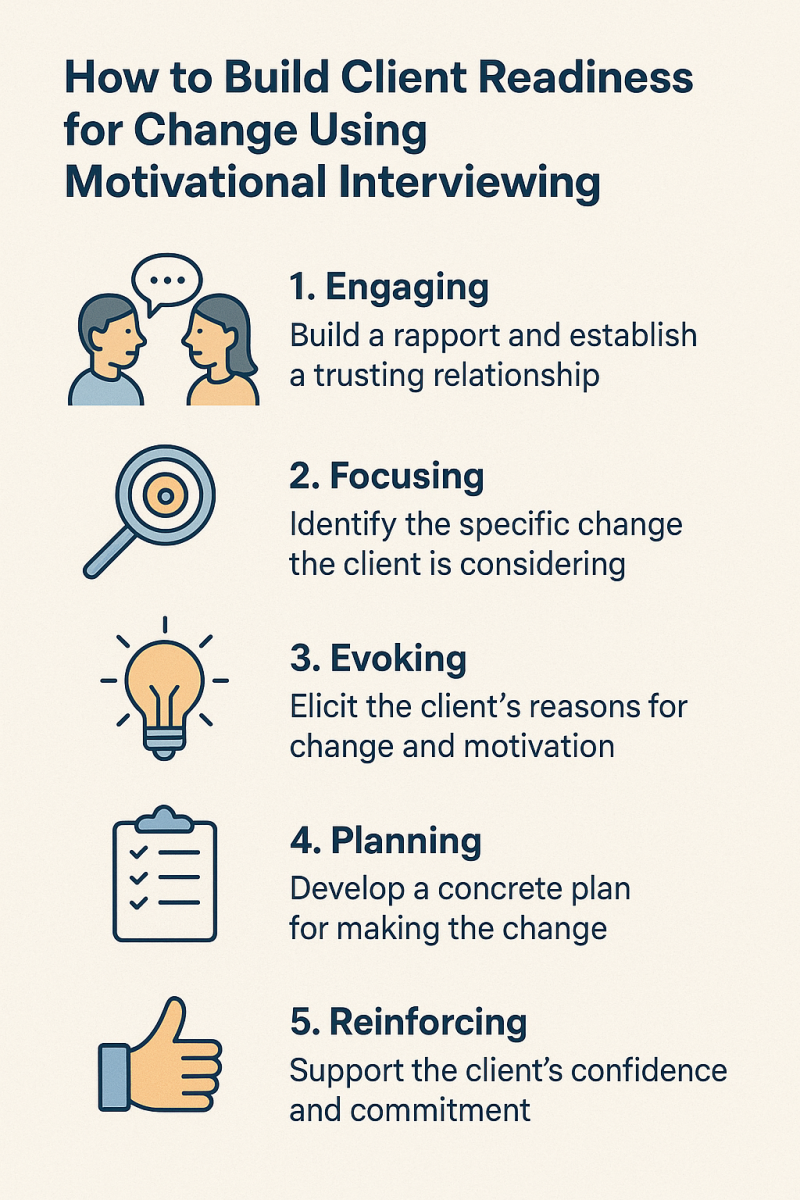
How to Build Client Readiness for Change Using Motivational Interviewing – Mental Health Rehabilitation Center in Islamabad

What is motivational interviewing (MI)?
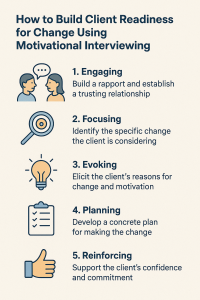
MI is a client-centered, collaboratively designed stance that aims to increase a person’s internal motivation towards positive behavioral change. Above all, MI respects the client’s autonomy, emphasizes empathy, and helps people see how far they still have to go in order to reach their goals. This makes MI especially useful in mental health treatment and addiction recovery where readiness to change is often unclear or unclear.

According to New Hope Rehab brings MI to Islamabad

A good MI clinical environment should be focused on integrating the treatment into the broader cycles of support, not just fixing what is broken. MI is an inspiration for all tenth a new framework. It provides a foundation for building trust, encourages emotional expression, and gives clients an increased willingness to participate in treatment. Many people come into therapy fumbling with mixed feelings–want change and yet at the same time fear it. MI helps them bridge that emotional gap.

Understanding Readiness to Change

Before they act, clients need to feel ready. Readiness for change is a client’s level of preparedness to alter behavior, thoughts, emotions. MI examines this readiness and supports it as clients move through improvement step by step.

The Trans theoretical Model

The stages of change, as developed and taken up by therapists everywhere with Michigan State’s Transtheoretical Model:

  • Pre-contemplation: No intention to change
  • Contemplation: Thinking about change
  • Preparation: Getting ready to change
  • Action: Actively making changes
  • Maintenance: Staying changed

MI gets clients moving from one stage to the next with gentle, supportive dialogue.

Motivational interviewing: three core principles

Collaboration supersedes authority

Instead of telling people what to do, therapists work with them.

Evocation of internal motivation

MI draws from within the client himself a rationale for change, rather than imposing external motives.

Autonomy is sacred

Ultimately, clients make their own choices. MI reinforces this in every step.

The role of empathy in the success of MI

It’s not just an emotional tool——really it’s a tactic when clients feel understood rather than judged, they express themselves more openly This openness allows therapists to investigate deeper motivations and barriers to change.

Building Readiness To Deal With Change Strategies

Open-Ended Questions

Instead of yes/no questions, open-ended questions encourage greater reflection. For instance:

  • “What concerns you most about your current situation?”
  • “How will your life be distinct from now if this problem gets solved?”

These questions force clients to think about how their behaviours affect others emotionally.

Affirmations and Giving As Much Support As The Strength

The affirmations are supportive actions designed to lift up a client’s strengths, such as:

  • “You’ve shown a lot of courage by coming here today.”
  • “You’ve handled challenges before, so that means you can do that again.”

This method reduces resistance to change and creates more readiness for it.

Reflective Listening

Reflective listening allows clients to feel heard and valued. By repeating back what the client has said, therapists can both keep the client on track emotionally and clarify any misunderstandings–and other interference.

As a Transition Tool Summarizing

Summaries allow clients to understand the progress made during the session. This enhances change talk and makes incongruities between values and behaviors more readly.

Promoting “Change Talk” In MI Sessions

“Change talk” means statements that clients make showing a desire, ability to cope with or reasons for change. Encouraging change talk greatly boosts the commitment to action.

Recognizing Sustain Talk vs. Change Talk

  • Sustain talk: “I don’t think I can do this.”
  • Change talk: “Maybe it’s time for things to be different.”

At New Hope Rehab, MI-trained therapists gently turn the conversation toward change talk.

MI at New Hope and Caring Islamabad Center

At New Hope Rehab and Caring Center Islamabad MI is part of treatment. It provides a safe and supportive environment where clients feel heard, validated and empowered.

Personalized Homeless Mental Health Programs

Each patient gets a tailor-made course of therapy. It addresses his or her unique psychological needs, history, and goals for treatment.

Support families

With education, counseling, and engagement in the recovery journey, families have been shown to greatly improve long-term outcomes.

Common problems and how to deal with them

Resistance, denial, and ambivalence are all common. In responses to these issues MI adopts the following methods:

  • Avoid confrontation
  • Support its own initiative
  • Take small steps
  • Vindicate personal motives

This overcomes defensiveness and helps to foster a more open mindset.

Frequently Asked Questions

1. What is Motivational Interviewing used for?

MI is used to enhance internal motivation to change unhealthy behavior. This is particularly effective in the treatment of mental disorders and addiction.

2. How does MI serve Mental Health Rehabilitation Center, Islamabad?

It enables clients to explore their emotions, to decrease resistance and to commit themselves to healthier choices.

3. Can people of any age be treated with MI?

MI can be adapted for use with adolescents, adults and the elderly.

4. How long does it take MI to work?

Results vary, but clients often achieve progress within a few sessions.

5. Does New Hope Rehab and Caring Center Islamabad have MI certified counselors?

Yes, the center employs certified counselors who have received training in this technique.

6. Where can I learn more about MI?

You might want to explore sources on motivational interviewing located within recognized websites like our own MI Network of Trainers.

Conclusion

Motivational Interviewing is a valuable tool to create a readiness for change. At New Hope Rehab and Caring Center, Beijing clients receive compassionate, evidence-based care that is supportive of healing, personal empowerment and success in the long term. With MI, people learn to trust themselves once more, embrace new possibilities, and then proceed confidently–one step at a time.


Related Article

Psychotherapy

Psychotherapy and Emotional Healing at a Rehabilitation center in Pakistan

HUNs impact people from all walks of life – regardless of age, ethnicity or socioeconomic group. Recent years have seen an increasing emphasis on mental health awareness, and people no longer shun help to suffer in silence. Psychotherapy and healing is important in this journey, particularly when done by someone safe, ethical and boundaried. A reliable Rehabilitation center in Pakistan offers much more than medical care: they bring acceptance, respect, and ongoing emotional support. New Hope Rehab and Caring Center Islamabad provides evidence-based psychotherapy and emotional healing services to individuals, couples, and families. By offering whole-person recovery, the center assists individuals in rebuilding emotional potency, enhancing coping mechanisms, and bringing balance to their lives. Understanding Psychotherapy and Emotional Healing Psychotherapy—also referred to as talk therapy—is a professional intervention that encourages individuals to explore their thoughts, feelings, and behaviors. It creates an open environment for people to share life challenges without fear of judgment. Psychological healing, however, attends to unresolved emotional pain, trauma, stress or psychological struggle that may impair daily functioning. At a professional RHC in Pakistan, psychotherapy is conducted by trained mental health professionals working with accepted clinical procedures. These techniques are nurtured to aid emotional balance, self-awareness and from a long term perspective better decision making. Importance of Emotional Healing to Recover Your Mental Health Battle scars are emotional, not just physical. Without intervention, emotional pain can lead to anxiety, depression, alcohol or drug abuse or relationship problems. Emotional healing is empowering, helping individuals make meaning of their life experiences, learn emotional regulation and to gain a sense of taking hold of one’s own life. The team at New Hope Rehab and Caring Center Islamabad understands that emotional healing does not happen overnight. Recovery is the work of diligence, steadfastness, and expertise. If we give weight to our emotional health, we can learn stress management, resilience, and mental stability. Psychotherapeutic Programmes in Rehabilitation Care of These Days A well know Rehabilitation centre in Pakistan provides variety of Psychotherapies to suit different needs of its patients. These may include: Individual Therapy Clients can also delve more deeply into personal struggles during private appointments. This model enables personal, emotive appropriate care plans with secrecy. Group Therapy A group setting fosters kinship and camaraderie. They can make people aware that they’re not alone, and perhaps learn new coping methods from others experiencing the same dilemmas. Family Counseling “Frankly, mental health doesn’t just impact the person who is sick; it impacts the whole family. Family therapy works to enhance communications and understanding of feelings, as well as promote positive family atmosphere. At the New Hope Rehab and Caring Center Islamabad, We Individualize therapy plans so that each member of our family receives required emotional and psychological support without overburdening pressure. How a Rehab Center Plays an Important Role in Your Emotional Stability A good rehab center is much more than just therapy sessions. It provides an organized, peaceful and nurturing atmosphere for the residents to focus entirely on recovery. REHABILITATION in Pakistan is a PROCESS comprising Assessment, planning intervention and emotional monitoring, whereas Rehabilitation centre play the role of long-term support. New Hope Rehab and Caring Center Islamabad New Hope has been a proponent of ethical care for people in need, confidentiality, and respect for its residents. The center’s holistic model also assures that emotional healing is connected to psychological insight and personal growth. Mindful Attention to Tension, Stress, and Pain The impact of trauma and chronic stress on the psyche can be profound. Therapy provides people with a safe place to process traumatic events, and the skills they will need to cope with future emotional triggers. Emotional healing isn’t about wiping out your memories of the past, but taking them off the pedestal where they dominate your present. A trusted registry of Rehabilitation center in Pakistan is used to provide trauma-informed care with respect and professionalism. Therapists emphasize emotional safety, step by step improvement, and empowering people to be confident and emotionally stable. Building Emotional Resilience Through Therapy Emotional Resilience is the capacity to recover from difficult situations. Psychotherapy helps with this by training coping strategies, emotional literacy and problem solving. Following a while time, people figure out how to study stress more comprehensively without being overwhelmed. New Hope Rehab and Caring Center Islamabad New Hope Rehab and Caring Center Islamabad integrates methods to build resilience in its Therapy plans, which assist individuals develop or reinforce their emotional foundation for mental wellbeing in the long run. Why There Is (And Will Always Be) A Need For Professional Support In Psychotherapy Family and friends are great for emotional support, but there is no substitute for guided assistance from a psychotherapist because it comes with the knowledge that can provided from psychological science’s tested and proven approaches. A professional therapist will recognize emotional patterns, behaviors and psychological risks that may not be evident to others. For a professional Rehabilitation center Pakistan for the prevents therapy to be ethical, confidential Its ethical care is benchmark of best mental health practices. We need this kind of caring as we heal emotionally, and seek emotional steadiness from day to day. Establishing an Environment of Safety and Support for Healing Emotional healing requires trust. It is easier for people to discuss their emotions when they feel safe in a supportive environment. Caring Center c New Hope Rehab and Islamabad Care Centre emphasizes on emotional safety, cultural awareness and patient respect in all the stages of treatment. This atmosphere makes it easier for people to concentrate on self-reflection, therapy attendance and growth without judgement or discomfort. Frequently Asked Questions (FAQs) 1. Why is psychotherapy important in healing of emotions? Psychotherapy also assists in gaining an understanding of emotional struggles, learning coping skills and how to process painful events in a structured way while receiving support. 2. How long does it take to heal emotionally through therapy? This length is different for everyone. Emotional repair takes time, shaped by life experiences, therapeutic stability and personal needs. 3. Can family participate in psychotherapy? Yes, at times, it’s good to have the involvement of family. Family therapy focuses on enhancing communication and feelings within the family. 4. Is therapy private at rehabs? And Yes, there is professional ethical responsibility to maintain confidentiality to insure the emotional safety of your patients.. 5. Who needs psychotherapy services? People who are suffering from emotional distress,

Motivational Interviewing

How Motivational Interviewing Improves Treatment Engagement at a Mental Health Rehab Center

Inspiring patients to take their mental health treatment seriously is one of the most critical — and sometimes one of the more difficult — parts of recovery care. Treatment often starts at a disadvantage; people enter therapy uncertain, resistant or overwhelmed by the prospect of change. This is where motivational interviewing (MI) comes in. At New Hope Rehab and Caring Center Islamabad, motivational interviewing is respected as an evidence-informed way to ensure that patients feel heard, understood and self-efficient in their journey of recovery at a Mental Health Rehab Center. Motivational interviewing operates from a spirit of partnership, rather than confrontation. Rather than simply instructing people on what they should do, it allows them to explore their personal reasons for change. It provides momentum for more active treatment participation, improved communication and sustained commitment to recovery goals. Understanding Motivational Interviewing in Mental Health Care Motivational interviewing is a directive, client-centred counselling style for eliciting behaviour change by helping clients to explore and resolve ambivalence. It seems particularly useful in the mentally ill and addicted who often have mixed feelings about their condition. This approach does not use authority or coercion, but involves empathy, listening actively and respectful conversation. Well-trained professionals using this method can do the work participants need in order to consider their values, challenges and aspirations in a way that makes motivation intrinsic. At a Mental Health Rehab Center standards and practice are very similar to that of this principle as in there staffs recognize patients being always treated with respect even when they do not know the consequences of their decisions. Why Patient Engagement is Important at a Mental Health Rehab Center Engagement with treatment is the degree to which an individual attends to their care in a consistent and timely manner. Higher engagement predicts increased emotional stability, better coping strategies, and greater adherence to the treatment regimen. However, many patients in mental health service rehabilitation will have: Fear or uncertainty about treatment Stigma-related concerns Low personal agency to do something differently Past negative healthcare experiences Such barriers can be breached through motivational interviewing, which provides this extra lubricant, enabling the interview to take place in a safe and non-judgemental setting. At New Hope Rehab and Care Centre Islamabad, this approach assists people in their recovery journey to feel like active participants rather than passive recipients of care. Core Principles of Motivational Interviewing MI operates according to four core principles that produce excellent results in mental health: 1. Expressing Empathy Empathy builds trust. Therapists listen intently and validate emotions without judging. This instills a sense of being respected and accepted in each person, which is crucial when you want to have an environment at your Mental Health Rehab Center. 2. Developing Discrepancy Clients are subtly nudged to see the contrast between where they are and what is theirs. This consciousness then serves as a strong internal push towards change. 3. Rolling With Resistance There is no resistance to challenge or confront. Instead, it’s been so thoroughly studied and discussed that people can talk candidly about being torn without being considered failures. 4. Supporting Self-Efficacy In motivational interviewing, we never give up hope that people can change. The little victories are celebrated, allowing people to gain confidence in their ability to keep going. Why Motivational Interviewing Enhances Engagement in Treatment Encourages Active Participation When people feel that they’re being heard, they are much more likely to fully engage in their therapy sessions, group discussions and recovery planning. Motivational interview changes treatment from something that is being imposed into a joint venture. Reduces Dropout Rates The reason is that many people don’t feel a personal connection or understand their mental health treatment. Therapeutischer Allianz von Nutzen Strengthening the Therapeutic Alliance can prevent early dropout and foster longer-term attendance. Enhances Commitment to Recovery Goals Rather than complying with directions passively, individuals self-generate personally relevant goals. This sense of belonging promotes the feelings of use and value, which keeps a person come back to an Mental Rehab Center. Improves Communication Between Clients and Providers Transparent, empathetic communication results in fewer misunderstandings and more open discussions about problems and progress. How Motivational Interviewing Works at New Hope Rehab and Caring Center in Islamabad At New Hope Rehab and Caring Center Islamabad, motivational interviewing is used as a component of client-centered care to facilitate ethical treatment. Mental Health Professionals who have been taught this intervention work with it to: Lay the foundation for trust in early treatment periods Explore mixed feelings about therapy or meds Encourage openness during counseling sessions Support gradual, sustainable behavior change This type of cure supports other forms of healing in a Mental Health Rehab Center so that treatment is all-is-inclusive, respectful and sensitive to every side. Motivational Interviewing and Long-Term Recovery True recovery is long-term and it’s not only about managing the symptoms it’s about gaining insight, resiliency, and self awareness. Why motivational interviewing is beneficial towards sustaining recovery long term With the right intervention, such as motivational interviewing, long-term recovery can be achieved by facilitating: Have a better understanding of their mental health struggles Identify personal strengths and values Develop healthier coping strategies Keep interest alive even during less positive cycles By promoting “intrinsic motivation,” the approach helps people stay engage with treatment long after they have completed transitional rehabilitation services. Moral Gains of Motivational Interviewing in Psychiatry Yes, then it is your duty to have a look at what ethical mental health care means: an emphasis on informed choice, respect and collaboration. Motivational interviewing is consistent with such values in the sense that clients are not manipulated into changes, but neither coerced nor pressured. In a Mental Health Rehab center, this is useful for: Patient autonomy Transparent decision-making Respecting the degree of readiness for change in each person Trust-based therapeutic relationships Such ethical bases are necessary for the provision of ethically viable and caring mental health care. Frequently Asked Questions (FAQs) 1. Is motivational interviewing appropriate for any mental health disorder? Motivational Interviewing is a flexible model and can be applied to many mental health issues. It is especially useful when patients are hesitant to get involved in treatment, or they feel ambivalence about proceeding. 2. What is the difference between motivational interviewing and counselling? Unlike directive methods, motivational interviewing (MI) is a counseling style that emphasizes collaboration and evocation rather than teaching

Heroin Addiction

Psychological Effects of Heroin Addiction on Mental Health – Role of a Drug rehabilitation center in Islamabad Pakistan

Heroin is a dangerous issue of public health, not only affecting the body but throws mental and emotional health into disarray. If unattended to, the psychological outcomes of heroin abuse can be deep-seated and incredibly complex – in addition to life-changing. There has been an increase in demand for sensitive and evidence-based services within Pakistan, particularly within urban centres such as Islamabad. A reliable Drug rehab centre in Islamabad Pakistan is an effective way for addicts to cope with their drug addiction as well as the psychological issues that come along with abuse. In this article, we will discuss how heroin dependency influences mental health and what the general psychological comorbidities are connected to it, in addition, the role of professional rehab centers like New Hope Rehab and Caring Center Islamabad in responsibly restoring one’s life back on track with focusing primarily on patient care. TractsHeroin Addiction and Mental Health Cocaine acts similarly to heroin by targeting the brain’s reward and emotional control systems. Although moderate doses tend to make users feel calm and euphoric, brain chemistry changes with continued use. The brain, having become accustomed to functioning normally with the drug, can no longer function comfortably without it. There is a close relationship between mental health and heroin abuse. Some people find that, due to frequent use over time, it becomes hard for them to think and/or feel in response to stressful situations; others were not experiencing certain types of thought and feeling before using but press on with heroin use as a way of warding off acute mental health symptoms (e.g. inability to sleep) that upset their functioning. This dual interaction underscores the importance of a professional evaluation and care. Typical Psychological Effects of Heroin Dependence Depression and Emotional Numbness Depression is one of the most common mental health outcomes of heroin abuse. That natural dopamine production is suppressed by chronic heroin use, making it so users have a hard time feeling good without the drug. This can result in chronic feelings of sadness, a lack of emotions, not motivated and withdrawal from social life. People often tell me they feel emotionally numb, alienated from their family, and uncertain about what gives them purpose. An experienced Drug rehabilitation center in Islamabad Pakistan takes time to rehab you emotionally through required assisted therapy and not make things go away overnight which is next to impossible. Anxiety and Chronic Stress Heroin Addiction Inducing constant Stress Extended fear is a usual result of heroin addiction, especially whenever the junkie has run out of his/her dosage or if their reserve is running low. People can have feelings of constant concern, agitation, panic or fear about health, relationships and legal matters. Long term, this overactive stress response can disrupt sleep, impair decision-making and impede day-to-day function. Therapists in organized rehab programs teach patients to self-soothe, without using a substance, when anxiety take hold. Cognitive Impairment and Poor Decision-Making Long-term heroin use may have negative effects on memory, concentration and problem-solving abilities. People may have difficulty with focus, planning and judgment that affect work, school or home obligations. It is not always permanent, but it does take time, consistency and therapeutic support to address these cognitive effects. A medically managed & professional Substance Abuse facility in Islamabad Pakistan offers well defined activities and mental-task oriented exercises that encourage a sustained cognitive growth. Personality and Behavioral Changes Personality changes and behavior with Heroin Addiction People may become cranky, impatient, socially isolated or emotionally volatile. Distrust, lies and broken relationships abound, oftentimes leading to feelings of guilt and shame which in turn contribute to negative mental health. Rehabilitation centers such as New Hope Rehab and Caring Center Islamabad work with these changes through counseling and cognitive therapy – rotating accountability, emotional consciousness, and reconstructing healthy ways of relating to others. Co-Occurring Mental Health Disorders Many of these individuals with heroin abuse also have other mental health conditions, a condition known as dual diagnosis. These may include: Major depression Other mood disorder Anxiety disorders Trauma-related conditions Sleep disorders The underlying psychological challenges may not be completely addressed if addiction is treated alone, without the integration of care. This is also the reason a medically supervised Drug rehabilitation center in Islamabad Pakistan focuses on thorough assessment of mental health before starting addiction treatment. The Psychological Effects of Withdrawal and Recovery The detox period might be mentally tough. As the brain gets used to working without heroin, moodiness will kick in, people will have moments of irritability, feeling restless and just not being comfortable. These symptoms may seem scary, but they are typical experiences during detox. Recovery can be facilitated by supportive, supervised and therapeutic guidance to ensure that patients safely negotiate this phase. By a mindful care program in course of time, mental lucidity, emotional balance and confidence can be improved. Role of Professional Rehabilitation in Mental Recovery An ethical drug rehab center is one that has the future of the patients at heart, not making a quick buck from them. At New Hope Rehab and Caring Center Islamabad, we believe in caring with honor, confidentiality and respect for every person’s mental health. A distinguished addiction treatment center or Drug rehabilitation centre in Islamabad Pakistan usually Read also /supports recovery by: Psychological assessment and monitoring Individual counseling and therapy sessions Strategies for how to process emotions and manage stress The stability and the structure we are missing come from those routines. Aid to family understanding and communication All of these elements assist in helping people learn to think more healthily, to cope differently and relate to others in a new way. Significance of Ethical, Patient-Centered Care Decency and ethics are, or should be, core in health care — addiction treatment and mental health services in particular. There’s personal healing, and each person does that differently. Professional centers steer clear of hype and bulls3hit, focusing on good medicine, patient safety and incremental improvements. A standard Best Drug rehabilitation center in Islamabad Pakistan not only promotes mental health education, long-term well-being but emphasises on informed choice as opposed to temporary pledges. FAQs 1. What is the long-term adverse mental effect of being addicted to heroin? Long-term effects on mood, emotional control and cognitive function Due to heroin addiction permanent while lasting depression of the mood On the other hand in it is known

Individual Counseling sessions

Individual Counseling Sessions for Inner Peace and Stability – Addiction rehabilitation center in Islamabad, Pakistan

Mental health also holds the key in overcoming addiction and mental stress. At New Hope Rehab and Caring Center Islamabad, the individual counseling sessions are to assist people in re-finding inner peace, emotional stabilityand long-term equilibrium. These sessions are designed to help individuals learn about their own struggles, develop healthy coping skills and support recovery in a safe, respectful and confidential setting. Being a reliable addiction rehabilitation center in Islamabad, Pakistan; New Hope Rehab & Caring Center are concerned to provide growth based on medical ethics and honor house’s dignity. One-on-one counseling isn’t the miracle cure it’s often made out to be; it’s a mindful process of exploring oneself, one’s actions and emotional responses. Understanding Individual Counseling Sessions Personal counseling is a one-on-one helping relationship between a professional counselor and a student. Sessions provide you with your own place to talk through what’s on your mind, and try out different solutions without feeling like other people are weighing in. At New Hope Rehab and Caring Center Islamabad we provide one-on-one counseling according to the client’s problem. Whether it is issues related to substance abuse, emotional pain, anxiety, trauma or how to stay sober… clients experience sessions designed with their recovery objectives in mind. A Personalized Approach to Healing Addiction and emotional suffering are both individual experiences people handle differently. That’s exactly why individualized treatment program is one of the founding blocks to successful recovery at an Addiction rehabilitation center in Islamabad, Pakistan. Counselors spend valuable time in learning about the individual’s history, mental health status, family dynamics and social issues that are impacting them to develop their therapeutic plan. This personalized perspective lets clients go at their own speed and target the causes of illness instead of only treating their symptoms. Individual Therapy and Addiction Recovery Emotional health, the ability to make decisions and feelings of self-worth are often affected by addiction. Personal counseling is instrumental in helping patients work through these deeper issues, while promoting life-long recovery. Emotional Awareness and Regulation Many people addicted to opioids have a hard time recognizing or controlling their feelings. Through counseling, clients can also learn to identify their own emotional triggers and implement more beneficial reactions. It provides emotional sobriety and prevents the slippery slope of relapse. Building Healthy Coping Strategies Low-key Terrorism stress, anxiety, and unresolved trauma may play a role in substance use. During personal counseling at New Hope Rehab and Caring Center Islamabad, we teach coping skills that are used to stay calm and in control without using a drug. Strengthening Motivation and Accountability Motivation and personal responsibility can be fostered in individual sessions. This is of particular relevance in Addiction center rehabilitation Islamabad Pakistan where recovery is considered as a group activity that never ends. Creating Inner Peace Through Counseling Inner peace isn’t the lack of problems- it’s having the psychological tools to get through them in a whole way. With guidance, in individual counseling clients can work towards this balance. Addressing Trauma and Past Experiences Untreated trauma can have a profound effect on mental health and recovery from addiction. Qualified therapists at New Hope Rehab, Caring Center in Islamabad offer an initial trauma-focused treatment and recovery where discussions are held with dignity sensitivity. Improving Self-Esteem and Self-Understanding Addiction can also have a devastating impact on self-worth and self-confidence. In one-on-one counseling, clients gain an understanding of their strengths, restore self-respect and acquire a healthier identity. Stability and Long-Term Mental Wellness The aim of recovery is for there to be stability. In the context of individual counseling, individuals learn to create a stable daily routine for oneself – creating emotional resilience that lets them bounce back from challenges with life goals. Decision-Making and Problem-Solving Skills Impulsivity when many of those who come to an Addiction rehab in Islamabad, Pakistan. Counseling is working on better judgment, planning well and emotional accurate thinking to keep me stable. Supporting Daily Life and Relationships Relationships and daily activity structure are a part of the recovery. Guidance Therapists assist in overcoming communication barriers, reconciling with relatives and normalizing lives. Why prefer New Hope Rehab and Caring Center? New Hope Rehab and Caring Center Islamabad provides professional, ethical and patient centred care. As an accredited Addiction rehabilitation center in Islamabad, Pakistan, it promotes evidence-based interventions and professional conduct. Key principles include: Confidential and respectful treatment environments Qualified and experienced counseling professionals Personalized care plans, not just care plans… tailored to long-term health Mental health support as part of addiction recovery The center knows that recovery isn’t linear. Individual counselling sessions adjust according to client development; this guarantees continuous emotional support during the trip. The Significance of Ethical and Trust-Based Care Trust is crucial for health care, particularly in addiction and mental health services. However, personal counseling at New Hope Rehab and Caring Center Islamabad abides by morals protecting patient privacy and written consent of the client. Counselor do not give false hopes or assurances. They are about empowering people with information, skills and emotional support that enables them to effect positive changes progressively. Frequently Asked Questions (FAQs) 1. What is individual therapy in addiction treatment for? Private counseling aids those in recovery to recognize emotional triggers, establish coping skills and expose underlying issues that can cause addictive behavior which then allow a person maintain long term sobriety and get his or her life under control. 2. Are individual counseling sessions confidential? Yes. The New Hope Rehab and Caring Center Islamabad keep your matters completely confidential to provide you a safer and much more trusty environment for therapy. 3. What is the average length of an individual counseling session? Session length will vary according to the needs of each individual, however it is generally structured in a way to permit exploration and further movement through issues. 4. Is individual counseling for anxiety and emotional stress? Yes. Emotion-focused therapy Emotional stress, anxiety and similar concerns are treated in individual counseling with a focus on emotional awareness, learning relaxation techniques and practicing healthy coping mechanisms. 5. Is one on one counseling appropriate for everyone at an Addiction treatment center in Islamabad, Pakistan? Most individuals do well in individual therapy and it is tailored to address various emotional, cognitive, and recovery needs. Conclusion Private Face to Face Counselling sessions are critical when it comes to attaining peace within yourself and emotional balance on your road