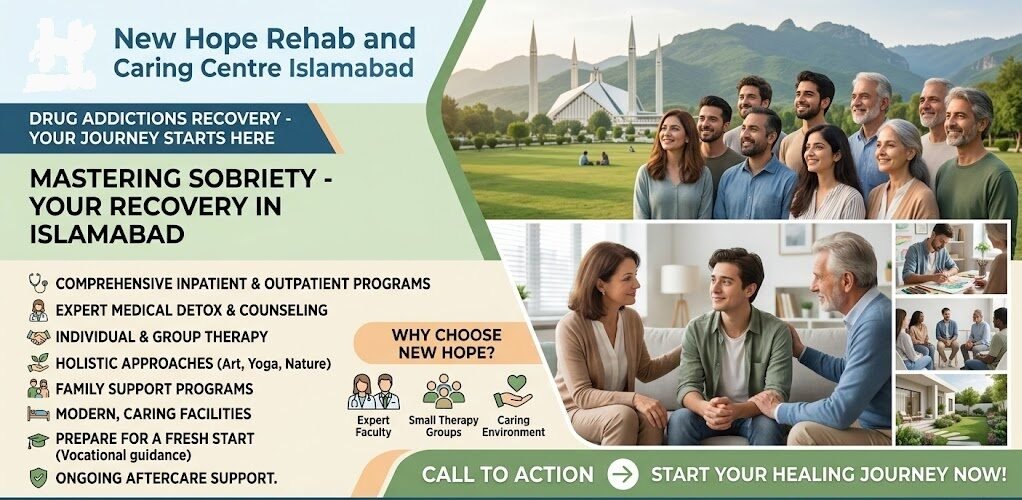


Alcohol Dependence is a complex medical condition which effects an individuals life, work and family. Selecting the right treatment setting is a critical first step to long-term healing. Alcohol Treatment Inpatient Rehab is a highly structured, medically supervised facility where you can concentrate solely on recovering from an addiction to alcohol. Inpatient treatment in New Hope Rehab and Caring Center Islamabad is a concept where ethical professional care with evidence-based theories are blended together to achieve the optimal recovery, emotional stability, and long-term well-being for individuals.
Knowing More About Alcohol Addiction Inpatient Rehabilitation
There is also inpatient rehabilitation, where you live at a rehab center for a set amount of time. This model works particularly well for those with moderate to severe alcohol dependence, a history of relapse, or both co-occurring mental and medical disorders.
Inpatient treatment, unlike any of the outpatient programming gets individuals out of triggering situations and high risk environments throughout their daily lives. It is this immersive deprivation that arms health workers with an opportunity to counter the physical consequences of alcohol consumption and the mental habits that perpetuate addiction. In this context, alcoholism treatment can be much more concentrated, coordinated and supervised.
Why Is Inpatient Care Necessary for Alcohol Recovery
Psychosocial and biological factors of alcohol addiction. Cold turkey is unsafe and can cause severe anxiety, seizures, or cardiac problems. Inpatient rehab services offer ongoing care to control these risks in a safe manner.
The major advantages of inpatient care are:
- A controlled, substance-free environment
- 24-hour access to medical and nursing encouragement
- Daily rituals to keep themselves grounded
- Less time spent with stress and relapse triggers
At New Hope Rehab and Caring Center Islamabad, our inpatient programs focus on patient safety, respect and taking it slow – not the quick fix or unrealistic claims.
The Role of Medical Detoxification
Detoxification in a medically supervised environment is often the starting point for inpatient rehabilitation for many people. Detox is a way of enabling the body to drip previously ingested alcohol and safely control withdrawal symptoms. This is an important stage as uncontrolled withdrawal can cause physical and emotional overwhelm.
Detox is medically supervised and the health of patients is closely monitored 24/7 as they progress through detox. Support care assists to ease pain and stabilizes the person so they’re prepared for the therapeutic part of alcohol addiction treatment. Detoxification by itself is not full treatment, but a crucial first step to successful recovery.
Therapeutic Interventions of Inpatient Rehabilitation
Good inpatient rehabilitation is so much more than detox and addresses long term behavior change. Most programs are a mixture of therapies based on individual needs.
Individual Counseling
Private sessions allow people to delve into the personal, emotional and psychological elements underlying their alcohol use. In this private environment, honesty, introspection and goal-setting are promoted.
Group Therapy
Group sessions offer the opportunity for patients to exchange their experience and draw on peer support. A sense of belonging decreases isolation and allows individuals to recognize they are not alone in their recovery.
Behavioral Therapies
Behavioral therapies based on science have taught individuals to recognize dysfunctional thinking, develop coping strategies and practise healthier ways to react to stress. These are all necessary tools for preventing relapse post discharge.
Addressing Mental and Emotional Well-Being
Alcohol dependence often is concurrent with depression, anxiety or stress related to trauma. Inpatient Treatment allows us to help you address these issues at the same time as your addiction.
At New Hope Rehab and Caring Center Islamabad we plan our care that has whole view/holistic approach. The maintenance of emotional fitness, the alleviation of stress and self-awareness are regarded as equally important aspects of recovery. this comprehensive method enhances the efficacy of alcohol addiction therapy and provides for a long-term recovery.
Daily Structure and Healthy Routines
A structured program is one of the key characteristics of inpatient rehabilitation. Predictable routines Serve to help restore balance to lives that have been continually upset by addiction. Your day may involve therapy, wellness activities, educational talks and time to relax and reflect.
Good habits will result in more sound sleep and better nutrition, which are both important components of recovery. Eventually, these habits enable people to regain their self-discipline and confidence that are crucial when it comes to staying sober outside of the center.
Family Involvement and Support
Chronic alcoholism affects everyone in a family, not just the alcoholic. Inpatient treatment programs frequently acknowledge the value of family education and involvement as may be warranted. Family-centered therapy sessions can make lines of communication stronger, restore trust and encourage healthier boundaries.
When people understand addiction as a medical and psychological condition, they are better prepared to provide support during the recovery process without bringing shame into the mix. This combined approach improves success rates for treatment of alcohol abuse, and lowers the risk of relapse.
When the Inpatient Rehabilitation Stint Is Over
Recovery is not finished when inpatient treatment concludes. “Rehab is an enormous part of getting ready to live in the community, because it’s not a care facility or anything like that. This may involve relapse prevention planning, stress management coping skills, or recommendations for aftercare.
Aftercare planning facilities are also utilised by New Hope Rehab and Caring Center for Islamabad to help with the easy re-adaptation in normal daily life. Continued care, whether in the form of follow up treatment or community resources, are important for sustainability of the gains made during hospitalization.
Frequently Asked Questions (FAQs)
1. Who is a candidate for inpatient rehab for alcoholism?
Inpatient treatment is best for those with a severe drinking problem, multiple relapses, or require medical oversight during withdrawal.
2. What is the typical length of stay for inpatient alcohol rehab?
The length of time is different for everyone according to need, overall health and treatment goals. No longer cookie cutter, programs are personalized so all needs can be met.
3. Is alcohol addiction inpatient treatment safe?
Inpatient treatment is supposed to be a safe, medically supervised environment — especially when you are detoxing and early into recovery.
4. Are you able to address mental health issues while attending inpatient rehab?
Yes, frequently inpatient does focus on other underlying mental-health issues in addition to the drinking that contributes to a more well-rounded treatment approach.
5. What Do You Do after Inpatient Drug Rehab?
Aftercare The planning of aftercare is a necessary measure to prevent relapse and empower clients on the path of healing by offering support following discharge, implementing lifestyle changes, utilizing effective coping strategies for reducing relapse vulnerability.
Conclusion
Inpatient Alcohol Rehabilitation Inpatient detox and rehabilitation for the treatment of alcoholism provides a complete, nurturing environment that is medically monitored to restore a person who has been addicted back to health. When physical health, emotional well-being and behaviour patterns are treated as an integrated whole, recovery from addiction is more successful. New Hope Rehab and Caring Center is dedicated to offering ethical,patient-focused alcohol addiction treatment that honors individuality and supports long term well-being. Inpatient Rehabilitation If you are looking for the right place to start on your path to recovery, inpatient rehab continues to be an important and powerful force.