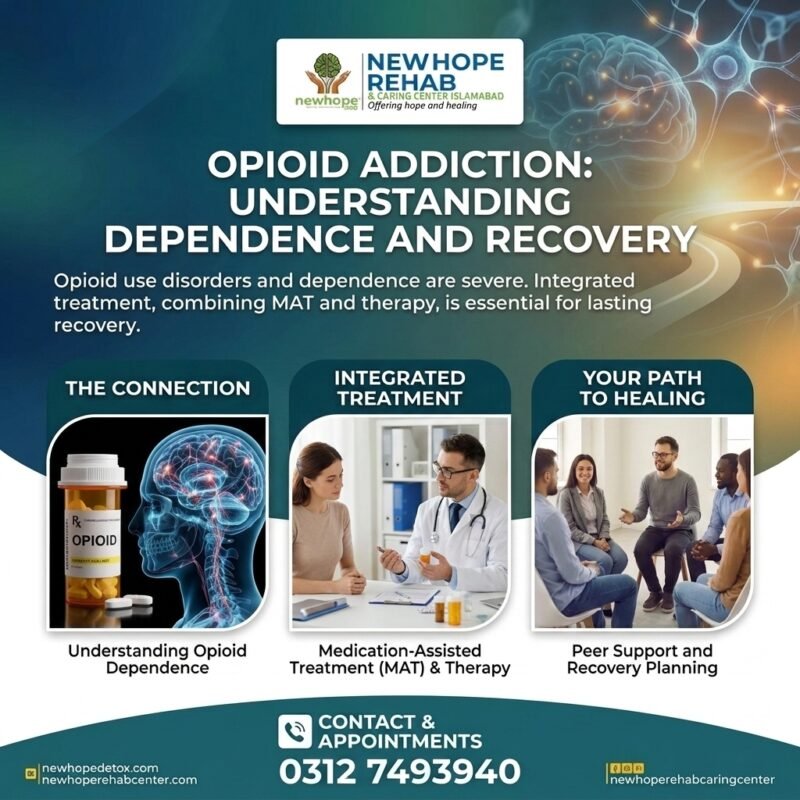
Opioid addiction is a serious health condition that can affect a person’s physical health, mental well-being, relationships, and daily life. Opioids are medicines used to treat pain, but some opioids can also cause dependence and addiction. When opioid use becomes difficult to control, a person may continue using them despite harmful effects on their health or personal life.
The good news is that opioid addiction is treatable. With appropriate medical care, counseling, and ongoing support, people can manage dependence and work toward long-term recovery. Understanding the signs of opioid addiction and the available treatment options is an important first step toward getting help.
What Is Opioid Addiction?
Opioids are substances that act on opioid receptors in the brain and body to reduce pain. They include prescription medicines such as oxycodone, morphine, and codeine, as well as illicit opioids such as heroin. Fentanyl is a powerful synthetic opioid used medically in specific circumstances and also found in illicit drug supplies.
Opioids can be helpful when prescribed and used appropriately. However, they can also produce feelings of relaxation or pleasure, which may contribute to repeated use and dependence.
Opioid use disorder, commonly called opioid addiction, is a medical condition involving a pattern of opioid use that becomes difficult to control and causes significant problems in daily life. It is not simply a lack of willpower. Biological, psychological, and social factors can all contribute to its development.
Understanding Opioid Dependence
Opioid dependence and opioid addiction are related, but they are not exactly the same.
Physical dependence develops when the body adapts to regular opioid exposure. If a person suddenly reduces or stops taking opioids, withdrawal symptoms may occur. Physical dependence can develop even when someone takes medication as prescribed.
Opioid addiction, or opioid use disorder, involves difficulty controlling use despite negative consequences. A person may experience strong cravings, spend considerable time obtaining or using opioids, or continue taking them even when they harm health, relationships, or responsibilities.
Recognizing this difference is important because physical dependence alone does not necessarily mean someone has an addiction. A healthcare professional can assess symptoms and recommend appropriate care.
Common Signs and Symptoms of Opioid Addiction
The signs of opioid addiction can vary depending on the substance, the amount used, the duration of use, and the person’s health.
Common warning signs include:
- Strong cravings or a persistent desire to use opioids.
- Taking more medication than intended or using it more often than prescribed.
- Repeated unsuccessful attempts to reduce or stop use.
- Spending significant time obtaining, using, or recovering from opioids.
- Neglecting work, education, family, or other responsibilities.
- Continuing opioid use despite physical, emotional, or social problems.
- Experiencing withdrawal symptoms when opioid use is reduced or stopped.
- Developing a higher tolerance, meaning more of the substance is needed to produce the same effect.
Some people may hide their opioid use because of shame or fear of judgment. Responding with compassion rather than blame can make it easier for them to seek help.
Causes and Risk Factors of Opioid Addiction
There is no single cause of opioid addiction. It can develop through a combination of medical, psychological, environmental, and biological factors.
Prescription Opioid Use
Some people first encounter opioids after surgery, an injury, or treatment for a painful condition. Although many patients use these medicines without developing an addiction, prolonged exposure or other risk factors can increase the chance of problems.
Taking opioids only as prescribed reduces some risks, but it does not eliminate the possibility of physical dependence or opioid use disorder.
Mental Health Challenges
People experiencing depression, anxiety, trauma, or severe stress may use opioids in an attempt to cope with emotional distress. The relief may be temporary, while repeated use can create additional health and personal difficulties.
Social and Environmental Factors
Social pressure, exposure to substance use, family difficulties, isolation, and limited access to healthcare may increase vulnerability. These factors do not determine a person’s future, but they can influence the risk of developing a substance use disorder.
Previous Substance Use Problems
A personal history of substance use problems may increase the risk of opioid addiction. A family history of addiction may also contribute through genetic and environmental influences.
Understanding these factors can help healthcare professionals develop treatment plans that address the whole person.
The Health Risks of Opioid Addiction
Opioid addiction can affect nearly every area of life. Beyond the risk of dependence, opioids can slow breathing, reduce alertness, and impair judgment.
Potential complications include:
- Overdose: Opioids can suppress breathing, potentially causing brain injury or death.
- Physical health problems: Long-term use may contribute to constipation, hormonal changes, sleep-related breathing problems, and other complications.
- Mental health concerns: Opioid use disorder may occur alongside depression, anxiety, or other mental health conditions.
- Relationship difficulties: Secrecy, financial strain, and changes in behavior may affect family and social relationships.
- Problems with work or education: Cravings, intoxication, and time spent obtaining opioids may interfere with daily responsibilities.
- Infection risks: Injecting opioids can increase the risk of serious infections, including HIV and hepatitis, particularly when equipment is shared.
Recognizing an Opioid Overdose
An opioid overdose is a medical emergency. Warning signs can include very slow or absent breathing, inability to wake the person, a limp body, and blue or gray lips or fingertips.
If an overdose is suspected, contact local emergency services immediately. Give naloxone if it is available and follow the product instructions. Naloxone can temporarily reverse an opioid overdose, but emergency medical care is still necessary because symptoms may return.
If the person is not breathing normally, follow the emergency dispatcher’s instructions for rescue breathing or CPR if you can. Do not leave the person alone.
Opioid Withdrawal: What to Expect
When someone who is physically dependent on opioids stops or sharply reduces use, withdrawal symptoms may develop. Symptoms and their duration depend on the opioid involved, the pattern of use, and the person’s health.
Common symptoms include:
- Muscle aches and body pain.
- Sweating, chills, or a runny nose.
- Restlessness, anxiety, or irritability.
- Trouble sleeping.
- Abdominal cramps, nausea, vomiting, or diarrhea.
- Increased heart rate and strong cravings.
Withdrawal can be very uncomfortable. Although opioid withdrawal is not usually life-threatening for otherwise healthy adults, complications such as dehydration can occur. Pregnancy and certain medical conditions require particular care.
People should seek medical guidance before attempting to stop opioids, especially after prolonged use or when other substances are involved. Medical treatment can reduce withdrawal symptoms and help prevent a return to opioid use.
Opioid Addiction Treatment Options
Effective treatment is available, and the best approach depends on a person’s health, history of opioid use, and individual needs.
1. Medication for Opioid Use Disorder
Medications are an important part of evidence-based treatment. Common options include:
- Buprenorphine: Helps reduce cravings and withdrawal symptoms while lowering the risk of overdose compared with continued use of many full opioid agonists.
- Methadone: A long-acting medication that can reduce withdrawal symptoms and cravings when provided through an appropriate treatment program.
- Naltrexone: Blocks opioid effects and may help prevent a return to opioid use for people who have completed the required opioid-free period before starting treatment.
These medications work differently and are not suitable for everyone. A qualified healthcare professional can explain the benefits, risks, availability, and requirements of each option.
Medication treatment can continue for an extended period when needed. There is no universal timeline for recovery, and stopping medication too soon can increase the risk of returning to opioid use and experiencing an overdose.
2. Medical Detoxification
Medically supervised withdrawal management can help people cope with opioid withdrawal symptoms. Healthcare professionals may provide monitoring, supportive care, and appropriate medications.
However, detoxification alone is usually not sufficient treatment for opioid use disorder. Without continued care, the risk of returning to opioid use remains significant. A comprehensive plan should connect withdrawal management with ongoing treatment and recovery support.
3. Counseling and Behavioral Support
Counseling can help people identify triggers, manage stress, develop healthier coping skills, and rebuild daily routines. Individual counseling, group support, and family involvement may be helpful depending on the person’s circumstances.
Counseling is often most effective when combined with appropriate medication rather than used as a substitute for medication when medication is indicated.
4. Treatment for Co-Occurring Conditions
Some people experience opioid use disorder alongside depression, anxiety, trauma-related symptoms, or other substance use problems. Treating these concerns together can support better overall health.
A professional assessment can help identify the appropriate combination of medical treatment, mental health care, and practical support.
5. Long-Term Recovery Support
Recovery often involves more than stopping opioid use. People may need help rebuilding relationships, returning to work or education, addressing housing or financial concerns, and maintaining physical and emotional health.
Regular follow-up, access to treatment, supportive relationships, and an overdose prevention plan can help people manage challenges over time.
How Family and Friends Can Help
Family members and friends can play a valuable role in recovery. Their support is most helpful when it combines compassion with practical assistance.
Helpful steps include:
- Listening without judgment or humiliation.
- Encouraging a professional assessment and evidence-based treatment.
- Learning about opioid addiction and overdose warning signs.
- Supporting attendance at medical appointments when appropriate.
- Keeping naloxone accessible where possible and learning how to use it.
- Setting healthy boundaries while continuing to offer encouragement.
It is important not to assume that threats, punishment, or shame will resolve addiction. Opioid use disorder is a health condition, and respectful support can make seeking treatment feel safer.
Opioid Addiction Support at New Hope Rehab and Caring Centre Islamabad
New Hope Rehab and Caring Centre Islamabad is a resource for individuals and families seeking addiction-related support. People concerned about opioid use may benefit from discussing their symptoms, medical history, withdrawal concerns, and recovery goals with an appropriate professional.
Treatment needs vary. A professional assessment can help determine whether medical evaluation, withdrawal management, medication treatment, counseling, or additional support is appropriate. Opioid use can carry serious overdose risks, so medical supervision is especially important when planning changes to ongoing use.
Individuals and families should contact the centre directly to confirm which services are available and whether the centre can provide or coordinate the specific medical care required. Choosing qualified support can help people make informed decisions about treatment and recovery.
Frequently Asked Questions
1. Can opioid addiction be treated successfully?
Yes. Opioid use disorder is treatable. Medication, counseling, medical care, and ongoing recovery support can help people reduce harmful opioid use and improve their quality of life. Treatment should be tailored to the individual, and recovery may involve long-term care.
2. Is physical dependence the same as opioid addiction?
No. Physical dependence means the body has adapted to opioids and may experience withdrawal when they are stopped. Addiction involves difficulty controlling use despite harmful consequences. A person can develop physical dependence while taking prescribed medication without having opioid use disorder.
3. How long does opioid withdrawal last?
The duration depends on the opioid involved and the person’s pattern of use. Withdrawal from some short-acting opioids may begin within hours and improve over several days, while symptoms associated with longer-acting opioids can last longer. Cravings and sleep or mood changes may continue beyond the initial withdrawal period.
4. Is detox alone enough to recover from opioid addiction?
Usually not. Detoxification can help manage withdrawal, but it does not by itself address cravings, triggers, or the ongoing risk of relapse and overdose. Continued treatment, including medication when appropriate, counseling, and follow-up support, is generally recommended.
5. What should I do if someone may be experiencing an opioid overdose?
Call local emergency services immediately. Give naloxone if available and follow its instructions. If the person is not breathing normally, follow the emergency dispatcher’s guidance for rescue breathing or CPR. Stay with the person until help arrives, even if naloxone appears to reverse the symptoms.
Conclusion
Opioid addiction is a complex health condition, but effective treatment and recovery support are available. Understanding the difference between physical dependence and addiction, recognizing warning signs, and seeking professional care can help people take the next step toward recovery.
Medication treatment, counseling, overdose prevention, and continued support can all play important roles. With appropriate care and a plan tailored to individual needs, people affected by opioid addiction can improve their health, rebuild their lives, and work toward lasting recovery.