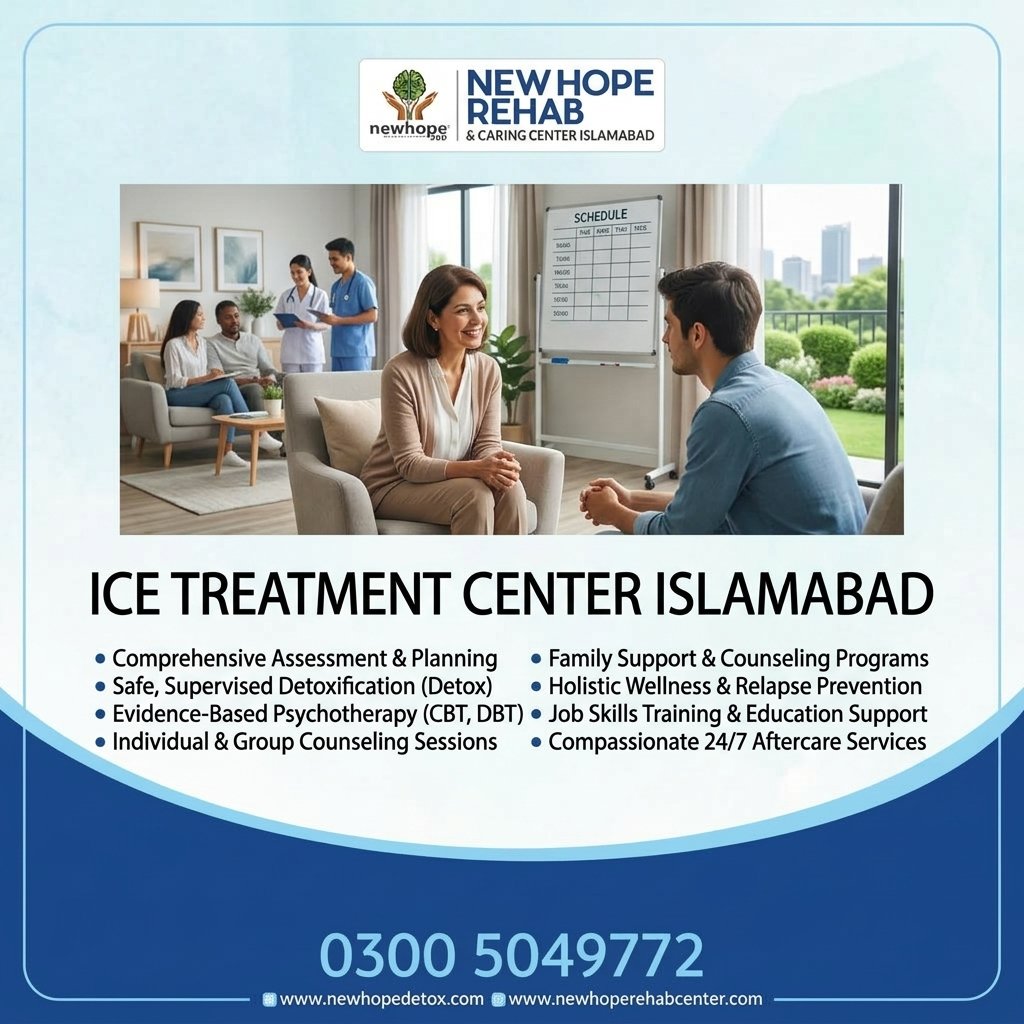
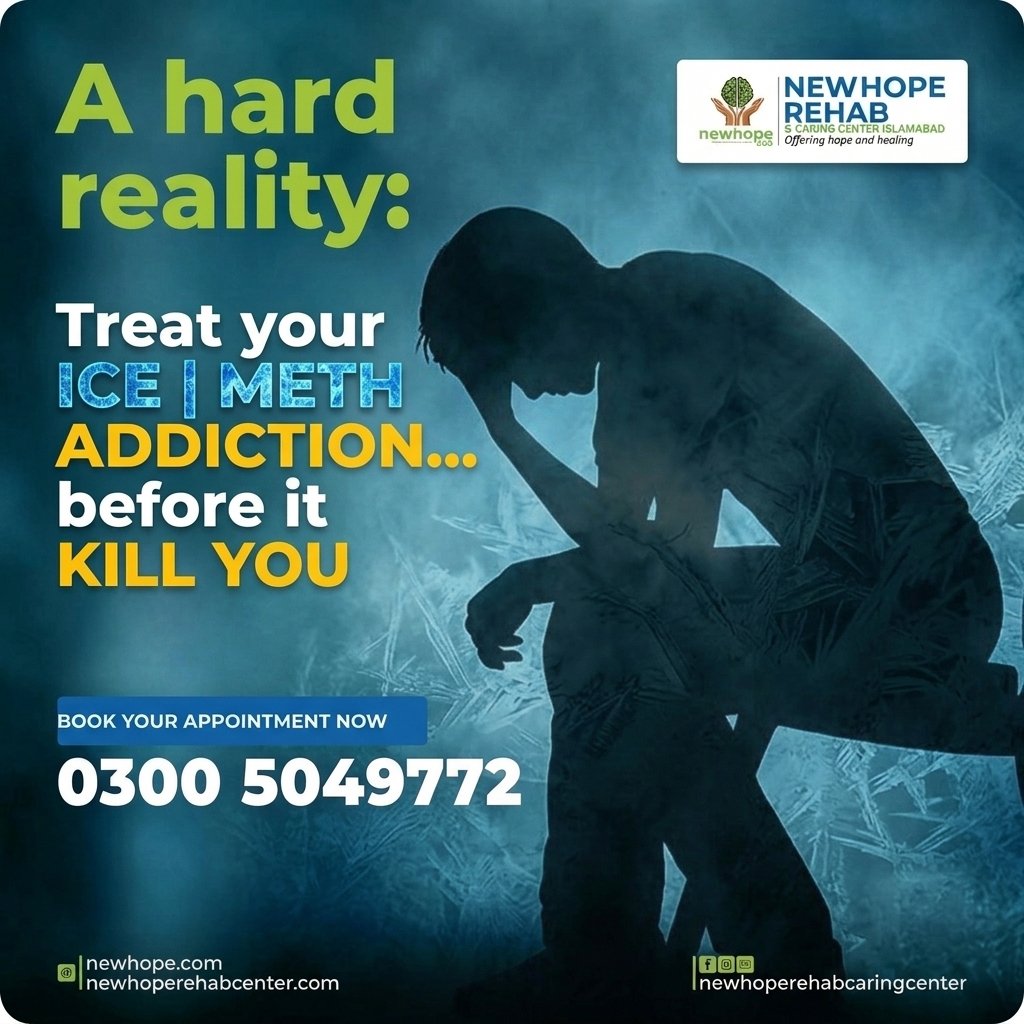
ICE (crystal methamphetamine / meth) is a potent and extremely addictive central nervous system stimulant that alters the way the brain functions. Although, at first, it creates a sensation of energy, self-assurance and vigilance that allures one to consume more frequently but this leads towards habituation in no time which has major physiological, mental and social repercussions. If treatment is not started quickly, addiction to ICE can affect many aspects of a personal life such as health, relationships with loved ones and career prospects before reducing quality of life.
The first step in recovery for those looking for ICE | METH Addiction Treatment in Islamabad, Pakistan is to learn about addiction and treatment options available. New Hope Rehab and Caring Centre Islamabad offer a full range of programmed delivered with compassion, responsibility, and care according to proven scientific principles to assist recovery and fulfil wellness.
What Is ICE | METH Addiction?
ICE, better known as crystal meth, is a manmade stimulant that releases more dopamine in the brain. This leads to heightened sensations of euphoria and vitality, but chronic use rewires the brain’s reward pathways for simple survival without the ganja itself.
Individuals can quickly become psychologically and physically dependent on drugs, requiring more of the substance to achieve previously experienced effects.
ICE | METH Signs and Symptoms
Identifying the signs and symptoms early can lead to treatment initiation which could improve recovery.
Common symptoms include:
- Intense cravings for methamphetamine
- More power; more power but more fatigue
- Rapid weight loss
- Loss of appetite
- Anxiety and irritability
- Mood swings
- Aggressive behavior
- Difficulty sleeping
- Poor concentration and memory
- Neglect of personal hygiene
- Isolation from family and social events
Depending on the length and severity of your substance use, symptoms will vary.
Common Causes and Risk Factors
The combination of factors that can result in methamphetamine addiction is numerous.
Mental Health Conditions
People with anxiety, depression, trauma, or chronic stress may use stimulants to relieve emotional pain.
Peer Influence
Social exposure to drug use or examples in high-risk settings will also lead to an increased chance that people will try these features and continue the behavior.
Emotional Challenges
Substance less might also be related to savage lifestyles questioning, loneliness, bereavement, or dating problems.
Previous Substance Use
A person who has been treatment or medication on any substance based for example alcohol or other drug addiction is more likely to develop methamphetamine dependency and also there are many risks.
ICE | METH Addiction Health Effect
Methamphetamine impacts nearly every organ system after chronic use.
Physical Health Risks
Possible complications include:
- Heart problems
- High blood pressure
- Severe dental damage
- Malnutrition
- Skin sores
- Weakened immune system
- Increased risk of stroke
- Risk of overdose
Mental Health Effects
Methamphetamine addiction might also be responsible for:
- Anxiety
- Depression
- Paranoia
- Hallucinations
- Emotional instability
- Memory impairment
- Difficulty concentrating
An integrated treatment approach for addiction alongside mental health problems is often the best option for long-term outcomes.
Why Professional Treatment Is Important
When someone is addicted to meth, recovery can be problematic due to extreme cravings and a type of psychological dependence. With support and medical management as necessary, these programs can help binge drinkers initiate a recovery process in a relatively safe manner.
ICE | METH Addiction Treatment in Islamabad, Pakistan can help people:
- Manage withdrawal symptoms safely
- Reduce cravings
- Improve emotional well-being
- Treat the root causes of addiction
- Develop healthier coping strategies
- Lower the risk of relapse
Treatment plans at New Hope Rehab and Caring Centre Islamabad are tailored to a patient’s medical history, mental health background, and goals for recovery.
ICE | METH Addiction Treatment Approaches
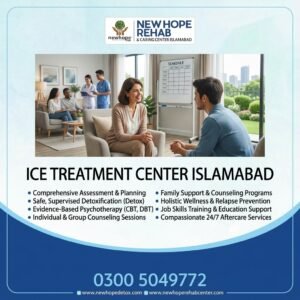
Comprehensive Assessment
The first step in recovery involves conducting a thorough assessment of both physical and psychiatric health as well as substance use history to tailor an individualized treatment plan.
Medical Detoxification
Supervised detoxification allows the body to adjust safely for those who need it, with health professionals closely monitoring withdrawal symptoms and providing supportive care.
Individual Counseling
Personal counseling is where individuals learn about the emotional, behavioral and environmental factors that led to their addiction while learning how to successfully cope with them.
Cognitive Behavioral Therapy (CBT)
CBT (Cognitive Behavioral Therapy) – CBT is a science-based therapy that helps people recognize unhealthy thought processes, gain control over cravings and develop new behaviors that lead to long-term recovery.
Group Therapy
Group therapy provides peer support, confidence, and shared experiences that reinforce motivation along the way.
Family Support Programs
Family Counseling aids in improving communication, rebuilding trust, and establishing a supportive home environment conducive to long-term recovery.
Relapse Prevention and Aftercare
Recovery continues beyond rehabilitation. Are trained in issues specific to the young adult age group; are provided ongoing support and relapse prevention planning for long-term effectiveness.
Helpful strategies include:
- Identifying personal triggers
- Practicing healthy stress management
- Continuing counseling sessions
- Maintaining structured daily routines
- Building supportive relationships
- Participating in aftercare programs
At New Hope Rehab and Caring Centre Islamabad, relapse prevention is a part of every stage of the recovery process.
Frequently Asked Questions (FAQs)
1. What is ICE or meth dependence?
ICE or meth addiction is actually classified as a substance use disorder in which the addict becomes so dependent on the methamphetamines, he/she will continue using them despite potentially damaging physical, emotional or social consequences.
2. Is there treatment for meth addiction?
Yes. Long-term recovery from OCD CAN be achieved with professional treatment that consists of assessment, detox (if applicable), counseling, behavior health therapies and ongoing support.
3. What Are Common Methamphetamine Withdrawal Symptoms?
Withdrawal Symptoms – When a person gives up the drug, they might experience fatigue, depression, anxiety, increased appetite and sleep disturbances as well as cravings for the drug.
4. What are the explanations for using Cognitive Behavioral Therapy (CBT) as part of treatment?
CBT works by allowing people to identify harmful thoughts, cope with triggers, improve their coping mechanisms, and reduce the chance of relapse.
5. Supporting a Person Recovering from Meth Addiction
They can offer emotional support, attend counseling sessions together, encourage healthy routines, and establish a stable environment conducive to recovery.
Conclusion
Addiction to ICE and meth are clinical leftist conditions with ramifications for both physical and mental well-being but can be treated. With early intervention, treatment, and support over the long term many people Have that addiction and find themselves fulfilling happy lives again. Finding ICE | METH Addiction Treatment in Islamabad, Pakistan means finding comprehensive care that specializes in treating substance use disorder as well as any additional mental health disorders being faced.
New Hope Rehab and Caring Centre Islamabad create treatment tailored to the specific needs of each patient that includes proper assessment, detoxification, when necessary, research-led treatments such as counselling for the individual, family with relapse prevention planning. With the assistance of effective, professional care, it is possible to have people guided through treatment and towards a successful recovery that can last throughout life and increased holistic wellbeing.