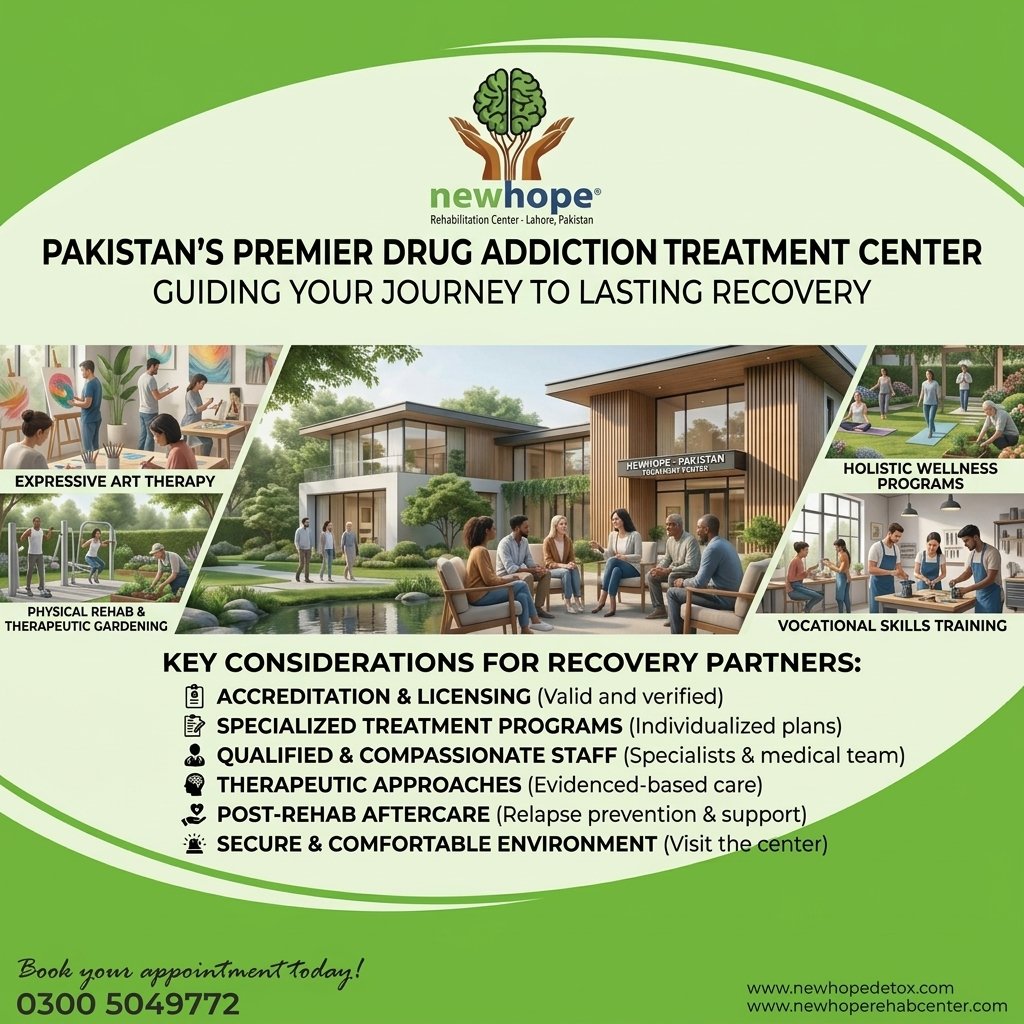
A Drug Addiction Treatment Centre can provide structured professional care for individuals struggling with substance use and for families looking for guidance. Drug addiction can affect physical health, mental well-being, relationships, employment, education, finances, and everyday life.
Addiction is a complex health condition. People may continue using drugs even when they understand the harmful consequences. With appropriate professional support, individuals can work toward reducing or stopping harmful substance use and developing healthier coping strategies.
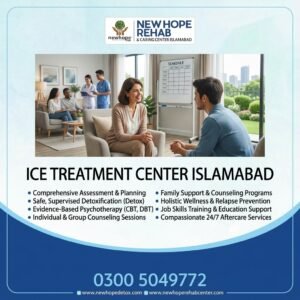
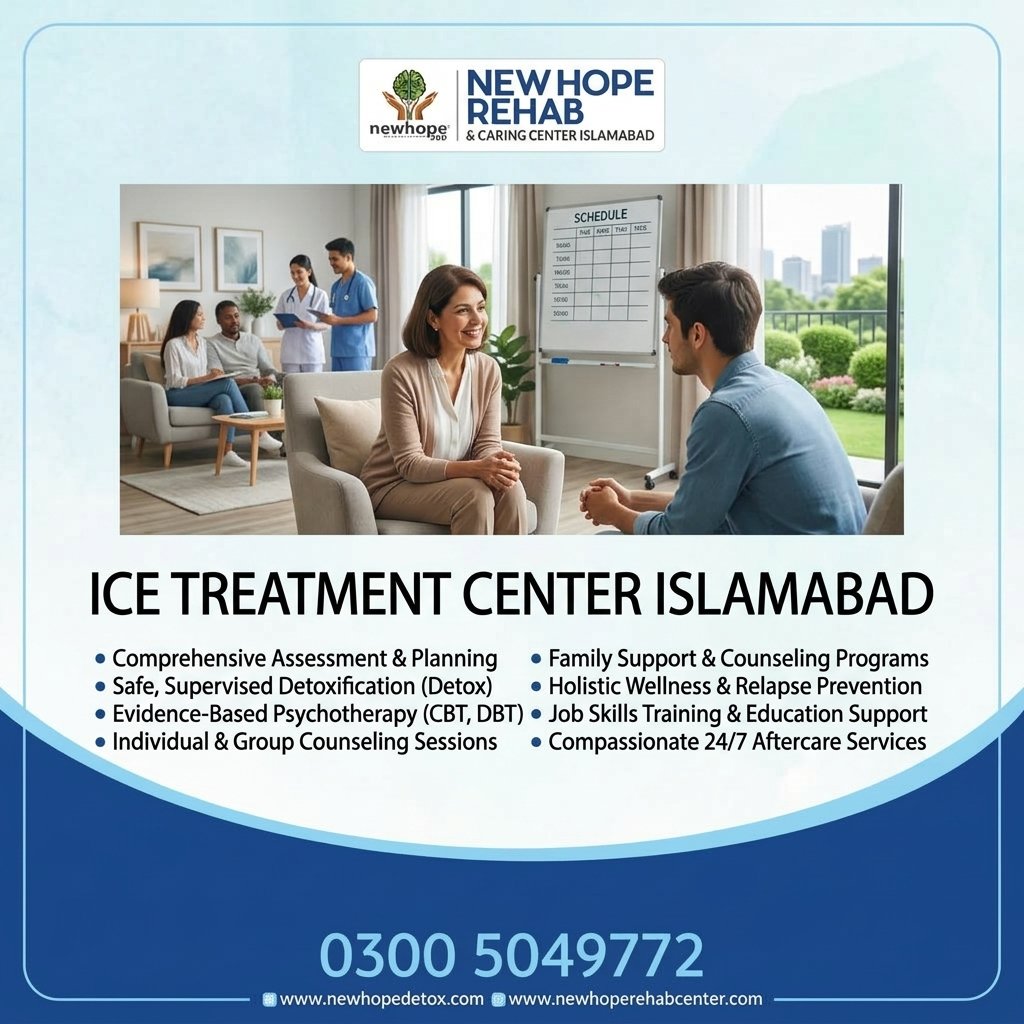
New Hope Rehab and Caring Centre Islamabad provides structured support for individuals and families affected by addiction and related mental health concerns.
What Is a Drug Addiction Treatment Centre?
A drug addiction treatment centre is a facility that provides services designed to help people address problematic drug use. Depending on individual needs, treatment may include medical assessment, withdrawal management, counseling, behavioral therapy, psychological support, family involvement, and relapse prevention.
Treatment can vary according to:
- Type of substance being used
- Severity and duration of substance use
- Physical health
- Mental health
- Previous treatment history
- Withdrawal risks
- Family and social circumstances
An individualized approach can help ensure that treatment is appropriate for the person’s specific situation.
Common Signs of Drug Addiction
Recognizing addiction can help individuals and families seek support earlier. Possible signs include:
- Strong cravings for drugs
- Increasing tolerance
- Difficulty controlling drug use
- Withdrawal symptoms after stopping
- Neglecting work, education, or family responsibilities
- Changes in mood or behavior
- Financial or relationship difficulties
- Spending significant time obtaining or using drugs
- Continuing drug use despite harmful consequences
- Repeated unsuccessful attempts to quit
Not every sign necessarily means a person has an addiction. A qualified professional can provide an appropriate assessment.
Why Professional Drug Addiction Treatment Is Important
Addiction can involve changes in brain function, behavior, emotional regulation, and decision-making. Attempting to manage severe addiction without professional support may be difficult and, depending on the substance, potentially unsafe.
Professional treatment can provide:
- Structured recovery planning
- Medical assessment
- Withdrawal monitoring when needed
- Psychological support
- Behavioral therapy
- Family education
- Relapse-prevention planning
- Continuing care
The goal is not simply to stop drug use temporarily but to address the factors that can contribute to continued substance use.
Drug Detoxification and Withdrawal Management
Detoxification may be an early part of treatment for some individuals. It focuses on helping the body adjust after drug use stops while managing withdrawal symptoms.
Withdrawal varies according to the substance and the individual’s physical health. Symptoms can include:
- Anxiety
- Irritability
- Sleep disturbances
- Fatigue
- Nausea
- Sweating
- Muscle aches
- Changes in appetite
- Strong cravings
Some substances can produce serious withdrawal complications. Alcohol and certain sedative drugs, for example, can cause potentially dangerous withdrawal symptoms. Medical assessment is important before stopping substances after prolonged or heavy use.
Detox should not be confused with complete addiction treatment. Ongoing psychological and behavioral care may be necessary after withdrawal management.
Counseling and Behavioral Therapy
Counseling is an important part of many drug addiction treatment programs. It can help individuals understand their substance-use patterns and develop healthier responses to stress and triggers.
Therapy may focus on:
Identifying Triggers
Individuals can learn to recognize people, places, emotions, and situations that increase the urge to use drugs.
Managing Cravings
Counseling can provide practical strategies for responding to cravings without returning to substance use.
Changing Unhelpful Thought Patterns
Cognitive behavioral approaches can help individuals recognize thoughts and behaviors that contribute to substance use and develop healthier alternatives.
Building Recovery Skills
Treatment can support better decision-making, emotional regulation, communication, stress management, and daily routines.
Mental Health and Dual Diagnosis Treatment
Drug addiction can occur alongside mental health conditions such as depression, anxiety, trauma-related symptoms, or other psychological difficulties.
When substance use and mental health problems occur together, professionals may refer to this as a dual diagnosis or co-occurring disorder.
A comprehensive treatment plan should assess mental health and address relevant psychological concerns alongside addiction. This can help provide more coordinated and individualized care.
Family Support in Addiction Recovery
Addiction affects more than the person using drugs. Families may experience emotional stress, conflict, financial problems, and uncertainty about how to respond.
Family involvement can provide education about addiction and help relatives develop healthier communication and boundaries.
Families may learn how to:
- Encourage professional treatment
- Communicate calmly
- Avoid enabling harmful substance use
- Establish healthy boundaries
- Support positive routines
- Recognize possible relapse warning signs
- Seek professional guidance during difficult situations
Family members should also take care of their own emotional health.
Relapse Prevention and Aftercare
Recovery is an ongoing process. Returning to familiar environments, stressful situations, or previous social circles can sometimes increase the risk of returning to substance use.
A relapse-prevention plan may include:
- Identifying personal triggers
- Continuing counseling
- Developing healthy routines
- Building supportive relationships
- Avoiding high-risk situations
- Practicing stress-management skills
- Attending follow-up appointments
- Seeking help early when difficulties appear
If substance use returns, professional reassessment can help determine whether the treatment plan needs to be modified or strengthened.
How to Choose a Drug Addiction Treatment Centre
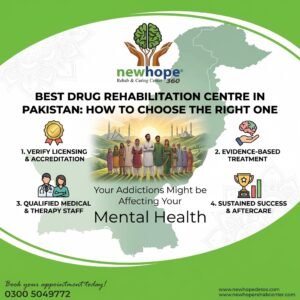
When searching for a Drug Addiction Treatment Centre, consider the quality, safety, and scope of services rather than relying on claims of guaranteed recovery.
Useful questions include:
- Are qualified medical professionals involved?
- Is a complete assessment performed?
- How are withdrawal symptoms managed?
- Are counseling and behavioral therapies available?
- Is mental health assessed?
- Is family support included?
- Is relapse prevention part of treatment?
- Is continuing care available?
- How are medical or psychiatric emergencies handled?
A suitable treatment centre should provide care based on the individual’s needs rather than applying exactly the same program to every patient.
Drug Addiction Treatment at New Hope Rehab and Caring Centre Islamabad
New Hope Rehab and Caring Centre Islamabad provides structured support for individuals and families dealing with addiction and related mental health concerns.
Treatment planning can consider the person’s substance-use history, physical health, psychological needs, family circumstances, and recovery requirements. Depending on individual needs, care may involve counseling, behavioral support, mental health services, family involvement, and relapse-prevention planning.
Seeking professional help can give individuals and families a clearer understanding of available treatment options and appropriate next steps.
Frequently Asked Questions
1. What does a drug addiction treatment centre provide?
A treatment centre may provide medical assessment, withdrawal management, counseling, behavioral therapy, psychological support, family guidance, relapse prevention, and continuing care depending on the individual’s needs.
2. Can drug addiction be treated successfully?
Recovery is possible, but it can take time and may require ongoing support. Treatment can help individuals address substance use, develop healthier coping strategies, manage triggers, and reduce the risk of returning to harmful drug use.
3. Is drug detox enough to overcome addiction?
No. Detox primarily addresses withdrawal and the initial physical effects of stopping a substance. Long-term recovery often requires counseling, behavioral therapy, mental health care, family support, and relapse-prevention strategies.
4. Should families participate in addiction treatment?
Family involvement can be beneficial when appropriate. Education and counseling can help relatives understand addiction, communicate more effectively, establish boundaries, and provide constructive support.
5. How long does drug addiction treatment take?
Treatment duration varies. Factors such as the substance involved, severity and duration of use, physical and mental health, previous treatment, progress, and continuing support needs can influence the appropriate length of care.
Conclusion
A Drug Addiction Treatment Centre can provide structured professional support for individuals experiencing problematic drug use. Effective treatment should address more than the immediate symptoms of addiction and consider physical health, psychological well-being, behavioral patterns, family relationships, and relapse risks.
Medical assessment, withdrawal management when necessary, counseling, behavioral therapy, mental health support, family involvement, and aftercare can all form part of a comprehensive recovery plan.
If drug use is affecting health, relationships, work, education, or daily life, speaking with a qualified addiction or mental health professional can be an important first step. New Hope Rehab and Caring Centre Islamabad provides structured support for individuals and families seeking help with addiction recovery.