+92 312 7493940

VIP Rehab Facility: Private, Personalised Addiction Treatment and Recovery Support

VIP Rehab Facility: Private, Personalised Addiction Treatment and Recovery Support

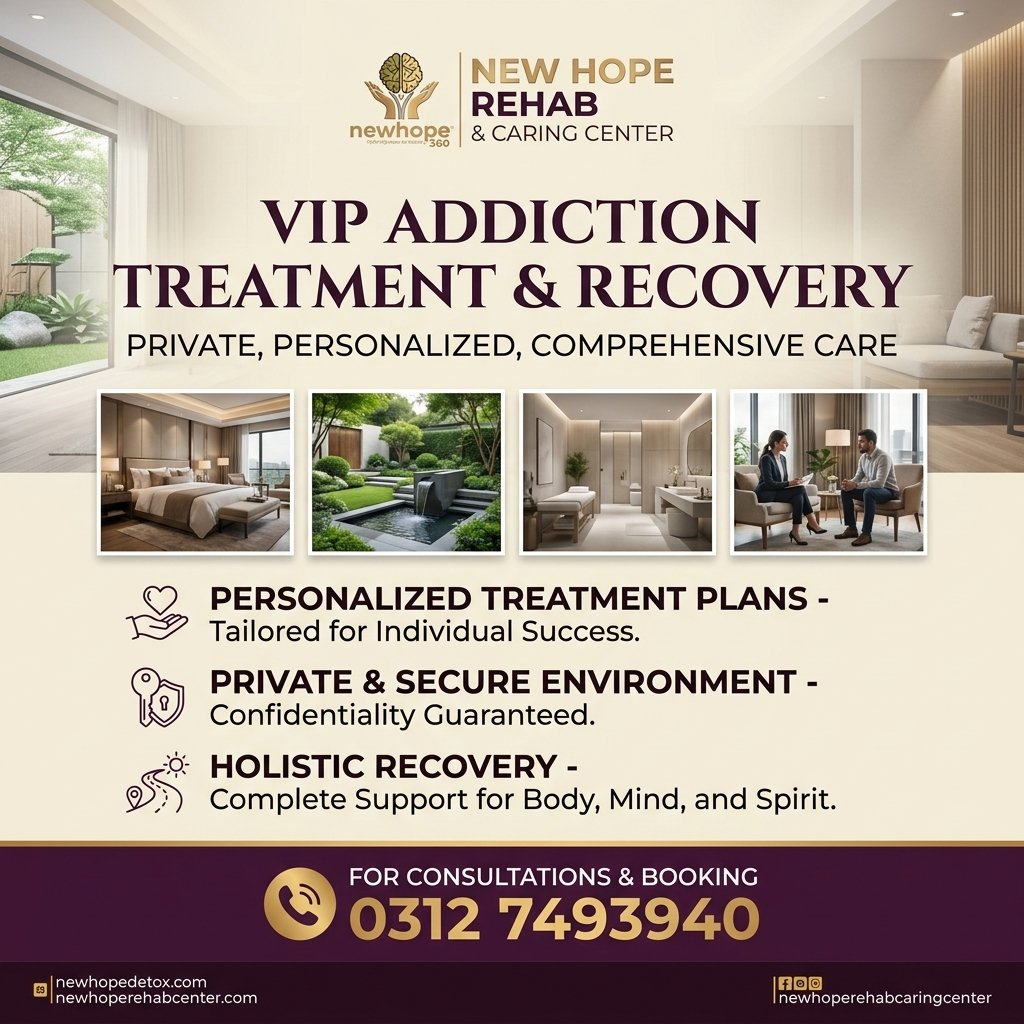
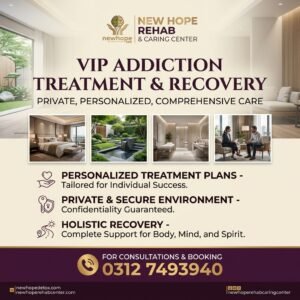
A VIP Rehab Facility provides a private and structured environment for individuals seeking professional treatment for drug or alcohol addiction. For some people, privacy, comfort, individualized attention, and a discreet setting are important considerations when choosing rehabilitation services.

While a VIP treatment environment may offer enhanced comfort and privacy, effective rehabilitation should remain centered on qualified healthcare, individualized treatment planning, psychological support, and continuing recovery care.

New Hope Rehab and Caring Centre Islamabad provides structured support for individuals and families affected by addiction and related mental health concerns.

What Is a VIP Rehab Facility?

A VIP rehab facility generally refers to a rehabilitation setting that emphasizes privacy, comfort, discretion, and personalized attention alongside addiction treatment.

Depending on the facility and an individual’s needs, services may include:

  • Addiction assessment
  • Detoxification or withdrawal management
  • Individual counseling
  • Behavioral therapy
  • Psychiatric assessment
  • Mental health support
  • Family counseling
  • Relapse prevention
  • Aftercare planning
  • Private or discreet accommodation

The exact services and level of care vary between facilities, so prospective patients and families should ask about the clinical services available.

Why Do People Choose VIP Rehabilitation?

People may consider a VIP rehabilitation environment for different reasons. Privacy can be particularly important for individuals concerned about confidentiality or disruption to their personal and professional responsibilities.

Potential considerations include:

  • Greater privacy
  • Discreet treatment arrangements
  • Comfortable surroundings
  • Individualized attention
  • Personalized recovery planning
  • Reduced distractions
  • Family involvement when appropriate
  • Access to continuing support

However, luxury or privacy should not be viewed as a substitute for qualified clinical care. Medical safety, professional treatment, and appropriate follow-up remain central to addiction recovery.

Addiction Assessment Before Treatment

A comprehensive assessment can help determine the appropriate level of care.

Healthcare professionals may consider:

  • Type of substance used
  • Frequency and amount of use
  • Duration of substance use
  • Previous treatment
  • Previous withdrawal experiences
  • Physical health
  • Mental health
  • Current medications
  • Use of multiple substances
  • Family and social circumstances

The results can help determine whether a person needs detoxification, residential treatment, outpatient care, psychiatric support, or another level of treatment.

Detoxification at a VIP Rehab Facility
VIP Rehab Facility: Private, Personalised Addiction Treatment and Recovery Support

For people who have developed physical dependence, detoxification may be an early stage of treatment.

Withdrawal symptoms vary depending on the substance. They may include:

  • Anxiety
  • Irritability
  • Sweating
  • Tremors
  • Nausea
  • Fatigue
  • Sleep difficulties
  • Muscle aches
  • Mood changes
  • Strong cravings

Withdrawal from alcohol and certain sedative medications can become medically dangerous. People with significant dependence should seek professional medical guidance before stopping these substances abruptly.

Detox should be considered the beginning of recovery rather than the complete treatment for addiction.

Individualized Addiction Treatment

A major component of professional rehabilitation is developing a treatment plan based on the individual’s needs.

Treatment may include:

Individual Counseling

Private counseling can provide an opportunity to explore substance use, emotional difficulties, relationships, stress, and recovery goals.

Behavioral Therapy

Behavioral approaches can help individuals identify triggers, manage cravings, change harmful patterns, and develop healthier coping strategies.

Psychiatric Support

Psychiatric assessment may be appropriate when addiction occurs alongside significant depression, anxiety, psychosis, bipolar disorder, or other mental health concerns.

Relapse Prevention

Individuals can learn to recognize high-risk situations and develop strategies for responding to cravings and triggers.

VIP Rehab and Dual Diagnosis Treatment

Addiction sometimes occurs alongside mental health conditions. Depression, anxiety, trauma-related symptoms, and other psychiatric concerns can affect substance use and recovery.

When substance use and mental health conditions occur together, professionals may refer to this as a dual diagnosis or co-occurring disorder.

A comprehensive VIP rehabilitation program should consider mental health as part of the overall assessment and treatment plan when clinically appropriate.

Family Support and Rehabilitation

Addiction can have a significant effect on spouses, parents, children, and other relatives.

Family support may include education and counseling that help relatives understand addiction and establish healthier ways of responding.

Families can learn about:

  • Addiction and recovery
  • Healthy communication
  • Appropriate boundaries
  • Relapse warning signs
  • Supportive recovery behaviors
  • Avoiding enabling behaviors

Family involvement should be guided by the individual’s privacy, safety, and treatment needs.

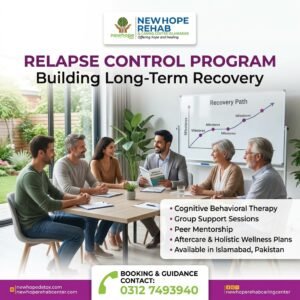
Relapse Prevention and Aftercare

Completing residential rehabilitation does not necessarily mean that treatment is finished. Continued support can help individuals maintain recovery after returning to their usual environment.

Aftercare may involve:

  • Individual counseling
  • Follow-up appointments
  • Family support
  • Mental health care
  • Relapse-prevention planning
  • Recovery-focused routines
  • Ongoing professional monitoring

A relapse-prevention plan can identify personal triggers and establish specific steps to take when cravings or other warning signs appear.

How to Choose a VIP Rehab Facility

When comparing a VIP Rehab Facility, consider clinical quality as well as privacy and comfort.

Important questions include:

  • Are qualified medical professionals available?
  • Is there a comprehensive assessment?
  • Is withdrawal risk evaluated?
  • How are medical emergencies handled?
  • Are mental health conditions assessed?
  • Is individual counseling available?
  • Are behavioral therapies offered?
  • Is family support available?
  • Is relapse prevention included?
  • Is aftercare provided?

It is also important to understand exactly what the facility means by “VIP.” Services, accommodation, staffing, and clinical capabilities can differ substantially between rehabilitation centers.

Be cautious about claims of guaranteed recovery, instant cures, or treatment outcomes that cannot reasonably be guaranteed.

VIP Rehab Facility in Islamabad

For individuals seeking rehabilitation services in Islamabad, New Hope Rehab and Caring Centre Islamabad provides structured support for people and families affected by addiction and related mental health concerns.

Depending on individual needs, treatment planning may include addiction assessment, withdrawal management, counseling, psychological support, family involvement, relapse prevention, and continuing care.

A professional assessment can help determine which level of treatment is appropriate for the individual’s substance use, health, mental health, and recovery needs.

Frequently Asked Questions

1. What is a VIP rehab facility?

A VIP rehab facility generally provides addiction treatment in a setting that emphasizes privacy, comfort, discretion, and individualized attention. Clinical services vary between facilities.

2. Does VIP rehab mean luxury treatment only?

Not necessarily. A VIP program may include enhanced privacy and accommodation, but effective rehabilitation should also include appropriate medical, psychological, and addiction treatment.

3. Is detox included in VIP rehabilitation?

Some facilities provide detoxification or withdrawal management, while others may refer patients to another medical service. Always confirm what level of medical care is available before admission.

4. Can VIP rehab treat mental health and addiction together?

Depending on the facility’s clinical services, treatment may address co-occurring mental health and substance-use conditions. A professional assessment can determine the appropriate treatment approach.

5. How long does VIP rehabilitation take?

There is no universal treatment duration. It depends on factors such as the substance involved, severity of addiction, withdrawal risk, physical and mental health, previous treatment, and ongoing recovery needs.

Conclusion

A VIP Rehab Facility can provide a private, comfortable, and structured environment for people seeking professional addiction treatment. Privacy and individualized attention may be valuable considerations, but they should be combined with qualified medical care, psychological treatment, relapse prevention, and continuing support.

Treatment may involve detoxification, counseling, behavioral therapy, psychiatric care, family support, and aftercare depending on individual needs.

If you or someone you care about is considering private addiction rehabilitation, professional assessment can help identify the appropriate level of care. New Hope Rehab and Caring Centre Islamabad provides structured addiction and mental health support for individuals and families seeking professional treatment.

Related Article

VIP Rehab Facility: Private, Personalised Addiction Treatment and Recovery Support
VIP Rehab Facility

VIP Rehab Facility: Private, Personalised Addiction Treatment and Recovery Support

A VIP Rehab Facility provides a private and structured environment for individuals seeking professional treatment for drug or alcohol addiction. For some people, privacy, comfort, individualized attention, and a discreet setting are important considerations when choosing rehabilitation services. While a VIP treatment environment may offer enhanced comfort and privacy, effective rehabilitation should remain centered on qualified healthcare, individualized treatment planning, psychological support, and continuing recovery care. New Hope Rehab and Caring Centre Islamabad provides structured support for individuals and families affected by addiction and related mental health concerns. What Is a VIP Rehab Facility? A VIP rehab facility generally refers to a rehabilitation setting that emphasizes privacy, comfort, discretion, and personalized attention alongside addiction treatment. Depending on the facility and an individual’s needs, services may include: Addiction assessment Detoxification or withdrawal management Individual counseling Behavioral therapy Psychiatric assessment Mental health support Family counseling Relapse prevention Aftercare planning Private or discreet accommodation The exact services and level of care vary between facilities, so prospective patients and families should ask about the clinical services available. Why Do People Choose VIP Rehabilitation? People may consider a VIP rehabilitation environment for different reasons. Privacy can be particularly important for individuals concerned about confidentiality or disruption to their personal and professional responsibilities. Potential considerations include: Greater privacy Discreet treatment arrangements Comfortable surroundings Individualized attention Personalized recovery planning Reduced distractions Family involvement when appropriate Access to continuing support However, luxury or privacy should not be viewed as a substitute for qualified clinical care. Medical safety, professional treatment, and appropriate follow-up remain central to addiction recovery. Addiction Assessment Before Treatment A comprehensive assessment can help determine the appropriate level of care. Healthcare professionals may consider: Type of substance used Frequency and amount of use Duration of substance use Previous treatment Previous withdrawal experiences Physical health Mental health Current medications Use of multiple substances Family and social circumstances The results can help determine whether a person needs detoxification, residential treatment, outpatient care, psychiatric support, or another level of treatment. Detoxification at a VIP Rehab Facility For people who have developed physical dependence, detoxification may be an early stage of treatment. Withdrawal symptoms vary depending on the substance. They may include: Anxiety Irritability Sweating Tremors Nausea Fatigue Sleep difficulties Muscle aches Mood changes Strong cravings Withdrawal from alcohol and certain sedative medications can become medically dangerous. People with significant dependence should seek professional medical guidance before stopping these substances abruptly. Detox should be considered the beginning of recovery rather than the complete treatment for addiction. Individualized Addiction Treatment A major component of professional rehabilitation is developing a treatment plan based on the individual’s needs. Treatment may include: Individual Counseling Private counseling can provide an opportunity to explore substance use, emotional difficulties, relationships, stress, and recovery goals. Behavioral Therapy Behavioral approaches can help individuals identify triggers, manage cravings, change harmful patterns, and develop healthier coping strategies. Psychiatric Support Psychiatric assessment may be appropriate when addiction occurs alongside significant depression, anxiety, psychosis, bipolar disorder, or other mental health concerns. Relapse Prevention Individuals can learn to recognize high-risk situations and develop strategies for responding to cravings and triggers. VIP Rehab and Dual Diagnosis Treatment Addiction sometimes occurs alongside mental health conditions. Depression, anxiety, trauma-related symptoms, and other psychiatric concerns can affect substance use and recovery. When substance use and mental health conditions occur together, professionals may refer to this as a dual diagnosis or co-occurring disorder. A comprehensive VIP rehabilitation program should consider mental health as part of the overall assessment and treatment plan when clinically appropriate. Family Support and Rehabilitation Addiction can have a significant effect on spouses, parents, children, and other relatives. Family support may include education and counseling that help relatives understand addiction and establish healthier ways of responding. Families can learn about: Addiction and recovery Healthy communication Appropriate boundaries Relapse warning signs Supportive recovery behaviors Avoiding enabling behaviors Family involvement should be guided by the individual’s privacy, safety, and treatment needs. Relapse Prevention and Aftercare Completing residential rehabilitation does not necessarily mean that treatment is finished. Continued support can help individuals maintain recovery after returning to their usual environment. Aftercare may involve: Individual counseling Follow-up appointments Family support Mental health care Relapse-prevention planning Recovery-focused routines Ongoing professional monitoring A relapse-prevention plan can identify personal triggers and establish specific steps to take when cravings or other warning signs appear. How to Choose a VIP Rehab Facility When comparing a VIP Rehab Facility, consider clinical quality as well as privacy and comfort. Important questions include: Are qualified medical professionals available? Is there a comprehensive assessment? Is withdrawal risk evaluated? How are medical emergencies handled? Are mental health conditions assessed? Is individual counseling available? Are behavioral therapies offered? Is family support available? Is relapse prevention included? Is aftercare provided? It is also important to understand exactly what the facility means by “VIP.” Services, accommodation, staffing, and clinical capabilities can differ substantially between rehabilitation centers. Be cautious about claims of guaranteed recovery, instant cures, or treatment outcomes that cannot reasonably be guaranteed. VIP Rehab Facility in Islamabad For individuals seeking rehabilitation services in Islamabad, New Hope Rehab and Caring Centre Islamabad provides structured support for people and families affected by addiction and related mental health concerns. Depending on individual needs, treatment planning may include addiction assessment, withdrawal management, counseling, psychological support, family involvement, relapse prevention, and continuing care. A professional assessment can help determine which level of treatment is appropriate for the individual’s substance use, health, mental health, and recovery needs. Frequently Asked Questions 1. What is a VIP rehab facility? A VIP rehab facility generally provides addiction treatment in a setting that emphasizes privacy, comfort, discretion, and individualized attention. Clinical services vary between facilities. 2. Does VIP rehab mean luxury treatment only? Not necessarily. A VIP program may include enhanced privacy and accommodation, but effective rehabilitation should also include appropriate medical, psychological, and addiction treatment. 3. Is detox included in VIP rehabilitation? Some facilities provide detoxification or withdrawal management, while others may refer patients to another medical service. Always confirm

Cocaine Withdrawal: Symptoms and Professional Treatment
Cocaine Addiction

Cocaine Withdrawal: Symptoms and Professional Treatment

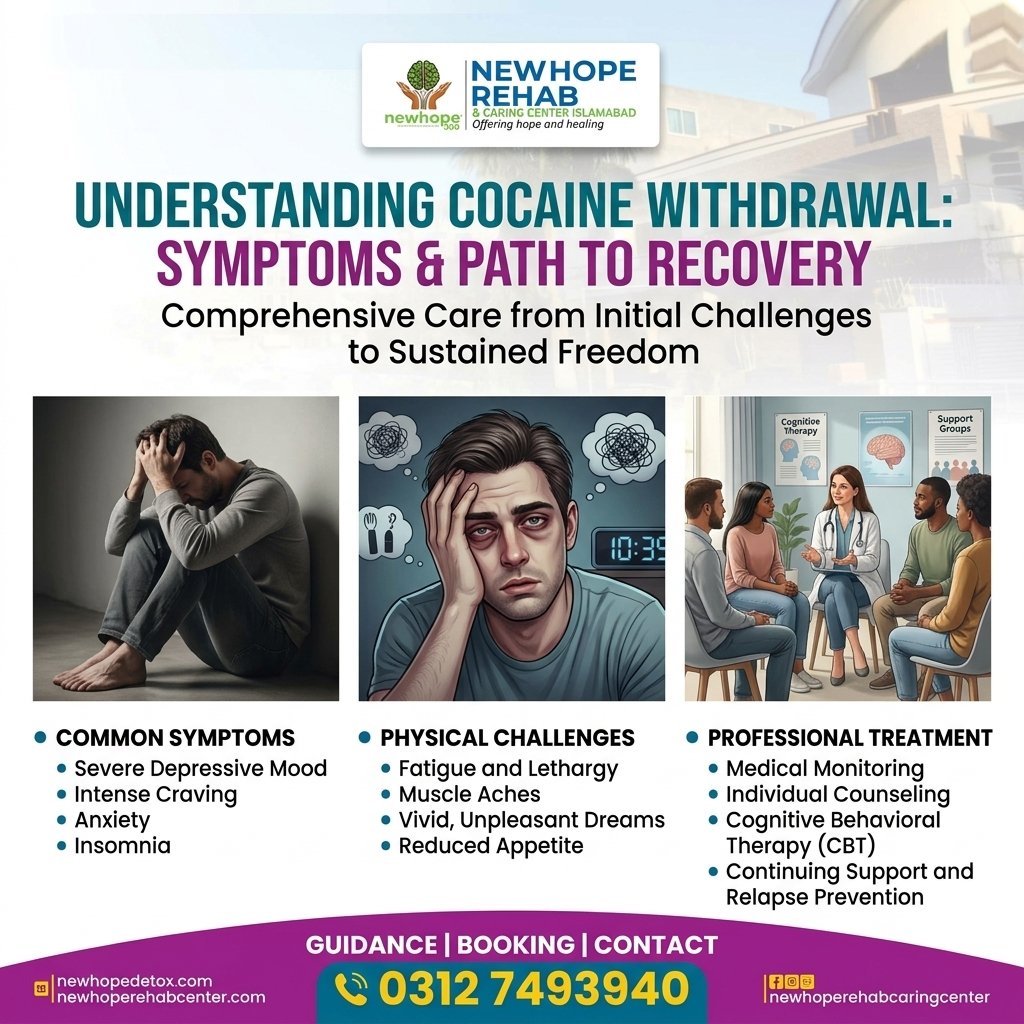
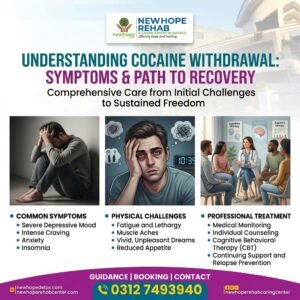
Cocaine withdrawal happens when a person who has been using cocaine regularly cuts down or suddenly stops using the drug. Cocaine withdrawal does not ordinarily create a process of poisonous withdrawal syndrome that requires treatment medicine for all cocaine cases, such as the way some outputs endure after substance exchange. It, however, can be with considerable psychological symptoms, cravings fatigue and mood changes requiring professional help. Professional addiction treatment can help ease the withdrawal process, exploring underlying factors that lead to cocaine use in the first place, and give patients tools for prolonged recovery. What Is Cocaine Withdrawal? Cocaine is a strong central nervous system stimulant that stimulates the brain’s reward and stress systems. After prolonged use, an individual can develop tolerance, cravings and a cycle of compulsive use. The brain and body start a long process of adapting to life without cocaine after a user stops adopting. This modification can, in turn, lead to withdrawal signs. It creates an experience that differs based on: Cocaine use frequency and quantity Duration of use Method of use Use of other substances Physical health Mental health Previous withdrawal experiences Common Cocaine Withdrawal Symptoms Though cocaine withdrawal can be a danger to the emotional health or wellbeing of an individual, its actual physical dangers tend to be in reality rather limited. Common symptoms can include: Extreme tiredness Increased sleep or disrupted sleep Increased appetite Low mood Irritability Anxiety Restlessness Difficulty concentrating Reduced motivation Strong cravings for cocaine Loss of interest in activities Withdrawal can produce intense depression in some people. The Cocaine Crash Others go through a near immediate withdrawal period called cocaine crash shortly after they stop using the drug. At this time, an individual may feel very worn out and sleep for extended hours of time with coping to having a heightened hunger and resounding craving to go get cocaine again. After the crash, there may be an extended period of cravings, mood changes and sleeping problems too. How Long Does Cocaine Withdrawal Take? There is not one time frame for withdrawal that works for everyone. The initial crash can start relatively soon after the last time it was used. It may take a few days or longer for fatigue, low mood, and sleep changes as well as cravings to settle down — other individuals have intermittent cravings and psychological symptoms over a much longer time span. This could be affected by the pattern of cocaine use, as well as an individual patient’s health status and mental state or co-occurring drug use. Symptoms that are persistent or worsening should be evaluated by a healthcare provider. Is Cocaine Withdrawal Dangerous? Cocaine withdrawal is not often associated with the same intense physical complications that one might see in alcohol or some sedative medication withdrawal. But the mental health risk is considerable. During and post-cocaine withdrawal, you may experience depression, symptoms of severe anxiety, agitation, paranoia (like in the world of drugs) or even think about suicide. Immediate medical attention should be sought by anyone experiencing suicidal thoughts, an immediate risk of self-harm, severe confusion, psychosis, chest pain or difficulty breathing along with seizures or loss of consciousness. Professional Assessment for Cocaine Withdrawal An evaluation by a professional can help assess the correct level of care needed. A healthcare or addiction specialist may do an assessment: Cocaine-use history Amount and frequency of use Previous attempts to stop Other substances being used Physical health Mental health Current medications Withdrawal symptoms Risk of self-harm or other current issues Available family and social support In addition, this evaluation estimates what type of treatment is appropriate between outpatient care, residential rehabilitation or a higher level of care. Treatment for Cocaine Withdrawal At present, there is no panacea for the treatment of cocaine withdrawal. Treatment usually aim to ease symptoms, keep a person safe, minimize cravings and treat the drug-use disorder. Professional treatment may include: Medical Monitoring Tracking physical and psychological symptoms allows health care professionals to discern complications needing further management. Psychological Support Counseling has shown to help individuals cope with low mood, anxiety, cravings, and the struggles of early recovery. Behavioral Therapy Cognitive behavioral approaches based-in-evidence can assist patients in recognizing stimuli, modifying behaviors connected with cocaine use and devising better ways to cope. Recovery Planning This may involve creating a plan for avoiding situations in which the temptation is high, coping with cravings, re-establishing nightly routines and on-going support. Behavioral Therapy for Cocaine Addiction Many affected individuals are treated with behavioral therapies as part of their care for cocaine use disorder. Therapy may help individuals: Identify triggers Understand cravings Recognize unhelpful thought patterns Develop alternative behaviors Manage stress Improve decision-making Strengthen motivation for recovery Prepare for high-risk situations Cognitive behavior therapies and other evidence-informed interventions can be considered as per the individual requirements. Cocaine Withdrawal and Mental Health Cocaine new syndromes & co-morbidity with mental illnesses Some of the people can have a depressive episode, anxiety or trauma-related symptoms, and some may experience psychotic symptoms. Assessment of mental health during significant shifts in mood during withdrawal are important. When cocaine use occurs alongside a mental health condition, this may be known as dual diagnosis or co-occurring disorder. Concerns can be resolved through treatment as part of a coordinated recovery plan. Cocaine Withdrawal and Other Substances Individuals abusing cocaine may also be using alcohol, opiates, benzodiazepines, cannabis or other drugs. It can alter the withdrawal image and possibly raises medical risks. Withdrawal from alcohol or benzodiazepines after long-term or heavy use can be potentially dangerous, for example. This is why a thorough history of substance use leading up to decision making for withdrawal management is critical. Family Support During Cocaine Recovery Family members can observe shifts in a person’s mood, sleep, behavior or relationships or finances that may not be apparent to the person when he is struggling with cocaine addiction. Family support can involve: Learning about cocaine addiction Encouraging professional treatment Maintaining healthy boundaries Supporting recovery routines Avoiding enabling behaviors Recognizing warning signs Seeking professional

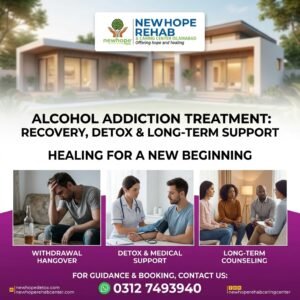
Alcohol Addiction Treatment: Recovery, Detox and Long-Term Support
Alcohol Addiction

Alcohol Addiction Treatment: Recovery, Detox and Long-Term Support

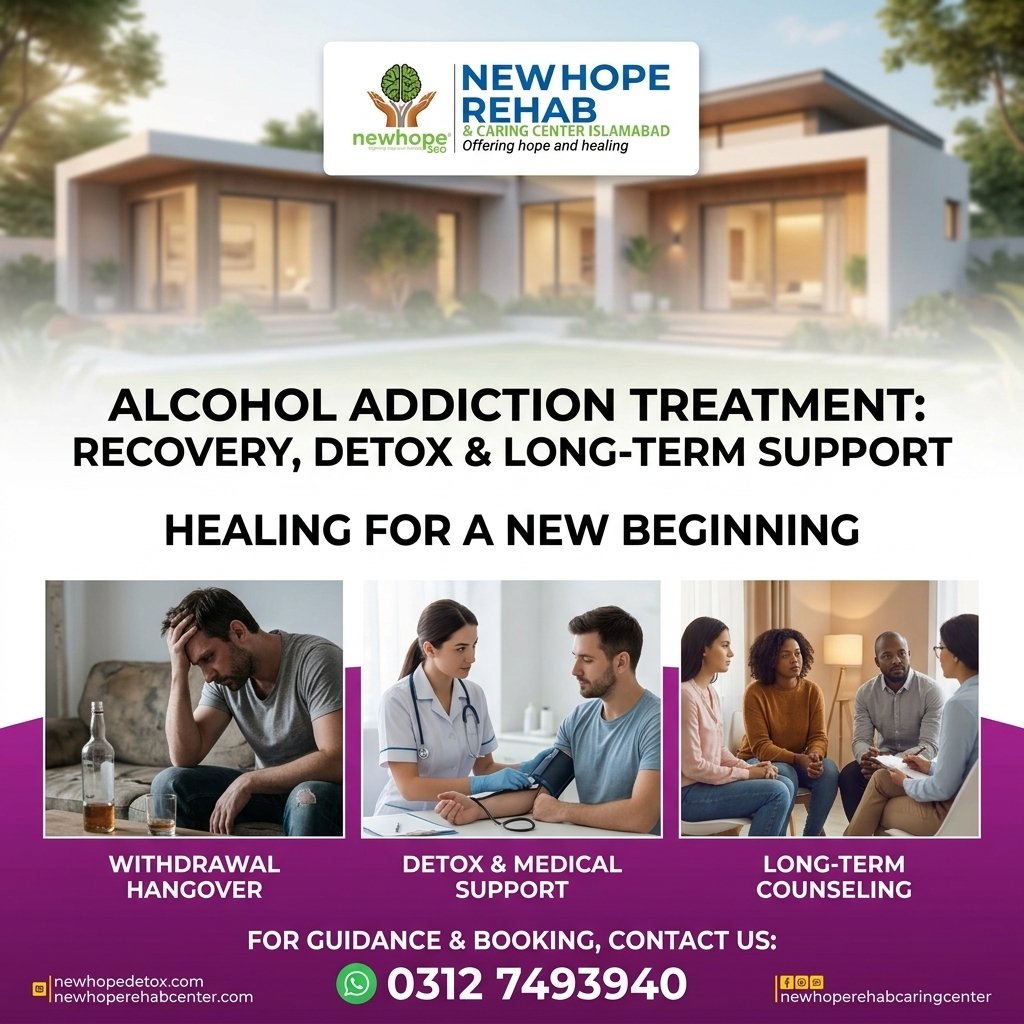
A supervised Program for Alcohol addiction treatment will provide you the mechanism that works in guiding people, who find it difficult to manage their consumption of alcohol or where alcoholism had taken root to behave normally. Alcohol use disorder interferes with physical health, mental well-being, relationships, employment and finances and day-to-day life. People can recover from addiction, but treatment needs to be tailored to each individual. Depending on the severity of alcohol use, treatment may include a brief assessment, medically supervised withdrawal management (if indicated), individual or group counseling, behavioral therapy, medication-assisted therapy as appropriate, family support and relapse prevention services. New Hope Rehab and Caring Centre Islamabad offer 24/7, structured support for those suffering from addiction and associated mental health issues. What Is Alcohol Addiction? Alcohol use disorder, or AUD: This is clinically significant problematic alcohol use which results in great distress and impairment. Possible signs include: Drinking more or for longer than planned Problem with either stopping or cutting down the use of alcohol Strong cravings for alcohol A great deal of time spent obtaining/use/recovery related to alcohol Ignoring work, family or other tasks Drinking even with health or relationship problems Developing tolerance And that could mean signs of withdrawal when they cut their drinking. Only a qualified healthcare professional can evaluate symptoms and diagnose alcohol use disorder. The Importance of Professional Alcohol Addiction Rehabilitation Alcohol use disorder can be biological and psychological in nature. If someone who has been drinking heavily or regularly for a long time suddenly stops drinking, they may experience withdrawal. Alcohol withdrawal can be life-threatening, at times. Symptoms may include: Anxiety Tremors Sweating Nausea Insomnia Rapid heart rate Agitation Seizures Hallucinations Severe confusion Heavy users of alcohol should consult their physician before attempting to stop drinking, since severe alcohol withdrawal can be dangerous. Alcohol Detoxification Detoxification is usually the first step in treating alcohol addiction when medically indications warrant it. The aim is to stabilize the body following ceasing alcohol intake, through supervision and treatment of withdrawal symptoms. Medical professionals may assess: Type, quantities and frequency of alcohol use Previous withdrawal episodes History of seizures Physical health Mental health Other substances being used Current medications Previous treatment Depending on the person, withdrawal Management may be medically supervised and/or require medication. But without detox, you can’t address the whole picture of recovery from an alcohol addiction. Continual support is typically essential in order to stay off the drugs. Counseling for Alcohol Addiction Counselling provides people with a better understanding of the difficulties surrounding drinking and the means to cope better in stressful situations. Therapy may focus on: Identifying drinking triggers Managing cravings Coping with stress Improving emotional regulation Addressing unhealthy thought patterns Strengthening motivation for change Improving relationships Developing relapse-prevention strategies Such as cognitive behavioral approaches and other evidence-informed therapies as appropriate to individual need Medication-Assisted Treatment Some medications are available to help treat alcohol use disorder. Healthcare professionals may look at medication options that either dampen cravings, or help people steer clear of heavy drinking. Medication can only be taken under proper supervision. A healthcare professional can decide if a specific prescription is appropriate—and can follow how it functions. Mental Health Treatment and Dual Diagnosis Alcohol use disorder can coexist with depression, anxiety, trauma-related conditions, bipolar disorder and other psychiatric disorders. If you drink alcohol and also have a mental health condition, professionals may call this a dual diagnosis or co-occurring disorder. Both should be considered in treating comprehensively. In many cases, treating the alcohol use in the absence of adequate mental health symptom amelioration, or vice versa, may be inadequate to address the prominent needs for recovery. Family Support in Alcohol Addiction Treatment Alcoholism can impact spouses, parents, children, siblings and other family members. Families have stress, confrontation and financial problems without the mapping of how to help. One can help family members through family education and counseling: Understand alcohol addiction Communicate more effectively Establish healthy boundaries Avoid enabling harmful drinking Recognize warning signs Support healthy recovery routines Encourage professional care Family members should also ensure they themselves are physically and emotionally healthy. Relapse Prevention and Aftercare Recovery does not stop when detox ends or after residential treatment is finished. In some people, cravings persist or suckles how often are you told will take place in threatening situations. A relapse-prevention plan may include: Identifying personal triggers Avoiding high-risk situations when possible Continuing counseling Developing healthy daily routines Building supportive relationships Managing stress effectively Addressing mental health concerns Attending follow-up appointments Getting help ASAP when you recognize warning signs When someone resumes drinking after a recovery period, professional agency reassessment can provide information on what else is needed. How To Select an Alcohol Addiction Treatment Centre Individuals and families searching for alcohol addiction treatment should also prioritize quality. Useful questions include: Medical evaluation before therapy? Are qualified healthcare professionals available? Can withdrawal from alcohol be medically managed? Are mental health conditions assessed? Is counseling available? Are evidence-informed treatment options offered? Is family support included? Does the program include relapse prevention? Is continuing care available? What To Do During Medical and Psychiatric Emergencies Avoid facilities which promise guaranteed or same-hour recovery. Clinical treatment for addiction is not a one-size-fits-all and outcomes are variable. New Hope Rehab and Caring Centre Islamabad — Alcohol Addiction Treatment New Hope Rehab and Caring Centre Islamabad offer structured support to individuals and families dealing with alcohol addiction along with concurrent mental health issues. Treatment planning can include assessment, withdrawal management, counseling, psychological or psychiatric support, family involvement and education regarding ongoing care needs that includes relapse prevention. An evaluation by a mental-health professional is essential to ascertain the degree of treatment required, based on factors such as history of alcohol-use disorder, general health status, comorbid psychiatric disorders and withdrawal risk at this stage (Table 1) [5]. Frequently Asked Questions 1.     Can alcohol addiction be treated? Yes. While recovery may be a lifelong process, alcohol use disorder is treatable. Management may include withdrawing from drugs, advising, medication, conduct therapy,

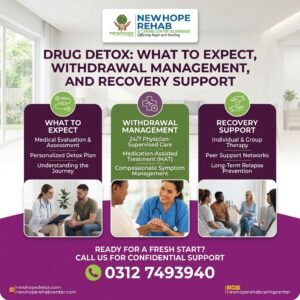
Drug Detox: What to Expect, Withdrawal Management and Recovery Support
Rapid detox

Drug Detox: What to Expect, Withdrawal Management and Recovery Support

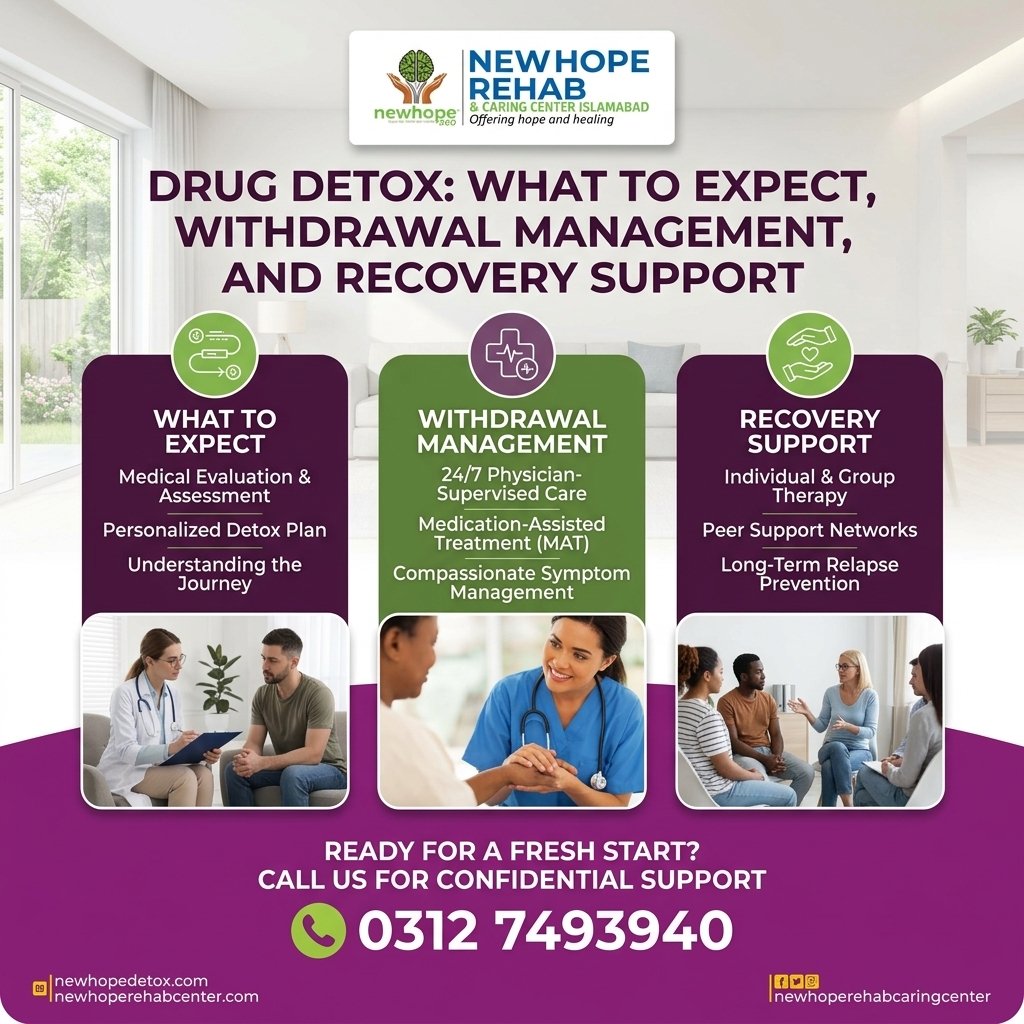
Drug detox is the process of allowing the body to eliminate a drug while managing the physical and psychological effects that can occur when substance use is reduced or stopped. For people who have developed physical dependence, detox can be an important first step toward addiction recovery. However, detox is not the same as complete addiction treatment. Withdrawal management addresses the immediate effects of stopping a substance, while longer-term treatment can address cravings, behaviors, mental health concerns, relationships, and relapse prevention. New Hope Rehab and Caring Centre Islamabad provides structured support for individuals and families dealing with addiction and related mental health concerns. What Is Drug Detox? Drug detoxification is a process through which a person stops using a substance and receives appropriate support while the body adjusts. The experience depends on several factors, including: The type of drug used Amount and frequency of use Duration of substance use Physical health Mental health Previous withdrawal experiences Use of multiple substances Some people may require medically supervised withdrawal management, while others may need a different level of support. Why Drug Detox Can Be Important Regular drug use can cause the body to adapt to the presence of a substance. When use suddenly stops, withdrawal symptoms may occur. Depending on the drug, withdrawal can involve: Anxiety Irritability Sweating Tremors Nausea Muscle aches Fatigue Sleep difficulties Changes in appetite Depression or low mood Strong cravings Some types of withdrawal can become medically serious. For this reason, people with significant dependence should seek professional advice before stopping certain substances abruptly. Different Drugs Can Cause Different Withdrawal Symptoms Drug detox is not a single process because different substances affect the body differently. Opioid Detox Opioids such as heroin and other opioid drugs can cause withdrawal symptoms including muscle aches, sweating, runny nose, nausea, diarrhea, anxiety, insomnia, and intense cravings. Although opioid withdrawal is generally not fatal by itself, professional support can help manage symptoms and address the risk of returning to opioid use after tolerance has decreased. Benzodiazepine Detox Benzodiazepine withdrawal can be medically serious, particularly after prolonged or high-dose use. Symptoms can include anxiety, insomnia, agitation, and, in severe cases, seizures. People taking benzodiazepines regularly should not abruptly discontinue them without medical guidance. Stimulant Detox Stopping stimulants such as methamphetamine or cocaine may result in fatigue, increased sleep, increased appetite, low mood, irritability, anxiety, and strong cravings. Severe depression or suicidal thoughts require urgent professional attention. Cannabis Withdrawal Some frequent cannabis users experience irritability, anxiety, sleep difficulties, reduced appetite, restlessness, and cravings after stopping. The intensity varies between individuals. Medical Assessment Before Detox A professional assessment can help determine the safest approach to withdrawal management. Healthcare professionals may review: Substance-use history Current medications Previous withdrawal symptoms Physical health Mental health Other substances being used Previous treatment Risk factors for complications This information can help determine whether outpatient support, supervised detoxification, or a higher level of care may be appropriate. What Happens During Drug Detox? The detox process varies depending on the substance and individual circumstances. A supervised program may include: Initial assessment – Reviewing substance use, health, medications, and withdrawal risks. Monitoring – Observing physical and psychological symptoms during withdrawal. Supportive care – Providing appropriate hydration, nutrition, rest, and symptom management. Medication when clinically appropriate – Certain medications may be used by qualified professionals to manage withdrawal or reduce risks. Mental health support – Monitoring mood, anxiety, agitation, or other psychological symptoms. Recovery planning – Preparing for ongoing addiction treatment after withdrawal. The purpose is to manage withdrawal safely and provide a transition toward longer-term recovery. Is Drug Detox Enough to Treat Addiction? No. Detox alone does not address all of the factors involved in addiction. After detox, individuals may still experience: Cravings Emotional difficulties Substance-use triggers Relationship problems Stress Unhealthy behavioral patterns Mental health symptoms Continuing treatment may include counseling, behavioral therapy, psychiatric care, family support, relapse prevention, and aftercare. Counseling After Drug Detox Counseling can help individuals understand their substance use and develop healthier ways to manage difficult situations. Treatment may focus on: Identifying triggers Managing cravings Developing coping skills Improving emotional regulation Addressing negative thought patterns Managing stress Strengthening motivation for recovery Developing a relapse-prevention plan Continuing treatment is an important part of moving from withdrawal management toward long-term recovery. Drug Detox and Dual Diagnosis Some people who seek drug detox also experience depression, anxiety, trauma-related symptoms, or other mental health conditions. When addiction and mental health concerns occur together, they may require coordinated treatment. A comprehensive assessment can help distinguish symptoms associated with substance use or withdrawal from an underlying psychiatric condition and identify appropriate mental health support. Family Support During Drug Detox and Recovery Families often play an important role in helping someone seek treatment. However, withdrawal and addiction can also create significant stress for relatives. Family education can help loved ones understand: What withdrawal may involve Why professional treatment can be important How to communicate effectively How to establish healthy boundaries How to recognize warning signs When emergency help may be needed Families should also seek support for their own well-being when necessary. When Is Drug Detox an Emergency? Some symptoms require immediate medical attention rather than waiting for a routine treatment appointment. Seek urgent medical help for symptoms such as: Seizures Severe confusion Difficulty breathing Loss of consciousness Severe chest pain Serious dehydration Extreme agitation Severe psychotic symptoms Suicidal thoughts or immediate risk of self-harm The appropriate emergency response depends on the situation and local medical services. Choosing a Drug Detox Centre When looking for a Drug Detox program, consider clinical safety and professional qualifications. Important questions include: Is there a medical assessment before detox? Are qualified healthcare professionals involved? How are withdrawal symptoms monitored? Can the program respond to medical emergencies? Are mental health concerns assessed? Is counseling available after detox? Is relapse prevention included? Is continuing care available? Be cautious about programs that promise instant detoxification or guaranteed permanent recovery. Addiction recovery is an individual healthcare process. Drug Detox at New Hope Rehab and