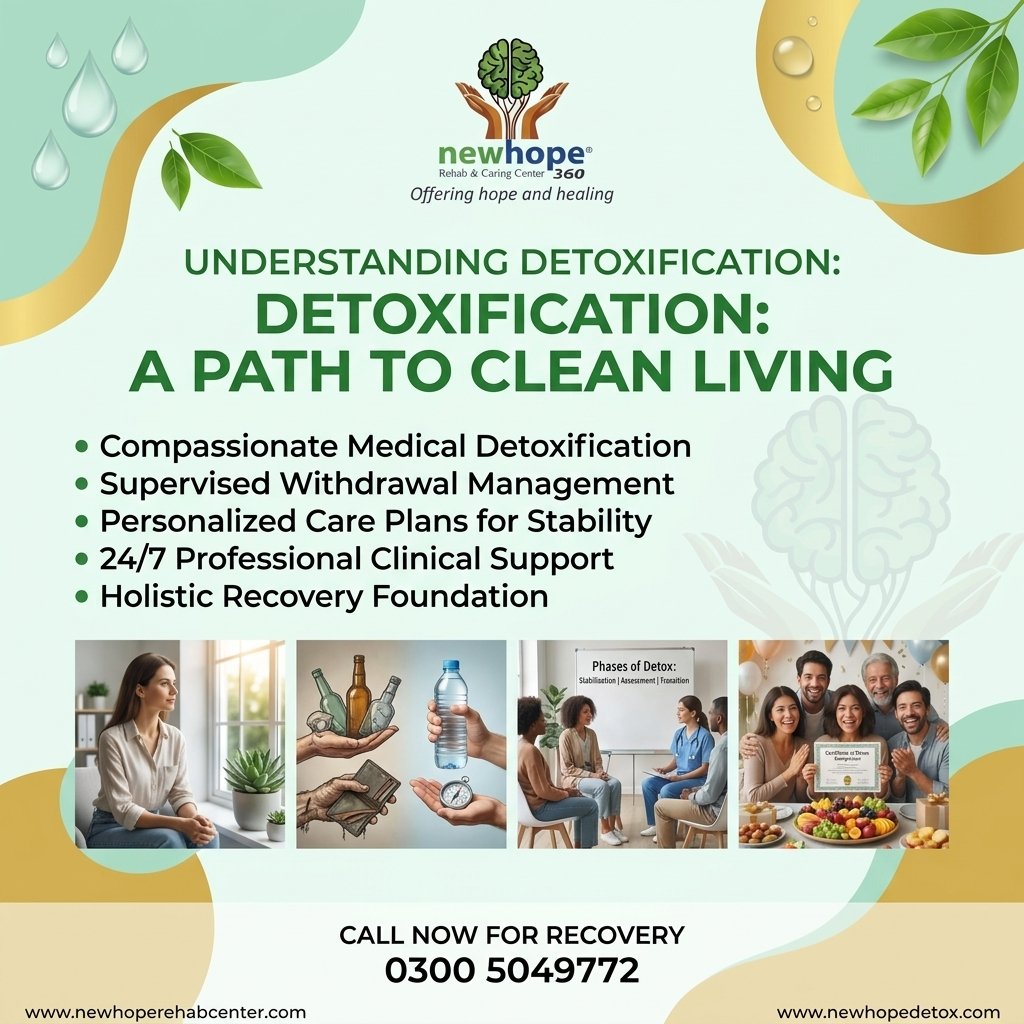
Detoxification is often the first stage of treatment for people who have developed physical dependence on alcohol, drugs, or certain medications. It is the process through which the body adjusts to reducing or stopping a substance. Depending on the substance and level of dependence, withdrawal can range from uncomfortable to medically dangerous.
For individuals searching for Detoxification Treatment in Islamabad, Pakistan, understanding what detox involves can help families make informed decisions. Detox should not be viewed as a complete cure for addiction. Instead, it is generally a stabilization stage that may prepare an individual for ongoing rehabilitation, counseling, and recovery support.
At New Hope Rehab and Caring Centre Islamabad, detoxification can be considered as part of an individualized treatment plan based on a person’s substance use, physical health, mental health, and withdrawal risks.
What Is Detoxification?
Detoxification, commonly called detox, involves managing the physical and psychological effects that may occur when a person reduces or stops using a substance after regular use.
Withdrawal symptoms depend on several factors, including:
- The substance being used
- Amount and frequency of use
- Duration of substance use
- Physical dependence
- Overall health
- Other medications or substances being taken
- Previous withdrawal experiences
Because these factors vary, detox shouldn’t follow the same process for every individual.
Why Medically Supervised Detox May Be Important
Some withdrawal syndromes can cause serious complications. Alcohol and benzodiazepine withdrawal, for example, can sometimes result in seizures, severe confusion, or other medical emergencies.
Opioid withdrawal is usually not life-threatening by itself, but it can involve significant physical discomfort, dehydration, intense cravings, and psychological distress. Reduced opioid tolerance after detox can also increase overdose risk if a person returns to previously tolerated doses.
Medical supervision allows professionals to assess symptoms and respond appropriately when complications develop.
Common Withdrawal Symptoms
Withdrawal symptoms vary considerably, but may include:
- Anxiety or irritability
- Sweating
- Tremors
- Nausea or vomiting
- Muscle aches
- Headaches
- Sleep disturbances
- Restlessness
- Changes in appetite
- Strong cravings
- Low mood
More serious symptoms can occur with certain substances. Anyone experiencing seizures, severe confusion, loss of consciousness, breathing difficulties, chest pain, or another medical emergency needs urgent medical attention.
The Detoxification Process
Initial Assessment
A professional assessment is an important starting point. Healthcare providers may review the individual’s substance use history, medical conditions, medications, mental health, previous withdrawal experiences, and current symptoms.
This information helps determine whether detox can be managed in an appropriate setting or whether a higher level of medical care is needed.
Withdrawal Management
During withdrawal, professionals may monitor physical and psychological symptoms and provide appropriate supportive care. In some circumstances, medications may be used to manage specific withdrawal symptoms or reduce health risks.
Medication decisions should be made by qualified healthcare professionals and shouldn’t be based on a generic detox schedule.
Stabilization
As acute withdrawal symptoms become more manageable, attention can shift toward ongoing addiction treatment. This transition is important because completing detox alone doesn’t address the underlying causes of substance use.
Detoxification for Different Substances
Alcohol
Alcohol withdrawal can become medically dangerous in people with significant dependence. Professional assessment is particularly important before abruptly stopping heavy or prolonged alcohol use.
Opioids
Heroin and other opioids can cause physical dependence. Withdrawal may involve muscle aches, gastrointestinal symptoms, restlessness, insomnia, and cravings. Evidence-based opioid use disorder treatment may include medications such as buprenorphine or methadone when clinically appropriate.
Benzodiazepines
Regular benzodiazepine use can result in physical dependence. Abrupt discontinuation can cause serious withdrawal, including seizures in some cases. A carefully supervised reduction may be appropriate for certain individuals.
Stimulants
Stopping drugs such as cocaine or crystal methamphetamine can result in fatigue, sleep changes, depressed mood, irritability, and cravings. Supportive care and behavioral treatment are important parts of recovery.
Detox Is Only the Beginning
One of the most important things to understand about detoxification is that it doesn’t treat every aspect of addiction.
Addiction can involve learned behaviors, emotional difficulties, social circumstances, cravings, and mental health conditions. After detox, individuals may benefit from:
- Individual counseling
- Cognitive Behavioral Therapy (CBT)
- Group therapy
- Family support
- Mental health treatment
- Relapse-prevention planning
- Medication-assisted treatment when clinically appropriate
- Continuing care and aftercare
At New Hope Rehab and Caring Centre Islamabad, treatment planning can consider these different needs according to the individual’s circumstances.
The Role of Family During Detox and Recovery
Families often play an important role in encouraging treatment and maintaining a supportive environment. However, relatives aren’t expected to manage withdrawal alone.
Family members can help by:
- Encouraging professional care
- Providing emotional support
- Maintaining healthy boundaries
- Learning about addiction and withdrawal
- Participating in family counseling when appropriate
- Supporting continuing treatment
Professional guidance can help families understand how to provide constructive support without unintentionally enabling substance use.
Frequently Asked Questions (FAQs)
1. What is detoxification?
Detoxification is the process of managing the physical and psychological effects that can occur when a person reduces or stops using a substance after regular use.
2. Is detoxification the same as addiction treatment?
No. Detox primarily addresses withdrawal and stabilization. Ongoing addiction treatment may be needed to address behavioral, psychological, and social factors associated with substance use.
3. Can detox be done safely at home?
It depends on the substance, level of dependence, health status, and withdrawal risk. Some withdrawal syndromes can be dangerous, so professional assessment is important before attempting detox at home.
4. How long does detoxification take?
There is no universal timeframe. Withdrawal can vary depending on the substance, duration of use, amount used, physical health, and individual response.
5. What happens after detox?
Depending on individual needs, continuing treatment may include counseling, behavioral therapy, family support, mental health care, relapse prevention, medication when clinically appropriate, and aftercare.
Conclusion
Detoxification Treatment in Islamabad, Pakistan can be an important first stage for individuals experiencing physical dependence on alcohol, drugs, or certain medications. Because withdrawal risks differ significantly, detox should be approached with appropriate professional assessment and medical supervision when necessary.
At New Hope Rehab and Caring Centre Islamabad, detoxification can form part of a broader, individualized recovery plan that considers physical health, mental health, counseling, family support, relapse prevention, and continuing care. Safe stabilization is an important beginning, but lasting recovery usually requires continued support beyond the detoxification stage.