Effective treatment is the foundation of successful recovery from addiction and mental health conditions. Every individual has unique physical, emotional, and psychological needs, which is why personalized treatment programs play an important role in promoting lasting recovery. A well-structured treatment program combines professional assessment, evidence-based therapies, medical care when required, and ongoing emotional support to help individuals regain control of their lives.
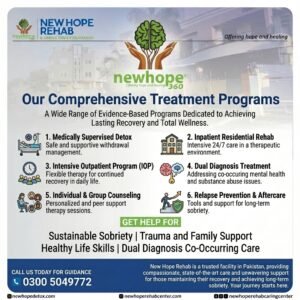
For those seeking Treatment Programs in Islamabad, Pakistan, understanding the available options can help individuals and families make informed decisions about recovery. At New Hope Rehab and Caring Centre Islamabad, comprehensive treatment programs are designed to address substance use disorders and mental health conditions through ethical, patient-centered, and evidence-based care.
What Are Treatment Programs?
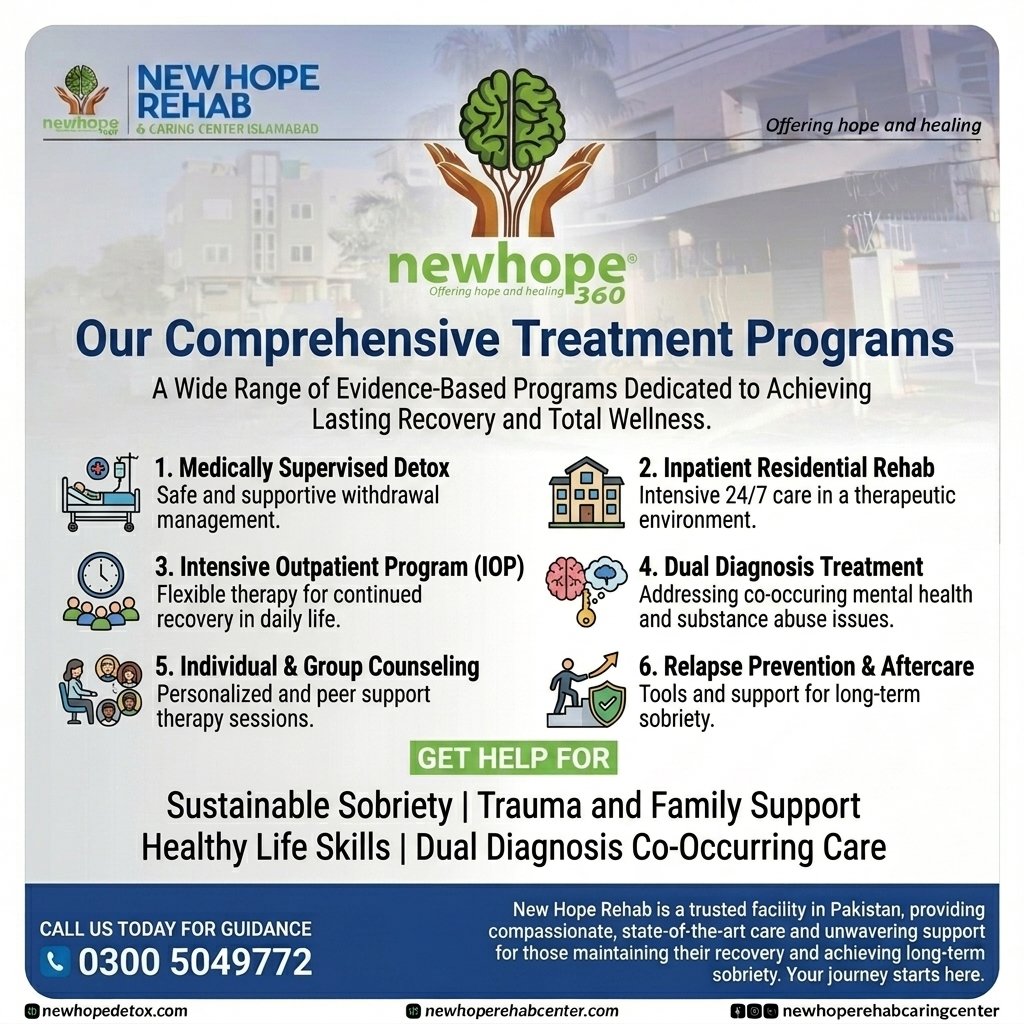
Treatment programs are structured plans developed by healthcare professionals to help individuals recover from addiction, manage mental health conditions, and improve overall well-being. Each program is tailored according to the individual’s medical history, psychological needs, recovery goals, and level of care required.
Treatment may involve medical supervision, psychological therapies, family support, relapse prevention, and aftercare planning to support long-term recovery.
Who Can Benefit from Treatment Programs?
Treatment programs may be appropriate for individuals experiencing:
- Alcohol addiction
- Drug addiction
- Opioid dependence
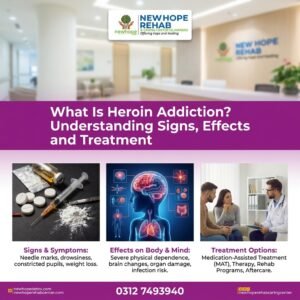
- Heroin addiction
- Cocaine addiction
- ICE or crystal meth addiction
- Cannabis dependence
- Anxiety disorders
- Depression
- Stress-related conditions
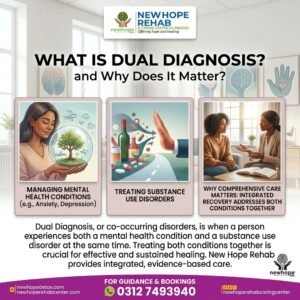
- Dual diagnosis (co-occurring addiction and mental health disorders)
A comprehensive clinical assessment helps determine the most appropriate treatment approach for each individual.
Key Components of Effective Treatment Programs
Comprehensive Assessment
Recovery begins with a detailed evaluation of physical health, mental health, substance use history, and personal circumstances. This assessment helps healthcare professionals develop an individualized treatment plan.
Medical Detoxification
For individuals with physical dependence, medically supervised detoxification may be recommended to manage withdrawal symptoms safely before beginning ongoing therapy.
Individual Counseling
One-on-one counseling provides a confidential setting where individuals can explore the underlying causes of addiction, identify personal challenges, and develop healthier coping strategies.
Cognitive Behavioral Therapy (CBT)
CBT is a widely used, evidence-based therapy that helps individuals recognize negative thought patterns, manage triggers, and replace unhealthy behaviors with positive lifestyle choices.
Group Therapy
Group therapy provides opportunities to learn from others facing similar challenges while building encouragement, accountability, and peer support.
Family Support Programs
Family involvement strengthens communication, improves understanding, and helps create a supportive home environment that encourages recovery.
The Importance of Personalized Care
No two individuals experience addiction or mental health conditions in the same way. Personalized treatment programs consider factors such as:
- Type and severity of addiction
- Physical health
- Mental health conditions
- Family support
- Personal recovery goals
- Previous treatment history
Individualized care helps ensure that treatment remains appropriate and responsive throughout the recovery journey.
Mental Health Support Within Treatment Programs
Many people living with addiction also experience mental health conditions, including:
- Anxiety
- Depression
- Trauma-related disorders
- Chronic stress
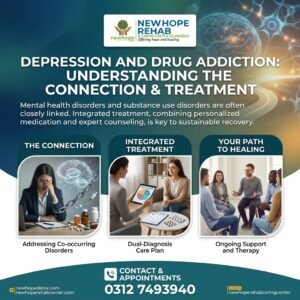
Addressing both substance use and mental health together can improve emotional stability, treatment engagement, and long-term recovery outcomes.
Relapse Prevention and Aftercare
Recovery continues after completing formal treatment. Relapse prevention strategies help individuals maintain progress and respond effectively to future challenges.
Common aftercare services include:
- Ongoing counseling
- Follow-up assessments
- Family education
- Support groups
- Recovery planning
- Healthy lifestyle guidance
At New Hope Rehab and Caring Centre Islamabad, aftercare planning is incorporated into every treatment program to support sustainable recovery.
Benefits of Professional Treatment Programs
Professionally developed treatment programs may help individuals:
- Improve physical and mental health
- Build healthier coping skills
- Strengthen emotional resilience
- Restore family relationships
- Develop healthier daily routines
- Reduce the risk of relapse
- Improve overall quality of life
Long-term recovery is often strengthened through continued professional guidance and family support.
Frequently Asked Questions (FAQs)
1. What are treatment programs?
Treatment programs are structured recovery plans that combine medical care, counseling, behavioral therapies, and ongoing support to help individuals overcome addiction or manage mental health conditions.
2. How is the right treatment program selected?
Healthcare professionals conduct a comprehensive assessment of the individual’s physical health, mental health, substance use history, and personal circumstances before recommending an appropriate treatment plan.
3. Do all treatment programs include counseling?
Counseling is a core component of most treatment programs because it helps individuals understand the underlying causes of addiction, develop coping strategies, and support lasting recovery.
4. Can family members participate in treatment?
Yes. Family support programs and counseling sessions often help strengthen communication, improve understanding, and create a positive environment that supports recovery.
5. Why is aftercare important after treatment?
Aftercare helps individuals maintain recovery through ongoing counseling, relapse prevention planning, follow-up support, and healthy lifestyle strategies.
Conclusion
Recovery is a gradual process that benefits from personalized care, professional guidance, and continued support. Well-designed Treatment Programs in Islamabad, Pakistan provide individuals with the tools needed to address addiction, improve mental health, and build healthier, more fulfilling lives.
At New Hope Rehab and Caring Centre Islamabad, treatment programs combine comprehensive assessment, evidence-based therapies, individual counseling, family involvement, relapse prevention, and aftercare planning. Through compassionate and ethical care, individuals are supported at every stage of their recovery journey, helping them achieve lasting well-being and an improved quality of life.