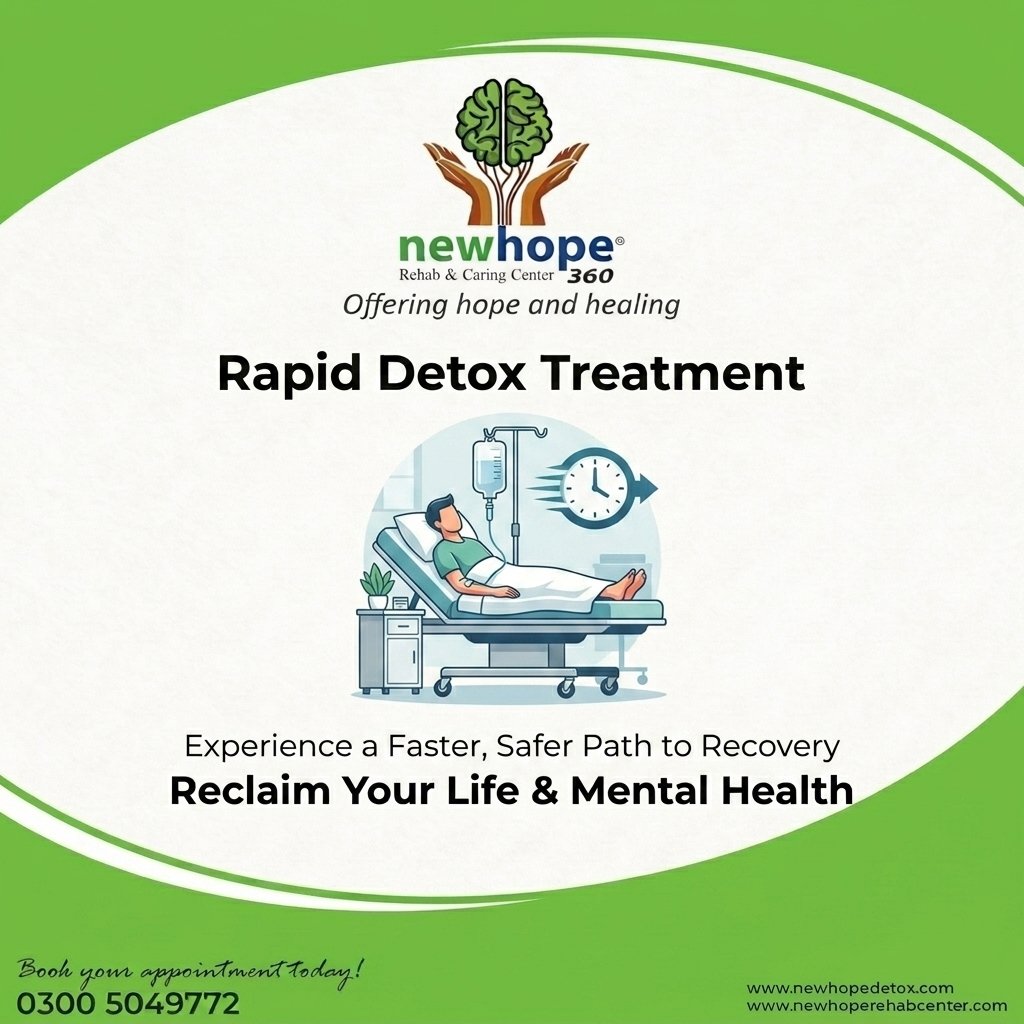
Rapid detox treatment is a term used to describe approaches intended to shorten the period of acute withdrawal from certain substances. The concept is often discussed in connection with opioid dependence, where withdrawal can be physically and emotionally difficult. However, detoxification is only one stage of addiction treatment, and speeding up withdrawal does not by itself treat the underlying substance use disorder.
For individuals searching for Rapid Detox Treatment in Islamabad, Pakistan, it is important to understand that detox should be based on medical assessment rather than speed alone. At New Hope Rehab and Caring Centre Islamabad, treatment planning should consider the person’s substance use history, physical health, mental health, withdrawal risks, and longer-term recovery needs.
What Is Rapid Detox Treatment?
Rapid detox generally refers to medically supervised methods intended to accelerate aspects of the withdrawal process. Some approaches involve medications that rapidly displace opioids from their receptors, potentially causing or intensifying withdrawal.
Because different substances require different approaches, there is no single rapid detox method suitable for everyone. The term should not be confused with a complete addiction treatment program.
A safe detox plan should begin with a professional assessment and appropriate medical monitoring.
Why Detoxification Requires Medical Care
Withdrawal can range from mild discomfort to serious medical complications, depending on the substance involved and the individual’s health.
Opioid withdrawal can cause symptoms such as:
- Muscle aches
- Sweating
- Restlessness
- Anxiety
- Nausea
- Vomiting
- Diarrhea
- Sleep difficulties
- Strong cravings
Alcohol and certain sedative medications can produce potentially dangerous withdrawal syndromes, including seizures or severe confusion. These substances require particular caution and may require medically supervised withdrawal management.
Is Rapid Detox Appropriate for Everyone?
No. Rapid detox is not automatically safer or more effective simply because the withdrawal period may be shorter.
Suitability depends on factors such as:
- The substance being used
- Level of physical dependence
- Duration and pattern of use
- Medical history
- Mental health status
- Previous withdrawal experiences
- Other medications or substances being used
- Risk of complications
A qualified healthcare professional should determine whether any accelerated detox approach is appropriate.
Assessment Before Detox
A comprehensive assessment is an important first step. Healthcare professionals may review:
- Substance use history
- Current medications
- Physical health
- Mental health
- Previous treatment
- Previous withdrawal symptoms
- Family and social circumstances
This information helps determine whether outpatient, residential, or medically supervised care is most appropriate.
Rapid Detox and Opioid Addiction

Rapid or accelerated withdrawal approaches are sometimes discussed in relation to heroin, prescription opioids, and other opioid drugs. However, opioid withdrawal management and long-term opioid use disorder treatment are separate considerations.
Evidence-based treatment for opioid use disorder may include medications such as buprenorphine or methadone, alongside counseling and recovery support when clinically appropriate. These treatments can help reduce cravings and withdrawal and may be continued as part of longer-term care.
The choice of treatment should be made by qualified clinicians according to individual circumstances.
Detox Is Not the Same as Addiction Treatment
One of the most important points about rapid detox is that completing withdrawal does not automatically resolve addiction.
Addiction involves behavioral, psychological, social, and neurological factors that may continue after substances leave the body.
A comprehensive recovery plan may include:
Individual Counseling
Counseling can help individuals understand triggers, emotional challenges, and behaviors associated with substance use.
Behavioral Therapy
Evidence-based therapies can help people develop healthier coping strategies and manage cravings.
Family Support
Family education and counseling can improve communication and provide a healthier support system during recovery.
Relapse Prevention
Individuals can learn to identify high-risk situations and develop practical strategies for maintaining recovery.
Aftercare
Continued counseling, follow-up care, and appropriate support can help individuals maintain progress after the initial treatment phase.
Potential Risks and Considerations
Accelerating opioid withdrawal can be physically and psychologically challenging. Rapid changes in opioid tolerance can also create an important overdose concern if a person returns to previous opioid doses after detox.
After a period of abstinence, tolerance may decrease. Taking an amount previously tolerated can therefore cause serious or fatal respiratory depression.
For this reason, overdose prevention and continuing treatment should be part of any responsible opioid recovery plan.
A Personalized Approach to Recovery
At New Hope Rehab and Caring Centre Islamabad, addiction treatment should be based on individual needs rather than a one-size-fits-all approach. Detoxification may be an initial step, but recovery often requires continued psychological support, behavioral treatment, family involvement, and relapse prevention.
Individuals and families should be encouraged to ask healthcare professionals about the purpose, benefits, limitations, and risks of any proposed detoxification method.
Frequently Asked Questions (FAQs)
1. What is rapid detox treatment?
Rapid detox treatment refers to medical approaches intended to accelerate aspects of withdrawal, most commonly discussed in relation to opioid dependence. It is not a complete treatment for addiction.
2. Is rapid detox safe?
Safety depends on the individual’s health, the substance involved, the method used, and the level of medical supervision. Some accelerated withdrawal methods carry significant risks and should only be considered after professional assessment.
3. Does rapid detox cure addiction?
No. Detox addresses physical withdrawal but does not by itself treat the psychological, behavioral, and social aspects of addiction. Continuing treatment is often necessary.
4. Can rapid detox be used for alcohol addiction?
Rapid detox approaches are not a general solution for alcohol withdrawal. Alcohol withdrawal can become medically dangerous and may require medically supervised withdrawal management.
5. What happens after detox?
After detox, a person may benefit from ongoing addiction treatment such as counseling, behavioral therapy, medication when clinically appropriate, family support, relapse prevention, and aftercare.
Conclusion
Rapid detox treatment can refer to specialized approaches designed to accelerate aspects of withdrawal, particularly in the context of opioid dependence. However, faster withdrawal should not be confused with safer or more complete recovery. Careful assessment, appropriate medical supervision, and continued addiction treatment remain essential.
For people considering Rapid Detox Treatment in Islamabad, Pakistan, New Hope Rehab and Caring Centre Islamabad can provide a treatment setting where individual health, withdrawal risk, mental health, and long-term recovery needs are considered. A responsible recovery plan focuses not only on detoxification but also on the ongoing support needed to build and maintain a healthier life.