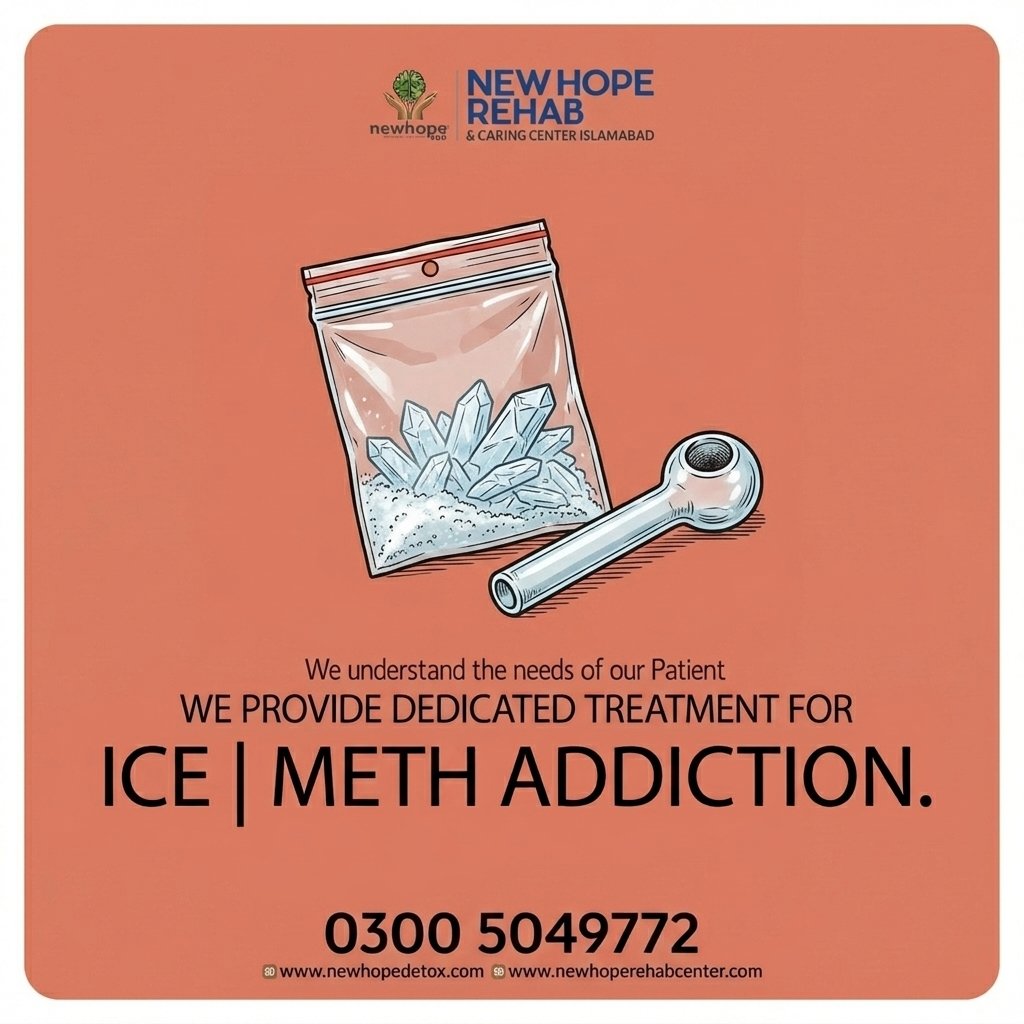
ICE, commonly referring to crystal methamphetamine, is a powerful stimulant that can have serious effects on the brain, body, emotions, and behavior. Repeated use can lead to cravings, tolerance, dependence, sleep disruption, mood changes, and significant difficulties in personal or professional life.
For individuals and families seeking ICE | METH Addiction Treatment in Islamabad, Pakistan, professional assessment and individualized care can provide an appropriate starting point. At New Hope Rehab and Caring Centre Islamabad, treatment can address substance use alongside physical health, mental health, family concerns, and long-term recovery needs.
What Is ICE | METH Addiction?
ICE is a form of methamphetamine, a potent central nervous system stimulant. It can produce increased alertness, energy, and euphoria, but repeated or heavy use can create significant physical and psychological problems.
Methamphetamine addiction, clinically considered a stimulant use disorder when diagnostic criteria are met, may involve difficulty controlling use despite harmful consequences.
Potential signs include:
- Strong cravings for methamphetamine
- Increasing amounts or frequency of use
- Difficulty stopping
- Severe changes in sleep patterns
- Loss of appetite
- Irritability or agitation
- Social withdrawal
- Neglect of responsibilities
- Continued use despite health or relationship problems
A qualified healthcare professional should conduct an assessment before making a diagnosis.
Effects of Crystal Meth on Physical and Mental Health
Methamphetamine can affect multiple areas of health. Short-term effects may include increased heart rate, elevated blood pressure, reduced appetite, insomnia, and agitation.
Long-term or heavy use may be associated with:
- Significant weight loss
- Cardiovascular problems
- Dental health problems
- Sleep disturbances
- Anxiety
- Depression
- Memory and concentration difficulties
- Paranoia or psychotic symptoms
- Social and occupational difficulties
Severe agitation, hallucinations, chest pain, seizures, or dangerously elevated body temperature require urgent medical attention.
Why ICE | METH Addiction Can Be Difficult to Overcome
Methamphetamine strongly affects brain systems involved in reward, motivation, and pleasure. Repeated use can reinforce patterns of craving and compulsive behavior.
Some people also use stimulants to cope with stress, emotional pain, fatigue, or difficult circumstances. When substance use becomes a primary coping strategy, stopping may require more than simply avoiding the drug.
Professional treatment can help address both substance use and the factors that contribute to it.
How ICE | METH Addiction Treatment Works
Comprehensive Assessment
Treatment begins with an evaluation of substance use, physical health, psychological symptoms, medications, previous treatment, and personal circumstances.
This assessment helps determine the appropriate level of care and whether additional medical or psychiatric support is required.
Withdrawal and Stabilization
Unlike alcohol or certain sedative withdrawals, stimulant withdrawal is not typically managed with a specific medication that eliminates the entire withdrawal process. However, professional monitoring and supportive care can help individuals manage symptoms such as fatigue, low mood, sleep changes, irritability, and cravings.
Individual Counseling
One-to-one counseling can help individuals identify triggers, understand patterns of methamphetamine use, and develop healthier coping strategies.
Cognitive Behavioral Therapy
CBT can help individuals recognize unhelpful thoughts and behaviors and learn practical techniques for responding to cravings, stress, and high-risk situations.
Contingency-Based Approaches
Behavioral approaches that provide structured incentives for treatment-related goals may be considered in some stimulant-use treatment settings. Suitability depends on the individual’s treatment plan and available clinical resources.
Dual Diagnosis and Mental Health Care
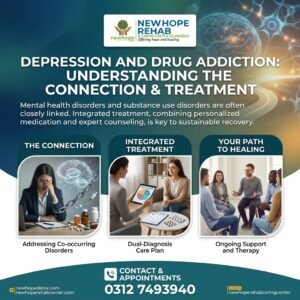
Some people experiencing methamphetamine addiction also develop or experience worsening anxiety, depression, trauma-related symptoms, paranoia, or psychosis.
When mental health and substance use problems occur together, both should be assessed. Continuing stimulant use may intensify psychological symptoms in some individuals, while untreated mental health difficulties can make recovery more challenging.
At New Hope Rehab and Caring Centre Islamabad, mental health concerns can be considered as part of an individualized treatment plan when clinically appropriate.
The Importance of Family Support
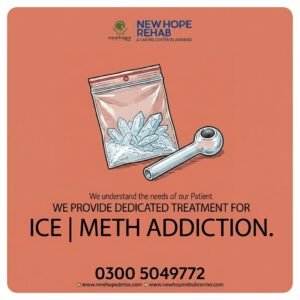
ICE | METH addiction can affect the entire household. Family members may notice changes in behavior, sleep, mood, finances, or relationships before the person recognizes the severity of the problem.
Family support may include:
- Learning about stimulant addiction
- Participating in family counseling
- Improving communication
- Establishing healthy boundaries
- Supporting treatment attendance
- Recognizing warning signs
- Encouraging professional help
Support should remain compassionate while avoiding actions that unintentionally enable continued substance use.
Relapse Prevention and Continuing Care
Recovery from methamphetamine addiction often requires continued support after the initial treatment period. A relapse-prevention plan can help individuals identify situations and emotions that increase the risk of returning to drug use.
Strategies may include:
- Identifying personal triggers
- Developing healthy sleep routines
- Managing stress constructively
- Avoiding high-risk environments
- Building positive social connections
- Continuing counseling
- Maintaining meaningful daily activities
- Attending follow-up care
If a setback occurs, professional reassessment can help determine what additional support may be needed.
Frequently Asked Questions (FAQs)
1. What is ICE or crystal meth?
ICE is a commonly used name for crystal methamphetamine, a powerful stimulant drug that can lead to dependence and significant physical and psychological health problems.
2. Can ICE | METH addiction be treated?
Yes. Treatment can include professional assessment, supportive withdrawal care, behavioral therapies, counseling, family involvement, mental health treatment, and relapse prevention.
3. Does methamphetamine withdrawal require detoxification?
People can experience significant psychological and physical symptoms after stopping methamphetamine. Professional assessment can determine whether supervised stabilization or another level of care is appropriate.
4. Can methamphetamine cause mental health problems?
Methamphetamine use can be associated with anxiety, depression, paranoia, and psychotic symptoms, particularly with heavy or prolonged use. Persistent or severe symptoms require professional assessment.
5. How can families help someone with methamphetamine addiction?
Families can encourage professional treatment, learn about stimulant use disorders, maintain healthy boundaries, communicate without unnecessary judgment, and participate in family counseling when appropriate.
Conclusion
ICE | METH addiction is a serious health concern that can affect physical health, mental well-being, relationships, and everyday functioning. Recovery may require structured professional support that addresses both stimulant use and the factors that contribute to continued use.
For individuals seeking ICE | METH Addiction Treatment in Islamabad, Pakistan, New Hope Rehab and Caring Centre Islamabad focuses on individualized assessment, counseling, behavioral therapy, mental health support, family involvement, and relapse-prevention planning. With appropriate care and continued support, individuals can work toward healthier routines, improved stability, and sustainable recovery.