Alcohol addiction is a serious health condition that can affect physical health, mental well-being, relationships, employment, and everyday responsibilities. A person experiencing alcohol addiction may continue drinking despite negative consequences and may find it difficult to reduce or stop drinking without professional support.
For individuals and families searching for Alcohol Addiction Treatment in Islamabad, Pakistan, understanding the condition and available treatment approaches can be an important first step. At New Hope Rehab and Caring Centre Islamabad, care can be tailored to individual needs, with attention to physical health, psychological well-being, family circumstances, and long-term recovery.
What Is Alcohol Addiction?
Alcohol addiction, commonly referred to as alcohol use disorder (AUD), is a medical condition involving problematic alcohol use that causes significant distress or impairment.
It can range from mild to severe. Some people may gradually develop dependence after repeated alcohol use, while others may experience significant problems over a shorter period.
Possible signs include:
- Drinking more or for longer than intended
- Repeated attempts to cut down without success
- Strong cravings for alcohol
- Neglecting work, education, or family responsibilities
- Continuing to drink despite health or relationship problems
- Spending significant time obtaining or recovering from alcohol use
- Developing tolerance
- Experiencing withdrawal symptoms after reducing or stopping alcohol
These signs don’t automatically confirm a diagnosis. A qualified healthcare professional can conduct an appropriate assessment.
Why Alcohol Addiction Can Develop
Alcohol addiction doesn’t have one single cause. A combination of biological, psychological, and social factors can influence a person’s risk.
Potential contributing factors include:
- Family history of addiction
- Genetic vulnerability
- Chronic stress
- Trauma
- Depression or anxiety
- Social environment
- Regular heavy drinking
- Difficulty managing emotions
- Exposure to alcohol-related social situations
Understanding these factors can help professionals develop a more individualized treatment plan.
Alcohol Addiction Treatment in Islamabad, Pakistan
Treatment depends on the person’s drinking pattern, physical health, withdrawal risk, mental health, and recovery goals.
Comprehensive Assessment
Treatment generally begins with an assessment of alcohol use, medical history, mental health, medications, previous withdrawal experiences, and current circumstances.
This assessment can help determine whether outpatient care, residential rehabilitation, or medically supervised withdrawal management is appropriate.
Detoxification and Withdrawal Management
Detoxification may be necessary for people who have developed significant physical dependence on alcohol.
Alcohol withdrawal can cause symptoms such as:
- Anxiety
- Tremors
- Sweating
- Nausea
- Insomnia
- Irritability
- Increased heart rate
In severe cases, withdrawal can involve seizures, hallucinations, severe confusion, or delirium tremens, which can be life-threatening.
For this reason, people with significant alcohol dependence shouldn’t assume that suddenly stopping alcohol at home is safe. Medical assessment is particularly important before stopping heavy or prolonged drinking.
Counseling and Behavioral Therapy
After stabilization, counseling can help individuals understand drinking patterns, identify triggers, manage cravings, and develop healthier coping strategies.
Cognitive Behavioral Therapy (CBT) may be used to help individuals recognize unhelpful thoughts and behaviors associated with alcohol use and develop more constructive responses.
Mental Health and Alcohol Addiction
Alcohol addiction may occur alongside depression, anxiety, trauma-related conditions, or other mental health concerns.
Some people may drink to cope with emotional distress, while ongoing alcohol use can worsen mood, sleep, anxiety, and other psychological symptoms.
When alcohol use and mental health concerns occur together, professionals may consider a dual-diagnosis approach that addresses both conditions.
At New Hope Rehab and Caring Centre Islamabad, mental health needs can be assessed alongside addiction concerns when clinically appropriate.
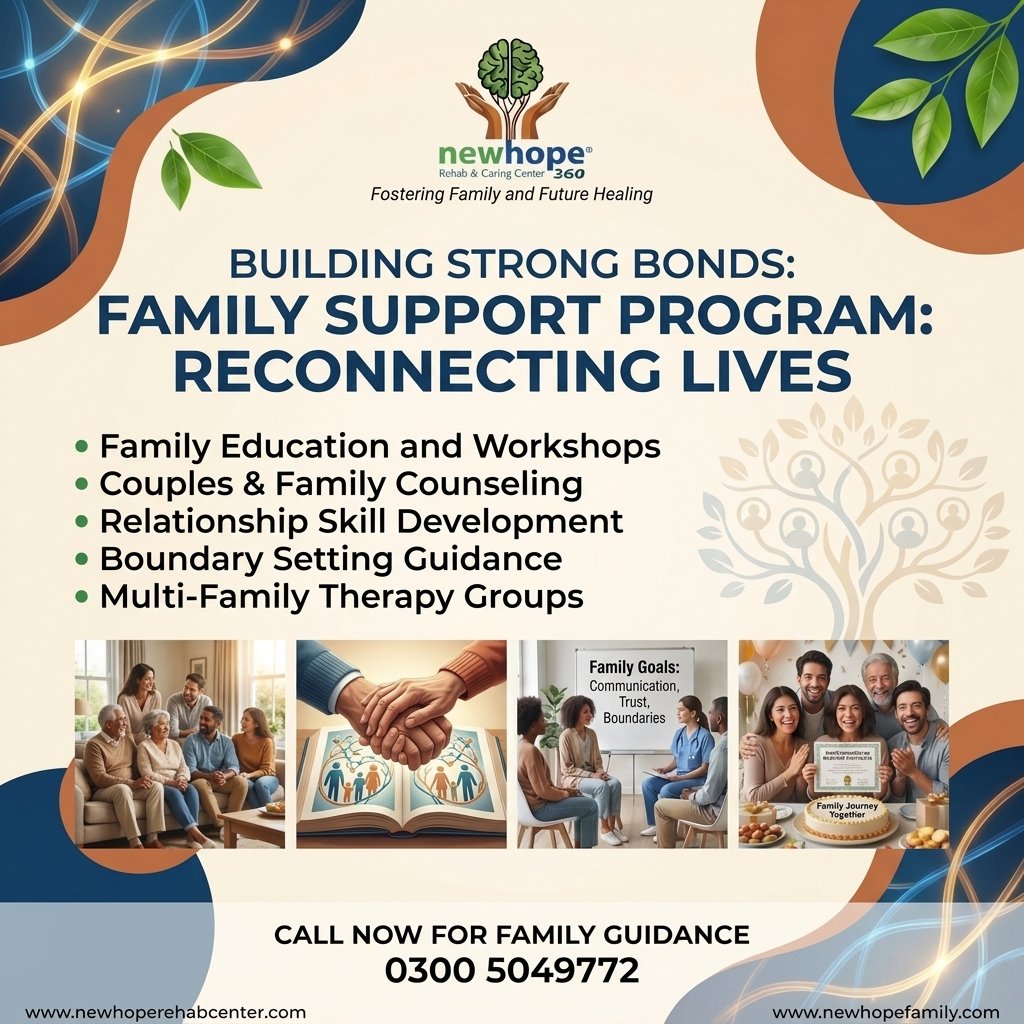
The Role of Family Support
Alcohol addiction can place considerable pressure on families. Relatives may experience worry, frustration, financial concerns, or uncertainty about how to respond.
Family support can involve:
- Education about alcohol addiction
- Family counseling
- Better communication
- Healthy boundaries
- Relapse-prevention education
- Encouragement for continuing treatment
Family members can provide valuable support, but they aren’t responsible for managing another person’s addiction on their own.
Relapse Prevention and Long-Term Recovery
Recovery doesn’t necessarily end when a person completes detoxification or residential treatment. Stress, emotional difficulties, social pressure, and exposure to previous drinking environments may increase the risk of returning to alcohol use.
A relapse-prevention plan may include:
- Identifying personal triggers
- Developing healthy coping skills
- Continuing counseling
- Building supportive relationships
- Maintaining regular sleep and daily routines
- Addressing mental health concerns
- Attending follow-up care
- Developing a plan for managing cravings
If a relapse occurs, professional reassessment can help identify contributing factors and determine whether the treatment plan should be modified.
Choosing Appropriate Alcohol Addiction Care
Families should consider safety, professional qualifications, individualized assessment, confidentiality, and continuing care when evaluating treatment options.
Useful questions include:
- Is the person’s withdrawal risk assessed?
- Are medical and mental health needs evaluated?
- Is treatment individualized?
- Are evidence-informed counseling approaches available?
- Can family members participate when appropriate?
- Is there a relapse-prevention and aftercare plan?
These questions can help families make informed healthcare decisions.
Frequently Asked Questions (FAQs)
1. What is Alcohol Addiction Treatment in Islamabad, Pakistan?
It refers to professional care for people experiencing problematic alcohol use. Treatment may include assessment, medically supervised withdrawal management, counseling, behavioral therapy, family support, relapse prevention, and continuing care.
2. Is alcohol withdrawal dangerous?
It can be. People with significant alcohol dependence may experience serious withdrawal complications, including seizures or severe confusion. Medical assessment is important when dependence is suspected.
3. Is detoxification enough to overcome alcohol addiction?
No. Detoxification primarily addresses withdrawal and stabilization. Ongoing counseling, behavioral treatment, relapse prevention, and continuing support may be needed to address the broader condition.
4. Can depression or anxiety be treated alongside alcohol addiction?
Yes. When alcohol use occurs alongside a mental health condition, integrated care can address both concerns as part of an individualized treatment plan.
5. How can families support someone recovering from alcohol addiction?
Families can encourage professional care, learn about alcohol use disorder, communicate respectfully, establish healthy boundaries, participate in counseling when appropriate, and support continuing treatment.
Conclusion
Alcohol addiction can affect nearly every area of a person’s life, but seeking professional support can provide a structured path toward healthier choices and improved well-being. Treatment should consider not only alcohol use but also physical health, mental health, relationships, and the circumstances that may contribute to continued drinking.
For those seeking Alcohol Addiction Treatment in Islamabad, Pakistan, New Hope Rehab and Caring Centre Islamabad can provide an individualized approach that may include assessment, withdrawal management, counseling, behavioral therapy, family support, relapse prevention, and continuing care. The focus should remain on safe, ethical, respectful, and patient-centered treatment throughout the recovery process.