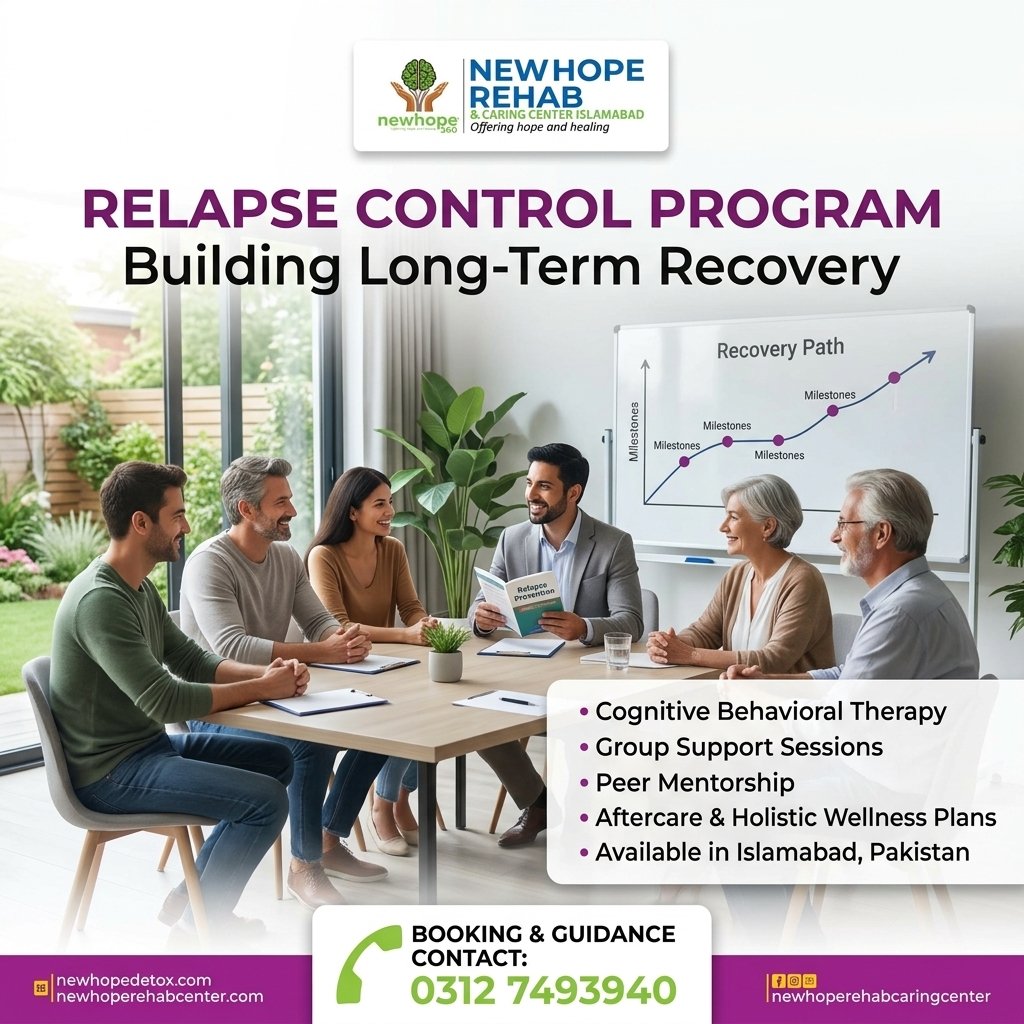
A Relapse Control Program in Islamabad, Pakistan can provide ongoing support for people recovering from drug or alcohol addiction. Completing detox or an initial rehabilitation program is an important step, but recovery often continues long after the first phase of treatment.
Relapse can happen when a person returns to substance use after a period of improvement or abstinence. It does not mean that recovery is impossible. Instead, it can indicate that additional support, treatment adjustments, or stronger coping strategies are needed.
New Hope Rehab and Caring Centre Islamabad provides structured support for individuals and families dealing with addiction and related mental health concerns.
What Is a Relapse Control Program?
A relapse control program is a structured approach designed to help individuals recognize and manage situations that may increase the risk of returning to substance use.
A program may focus on:
- Identifying personal triggers
- Managing cravings
- Developing healthy coping skills
- Addressing emotional difficulties
- Improving stress management
- Building supportive relationships
- Continuing counseling
- Monitoring warning signs
- Developing an aftercare plan
Relapse prevention is generally more effective when it is individualized. Different people may have different triggers, recovery goals, mental health needs, and support systems.
Why Relapse Prevention Matters in Addiction Recovery
Addiction can involve long-lasting changes in behavior, reward pathways, and responses to stress. Even after stopping substance use, cravings or difficult emotions may return.
Common situations that can increase relapse risk include:
- Stress at work or home
- Conflict with family members
- Social pressure
- Returning to environments associated with drug or alcohol use
- Certain people or places
- Loneliness
- Anxiety or depression
- Sleep problems
- Overconfidence about recovery
- Exposure to alcohol or drugs
Learning to recognize these situations before they become overwhelming can help individuals seek support early.
Understanding the Relapse Process
Relapse does not always happen suddenly. It may develop through changes in thoughts, emotions, and behaviors before substance use occurs.
Emotional Warning Signs
A person may experience:
- Irritability
- Anxiety
- Isolation
- Poor sleep
- Mood changes
- Neglect of self-care
- Increased stress
Mental Warning Signs
Someone may begin thinking about previous substance use, remembering positive experiences associated with drugs or alcohol, or believing that controlled use would be possible.
Behavioral Warning Signs
Behavioral changes may include returning to old social environments, withdrawing from supportive people, skipping counseling, or abandoning healthy routines.
Recognizing these signs early can provide an opportunity to strengthen the recovery plan.
Craving Management in a Relapse Control Program
Cravings are common during addiction recovery. Their intensity and frequency can vary from person to person.
A relapse control program may teach individuals to:
- Identify situations that trigger cravings
- Delay acting on an urge
- Distract themselves with healthy activities
- Contact supportive people
- Practice relaxation techniques
- Challenge unhelpful thoughts
- Leave high-risk environments
- Seek professional support when necessary
Cravings do not necessarily mean that a person will relapse. They can be managed through appropriate coping strategies and ongoing support.
Counseling and Behavioral Therapy
Counseling can help individuals understand the factors behind previous substance use and develop practical recovery skills.
Cognitive behavioral approaches may help people identify connections between thoughts, emotions, and behaviors.
Therapy may address:
- Stress management
- Emotional regulation
- Negative thinking patterns
- Decision-making
- Communication
- Relationship difficulties
- Coping with cravings
- High-risk situations
Continuing counseling can be particularly useful when a person has a history of repeated relapse.
Mental Health and Relapse Prevention
Mental health and addiction can influence each other. Depression, anxiety, trauma-related symptoms, and other psychological difficulties may increase vulnerability to substance use for some individuals.
A Relapse Control Program in Islamabad, Pakistan should therefore consider mental health as part of the overall recovery plan.
When addiction and mental health conditions occur together, professionals may describe this as a dual diagnosis or co-occurring disorder. Addressing both concerns can help create more coordinated care.
Family Support During Relapse Prevention
Families can play an important role in recovery when their involvement is appropriate.
Family members can support relapse prevention by:
- Encouraging continued treatment
- Maintaining healthy communication
- Supporting positive routines
- Learning about addiction
- Recognizing warning signs
- Establishing appropriate boundaries
- Avoiding behaviors that enable substance use
- Encouraging professional help when concerns arise
Families should understand that they cannot control another person’s recovery. Professional guidance can help relatives determine how to provide constructive support.
Aftercare and Continuing Recovery
Relapse prevention often works best when support continues after residential or intensive treatment ends.
Aftercare may include:
- Individual counseling
- Group therapy
- Family counseling
- Follow-up appointments
- Recovery-focused activities
- Mental health support
- Regular progress reviews
- Crisis planning
The appropriate form and frequency of aftercare depend on the individual’s needs and progress.
What to Look for in a Relapse Control Program in Islamabad
When choosing a Relapse Control Program in Islamabad, Pakistan, consider whether the program provides individualized and continuing support.
Useful questions include:
- Is relapse risk assessed individually?
- Are personal triggers identified?
- Is counseling available?
- Are mental health concerns assessed?
- Is family support included?
- Is there an aftercare plan?
- Can treatment be adjusted when circumstances change?
- Is professional help available during periods of increased risk?
- How are emergencies handled?
Avoid programs that promise guaranteed prevention of relapse. Recovery outcomes can vary, and treatment plans may need to change over time.
What Happens If Relapse Occurs?
A return to substance use should be taken seriously, but it does not mean that recovery has permanently failed.
The person may need a professional reassessment to understand:
- What triggered the return to use
- Whether mental health symptoms have changed
- Whether the current treatment plan is sufficient
- Whether additional counseling is needed
- Whether the person’s environment has changed
- Whether a higher level of care is appropriate
Seeking help quickly can reduce the chance that a brief setback develops into prolonged substance use.
Relapse Control Support at New Hope Rehab and Caring Centre Islamabad
New Hope Rehab and Caring Centre Islamabad provides structured addiction recovery and mental health support for individuals and families.
A relapse-prevention plan can be developed according to the person’s substance-use history, triggers, mental health needs, family circumstances, and ongoing recovery requirements. Depending on individual needs, support may include counseling, behavioral strategies, family involvement, mental health care, and continuing recovery planning.
Professional guidance can help individuals identify practical steps for maintaining recovery and responding to warning signs.
Frequently Asked Questions
1. What is a relapse control program?
A relapse control program is a structured approach that helps people in recovery identify triggers, manage cravings, develop coping skills, address mental health concerns, and maintain ongoing support.
2. Can relapse be completely prevented?
No treatment can guarantee that relapse will never occur. However, identifying triggers, continuing treatment, developing coping skills, and maintaining a strong support system can help reduce risks and provide earlier opportunities to respond to warning signs.
3. What are common relapse warning signs?
Warning signs can include isolation, poor sleep, increased stress, emotional changes, skipping treatment, returning to high-risk environments, thinking frequently about substance use, and withdrawing from supportive people.
4. What should someone do after a relapse?
Seek professional help as soon as possible. A healthcare professional can assess what happened, identify contributing factors, and determine whether the existing recovery plan should be modified or additional treatment is needed.
5. How long should relapse prevention continue?
There is no universal timeframe. Some people may benefit from continuing support for an extended period, depending on addiction severity, relapse history, mental health, environment, and individual recovery needs.
Conclusion
A Relapse Control Program in Islamabad, Pakistan can help individuals strengthen their recovery by identifying triggers, managing cravings, developing healthier coping strategies, and maintaining ongoing professional support.
Relapse prevention is not simply about avoiding drugs or alcohol. It can also involve improving mental health, managing stress, strengthening relationships, maintaining healthy routines, and recognizing warning signs early.
If you or someone you care about is experiencing difficulties during addiction recovery, professional assessment can help identify appropriate next steps. New Hope Rehab and Caring Centre Islamabad provides structured support for individuals and families working toward long-term recovery.