Drug detox is the process of allowing the body to eliminate a drug while managing the physical and psychological effects that can occur when substance use is reduced or stopped. For people who have developed physical dependence, detox can be an important first step toward addiction recovery.
However, detox is not the same as complete addiction treatment. Withdrawal management addresses the immediate effects of stopping a substance, while longer-term treatment can address cravings, behaviors, mental health concerns, relationships, and relapse prevention.
New Hope Rehab and Caring Centre Islamabad provides structured support for individuals and families dealing with addiction and related mental health concerns.
What Is Drug Detox?
Drug detoxification is a process through which a person stops using a substance and receives appropriate support while the body adjusts.
The experience depends on several factors, including:
- The type of drug used
- Amount and frequency of use
- Duration of substance use
- Physical health
- Mental health
- Previous withdrawal experiences
- Use of multiple substances
Some people may require medically supervised withdrawal management, while others may need a different level of support.
Why Drug Detox Can Be Important
Regular drug use can cause the body to adapt to the presence of a substance. When use suddenly stops, withdrawal symptoms may occur.
Depending on the drug, withdrawal can involve:
- Anxiety
- Irritability
- Sweating
- Tremors
- Nausea
- Muscle aches
- Fatigue
- Sleep difficulties
- Changes in appetite
- Depression or low mood
- Strong cravings
Some types of withdrawal can become medically serious. For this reason, people with significant dependence should seek professional advice before stopping certain substances abruptly.
Different Drugs Can Cause Different Withdrawal Symptoms
Drug detox is not a single process because different substances affect the body differently.
Opioid Detox
Opioids such as heroin and other opioid drugs can cause withdrawal symptoms including muscle aches, sweating, runny nose, nausea, diarrhea, anxiety, insomnia, and intense cravings.
Although opioid withdrawal is generally not fatal by itself, professional support can help manage symptoms and address the risk of returning to opioid use after tolerance has decreased.
Benzodiazepine Detox
Benzodiazepine withdrawal can be medically serious, particularly after prolonged or high-dose use. Symptoms can include anxiety, insomnia, agitation, and, in severe cases, seizures.
People taking benzodiazepines regularly should not abruptly discontinue them without medical guidance.
Stimulant Detox
Stopping stimulants such as methamphetamine or cocaine may result in fatigue, increased sleep, increased appetite, low mood, irritability, anxiety, and strong cravings.
Severe depression or suicidal thoughts require urgent professional attention.
Cannabis Withdrawal
Some frequent cannabis users experience irritability, anxiety, sleep difficulties, reduced appetite, restlessness, and cravings after stopping.
The intensity varies between individuals.
Medical Assessment Before Detox
A professional assessment can help determine the safest approach to withdrawal management.
Healthcare professionals may review:
- Substance-use history
- Current medications
- Previous withdrawal symptoms
- Physical health
- Mental health
- Other substances being used
- Previous treatment
- Risk factors for complications
This information can help determine whether outpatient support, supervised detoxification, or a higher level of care may be appropriate.
What Happens During Drug Detox?
The detox process varies depending on the substance and individual circumstances.
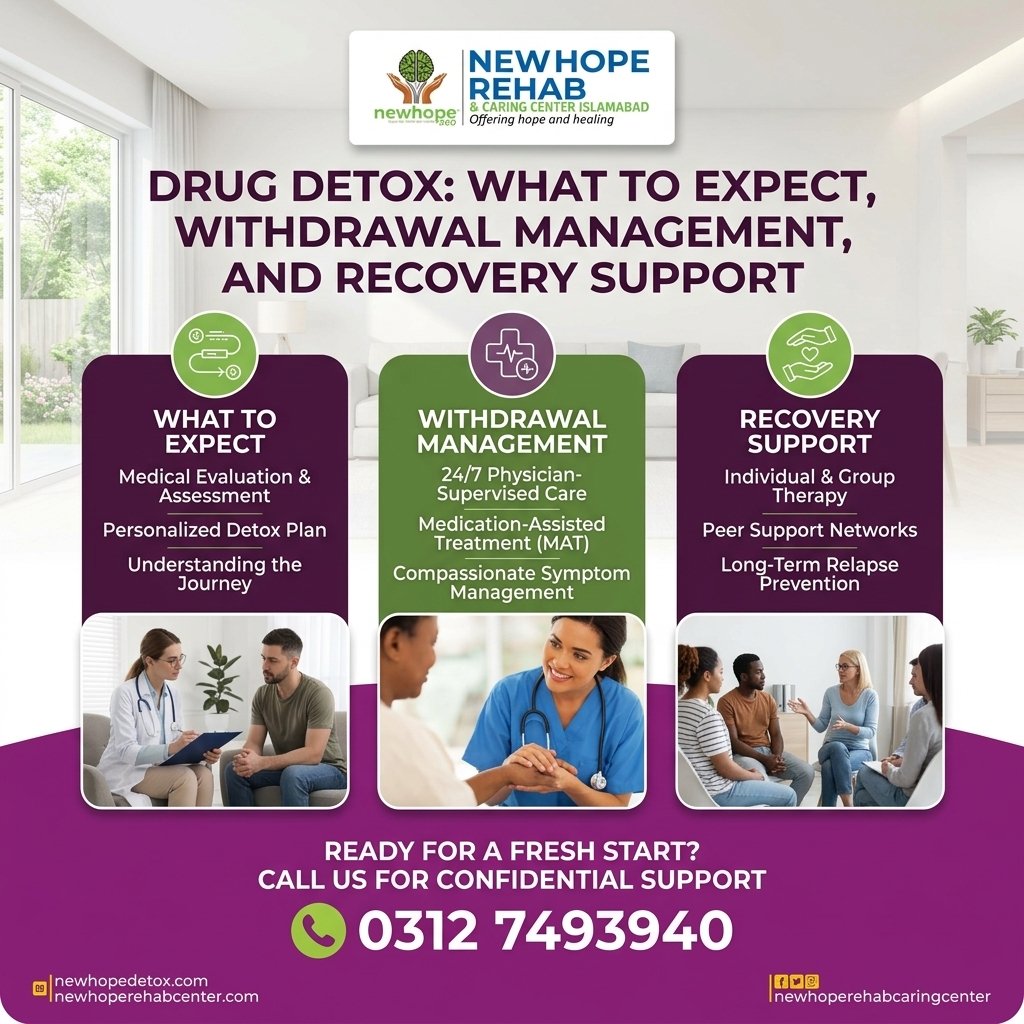
A supervised program may include:
- Initial assessment – Reviewing substance use, health, medications, and withdrawal risks.
- Monitoring – Observing physical and psychological symptoms during withdrawal.
- Supportive care – Providing appropriate hydration, nutrition, rest, and symptom management.
- Medication when clinically appropriate – Certain medications may be used by qualified professionals to manage withdrawal or reduce risks.
- Mental health support – Monitoring mood, anxiety, agitation, or other psychological symptoms.
- Recovery planning – Preparing for ongoing addiction treatment after withdrawal.
The purpose is to manage withdrawal safely and provide a transition toward longer-term recovery.
Is Drug Detox Enough to Treat Addiction?
No. Detox alone does not address all of the factors involved in addiction.
After detox, individuals may still experience:
- Cravings
- Emotional difficulties
- Substance-use triggers
- Relationship problems
- Stress
- Unhealthy behavioral patterns
- Mental health symptoms
Continuing treatment may include counseling, behavioral therapy, psychiatric care, family support, relapse prevention, and aftercare.
Counseling After Drug Detox
Counseling can help individuals understand their substance use and develop healthier ways to manage difficult situations.
Treatment may focus on:
- Identifying triggers
- Managing cravings
- Developing coping skills
- Improving emotional regulation
- Addressing negative thought patterns
- Managing stress
- Strengthening motivation for recovery
- Developing a relapse-prevention plan
Continuing treatment is an important part of moving from withdrawal management toward long-term recovery.
Drug Detox and Dual Diagnosis
Some people who seek drug detox also experience depression, anxiety, trauma-related symptoms, or other mental health conditions.
When addiction and mental health concerns occur together, they may require coordinated treatment.
A comprehensive assessment can help distinguish symptoms associated with substance use or withdrawal from an underlying psychiatric condition and identify appropriate mental health support.
Family Support During Drug Detox and Recovery
Families often play an important role in helping someone seek treatment. However, withdrawal and addiction can also create significant stress for relatives.
Family education can help loved ones understand:
- What withdrawal may involve
- Why professional treatment can be important
- How to communicate effectively
- How to establish healthy boundaries
- How to recognize warning signs
- When emergency help may be needed
Families should also seek support for their own well-being when necessary.
When Is Drug Detox an Emergency?
Some symptoms require immediate medical attention rather than waiting for a routine treatment appointment.
Seek urgent medical help for symptoms such as:
- Seizures
- Severe confusion
- Difficulty breathing
- Loss of consciousness
- Severe chest pain
- Serious dehydration
- Extreme agitation
- Severe psychotic symptoms
- Suicidal thoughts or immediate risk of self-harm
The appropriate emergency response depends on the situation and local medical services.
Choosing a Drug Detox Centre
When looking for a Drug Detox program, consider clinical safety and professional qualifications.
Important questions include:
- Is there a medical assessment before detox?
- Are qualified healthcare professionals involved?
- How are withdrawal symptoms monitored?
- Can the program respond to medical emergencies?
- Are mental health concerns assessed?
- Is counseling available after detox?
- Is relapse prevention included?
- Is continuing care available?
Be cautious about programs that promise instant detoxification or guaranteed permanent recovery. Addiction recovery is an individual healthcare process.
Drug Detox at New Hope Rehab and Caring Centre Islamabad
New Hope Rehab and Caring Centre Islamabad provides structured support for individuals and families dealing with addiction and related mental health concerns.
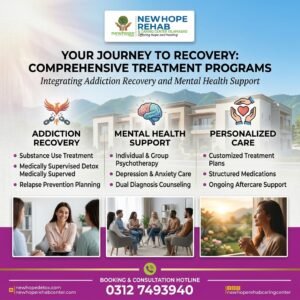
Depending on individual needs, treatment planning may include assessment, withdrawal management, counseling, psychological support, family involvement, relapse prevention, and continuing recovery care.
Anyone considering detox should receive an appropriate professional assessment, particularly if they have been using alcohol, benzodiazepines, opioids, or multiple substances.
Frequently Asked Questions
1. What is drug detox?
Drug detox is the process of stopping or reducing substance use while managing withdrawal and helping the body adjust. Depending on the substance and individual health, detox may require medical supervision.
2. Can I detox from drugs at home?
The safety of home withdrawal depends on the substance, level of dependence, medical history, and withdrawal risk. Some forms of withdrawal can be dangerous, so professional assessment is recommended before attempting detox independently.
3. How long does drug detox take?
There is no single timeframe. Detox duration varies according to the substance, pattern of use, physical health, withdrawal symptoms, and treatment approach.
4. Is detox enough to overcome addiction?
No. Detox primarily manages withdrawal. Long-term recovery may require counseling, behavioral therapy, mental health treatment, family support, relapse prevention, and aftercare.
5. What should happen after drug detox?
A continuing treatment plan should address cravings, triggers, behavioral patterns, mental health, and relapse risks. Depending on individual needs, this may involve residential rehabilitation, outpatient counseling, therapy, medication, family support, or aftercare.
Conclusion
Drug detox can be an important first step for people who have developed dependence on drugs, but it should be approached with appropriate professional guidance. Withdrawal symptoms differ significantly between substances, and some can become medically serious.
Safe withdrawal management should be followed by treatment that addresses the broader causes and consequences of addiction. Counseling, behavioral therapy, mental health support, family involvement, relapse prevention, and continuing care can all contribute to long-term recovery.
If you or someone you care about is considering drug detox, speaking with a qualified healthcare or addiction professional can help determine the safest and most appropriate next step. New Hope Rehab and Caring Centre Islamabad provides structured addiction and mental health support for individuals and families seeking professional care.