+92 312 7493940

Holistic Approaches to Food Addiction Treatment: Mind, Body, and Spirit – Rehabilitation center in Pakistan

Introduction to Food Addiction and Its Impact

Food addiction has joined the growing list of health concerns. Individuals who are attached to eating habits mostly find themselves in a repeated sequence of guilt, cravings, and unhealthy actions. Unlike simple acts of overconsumption, food addiction greatly impacts mental health, physical state, and general well-being. It is not only what is consumed but also how feelings and pressure influence eating manners.

In Pakistan, awareness about food addiction has risen. Many people are now getting professional help to take charge of their lives. That is how the role of a rehabilitation center in Pakistan becomes significant.

Why choose a Rehabilitation Center in Pakistan for Food Addiction?

Growing Need for Holistic Treatment Options

The rising holistic recovery approaches that welcome the root causes of addiction are being significantly demanded in Pakistan. Structured therapies which involve the healing of the mind, body, and spirit is what professional care injects into the patients. The treatment of food addiction constitutes more than just willpower.

Role of Professional Care in Recovery

A good rehab center gives medical advice, treatment, and a caring place where getting better is possible. Centers such as New Hope Rehab and Caring Centre Islamabad focus on creating personal plans that fit each patient’s special needs.

Knowing Whole Healing for Food Addiction

What Is “Mind, Body, Spirit” in Getting Better?

Holistic healing is defined as treating the whole person and not just the symptoms of addiction. It involves building mental strength, physical wellness, and spiritual harmony for a long-lasting recovery.

How Holistic Therapy Complements Medical Treatment

Where medical treatment would stabilize immediate health concerns, holistic methods create sustainable habits and emotional strength for recovery to last a lifetime.

Mind-Focused Therapies for Food Addiction

Cognitive Behavioral Therapy (CBT)

Patients can be assisted with the identification of those negative thought patterns that usually precipitate unhealthy eating. They can replace destructive habits with positive coping strategies to gain better control over cravings.

Mindfulness and Meditation Practices

Mindfulness teaches a person to observe emotions, decreasing impulse eating due to stress; meditation, yoga, and breathing exercises support the mind in gaining strength and becoming more conscious.

Stress Management and Emotional Healing

Addiction to food is mostly triggered by stress. Rehab centers offer counseling sessions, relaxation therapy, and group support that would make the patient strong enough to handle his or her emotions and not depend on food.

Body-Oriented Healing Methods

Nutritional Counseling and Healthy Diet Plans

Getting back to a healthy eating relationship forms a major part of recovery. Meal plans at New Hope Rehab are structured by expert dietitians so that physical health can be rebuilt.

Exercise and Physical Wellness Programs

Physical activity helps in weight management and improves the mood and energy of an individual. Classes for yoga, aerobic exercises, and fitness form a part of holistic treatment.

Detox and Lifestyle Healthy Habits

The detox program will assist in cleansing the body, while through lifestyle coaching, inculcate habits including proper sleep and hydration as well as regular health checkups.

Spiritual Upliftment in Food Addiction Recovery

Role of Spiritual Counseling and Inner Peace

Spiritual counsel enables the patient to get in touch with their inner self, therefore reducing dependency on food for comfort.

Building Meaning and Purpose Beyond Addiction

Meaning in life, goal setting, and supportive relationships help the patients sustain recovery.

The Role of New Hope Rehab and Caring Centre Islamabad

Why We Are a Leading Rehabilitation Center in Pakistan

As New Hope Rehab is rated among the best rehabs in Pakistan, it presents an evidence-based and holistic recovery approach.

Our Holistic Care Model for Food Addiction

The Holistic Care Model, Medical treatment, therapy, nutritional counseling, and spiritual growth programs are included to ensure a complete individual recovery.

Patient Success Stories & Testimonials

Most of the patients share that our integrated care has changed their lives by bringing confidence and hope back into their future.

Benefits of Holistic Food Addiction Treatment

Long-Term Recovery and Relapse Prevention

Holistic treatment gives the patient techniques of relapse prevention, which includes sustaining achievements.

Emotional stability and healthy relationships

A healed mind develops better self-value and more positive social contacts.

Improved quality of life

Recovery of the mind, body, and spirit results in emancipation from getting stuck in a rut to an invigorated existence.

FAQs About Food Addiction and Holistic Recovery

Q1: What is holistic food addiction treatment?
Holistic care treats the root causes͏ of fo͏od addiction—mental, physical, and spiritual—not just symptoms.

Q2: How long does treatment take at a rehabilitation center in Pakistan?
Treatment at a rehabilitation center can last anywhere between 30 to ͏90 days. It depends on the patient’s condition.

Q3: Is food addiction as serious as drug or alcohol addiction?
Yes. Something that takes over your thoughts and actions has the same power and control as drugs or alco͏hol. And it de͏stroys lives in the same way by damaging bodies, emotions, and relationships.

Q4: Can family members be involved in recovery?
Sure. Family therapy builds up the channel of support and helps in healing.

Q5: Does New Hope Rehab use both modern and traditional therapies?
Yes, treatment involves medication based on evidence added to mindfulness, spirituality, and lifestyle coaching.

Q6: Is food addiction treatment available for all age groups?
Yes, there is a program for adolescents, adults, and older people.

Conclusion: Choosing Healing for Mind, Body, and Spirit

Difficult as it is, food addiction can be treated successfully. The mind, body, and spirit will get good holistic support at New Hope Rehab and Caring Centre Islamabad, a rehabilitation center in Pakistan. With a balanced lifestyle plus personalized therapy embraced here, people can take back their health and find happiness once more.

Latest Post

Newsletter

Signup our newsletter to get free update, news or insight. 

Related Article

Treatment Programs: Comprehensive Addiction Recovery and Mental Health Support
Treatment Programs

Treatment Programs: Comprehensive Addiction Recovery and Mental Health Support

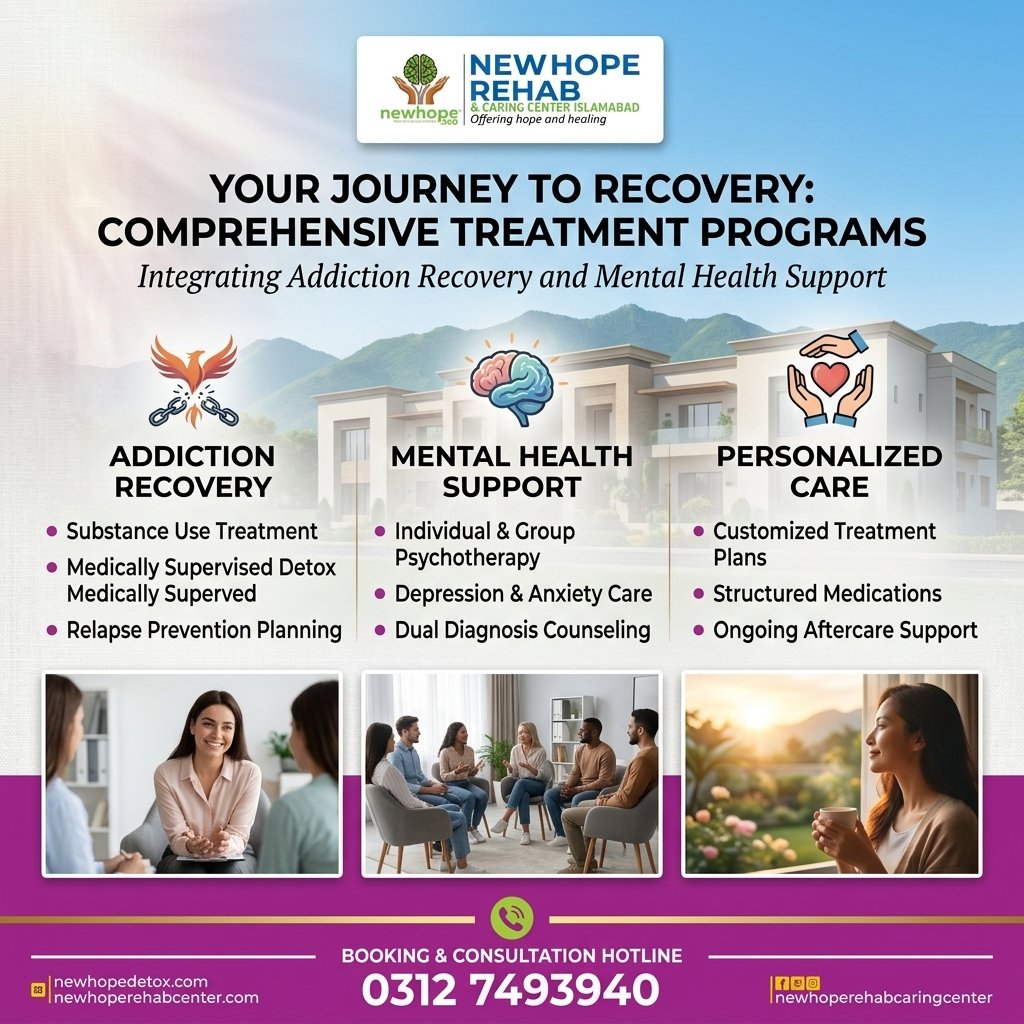
Treatment Programs offer a safe and organized environment for people who are struggling with substance abuse, alcoholism, mental health problems, and co-occurring disorders. With addiction affecting each person uniquely, it is important for a treatment plan to be developed and implemented based on the individual needs of a patient rather than using the same approach on everyone in need. Other treatments involve assessments, detoxification, counseling and therapy (usually cognitive behavioral), psychiatry and medication for co-occurring disorders, families and individual users in treatment together, relapse prevention training, or aftercare. The specific mix, however, relies on the material involved, degree of your problem, bodily fitness, mental health records, preceding treatment and lifestyles things to consider. New Hope Rehab and Caring Centre Islamabad is structured assistance for women, men and family members affected by substance misuse as well as exchanging mental health issues. What Are Addiction Treatment Programs? A carefully planned and implemented treatment program that helps an individual to replace their use of substances with a healthier way of living. A program can include: Initial medical and psychological assessment Detoxification or withdrawal management Individual counseling Group therapy Behavioral therapy Psychiatric support Dual diagnosis treatment Family counseling Relapse prevention Aftercare and continuing support The objective is not solely to interrupt substance use for a few months. Addiction is a complex disease; therefore, comprehensive treatment also addresses service that may be factors in the addiction and trains individuals on strategies to remain sober. Why Individualized Treatment Matters No one treatment program is suitable for everyone. Treatment planning may consider: Type of substance used Frequency and duration of use Severity of dependence Previous treatment attempts Withdrawal history Physical health Mental health Family circumstances Social environment Risk of relapse A personal approach lets providers make changes to care when the person or people they are supporting change or grow. Detoxification and Withdrawal Management In some cases, detoxification is the initial step in treatment. Detoxification is letting the body become accustomed to no longer using substances while withdrawal symptoms are monitored and managed. Withdrawal is extremely variable depending on the particular substance being used. Possible symptoms include: Anxiety Irritability Tremors Sweating Nausea Fatigue Sleep difficulties Muscle aches Changes in appetite Strong cravings Medically supervised withdrawal from a select few substances, like alcohol and some sedative medications, can be dangerous. So, if example, you stop something determine this straight aired the mission that peaceful from someone is suffering and long-term weighing heavy usages sub joining suddenly. Recuperation only consists of detoxing. Continued treatment for behavior and psychological issues associated with addiction is also important. Individual Counseling Individual counseling provides an opportunity for people to talk about their substance use, feelings, relationships, problems, and goals of recovery in a professional yet private environment. Therapy may help individuals: Identify substance-use triggers Understand patterns of addiction Manage cravings Develop healthier coping strategies Improve emotional regulation Address relationship difficulties Strengthen motivation for recovery Develop relapse-prevention skills Adaptations of treatment can be made according to the individual. Group Therapy and Peer Support Treatment in a group (be it individual, homes or professional acts) setting allows for openness and support to speak about the difficulties of recovery and learn from others who are also battling addiction. Group sessions may focus on: Addiction education Coping skills Emotional regulation Communication Relapse prevention Recovery planning Social support The extent of participation should be aligned with the person’s clinical needs and comfort level. Behavioral Therapy Behavioral therapies help individuals understand the connection between thoughts, emotions, and behaviors related to substance use. People may benefit from doing cognitive behavioral approaches: Identify unhelpful thinking patterns Recognize high-risk situations Develop alternative behaviors Manage cravings Improve decision-making Handle stress more effectively Depending on the specificities of the individual, other evidence-informed behavioral strategies may also be sought. Dual Diagnosis Treatment Some people have both addiction and mental health problems such as depression, anxiety, post-traumatic stress disorder (PTSD), bipolar disorder or another mental health condition. The simultaneous occurrence of substance uses and mental health problems is sometimes known as a dual diagnosis or co-occurring disorder. Mental health should be screened when relevant and care ought to be coordinated for both situations as part of therapy programs. A focus on only the addiction while missing important psychological symptoms could result in continued unmet needs of recovery. Family Support Programs Spouses, parents, kids, and siblings can all be impacted by addiction. Family support aids as a way for relatives to understand addiction, and discover better coping mechanisms. Family-focused treatment may include: Addiction education Communication guidance Family counseling Boundary-setting Relapse-warning education Support for caregivers The degree of family involvement should remain governed by clinical necessity, privacy and safety. Relapse Prevention Programs After the first course of treatment, recovery continues. Relapse-prevention programs train people to identify situations or triggers that may lead them back to use. A personalized plan may include: Identifying triggers Managing cravings Developing healthy routines Continuing counseling Building supportive relationships Avoiding high-risk environments Managing stress Maintaining follow-up care How to know when you need assistance If a person returns to using substances, it should lead to reassessment by the professional instead of being treated as evidence that recovery is not possible. Home-Based and Outpatient Treatment Not everyone requires residential rehabilitation. Outpatient or home-based services may be appropriate depending on the person’s health, substance use, safety needs and home environment. These may enable individuals to receive professional help, while still able to manage different at-home responsibilities. In patients with a high risk of withdrawal, very severe medical illness or psychiatric symptoms, or who are at home in an unsafe environment, a more intensive level of care may be necessary. The voice of a trained professional can determine the best setting for you. Online Treatment Sessions It can offer supplementary access to counseling and follow-up support for some. Bringing you online treatment sessions can be beneficial for: Counseling Follow-up appointments Relapse-prevention support Family education Mental health consultations Online treatment is maybe not suitable for all forms of desperate situations — at least where an individual inquired

Relapse Control Program in Islamabad, Pakistan: Building Long-Term Recovery
Relapse Control Program

Relapse Control Program in Islamabad, Pakistan: Building Long-Term Recovery

A Relapse Control Program in Islamabad, Pakistan can provide ongoing support for people recovering from drug or alcohol addiction. Completing detox or an initial rehabilitation program is an important step, but recovery often continues long after the first phase of treatment. Relapse can happen when a person returns to substance use after a period of improvement or abstinence. It does not mean that recovery is impossible. Instead, it can indicate that additional support, treatment adjustments, or stronger coping strategies are needed. New Hope Rehab and Caring Centre Islamabad provides structured support for individuals and families dealing with addiction and related mental health concerns. What Is a Relapse Control Program? A relapse control program is a structured approach designed to help individuals recognize and manage situations that may increase the risk of returning to substance use. A program may focus on: Identifying personal triggers Managing cravings Developing healthy coping skills Addressing emotional difficulties Improving stress management Building supportive relationships Continuing counseling Monitoring warning signs Developing an aftercare plan Relapse prevention is generally more effective when it is individualized. Different people may have different triggers, recovery goals, mental health needs, and support systems. Why Relapse Prevention Matters in Addiction Recovery Addiction can involve long-lasting changes in behavior, reward pathways, and responses to stress. Even after stopping substance use, cravings or difficult emotions may return. Common situations that can increase relapse risk include: Stress at work or home Conflict with family members Social pressure Returning to environments associated with drug or alcohol use Certain people or places Loneliness Anxiety or depression Sleep problems Overconfidence about recovery Exposure to alcohol or drugs Learning to recognize these situations before they become overwhelming can help individuals seek support early. Understanding the Relapse Process Relapse does not always happen suddenly. It may develop through changes in thoughts, emotions, and behaviors before substance use occurs. Emotional Warning Signs A person may experience: Irritability Anxiety Isolation Poor sleep Mood changes Neglect of self-care Increased stress Mental Warning Signs Someone may begin thinking about previous substance use, remembering positive experiences associated with drugs or alcohol, or believing that controlled use would be possible. Behavioral Warning Signs Behavioral changes may include returning to old social environments, withdrawing from supportive people, skipping counseling, or abandoning healthy routines. Recognizing these signs early can provide an opportunity to strengthen the recovery plan. Craving Management in a Relapse Control Program Cravings are common during addiction recovery. Their intensity and frequency can vary from person to person. A relapse control program may teach individuals to: Identify situations that trigger cravings Delay acting on an urge Distract themselves with healthy activities Contact supportive people Practice relaxation techniques Challenge unhelpful thoughts Leave high-risk environments Seek professional support when necessary Cravings do not necessarily mean that a person will relapse. They can be managed through appropriate coping strategies and ongoing support. Counseling and Behavioral Therapy Counseling can help individuals understand the factors behind previous substance use and develop practical recovery skills. Cognitive behavioral approaches may help people identify connections between thoughts, emotions, and behaviors. Therapy may address: Stress management Emotional regulation Negative thinking patterns Decision-making Communication Relationship difficulties Coping with cravings High-risk situations Continuing counseling can be particularly useful when a person has a history of repeated relapse. Mental Health and Relapse Prevention Mental health and addiction can influence each other. Depression, anxiety, trauma-related symptoms, and other psychological difficulties may increase vulnerability to substance use for some individuals. A Relapse Control Program in Islamabad, Pakistan should therefore consider mental health as part of the overall recovery plan. When addiction and mental health conditions occur together, professionals may describe this as a dual diagnosis or co-occurring disorder. Addressing both concerns can help create more coordinated care. Family Support During Relapse Prevention Families can play an important role in recovery when their involvement is appropriate. Family members can support relapse prevention by: Encouraging continued treatment Maintaining healthy communication Supporting positive routines Learning about addiction Recognizing warning signs Establishing appropriate boundaries Avoiding behaviors that enable substance use Encouraging professional help when concerns arise Families should understand that they cannot control another person’s recovery. Professional guidance can help relatives determine how to provide constructive support. Aftercare and Continuing Recovery Relapse prevention often works best when support continues after residential or intensive treatment ends. Aftercare may include: Individual counseling Group therapy Family counseling Follow-up appointments Recovery-focused activities Mental health support Regular progress reviews Crisis planning The appropriate form and frequency of aftercare depend on the individual’s needs and progress. What to Look for in a Relapse Control Program in Islamabad When choosing a Relapse Control Program in Islamabad, Pakistan, consider whether the program provides individualized and continuing support. Useful questions include: Is relapse risk assessed individually? Are personal triggers identified? Is counseling available? Are mental health concerns assessed? Is family support included? Is there an aftercare plan? Can treatment be adjusted when circumstances change? Is professional help available during periods of increased risk? How are emergencies handled? Avoid programs that promise guaranteed prevention of relapse. Recovery outcomes can vary, and treatment plans may need to change over time. What Happens If Relapse Occurs? A return to substance use should be taken seriously, but it does not mean that recovery has permanently failed. The person may need a professional reassessment to understand: What triggered the return to use Whether mental health symptoms have changed Whether the current treatment plan is sufficient Whether additional counseling is needed Whether the person’s environment has changed Whether a higher level of care is appropriate Seeking help quickly can reduce the chance that a brief setback develops into prolonged substance use. Relapse Control Support at New Hope Rehab and Caring Centre Islamabad New Hope Rehab and Caring Centre Islamabad provides structured addiction recovery and mental health support for individuals and families. A relapse-prevention plan can be developed according to the person’s substance-use history, triggers, mental health needs, family circumstances, and ongoing recovery requirements. Depending on individual needs, support may include counseling, behavioral strategies, family involvement, mental health care, and

Family Support Program – Family Support Program in Islamabad, Pakistan
Family Support Program

Family Support Program – Family Support Program in Islamabad, Pakistan

Addiction and mental health difficulties can affect more than the person experiencing them. Parents, spouses, children, siblings, and caregivers may also experience worry, stress, confusion, financial pressure, and emotional exhaustion. A structured Family Support Program in Islamabad, Pakistan can help relatives understand these challenges and learn practical ways to provide healthy, respectful support. Family involvement doesn’t mean that relatives are responsible for another person’s recovery. Instead, family support can help create better communication, clearer boundaries, and a more stable environment. At New Hope Rehab and Caring Centre Islamabad, family-focused services can be considered as part of an individualized treatment plan when appropriate. What Is a Family Support Program? A Family Support Program is a structured approach that provides education, counseling, and guidance to people supporting a loved one with addiction or mental health concerns. Depending on individual circumstances, family support may include: Family counseling Addiction education Mental health awareness Communication guidance Boundary-setting strategies Relapse-prevention education Emotional support Guidance about continuing care The specific services should be adapted to the family’s needs and the individual’s treatment plan. Why Family Support Matters in Recovery Addiction can create misunderstandings within families. A relative may interpret changes in behavior as a lack of responsibility, while the person experiencing addiction may feel judged or misunderstood. Education can help families recognize that substance use disorders are health conditions involving behavioral, psychological, and physical factors. A supportive family environment may help by encouraging treatment, reducing unnecessary conflict, and providing appropriate emotional encouragement. However, families should also understand that support doesn’t mean accepting unsafe or harmful behavior. Family Support Program in Islamabad, Pakistan: What Can It Include? Family Counseling Family counseling provides a structured setting where relatives can discuss concerns with professional guidance. It may help address communication problems, conflict, expectations, and relationship difficulties. Education About Addiction Families can learn about cravings, tolerance, dependence, withdrawal, triggers, relapse, and recovery. Understanding these concepts can reduce stigma and unrealistic expectations. Communication Skills Healthy communication involves listening, expressing concerns respectfully, and avoiding unnecessary blame or shame. Family members can learn how to discuss treatment and recovery without turning every conversation into an argument. Healthy Boundaries Boundaries help families define what behavior they can and cannot accept. They can provide structure while allowing relatives to remain compassionate. Relapse-Prevention Education Families can learn about potential warning signs and appropriate responses. The goal is to encourage timely professional support rather than blame a person for a setback. Supporting a Loved One Without Enabling Substance Use One of the most difficult challenges for families is distinguishing support from enabling. Healthy support may include: Encouraging professional treatment Providing emotional encouragement Supporting healthy routines Maintaining reasonable boundaries Listening without unnecessary judgment Encouraging follow-up care Enabling can involve repeatedly making excuses for harmful behavior, covering up serious consequences, or providing money or resources that facilitate continued substance use. Every family situation is different, so professional guidance can be useful when relatives aren’t sure how to respond. Family Support and Mental Health Addiction may occur alongside depression, anxiety, trauma-related conditions, or other mental health concerns. These co-occurring conditions can create additional challenges for both the individual and the family. For example, a person may use substances to cope with emotional distress, while continued substance use may worsen mood, sleep, anxiety, or other symptoms. A family support program can help relatives understand the importance of addressing both mental health and substance use when they occur together. At New Hope Rehab and Caring Centre Islamabad, family involvement can be considered alongside addiction and mental health care when clinically appropriate. The Family’s Own Well-Being Matters Supporting someone with addiction can be emotionally demanding. Relatives may experience anxiety, anger, guilt, sadness, or burnout. Family members should therefore look after their own health as well. Helpful strategies may include: Maintaining healthy sleep and eating routines Staying connected with trusted people Taking appropriate breaks from caregiving Seeking counseling when needed Learning about addiction Setting realistic expectations Maintaining healthy personal boundaries A family member doesn’t have to manage addiction alone. Family Support During Long-Term Recovery Recovery is usually an ongoing process. After residential treatment or an intensive program, individuals may continue to face cravings, stress, relationship difficulties, or exposure to previous triggers. Families can provide constructive support by encouraging: Follow-up appointments Counseling Healthy routines Appropriate medication use Positive social connections Relapse-prevention strategies If a relapse occurs, families should avoid viewing it simply as a moral failure. Professional reassessment may help identify what contributed to the setback and whether the treatment plan needs adjustment. Respecting Privacy and Individual Choice Family participation should respect confidentiality and the individual’s rights. Not every treatment detail needs to be shared with every relative. Healthcare professionals can help determine what information may appropriately be discussed and how family involvement can support treatment without compromising privacy. Frequently Asked Questions (FAQs) 1. What is a Family Support Program? A Family Support Program provides education, counseling, and practical guidance to relatives supporting someone with addiction or mental health difficulties. 2. Why is family involvement important in recovery? Family involvement can improve communication, reduce misunderstanding, encourage healthy boundaries, and provide appropriate emotional support during recovery. 3. Can family members attend counseling sessions? In appropriate circumstances, family counseling may be included in a person’s treatment plan. Participation should respect clinical considerations, confidentiality, and the individual’s consent. 4. How can families avoid enabling addiction? Families can maintain healthy boundaries, avoid covering up harmful behavior, encourage professional treatment, and provide emotional support without facilitating substance use. 5. Should families seek support for themselves? Yes. Supporting someone with addiction can be stressful. Family members may benefit from counseling, education, trusted social support, and strategies for protecting their own emotional well-being. Conclusion A Family Support Program in Islamabad, Pakistan can help relatives better understand addiction and mental health concerns while developing healthier communication, boundaries, and coping strategies. Family support isn’t about controlling another person’s recovery; it’s about creating informed and constructive support while protecting the well-being of everyone involved. At New Hope Rehab and Caring Centre Islamabad, family-focused care can

Founding of YouTube A Short History

YouTube is one of the most influential platforms in modern media, but its origin story is surprisingly simple: a small team wanted an easier way to share video online. In the early 2000s, uploading and sending video files was slow, formats were inconsistent, and most websites weren’t built for smooth playback. YouTube’s founders focused on removing those barriers—making video sharing as easy as sending a link. Who Founded YouTube? YouTube was founded by three former PayPal employees: Chad Hurley, Steve Chen, and Jawed Karim. They combined product thinking, engineering skills, and a clear user goal: create a website where anyone could upload a video and watch it instantly in a browser. Chad Hurley — product/design focus and early CEO role Steve Chen — engineering and infrastructure Jawed Karim — engineering and early concept support The Problem YouTube Solved At the time, sharing video often meant emailing huge files or dealing with complicated players and downloads. YouTube made video: Uploadable by non-experts (simple interface) Streamable in the browser (no special setup) Sharable through links and embedding on other sites Early Growth and the First Video YouTube launched publicly in 2005. One of the most famous early moments was the first uploaded video, “Me at the zoo,” featuring co-founder Jawed Karim. The clip was short and casual—exactly the kind of everyday content that proved the platform’s big idea: ordinary people could publish video without needing a studio. Key Milestones Timeline Year/Date Milestone Why It Mattered 2005 YouTube is founded and launches Introduced easy browser-based video sharing 2005 “Me at the zoo” is uploaded Became a symbol of user-generated video culture 2006 Google acquires YouTube Provided resources to scale hosting and global reach Why Google Bought YouTube By 2006, YouTube’s traffic was exploding. Video hosting is expensive—bandwidth and storage costs rise fast when millions of people watch content daily. Google’s acquisition gave YouTube the infrastructure and advertising ecosystem to grow into a sustainable business. What YouTube’s Founding Changed YouTube didn’t just create a popular website; it reshaped how people learn, entertain themselves, and build careers online. Its founding helped accelerate: Creator-driven media and influencer culture How-to education and free tutorials at massive scale Music discovery, commentary, and global community trends From a small startup idea to a global video powerhouse, YouTube’s founding is a classic example of a simple product solving a real problem—and changing the internet in the process.