What is depression?

What is depression?

Depression is one of the most common types of mental health conditions and often develops alongside anxiety.

Depression can be mild and short-lived or severe and long-lasting. Some people are affected by depression only once, while others may experience it multiple times.
Depression can lead to suicide, but this is preventable when appropriate support is provided. It’s important to know that much can be done to help young people who are thinking about suicide.

What causes depression?

Depression can happen as a reaction to something like abuse, violence in school, the death of someone close or family problems like domestic violence or family breakdown. Someone might get depressed after being stressed for a long time. It can also run in the family. Sometimes we may not know why it happens.

Depression in children and adolescents:

Depression can show up in children and adolescents as prolonged periods of unhappiness or irritability. It is quite common among older children and teenagers, but often goes unrecognized.

Some children might say they feel “unhappy” or “sad”. Others might say they want to hurt or even kill themselves. Children and adolescents who experience depression are at greater risk of self-harm, so such responses should always be taken seriously.

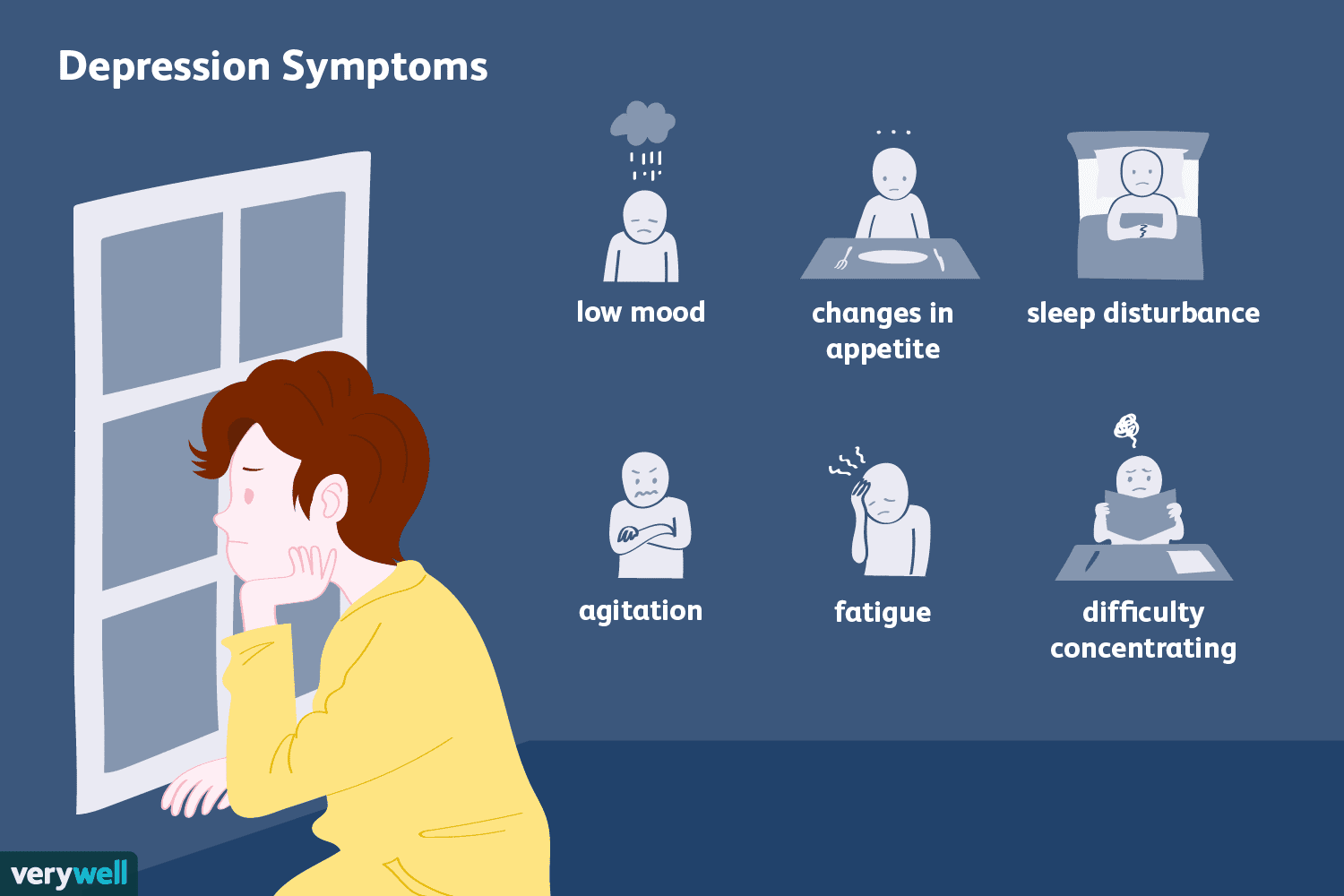
Signs and symptoms of depression:

 Physical:

  • Tiredness or low energy, even when rested
  • Restlessness or difficulty concentrating
  • Difficulty in carrying out daily activities
  • Changes in appetite or sleep patterns
  • Aches or pains that have no obvious cause

Emotional and mental:

  • Persistent sadness, anxiousness or irritability
  • Loss of interest in friends and activities that they normally enjoy
  • Withdrawal from others and loneliness
  • Feelings of worthlessness, hopelessness or guilt
  • Taking risks they wouldn’t normally take
  • Self-harming or suicidal thoughts

Ways to help your Patients:

Find out what’s happening:

Ask them how they’re feeling and listen openly without judgment or advice. Ask people you trust who know your child, like a favourite teacher or close friend, to find out if they’ve noticed anything that might be worrying them or changes in their reactions to things. Pay particular attention to their well-being during important life changes like starting a new school or puberty.

Spend time with them:

Try to build an environment of warmth, reassurance and support by talking or doing age-appropriate activities together that they will enjoy. Take an interest in their life, like how their day was at school or what they love most about their friends.

Encourage positive habits:

Encourage your child to do the things they usually enjoy, stick to regular eating and sleeping habits and stay active. Physical activity is an important way to boost their mood. Music can have a strong influence on our moods, so try listening to songs together that make them feel positive about life.

Let them express themselves:

Let them talk to you. Listen carefully to what they say about how they feel. Never press your child to share, instead you can encourage other forms of creative expression like painting, crafts or journaling their thoughts and experiences. Mood-journaling can help some children let their feelings out by observing the things that make them upset or low. They can also be a great reminder of the positive aspects of their life and the things they are proud of.

Protect them from stressful surroundings:

Try to keep your child away from situations where they may experience excessive stress, maltreatment or violence. And remember to model healthy behaviour and reactions to the stresses in your own life, including setting boundaries and maintaining positive self-care habits.

Symptoms and patterns:

During a depressive episode, a person experiences a depressed mood (feeling sad, irritable, empty). They may feel a loss of pleasure or interest in activities.

A depressive episode is different from regular mood fluctuations. They last most of the day, nearly every day, for at least two weeks.

Poor concentration

Feelings of excessive guilt or low self-worth

Hopelessness about the future

Thoughts about dying or suicide

Changes in appetite or weight

Feeling very tired or low in energy.

There are different patterns of depressive episodes including:

Single episode depressive disorder, meaning the person’s first and only episode;

Recurrent depressive disorder, meaning the person has a history of at least two depressive episodes; and

Bipolar disorder, meaning that depressive episodes alternate with periods of manic symptoms, which include euphoria or irritability, increased activity or energy, and other symptoms such as increased talkativeness, racing thoughts, increased self-esteem, decreased need for sleep, distractibility, and impulsive reckless behaviour.

Contributing factors and prevention:

Depression results from a complex interaction of social, psychological, and biological factors. People who have gone through adverse life events (unemployment, bereavement, traumatic events) are more likely to develop depression. Depression can, in turn, lead to more stress and dysfunction and worsen the affected person’s life situation and the depression itself.

Depression is closely related to and affected by physical health. Many of the factors that influence depression (such as physical inactivity or harmful use of alcohol) are also known risk factors for diseases such as cardiovascular disease, cancer, diabetes and respiratory diseases. In turn, people with these diseases may also find themselves experiencing depression due to the difficulties associated with managing their condition.

Diagnosis and treatment:

There are effective treatments for depression. These include psychological treatment and medications. Seek care if you have symptoms of depression.

Psychological treatments can teach new ways of thinking, coping or relating to others. They may include talk therapy with professionals and supervised lay therapists. Talk therapy can happen in person or online. Psychological treatments may be accessed through self-help manuals, websites and apps.

Effective psychological treatments for depression include:  

Cognitive behavioural therapy

Behavioural activation

Interpersonal psychotherapy

Problem-solving therapy.

Antidepressants should not be used for treating depression in children and are not the first line of treatment in adolescents, among whom they should be used with extra caution.

PREVALANCE:

 Women are more likely to have depression than men. An estimated 3.8% of the population experience depression, including 5% of adults (4% among men and 6% among women), and 5.7% of adults older than 60 years. Approximately 280 million people in the world have depression.

In Pakistan, around 10 to 16% of the population suffers from mild to moderate psychiatric disorders. This alarming rate necessitates the requirement of dialogue around mental health to make it a priority in Pakistan.

Major depressive disorder and persistent depressive disorder are two of the most common types of depression that people experience, however, there are many types of depression. What most mood disorders have in common are major depressive episodes.

TREATMENT IN NEW HOPE REHAB CENTER ISLAMABAD

Talking to your healthcare provider. Psychotherapy can be important treatment component for people with depression disorder. It can enable them to recognize changes in thoughts and mood and respond accordingly. Lifestyle modification is also important key in the treatment of depression.

Our New Hope team aim is to provide awareness regarding mental health general and specifically depression and other mental health disorders.

New Hope is playing its best role to create awareness about the risks and dangers of life. We advise parents to take good care of their children especially in teen age.

ABOUT THE AUTHOR:

LAIBA SHAHAB

CLINICAL PSYCHOLOGIST AT NEW HOPE REHAB AND CARING CENTER ISLAMABAD

Author has experience of treating mental disorder and addiction counselling in NEW HOPE REHAB AND CARING CENTER ISLAMABAD

She can be reached at

laibashahabuddin@gmail.com

ADDRESS: House 275, block A, Street 2 near save mart main PWD road Islamabad.

Contact: 03127493940, 03068703891, 03350172051

Related Article

ICE Drug Addiction – ICE Drug Addiction in Islamabad, Pakistan
ICE | METH Addiction

ICE Drug Addiction – ICE Drug Addiction in Islamabad, Pakistan

ICE drug addiction is the use of ICE or crystal methamphetamine, and has become a widespread and serious physical and mental health issue. It is a very addictive substance that changes the way your brain functions, driving strong cravings and negative behavior patterns. ICE Drug addiction in Islamabad, Pakistan demands clinical treatment and structured treatment with long-term follow-up care. More than results: Compassionate and Evidence-Based Care for ICE Addiction New Hope Rehab and Caring Centre Islamabad Helping people to understand their condition, cope with withdrawal and pave the road to recovery can be done in an environment that is safe and supportive. Understanding ICE Drug Addiction ICE, or crystalline methamphetamine, reacts with the central nervous system in a highly stimulant way. Though it provides an instant high of feel goodness and excitement, over time this releases havoc on health. It can become addictive, and quitting often requires medical help. Colleges and ice drug rehab Treatment in Islamabad, Pakistan structured such programs assist individuals to understand how so much trouble of the substance. Common Signs of ICE Addiction Intense cravings for the drug You feel energetic and then it is followed by the extreme fatigue Changes in behavior or mood Difficulty maintaining daily responsibilities Recognizing these early warning signs is the first step to receiving help. The health effects of using ICE drugs An ICE drug addiction can—and often does—impact all areas of health, including physical, mental, and emotional. Physical Health Effects Rapid weight loss Sleep disturbances Higher heart rate and blood pressure Dental and skin problems Mental and Emotional Impact Anxiety and depression Aggressive or impulsive behavior Difficulty concentrating Emotional instability New Hope Rehab and Caring Centre Islamabad provide comprehensive treatment for these health issues. Why Professional Treatment is Essential The second addiction is when an individual relies on their surroundings to help them overcome their addiction because ICE creates a solid foundation of dependence and it can be exceptionally tough to rid oneself of this substance without assistance. Treatment provides an environment that is safe and structured in order to begin recovery. Medical Supervision Psychological symptoms include anxiety and agitation [8] and withdrawal from ICE [9]. This process is manageable as long as supervision provides safety. Personalized Treatment Plans Every person’s addiction is different. A custom plan ensures treatment meets precise requirements and hurdles. Emotional and Psychological Support Therapists and therapy are critical components — helping them learn the root causes of their addiction and how to cope with the trauma or mental illness. Due to the fact that a broad method of ICE Drug addiction in Islamabad, Pakistan is always consistent and authentic treatment. Effective Treatment Approaches ICE addiction is treated through a combination of medical care, therapy, and lifestyle modifications. Detoxification and Stabilization This first stage is for the drug to undergo a process of detoxification from the body. Where ICE recovery is largely a matter of mental/emotional state and professional management will keep symptoms in check. Cognitive Behavioral Therapy (CBT) Cognitive-behavioral therapy teaches individuals to notice their triggers and substitute harmful behaviors with healthy coping skills. Individual and Group Counseling Counseling sessions offer emotional support and allow the person to speak about his or her experiences in a secure environment. Lifestyle and Behavioral Changes It consists of taking on good habits, this includes: Maintaining a regular sleep schedule Engaging in physical activity Practicing stress management techniques New Hope Rehab and Caring Centre Islamabad these methodologies into the treatment plans that will last for years. Role of Family in Recovery Support from family is an important aid from which help addicts addicted to ICE recover. Having a positive environment can encourage people to stick with their treatment. Families can contribute by: Encouraging positive behaviors Providing emotional support Participating in counseling sessions Family involvement in ICE Drug addiction programs in Islamabad, Pakistan tends to solidify the spire-ups of personal recovery. Preventing Relapse A significant aspect of treatment is relapse prevention. By helping someone track triggers and do those things to stay on a positive path. Effective strategies include: Identifying high-risk situations Developing coping mechanisms Continuing therapy or counseling Building a supportive social network Relapse prevention is an integral component of treatment at New Hope Rehab and Caring Centre Islamabad. Benefits of Seeking Professional Help Here are some of the benefits once you opt for professional care: Structured Recovery Environment In a specified environment, people concentrate on recovering without interruptions. Comprehensive Care Treatment treats both the psychological and physical components of addiction. Improved Quality of Life Recovery = better health, relationships and wellbeing. ICE addiction treatment in Islamabad, Pakistan helps to guide permanent healing with a special program from ICE drug abuse. Frequently Asked Questions (FAQs) 1.     What is ICE drug addiction? Ice drug addiction is dependent on crystal meth, a powerful stimulant that influences the brain and body. 2.     Is it possible to successfully treat ICE addiction? Addiction is a disease, and if you treat it right, then individuals are able to manage addiction and work on long-term recovery. 3.     What are common withdrawal symptoms? Symptoms can include anxiety, fatigue/depression and extreme cravings. 4.     How long does recovery take? The length of recovery depends on the person and the extent of addiction. 5.     Do We Need Family Support to Recover? Yes, family support help motivate, keep in line with treatment Conclusion ICE addiction is very serious health disorder which needs professional treatment in comforting surroundings for successful rehabilitation. Recognizing the effects of the drug and getting help early can absolutely change a life. An Introduction to ICE Drug Addiction – New Hope Rehab & Caring Centre Islamabad offer structured, compassionate care for those in need and offer specific experience of working with individuals facing ICE Drug addiction in Islamabad Pakistan. Compassionate care, therapy and support help guide people toward healthier footing and a more secure future. Recovery is achievable when approached correctly with dedication and proper support system to rebuild their lives reaffirming joy and strength.  

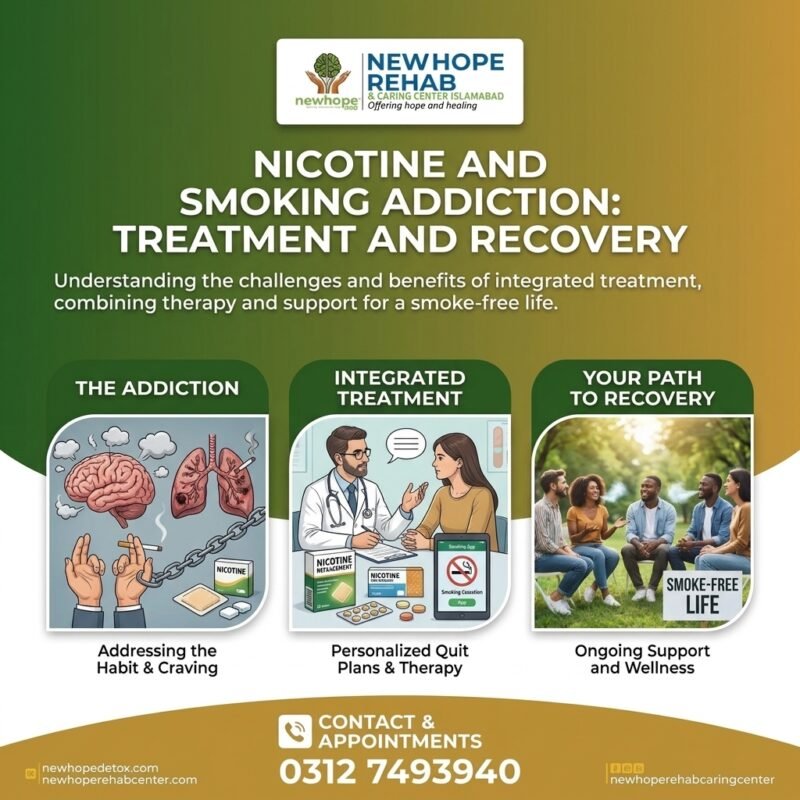
Smoking Addiction – Smoking Addiction in Islamabad, Pakistan
Addiction Treatment Center

Smoking Addiction – Smoking Addiction in Islamabad, Pakistan

Like Smoking Addiction main particular help, a drug that will undoubtedly be used almost any globe and addicted to cigarette but extremely tough admixture for the individual. It does not just impact physical health; it impacts mental health and daily life. Nicotine is an extremely addictive substance, and if a person has been smoking for some time, the habit may already be established as part of their lifestyle but quitting can be harder. Professional help for Smoking addiction in Islamabad, Pakistan can be the structured guidance and support needed for a healthy new life. That’s why New Hope Rehab and Caring Centre Islamabad provide individuals with evidence-based approaches that address the physical and psychological aspects of smoking addiction. To allow those that suffer to come off smoking in a safe, non-judgement atmosphere almost naturally by taking small steps toward a smoke free life. Understanding Smoking Addiction Nicotine dependency is the purest form of addictive smoking addiction. Nicotine is a chemical in tobacco that works on the reward system of your brain, giving you a feeling of relief and pleasure that only lasts for a while. The body grows addicted to nicotine within the time, creating that it is hard to kick the habit without assist. Some of the common indicators for smoking addiction include: Strong cravings for cigarettes Immutable response against harm despite knowledge of hazards Feeling tensed or nervous without smoking Increased tolerance over time In Islamabad, Pakistan an organized program for Smoking addiction helps a person understand these patterns and work on them accordingly. Health Risks Associated with Smoking In fact, smoking has very serious long-term consequences for health. It affects nearly every organ in the body and raises the risk of many serious illnesses. Physical Health Risks Chronic cough and difficulty in breathing Increased risk of heart disease Reduced immune function Long-term lung damage Mental and Emotional Impact In addition to this, smoking addiction can have impact on your mental health because excess stress, anxiety and dependency are crucial aspects that also are the part of drinking habit. New Hope Rehab and Caring Centre Islamabad provides training to individuals on such risks, which ultimately directs them to get a progressive lifestyle. Why Professional Help is Important It is hard to quit smoking without help, due to the withdrawal symptoms and behavioral habits. Structure of professional treatment maintains these challenges under control. 1.     Medical and Behavioral Support The clinical method of Smoking Addiction in Islamabad, Pakistan contains the quantity of medical and behavioral treatment to cope with dependency. 2.     Personalized Treatment Plans The way smoking addiction affects individuals is very different from person to person. With personalization, treatment will fit specific needs and challenges. 3.     Safe Management of Withdrawal Symptoms Withdrawal symptoms, including mood swings, insomnia, and cravings can become overwhelming on your own. Professional support assists those who suffer to do so safely. Effective Treatment Approaches A well-rounded program incorporates different approaches to aid recovery. Cognitive Behavioral Therapy (CBT) CBT Builds Your Skills to Identify Triggers and Replace Them with Healthy Coping Skills It targets thought processes and behaviours associated with tobacco use. Counseling and Emotional Support Individual counselling sessions offer a private environment to talk about issues, confidence in quitting Lifestyle Modification In addition to this, addiction is also overcome due to the good and healthy habits one adopts. This includes: Regular physical activity Balanced nutrition Stress management techniques At New Hope Rehab and Caring Centre Islamabad, these methodologies form an essential part of the treatment plans to aid recovery. Benefits of Quitting Smoking The benefits of quitting smoking are both immediate and long term. Short-Term Benefits Improved breathing and energy levels A better sense of taste and smell Reduced stress levels over time Long-Term Benefits Lower risk of chronic diseases Improved heart and lung health Enhanced overall quality of life Your structured Pakistani smoking addiction program assists for takes place in for achieve these avoided for gradual. Family and Social Support Elements This type of initiative can also provide much-needed support from family when people want to stop smoking. Quantitative encouragement and understanding from loved ones simplify the process. Families can help by: Offering emotional support Encouraging healthy habits Out of the triggers in his house climate Family engagement is encouraged at all levels to extend recovery outcomes, and family members are an integral part of treatment here at New Hope Rehab and Caring Centre Islamabad. Preventing Relapse Often people relapse when they quit smoking. Managing your triggers is half the battle and if you want to be happy (and successful) for the long term, you need to learn how. Effective strategies include: Identifying high-risk situations Practicing stress management techniques Seeking ongoing support and counseling Maintaining a structured daily routine Relapse prevention is an essential aspect of Smoking addiction programs in Islamabad; Pakistan aimed at sustaining the process. Frequently Asked Questions (FAQs) 1.     What causes smoking addiction? The majority of lap smoking addiction are due to a dependence on tobacco nicotine which has an effect on the brain reward system. 2.     No one teaches you how to stop smoking for life And yes, you can give up smoking for good if you get the help and stick to it! 3.     What are common withdrawal symptoms? Some examples are cravings, irritability, anxiety and lack of concentration. 4.     When will my smoke addiction go away? Timeline differs between individuals as well, primarily per severity of dependence and method towards recovery. 5.     Can Therapy Stop Me from Smoking? Therapy teaches you about what triggers you, and how to cope in a healthier way. Conclusion The addiction to smoking can cause a great deal of damage both physically and mentally, although quitting is very much achievable through guidance. This structure and the tools to help manage cravings, push through struggles, and establish healthier habits can all be offered by professional care. New Hope rehab and caring center Islamabad provides total care with love for the males & females Smoking addiction in Islamabad Pakistan. Centered on behavioral therapy, mental

Family Support Program – Family Support Program in Islamabad, Pakistan
Family Therapy

Family Support Program – Family Support Program in Islamabad, Pakistan

Recovery from addiction and mental health challenges is not an individual journey alone—it deeply involves family, relationships, and social support systems. A strong family foundation can play a vital role in helping individuals maintain progress and build a stable life. A structured Family Support Program in Islamabad, Pakistan is designed to guide families in understanding, supporting, and actively participating in the recovery process. At New Hope Rehab and Caring Centre Islamabad, family support is considered an essential part of treatment. The aim is to strengthen relationships, improve communication, and create a supportive environment that promotes long-term recovery. This article explores the importance, structure, and benefits of family support programs. Understanding the Importance of Family Support in Recovery Addiction and mental health issues often affect not only the individual but also their family members. Misunderstandings, emotional stress, and communication gaps can make recovery more challenging. A professional Family Support Program in Islamabad, Pakistan helps families: Understand addiction and mental health conditions Learn how to provide emotional support Develop healthy communication patterns Reduce stress and conflict within the household At New Hope Rehab and Caring Centre Islamabad, families are guided to become active participants in the healing process. Key Components of a Family Support Program A structured program includes several elements designed to educate and empower families. 1. Family Counseling Sessions Family counseling provides a safe space for open communication. It allows family members to express concerns, share feelings, and work toward resolving conflicts. Professional therapists guide these sessions to ensure respectful and constructive discussions. A well-organized Family Support Program in Islamabad, Pakistan focuses on rebuilding trust and understanding. 2. Education About Addiction and Mental Health Many families struggle to understand the nature of addiction. Education helps them recognize that addiction is a complex condition, not simply a lack of willpower. Key topics may include: Causes and effects of addiction Recovery process and challenges Role of mental health in addiction At New Hope Rehab and Caring Centre Islamabad, education is a core part of empowering families. 3. Communication Skills Development Healthy communication is essential for recovery. Families learn how to: Listen actively and empathetically Express concerns without judgment Set healthy boundaries Improved communication strengthens relationships and reduces misunderstandings. 4. Emotional Support and Coping Strategies Supporting a loved one in recovery can be emotionally demanding. Family members are taught coping strategies to manage stress and maintain their own well-being. A structured Family Support Program in Islamabad, Pakistan ensures that both the individual and their family receive balanced care. 5. Relapse Awareness and Prevention Families play a crucial role in identifying early signs of relapse. They are trained to recognize warning signs and respond in a supportive and constructive manner. This proactive approach helps maintain long-term recovery and stability. Benefits of a Family Support Program Participating in a family support program offers several important benefits. Strengthened Relationships Open communication and understanding help rebuild trust between family members. Improved Emotional Well-Being Families learn how to manage stress and support each other effectively. Enhanced Recovery Outcomes A supportive home environment increases the chances of long-term recovery. Better Conflict Resolution Families develop skills to handle disagreements in a healthy way. At New Hope Rehab and Caring Centre Islamabad, these benefits are achieved through structured and compassionate care. Role of Families in Long-Term Recovery Families are not just observers in the recovery process—they are active contributors. Their involvement can provide motivation, accountability, and emotional stability. A reliable Family Support Program in Islamabad, Pakistan encourages families to: Stay involved in treatment plans Offer consistent encouragement Maintain a positive and supportive environment Respect boundaries and recovery goals This involvement helps individuals feel supported and valued throughout their journey. Creating a Supportive Home Environment A stable and supportive home environment is essential for sustained recovery. Key practices include: Maintaining a calm and structured routine Encouraging healthy habits Avoiding triggers and negative influences Promoting open and honest communication At New Hope Rehab and Caring Centre Islamabad, families are guided on how to create an environment that supports recovery and well-being. Challenges Families May Face While family involvement is beneficial, it can also come with challenges. Common difficulties include: Emotional stress and anxiety Feelings of frustration or helplessness Difficulty understanding the recovery process A structured Family Support Program in Islamabad, Pakistan addresses these challenges by providing guidance, education, and emotional support. Frequently Asked Questions (FAQs) 1. What is a family support program? A family support program provides guidance, counseling, and education to help families support their loved ones during recovery. 2. Why is family involvement important in recovery? Family support provides emotional stability, encouragement, and a positive environment for long-term recovery. 3. Can family therapy improve relationships? Yes, family therapy helps improve communication, resolve conflicts, and rebuild trust. 4. How can families help prevent relapse? By recognizing early warning signs and providing support, families can help reduce the risk of relapse. 5. Do family members receive support as well? Yes, family programs focus on the well-being of both the individual and their loved ones. Conclusion A strong support system is one of the most important factors in successful recovery. Families play a vital role in providing encouragement, stability, and understanding throughout the process. New Hope Rehab and Caring Centre Islamabad offers a comprehensive Family Support Program in Islamabad, Pakistan designed to strengthen relationships and support long-term recovery. Through counseling, education, and emotional guidance, families are empowered to contribute positively to their loved one’s journey.

Best Rehabilitation Center – Best Rehabilitation Center in Islamabad, Pakistan
Rehabilitation Center

Best Rehabilitation Center – Best Rehabilitation Center in Islamabad, Pakistan

Addiction and mental health challenges can affect every aspect of a person’s life, from physical health to emotional stability and relationships. Seeking professional help is a crucial step toward recovery, and choosing the right facility plays a significant role in long-term success. A trusted Best Rehabilitation Center in Islamabad, Pakistan offers structured care, compassionate support, and personalized treatment plans to help individuals regain control of their lives. At New Hope Rehab and Caring Centre Islamabad, the focus is on ethical, patient-centered care. The goal is to provide individuals with the tools and support needed to achieve stability and build a healthier future. This article explores what makes a rehabilitation center effective and how professional care supports recovery. Understanding the Role of a Rehabilitation Center A rehabilitation center provides a structured environment where individuals receive treatment for substance use disorders and mental health conditions. These centers focus on both physical recovery and emotional well-being. Addiction is a complex condition that affects brain function and behavior. Without proper care, it can lead to serious health issues and disrupt daily life. A professional Best Rehabilitation Center in Islamabad, Pakistan offers comprehensive services to address these challenges in a safe and supportive setting. At New Hope Rehab and Caring Centre Islamabad, treatment programs are designed to meet the unique needs of each individual, ensuring a balanced approach to recovery. Key Features of the Best Rehabilitation Center Choosing the right rehabilitation center is essential for effective treatment. Several key features define a high-quality facility. 1. Comprehensive Assessment and Personalized Care Every individual’s journey with addiction is different. A thorough assessment helps identify physical, emotional, and psychological needs. A leading Best Rehabilitation Center in Islamabad, Pakistan creates customized treatment plans tailored to each individual, ensuring more effective care. 2. Medical Detoxification Services Detox is often the first step in recovery. It involves safely removing harmful substances from the body while managing withdrawal symptoms. Professional supervision during detox ensures safety and comfort, especially for individuals experiencing severe withdrawal effects. 3. Evidence-Based Therapy and Counseling Therapy is a core component of rehabilitation. It helps individuals understand the root causes of addiction and develop healthier coping strategies. Common approaches include: Cognitive Behavioral Therapy (CBT) Individual counseling Behavioral therapy Stress management techniques At New Hope Rehab and Caring Centre Islamabad, therapy sessions are conducted in a supportive and confidential environment. 4. Mental Health Support Many individuals facing addiction also experience mental health challenges such as anxiety, depression, or trauma. Integrated treatment addresses both issues simultaneously. A professional Best Rehabilitation Center in Islamabad, Pakistan ensures that mental health care is part of the recovery process. 5. Relapse Prevention and Aftercare Recovery does not end after treatment. Relapse prevention programs help individuals identify triggers and maintain long-term progress. Aftercare services provide ongoing support through counseling and follow-up sessions. Benefits of Choosing a Professional Rehabilitation Center A structured rehabilitation program offers several advantages that support long-term recovery. Safe and Supportive Environment A controlled setting helps individuals focus on recovery without external distractions. Professional Guidance Trained healthcare professionals provide expert care and emotional support. Improved Physical and Mental Health Comprehensive treatment helps restore balance and stability. Skill Development Individuals learn practical skills to manage stress and avoid triggers. At New Hope Rehab and Caring Centre Islamabad, the emphasis is on creating a positive and supportive recovery experience. Importance of a Holistic Approach Recovery is not limited to medical treatment alone. A holistic approach considers the overall well-being of the individual. This includes: Emotional healing Behavioral change Social support Lifestyle improvement A trusted Best Rehabilitation Center in Islamabad, Pakistan integrates these elements to promote long-term recovery. Lifestyle Changes for Sustained Recovery Adopting healthy habits is essential for maintaining progress after rehabilitation. Key lifestyle changes include: Establishing a structured daily routine Practicing mindfulness and relaxation techniques Engaging in regular physical activity Building healthy relationships Setting achievable goals At New Hope Rehab and Caring Centre Islamabad, individuals are encouraged to incorporate these habits into their daily lives. Role of Family in the Recovery Process Family support plays a vital role in recovery. Encouragement and understanding from loved ones can help individuals stay motivated. Family counseling sessions improve communication and rebuild trust. Many programs at a Best Rehabilitation Center in Islamabad, Pakistan include family involvement as part of comprehensive care. Frequently Asked Questions (FAQs) 1. What makes a rehabilitation center the best? A high-quality center offers personalized care, professional support, and comprehensive treatment programs tailored to individual needs. 2. How long does rehabilitation take? The duration varies depending on the individual’s condition and treatment plan. 3. Is detox necessary for recovery? Detox is often the first step, helping the body safely remove harmful substances. 4. Can mental health conditions be treated alongside addiction? Yes, integrated treatment addresses both addiction and mental health challenges. 5. Is long-term recovery possible? With proper care, support, and commitment, individuals can achieve long-term recovery. Conclusion Choosing the right rehabilitation center is a critical step toward recovery and long-term well-being. A structured and supportive environment helps individuals address addiction, improve mental health, and rebuild their lives. New Hope Rehab and Caring Centre Islamabad provides compassionate, ethical, and professional care for individuals seeking recovery. As a trusted Best Rehabilitation Center in Islamabad, Pakistan, the focus is on personalized treatment, emotional support, and sustainable recovery strategies.