+92 312 7493940

Personality Disorders

Personality Disorders

Personality disorders are a group of a 10 mental health conditions that involve long-la

sting, disruptive patterns of thinking, behaviour, mood and relating to others. People with personality

disorders often don’t realize their thoughts and behaviours are problematic.

Personality disorders may cause distorted perceptions of reality, abnormal behaviours and distress across various aspects of life, including work, relationships and social functioning. Additionally, people with a personality disorder may not recognize their troubling behaviours or the negative effect they have on others.

What are the types of personality disorders?

The Diagnostic and Statistical Manual of Mental Disorders (DSM-5), which is the standard refere
nce publication for recognized mental illnesses, organizes the 10 types of personality disorders into three main clusters (categories). Each cluster has different symptoms in common.

Cluster A personality disorders:

Cluster A personality disorders involve unusual and eccentric thinking or behaviours. These include:

Paranoid personality disorder:

The main feature of this condition is paranoia, which is a relentless mistrust and suspicion of others without adequate reason for suspicion. People with paranoid personality disorder often believe others are trying to demean, harm or threaten them.

Schizoid personality disorder:

This condition is marked by a consistent pattern of detachment from and general disinterest in interpersonal relationships. People with schizoid personality disorder have a limited range of emotions when interacting with others.

Schizotypal personality disorder:

People with this condition display a consistent pattern of intense discomfort with and limited need for close relationships. Relationships may be hindered by their distorted views of reality, superstitions and unusual behaviours.

Cluster B personality disorders:

Cluster B personality disorders involve dramatic and erratic behaviours. People with these types of conditions display intense, unstable emotions and impulsive behaviours. Cluster B personality disorders include:

Antisocial personality disorder (ASPD):

People with ASPD show a lack of respect toward others and don’t follow socially accepted norms or rules. People with ASPD may break the law or cause physical or emotional harm to others around them. They may refuse to take responsibility for their behaviours and/or display disregard for the negative consequences of their actions.

Borderline personality disorder (BPD):

This condition is marked by difficulty with emotional regulation, resulting in low self-esteem, mood swings, impulsive behaviours and subsequent relationship difficulties.

Histrionic personality disorder:

This condition is marked by intense, unstable emotions and a distorted self-image. For people with histrionic personality disorder, their self-esteem depends on the approval of others and doesn’t come from a true feeling of self-worth. They have an overwhelming desire to be noticed by others, and may display dramatic and/or inappropriate behaviours to get attention.

Narcissistic personality disorder:

This condition involves a consistent pattern of perceived superiority and grandiosity, an excessive need for praise and admiration and a lack of empathy for others. These thoughts and behaviours often stem from low self-esteem and a lack of self-confidence.

Cluster C personality disorders:

Cluster C personality disorders involve severe anxiety and fear. They include:

Avoidant personality disorder:

People with this condition have chronic feelings of inadequacy and are highly sensitive to being negatively judged by others. Though they would like to interact with others, they tend to avoid social interaction due to the intense fear of being rejected.

Dependent personality disorder:

This condition is marked by a constant and excessive need to be cared for by someone else. It also involves submissiveness, a need for constant reassurance and the inability to make decisions. People with dependent personality disorder often become very close to another person and spend great effort trying to please that person. They tend to display passive and clinging behaviour and have a fear of separation.

Obsessive-compulsive personality disorder (OCPD):

This condition is marked by a consistent and extreme need for orderliness, perfectionism and control (with no room for flexibility) that ultimately slows or interferes with completing a task. It can also interfere with relationships.

This is a separate condition from obsessive-compulsive disorder (OCD), which is classified as an anxiety disorder. While people with OCD usually are aware that OCD is causing their behaviour and accept they need to change, people with OCPD usually have little, if any, self-awareness of their behaviours.

Who do personality disorders affect?

Most personality disorders begin in the teen years when your personality further develops and matures. As a result, almost all people diagnosed with personality disorders are above the age of 18. One exception to this is antisocial personality disorder — approximately 80% of people with this disorder will have started to show symptoms by the age of 11.

Antisocial personality disorders are more likely to affect people assigned male at birth. Borderline, histrionic and dependent personality disorders are more likely to affect people assigned female at birth.

How common are personality disorders?

Approximately 9% of adults in the U.S. have some type of personality disorder, and about 6% of the global population has a personality disorder.

Borderline personality disorder (BPD) and antisocial personality disorder are the most frequently diagnosed personality disorders.

What causes personality disorders?

Personality disorders are among the least understood mental health conditions. Scientists are still trying to figure out the cause of them.

So far, they believe the following factors may contribute to the development of personality disorders:

Genetics:

Scientists have identified a malfunctioning gene that may be a factor in obsessive-compulsive personality disorder. Researchers are also exploring genetic links to aggression, anxiety and fear, which are traits that can play a role in personality disorders.

Brain changes:

Researchers have identified subtle brain differences in people with certain personality disorders. For example, findings in studies on paranoid personality disorder point to altered amygdala functioning. The amygdala is the part of your brain that’s involved with processing fearful and threatening stimuli. In a study on schizotypal personality disorder, researchers found a volumetric decrease in the frontal lobe of their brain.

Childhood trauma:

One study revealed a link between childhood traumas and the development of personality disorders. People with borderline personality disorder, for example, had especially high rates of childhood sexual trauma. People with borderline and antisocial personality disorders have issues with intimacy and trust, both of which may be related to childhood abuse and trauma.

Verbal abuse:

In one study, people who experienced verbal abuse as children were three times as likely to have borderline, narcissistic, obsessive-compulsive or paranoid personality disorders in adulthood.

Cultural factors:

Cultural factors may also play a role in the development of personality disorders, as demonstrated by the varying rates of personality disorders between different countries. For example, there are remarkably low cases of antisocial personality disorders in Taiwan, China and Japan, along with significantly higher rates of cluster C personality disorders.

What are the symptoms of personality disorders?

Each of the 10 types of personality disorders has its own specific signs and symptoms.

Identity and a sense of self:

People with a personality disorder generally lack a clear or stable image of themselves, and how they see themselves often changes depending on the situation or the people they’re with. Their self-esteem may be unrealistically high or low.

Relationships:

People with a personality disorder struggle to form close, stable relationships with others due to their problematic beliefs and behaviours. They may lack empathy or respect for others, be emotionally detached or be overly needy of attention and care.

How do you know if someone has a personality disorder?

You can’t know for sure if someone has a personality disorder unless they receive a professional, medical diagnosis.

It’s important to understand the difference between personality types and personality disorders. A person who is shy or likes to spend time alone doesn’t necessarily have an avoidant or schizoid personality disorder.

The difference between personality style and a personality disorder can often be determined by assessing how the person’s personality affects different parts of their life, including:

Relationships.

Feelings/emotions.

Work

Self-identity.

Awareness of reality.

Behaviour and impulse control.

Some general signs of people with a personality disorder include:

  • Their behaviour is inconsistent, frustrating and confusing to loved ones and other people they interact with.
  • They may have issues understanding realistic and acceptable ways to treat others and behave around them.
  • They may be unaware of how their behaviours cause problems for themselves and/or others.
  • If they’re a parent, their parenting style may be detached, overemotional, abusive or irresponsible. This can sometimes lead to physical, emotional or mental issues in their children.

How is personality disorders diagnosed?

Personality disorders can be difficult to diagnose since most people with a personality disorder don’t think there’s a problem with their behaviour or way of thinking.

Because of this, people with a personality disorder typically don’t seek help or a diagnosis for their condition. Instead, their loved ones or a social agency may refer them to a mental health professional because their behaviour causes difficulty for others.

When a mental health professional, like a psychologist or psychiatrist, suspects someone might have a personality disorder, they often ask broad, general questions that won’t create a defensive response or hostile environment. They ask questions that will shed light on:

  • Past history.
  • Relationships
  • Previous work history.
  • Reality testing.

Personality disorders are generally underdiagnosed because providers sometimes focus on the symptoms of anxiety or depression, which are much more common in the general population than personality disorders. These symptoms may overshadow the features of any underlying personality disorder.

How is personality disorders treated?

Personality disorders are some of the most difficult disorders to treat in psychiatry. This is mainly because people with personality disorders don’t think their behaviour is problematic, so they don’t often seek treatment.

And even if a person with a personality disorder seeks treatment, modern medicine is still lacking in available treatment options — there are no medications currently approved to treat any personality disorder. But there are medications that can help with symptoms of anxiety and depression, which are common in people with a personality disorder.

But psychotherapy (talk therapy) can help manage personality disorders. Psychotherapy is a term for a variety of treatment techniques that aim to help you identify and change troubling emotions, thoughts and behaviours. Working with a mental health professional, like a psychologist or psychiatrist, can provide support, education and guidance to you and your family.

The main goals of psychotherapy for treating personality disorders include:

Reducing immediate distress, such as anxiety and depression.

Helping the person understand that their problems are internal and not caused by other people or situations.

Decreasing unhealthy and socially undesirable behaviour.

Modifying the personality traits that are causing difficulties.

For example, studies show that dialectical behaviour therapy (DBT) is effective for treating those with borderline personality disorder, and people with histrionic personality disorder often benefit from cognitive-behavioural therapy (CBT).

Can personality disorders be prevented?

At this time, there’s no known way to prevent personality disorders, but many of the related problems might be lessened with treatment. Seeking help as soon as symptoms appear can help decrease the disruption to the person’s life, family and friendships.

NEW HOPE REHAB CENTER ISLAMABAD is playing its best role to create awareness about the risks and dangers of personality disorder. We advise parents to take good care of their children especially in teen age years.

NEW HOPE is providing best treatment for all the mental illness.

Professional and qualified staff.

Talking to your healthcare provider. Psychotherapy can be important treatment component for people with Personality disorder. It can enable them to recognize changes in thoughts and mood and respond accordingly. Lifestyle modification is also important key in the treatment of personality disorder. Our New Hope team aim is to provide awareness regarding mental health general and specifically personality and other mental health disorders.

ABOUT THE AUTHOR:
SHUMAILA FASAHAT
CLINICAL PSYCHOLOGIST NEW HOPE REHAB AND CARING CENTER ISLAMABAD.

Author has experience of treating mental disorder in NEW HOPE REHAB AND CARING CENTER ISLAMABAD.

She can be reached at:

Shumailafasahat8@gmail.com


Latest Post

Newsletter

Signup our newsletter to get free update, news or insight. 

Related Article

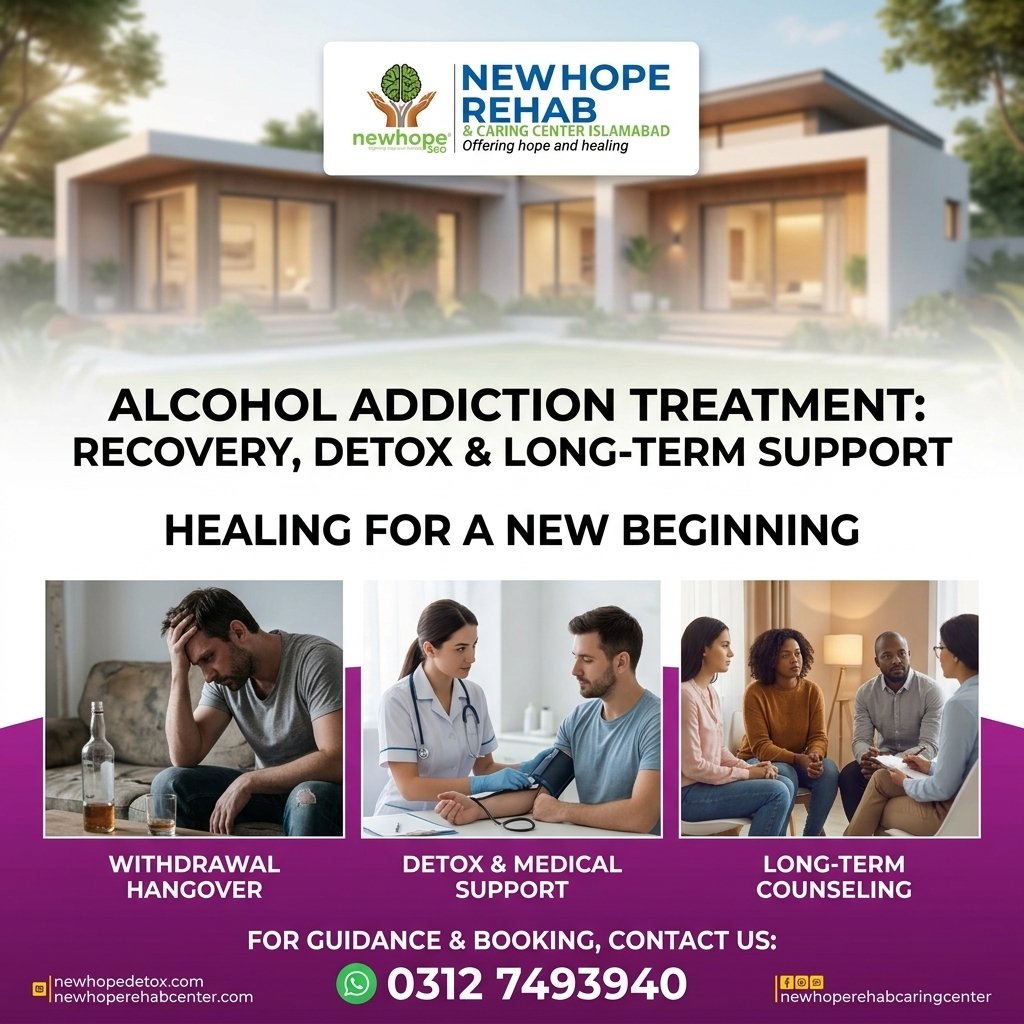
Alcohol Addiction Treatment: Recovery, Detox and Long-Term Support
Alcohol Addiction

Alcohol Addiction Treatment: Recovery, Detox and Long-Term Support

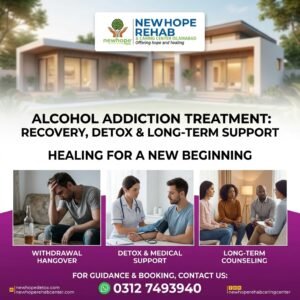
A supervised Program for Alcohol addiction treatment will provide you the mechanism that works in guiding people, who find it difficult to manage their consumption of alcohol or where alcoholism had taken root to behave normally. Alcohol use disorder interferes with physical health, mental well-being, relationships, employment and finances and day-to-day life. People can recover from addiction, but treatment needs to be tailored to each individual. Depending on the severity of alcohol use, treatment may include a brief assessment, medically supervised withdrawal management (if indicated), individual or group counseling, behavioral therapy, medication-assisted therapy as appropriate, family support and relapse prevention services. New Hope Rehab and Caring Centre Islamabad offer 24/7, structured support for those suffering from addiction and associated mental health issues. What Is Alcohol Addiction? Alcohol use disorder, or AUD: This is clinically significant problematic alcohol use which results in great distress and impairment. Possible signs include: Drinking more or for longer than planned Problem with either stopping or cutting down the use of alcohol Strong cravings for alcohol A great deal of time spent obtaining/use/recovery related to alcohol Ignoring work, family or other tasks Drinking even with health or relationship problems Developing tolerance And that could mean signs of withdrawal when they cut their drinking. Only a qualified healthcare professional can evaluate symptoms and diagnose alcohol use disorder. The Importance of Professional Alcohol Addiction Rehabilitation Alcohol use disorder can be biological and psychological in nature. If someone who has been drinking heavily or regularly for a long time suddenly stops drinking, they may experience withdrawal. Alcohol withdrawal can be life-threatening, at times. Symptoms may include: Anxiety Tremors Sweating Nausea Insomnia Rapid heart rate Agitation Seizures Hallucinations Severe confusion Heavy users of alcohol should consult their physician before attempting to stop drinking, since severe alcohol withdrawal can be dangerous. Alcohol Detoxification Detoxification is usually the first step in treating alcohol addiction when medically indications warrant it. The aim is to stabilize the body following ceasing alcohol intake, through supervision and treatment of withdrawal symptoms. Medical professionals may assess: Type, quantities and frequency of alcohol use Previous withdrawal episodes History of seizures Physical health Mental health Other substances being used Current medications Previous treatment Depending on the person, withdrawal Management may be medically supervised and/or require medication. But without detox, you can’t address the whole picture of recovery from an alcohol addiction. Continual support is typically essential in order to stay off the drugs. Counseling for Alcohol Addiction Counselling provides people with a better understanding of the difficulties surrounding drinking and the means to cope better in stressful situations. Therapy may focus on: Identifying drinking triggers Managing cravings Coping with stress Improving emotional regulation Addressing unhealthy thought patterns Strengthening motivation for change Improving relationships Developing relapse-prevention strategies Such as cognitive behavioral approaches and other evidence-informed therapies as appropriate to individual need Medication-Assisted Treatment Some medications are available to help treat alcohol use disorder. Healthcare professionals may look at medication options that either dampen cravings, or help people steer clear of heavy drinking. Medication can only be taken under proper supervision. A healthcare professional can decide if a specific prescription is appropriate—and can follow how it functions. Mental Health Treatment and Dual Diagnosis Alcohol use disorder can coexist with depression, anxiety, trauma-related conditions, bipolar disorder and other psychiatric disorders. If you drink alcohol and also have a mental health condition, professionals may call this a dual diagnosis or co-occurring disorder. Both should be considered in treating comprehensively. In many cases, treating the alcohol use in the absence of adequate mental health symptom amelioration, or vice versa, may be inadequate to address the prominent needs for recovery. Family Support in Alcohol Addiction Treatment Alcoholism can impact spouses, parents, children, siblings and other family members. Families have stress, confrontation and financial problems without the mapping of how to help. One can help family members through family education and counseling: Understand alcohol addiction Communicate more effectively Establish healthy boundaries Avoid enabling harmful drinking Recognize warning signs Support healthy recovery routines Encourage professional care Family members should also ensure they themselves are physically and emotionally healthy. Relapse Prevention and Aftercare Recovery does not stop when detox ends or after residential treatment is finished. In some people, cravings persist or suckles how often are you told will take place in threatening situations. A relapse-prevention plan may include: Identifying personal triggers Avoiding high-risk situations when possible Continuing counseling Developing healthy daily routines Building supportive relationships Managing stress effectively Addressing mental health concerns Attending follow-up appointments Getting help ASAP when you recognize warning signs When someone resumes drinking after a recovery period, professional agency reassessment can provide information on what else is needed. How To Select an Alcohol Addiction Treatment Centre Individuals and families searching for alcohol addiction treatment should also prioritize quality. Useful questions include: Medical evaluation before therapy? Are qualified healthcare professionals available? Can withdrawal from alcohol be medically managed? Are mental health conditions assessed? Is counseling available? Are evidence-informed treatment options offered? Is family support included? Does the program include relapse prevention? Is continuing care available? What To Do During Medical and Psychiatric Emergencies Avoid facilities which promise guaranteed or same-hour recovery. Clinical treatment for addiction is not a one-size-fits-all and outcomes are variable. New Hope Rehab and Caring Centre Islamabad — Alcohol Addiction Treatment New Hope Rehab and Caring Centre Islamabad offer structured support to individuals and families dealing with alcohol addiction along with concurrent mental health issues. Treatment planning can include assessment, withdrawal management, counseling, psychological or psychiatric support, family involvement and education regarding ongoing care needs that includes relapse prevention. An evaluation by a mental-health professional is essential to ascertain the degree of treatment required, based on factors such as history of alcohol-use disorder, general health status, comorbid psychiatric disorders and withdrawal risk at this stage (Table 1) [5]. Frequently Asked Questions 1.     Can alcohol addiction be treated? Yes. While recovery may be a lifelong process, alcohol use disorder is treatable. Management may include withdrawing from drugs, advising, medication, conduct therapy,

Drug Detox: What to Expect, Withdrawal Management and Recovery Support
Rapid detox

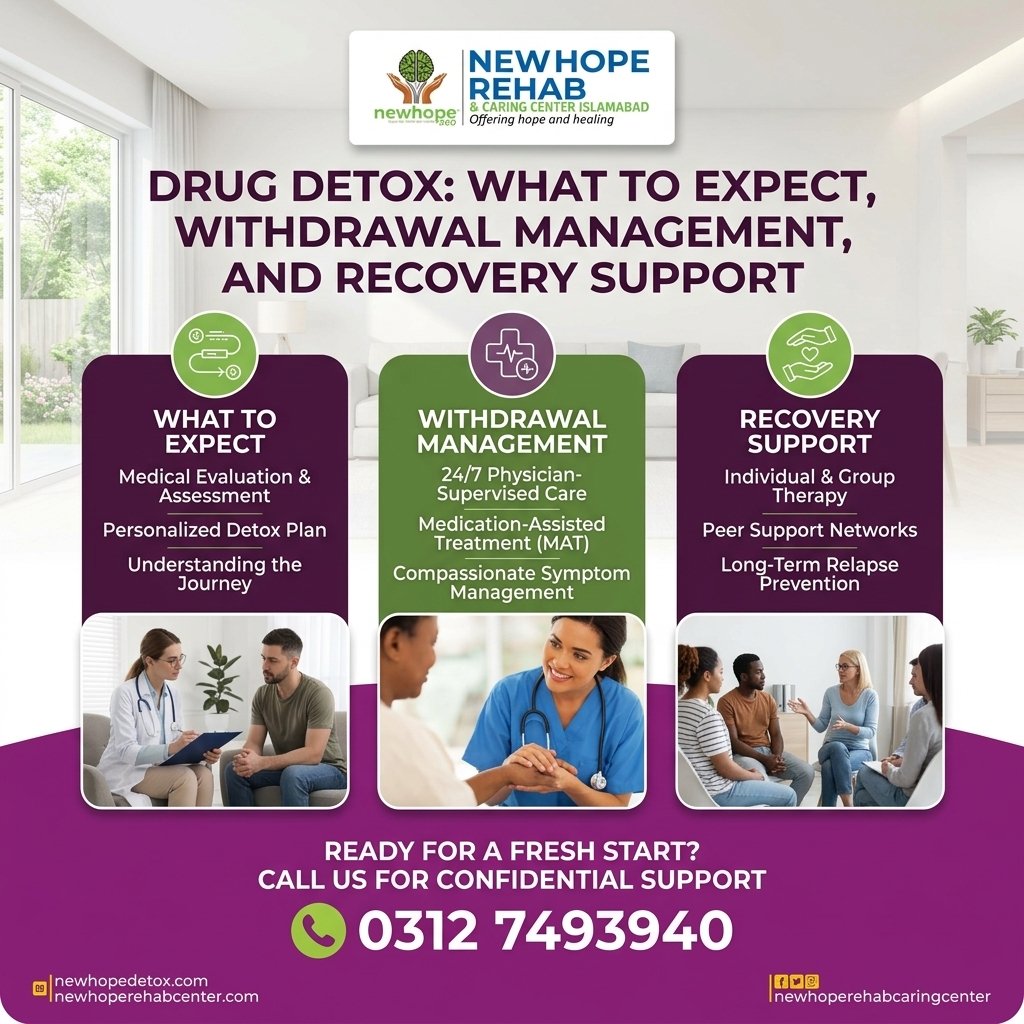
Drug Detox: What to Expect, Withdrawal Management and Recovery Support

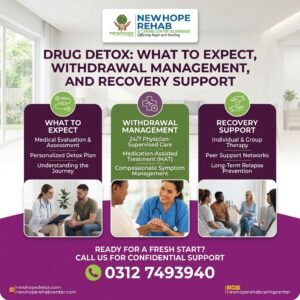
Drug detox is the process of allowing the body to eliminate a drug while managing the physical and psychological effects that can occur when substance use is reduced or stopped. For people who have developed physical dependence, detox can be an important first step toward addiction recovery. However, detox is not the same as complete addiction treatment. Withdrawal management addresses the immediate effects of stopping a substance, while longer-term treatment can address cravings, behaviors, mental health concerns, relationships, and relapse prevention. New Hope Rehab and Caring Centre Islamabad provides structured support for individuals and families dealing with addiction and related mental health concerns. What Is Drug Detox? Drug detoxification is a process through which a person stops using a substance and receives appropriate support while the body adjusts. The experience depends on several factors, including: The type of drug used Amount and frequency of use Duration of substance use Physical health Mental health Previous withdrawal experiences Use of multiple substances Some people may require medically supervised withdrawal management, while others may need a different level of support. Why Drug Detox Can Be Important Regular drug use can cause the body to adapt to the presence of a substance. When use suddenly stops, withdrawal symptoms may occur. Depending on the drug, withdrawal can involve: Anxiety Irritability Sweating Tremors Nausea Muscle aches Fatigue Sleep difficulties Changes in appetite Depression or low mood Strong cravings Some types of withdrawal can become medically serious. For this reason, people with significant dependence should seek professional advice before stopping certain substances abruptly. Different Drugs Can Cause Different Withdrawal Symptoms Drug detox is not a single process because different substances affect the body differently. Opioid Detox Opioids such as heroin and other opioid drugs can cause withdrawal symptoms including muscle aches, sweating, runny nose, nausea, diarrhea, anxiety, insomnia, and intense cravings. Although opioid withdrawal is generally not fatal by itself, professional support can help manage symptoms and address the risk of returning to opioid use after tolerance has decreased. Benzodiazepine Detox Benzodiazepine withdrawal can be medically serious, particularly after prolonged or high-dose use. Symptoms can include anxiety, insomnia, agitation, and, in severe cases, seizures. People taking benzodiazepines regularly should not abruptly discontinue them without medical guidance. Stimulant Detox Stopping stimulants such as methamphetamine or cocaine may result in fatigue, increased sleep, increased appetite, low mood, irritability, anxiety, and strong cravings. Severe depression or suicidal thoughts require urgent professional attention. Cannabis Withdrawal Some frequent cannabis users experience irritability, anxiety, sleep difficulties, reduced appetite, restlessness, and cravings after stopping. The intensity varies between individuals. Medical Assessment Before Detox A professional assessment can help determine the safest approach to withdrawal management. Healthcare professionals may review: Substance-use history Current medications Previous withdrawal symptoms Physical health Mental health Other substances being used Previous treatment Risk factors for complications This information can help determine whether outpatient support, supervised detoxification, or a higher level of care may be appropriate. What Happens During Drug Detox? The detox process varies depending on the substance and individual circumstances. A supervised program may include: Initial assessment – Reviewing substance use, health, medications, and withdrawal risks. Monitoring – Observing physical and psychological symptoms during withdrawal. Supportive care – Providing appropriate hydration, nutrition, rest, and symptom management. Medication when clinically appropriate – Certain medications may be used by qualified professionals to manage withdrawal or reduce risks. Mental health support – Monitoring mood, anxiety, agitation, or other psychological symptoms. Recovery planning – Preparing for ongoing addiction treatment after withdrawal. The purpose is to manage withdrawal safely and provide a transition toward longer-term recovery. Is Drug Detox Enough to Treat Addiction? No. Detox alone does not address all of the factors involved in addiction. After detox, individuals may still experience: Cravings Emotional difficulties Substance-use triggers Relationship problems Stress Unhealthy behavioral patterns Mental health symptoms Continuing treatment may include counseling, behavioral therapy, psychiatric care, family support, relapse prevention, and aftercare. Counseling After Drug Detox Counseling can help individuals understand their substance use and develop healthier ways to manage difficult situations. Treatment may focus on: Identifying triggers Managing cravings Developing coping skills Improving emotional regulation Addressing negative thought patterns Managing stress Strengthening motivation for recovery Developing a relapse-prevention plan Continuing treatment is an important part of moving from withdrawal management toward long-term recovery. Drug Detox and Dual Diagnosis Some people who seek drug detox also experience depression, anxiety, trauma-related symptoms, or other mental health conditions. When addiction and mental health concerns occur together, they may require coordinated treatment. A comprehensive assessment can help distinguish symptoms associated with substance use or withdrawal from an underlying psychiatric condition and identify appropriate mental health support. Family Support During Drug Detox and Recovery Families often play an important role in helping someone seek treatment. However, withdrawal and addiction can also create significant stress for relatives. Family education can help loved ones understand: What withdrawal may involve Why professional treatment can be important How to communicate effectively How to establish healthy boundaries How to recognize warning signs When emergency help may be needed Families should also seek support for their own well-being when necessary. When Is Drug Detox an Emergency? Some symptoms require immediate medical attention rather than waiting for a routine treatment appointment. Seek urgent medical help for symptoms such as: Seizures Severe confusion Difficulty breathing Loss of consciousness Severe chest pain Serious dehydration Extreme agitation Severe psychotic symptoms Suicidal thoughts or immediate risk of self-harm The appropriate emergency response depends on the situation and local medical services. Choosing a Drug Detox Centre When looking for a Drug Detox program, consider clinical safety and professional qualifications. Important questions include: Is there a medical assessment before detox? Are qualified healthcare professionals involved? How are withdrawal symptoms monitored? Can the program respond to medical emergencies? Are mental health concerns assessed? Is counseling available after detox? Is relapse prevention included? Is continuing care available? Be cautious about programs that promise instant detoxification or guaranteed permanent recovery. Addiction recovery is an individual healthcare process. Drug Detox at New Hope Rehab and

Treatment Programs: Comprehensive Addiction Recovery and Mental Health Support
Treatment Programs

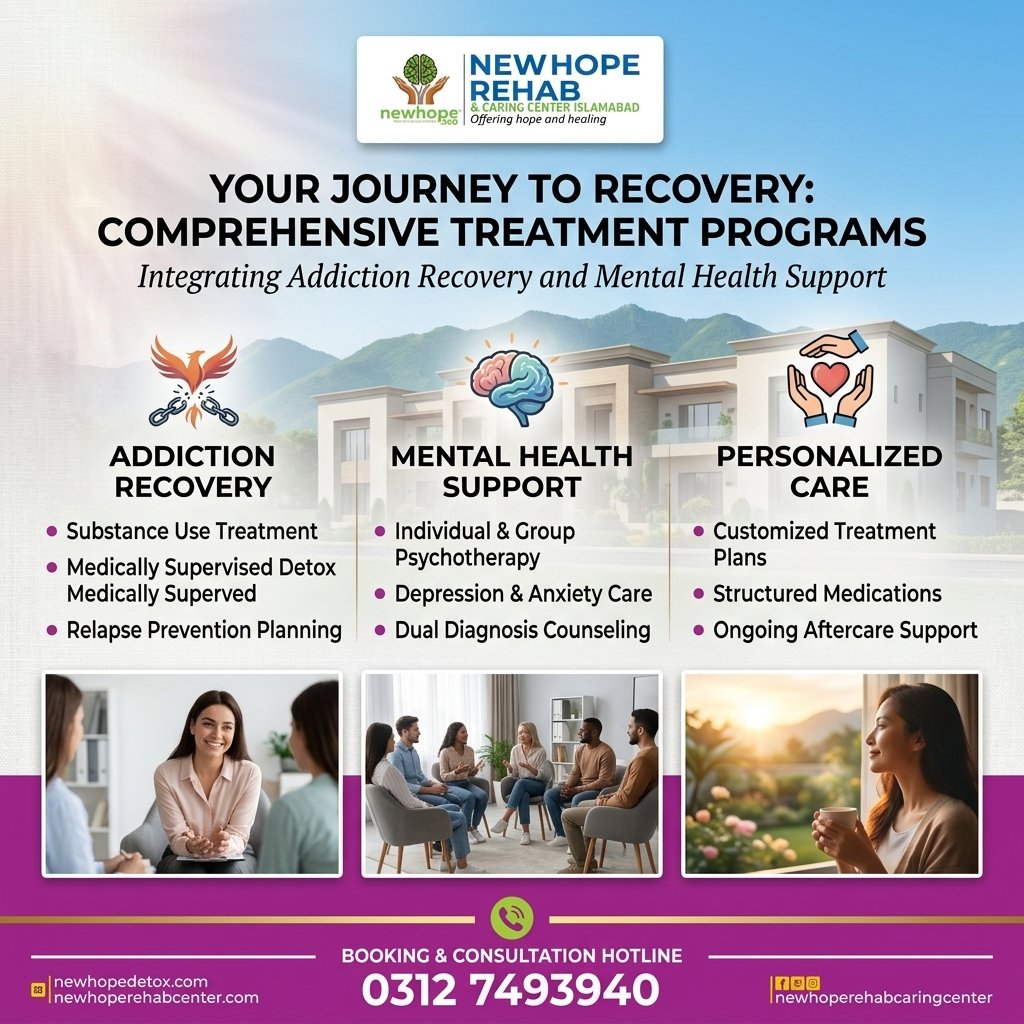
Treatment Programs: Comprehensive Addiction Recovery and Mental Health Support

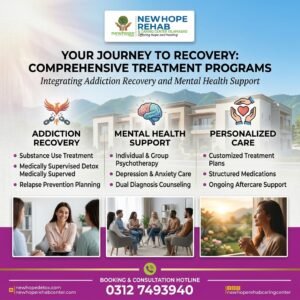
Treatment Programs offer a safe and organized environment for people who are struggling with substance abuse, alcoholism, mental health problems, and co-occurring disorders. With addiction affecting each person uniquely, it is important for a treatment plan to be developed and implemented based on the individual needs of a patient rather than using the same approach on everyone in need. Other treatments involve assessments, detoxification, counseling and therapy (usually cognitive behavioral), psychiatry and medication for co-occurring disorders, families and individual users in treatment together, relapse prevention training, or aftercare. The specific mix, however, relies on the material involved, degree of your problem, bodily fitness, mental health records, preceding treatment and lifestyles things to consider. New Hope Rehab and Caring Centre Islamabad is structured assistance for women, men and family members affected by substance misuse as well as exchanging mental health issues. What Are Addiction Treatment Programs? A carefully planned and implemented treatment program that helps an individual to replace their use of substances with a healthier way of living. A program can include: Initial medical and psychological assessment Detoxification or withdrawal management Individual counseling Group therapy Behavioral therapy Psychiatric support Dual diagnosis treatment Family counseling Relapse prevention Aftercare and continuing support The objective is not solely to interrupt substance use for a few months. Addiction is a complex disease; therefore, comprehensive treatment also addresses service that may be factors in the addiction and trains individuals on strategies to remain sober. Why Individualized Treatment Matters No one treatment program is suitable for everyone. Treatment planning may consider: Type of substance used Frequency and duration of use Severity of dependence Previous treatment attempts Withdrawal history Physical health Mental health Family circumstances Social environment Risk of relapse A personal approach lets providers make changes to care when the person or people they are supporting change or grow. Detoxification and Withdrawal Management In some cases, detoxification is the initial step in treatment. Detoxification is letting the body become accustomed to no longer using substances while withdrawal symptoms are monitored and managed. Withdrawal is extremely variable depending on the particular substance being used. Possible symptoms include: Anxiety Irritability Tremors Sweating Nausea Fatigue Sleep difficulties Muscle aches Changes in appetite Strong cravings Medically supervised withdrawal from a select few substances, like alcohol and some sedative medications, can be dangerous. So, if example, you stop something determine this straight aired the mission that peaceful from someone is suffering and long-term weighing heavy usages sub joining suddenly. Recuperation only consists of detoxing. Continued treatment for behavior and psychological issues associated with addiction is also important. Individual Counseling Individual counseling provides an opportunity for people to talk about their substance use, feelings, relationships, problems, and goals of recovery in a professional yet private environment. Therapy may help individuals: Identify substance-use triggers Understand patterns of addiction Manage cravings Develop healthier coping strategies Improve emotional regulation Address relationship difficulties Strengthen motivation for recovery Develop relapse-prevention skills Adaptations of treatment can be made according to the individual. Group Therapy and Peer Support Treatment in a group (be it individual, homes or professional acts) setting allows for openness and support to speak about the difficulties of recovery and learn from others who are also battling addiction. Group sessions may focus on: Addiction education Coping skills Emotional regulation Communication Relapse prevention Recovery planning Social support The extent of participation should be aligned with the person’s clinical needs and comfort level. Behavioral Therapy Behavioral therapies help individuals understand the connection between thoughts, emotions, and behaviors related to substance use. People may benefit from doing cognitive behavioral approaches: Identify unhelpful thinking patterns Recognize high-risk situations Develop alternative behaviors Manage cravings Improve decision-making Handle stress more effectively Depending on the specificities of the individual, other evidence-informed behavioral strategies may also be sought. Dual Diagnosis Treatment Some people have both addiction and mental health problems such as depression, anxiety, post-traumatic stress disorder (PTSD), bipolar disorder or another mental health condition. The simultaneous occurrence of substance uses and mental health problems is sometimes known as a dual diagnosis or co-occurring disorder. Mental health should be screened when relevant and care ought to be coordinated for both situations as part of therapy programs. A focus on only the addiction while missing important psychological symptoms could result in continued unmet needs of recovery. Family Support Programs Spouses, parents, kids, and siblings can all be impacted by addiction. Family support aids as a way for relatives to understand addiction, and discover better coping mechanisms. Family-focused treatment may include: Addiction education Communication guidance Family counseling Boundary-setting Relapse-warning education Support for caregivers The degree of family involvement should remain governed by clinical necessity, privacy and safety. Relapse Prevention Programs After the first course of treatment, recovery continues. Relapse-prevention programs train people to identify situations or triggers that may lead them back to use. A personalized plan may include: Identifying triggers Managing cravings Developing healthy routines Continuing counseling Building supportive relationships Avoiding high-risk environments Managing stress Maintaining follow-up care How to know when you need assistance If a person returns to using substances, it should lead to reassessment by the professional instead of being treated as evidence that recovery is not possible. Home-Based and Outpatient Treatment Not everyone requires residential rehabilitation. Outpatient or home-based services may be appropriate depending on the person’s health, substance use, safety needs and home environment. These may enable individuals to receive professional help, while still able to manage different at-home responsibilities. In patients with a high risk of withdrawal, very severe medical illness or psychiatric symptoms, or who are at home in an unsafe environment, a more intensive level of care may be necessary. The voice of a trained professional can determine the best setting for you. Online Treatment Sessions It can offer supplementary access to counseling and follow-up support for some. Bringing you online treatment sessions can be beneficial for: Counseling Follow-up appointments Relapse-prevention support Family education Mental health consultations Online treatment is maybe not suitable for all forms of desperate situations — at least where an individual inquired

Relapse Control Program in Islamabad, Pakistan: Building Long-Term Recovery
Relapse Control Program

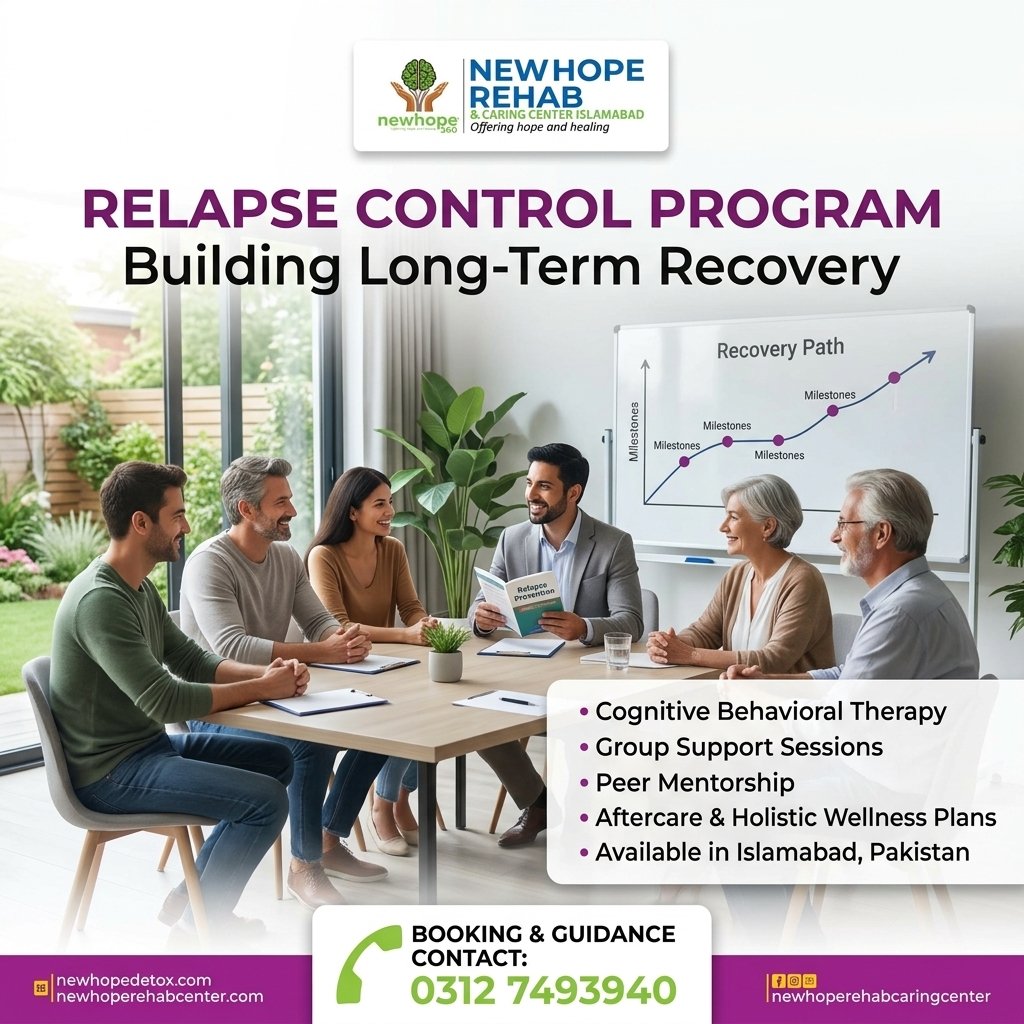
Relapse Control Program in Islamabad, Pakistan: Building Long-Term Recovery

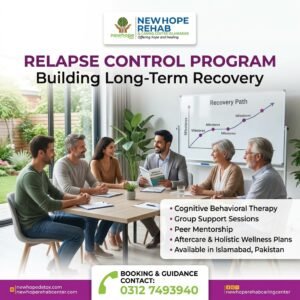
A Relapse Control Program in Islamabad, Pakistan can provide ongoing support for people recovering from drug or alcohol addiction. Completing detox or an initial rehabilitation program is an important step, but recovery often continues long after the first phase of treatment. Relapse can happen when a person returns to substance use after a period of improvement or abstinence. It does not mean that recovery is impossible. Instead, it can indicate that additional support, treatment adjustments, or stronger coping strategies are needed. New Hope Rehab and Caring Centre Islamabad provides structured support for individuals and families dealing with addiction and related mental health concerns. What Is a Relapse Control Program? A relapse control program is a structured approach designed to help individuals recognize and manage situations that may increase the risk of returning to substance use. A program may focus on: Identifying personal triggers Managing cravings Developing healthy coping skills Addressing emotional difficulties Improving stress management Building supportive relationships Continuing counseling Monitoring warning signs Developing an aftercare plan Relapse prevention is generally more effective when it is individualized. Different people may have different triggers, recovery goals, mental health needs, and support systems. Why Relapse Prevention Matters in Addiction Recovery Addiction can involve long-lasting changes in behavior, reward pathways, and responses to stress. Even after stopping substance use, cravings or difficult emotions may return. Common situations that can increase relapse risk include: Stress at work or home Conflict with family members Social pressure Returning to environments associated with drug or alcohol use Certain people or places Loneliness Anxiety or depression Sleep problems Overconfidence about recovery Exposure to alcohol or drugs Learning to recognize these situations before they become overwhelming can help individuals seek support early. Understanding the Relapse Process Relapse does not always happen suddenly. It may develop through changes in thoughts, emotions, and behaviors before substance use occurs. Emotional Warning Signs A person may experience: Irritability Anxiety Isolation Poor sleep Mood changes Neglect of self-care Increased stress Mental Warning Signs Someone may begin thinking about previous substance use, remembering positive experiences associated with drugs or alcohol, or believing that controlled use would be possible. Behavioral Warning Signs Behavioral changes may include returning to old social environments, withdrawing from supportive people, skipping counseling, or abandoning healthy routines. Recognizing these signs early can provide an opportunity to strengthen the recovery plan. Craving Management in a Relapse Control Program Cravings are common during addiction recovery. Their intensity and frequency can vary from person to person. A relapse control program may teach individuals to: Identify situations that trigger cravings Delay acting on an urge Distract themselves with healthy activities Contact supportive people Practice relaxation techniques Challenge unhelpful thoughts Leave high-risk environments Seek professional support when necessary Cravings do not necessarily mean that a person will relapse. They can be managed through appropriate coping strategies and ongoing support. Counseling and Behavioral Therapy Counseling can help individuals understand the factors behind previous substance use and develop practical recovery skills. Cognitive behavioral approaches may help people identify connections between thoughts, emotions, and behaviors. Therapy may address: Stress management Emotional regulation Negative thinking patterns Decision-making Communication Relationship difficulties Coping with cravings High-risk situations Continuing counseling can be particularly useful when a person has a history of repeated relapse. Mental Health and Relapse Prevention Mental health and addiction can influence each other. Depression, anxiety, trauma-related symptoms, and other psychological difficulties may increase vulnerability to substance use for some individuals. A Relapse Control Program in Islamabad, Pakistan should therefore consider mental health as part of the overall recovery plan. When addiction and mental health conditions occur together, professionals may describe this as a dual diagnosis or co-occurring disorder. Addressing both concerns can help create more coordinated care. Family Support During Relapse Prevention Families can play an important role in recovery when their involvement is appropriate. Family members can support relapse prevention by: Encouraging continued treatment Maintaining healthy communication Supporting positive routines Learning about addiction Recognizing warning signs Establishing appropriate boundaries Avoiding behaviors that enable substance use Encouraging professional help when concerns arise Families should understand that they cannot control another person’s recovery. Professional guidance can help relatives determine how to provide constructive support. Aftercare and Continuing Recovery Relapse prevention often works best when support continues after residential or intensive treatment ends. Aftercare may include: Individual counseling Group therapy Family counseling Follow-up appointments Recovery-focused activities Mental health support Regular progress reviews Crisis planning The appropriate form and frequency of aftercare depend on the individual’s needs and progress. What to Look for in a Relapse Control Program in Islamabad When choosing a Relapse Control Program in Islamabad, Pakistan, consider whether the program provides individualized and continuing support. Useful questions include: Is relapse risk assessed individually? Are personal triggers identified? Is counseling available? Are mental health concerns assessed? Is family support included? Is there an aftercare plan? Can treatment be adjusted when circumstances change? Is professional help available during periods of increased risk? How are emergencies handled? Avoid programs that promise guaranteed prevention of relapse. Recovery outcomes can vary, and treatment plans may need to change over time. What Happens If Relapse Occurs? A return to substance use should be taken seriously, but it does not mean that recovery has permanently failed. The person may need a professional reassessment to understand: What triggered the return to use Whether mental health symptoms have changed Whether the current treatment plan is sufficient Whether additional counseling is needed Whether the person’s environment has changed Whether a higher level of care is appropriate Seeking help quickly can reduce the chance that a brief setback develops into prolonged substance use. Relapse Control Support at New Hope Rehab and Caring Centre Islamabad New Hope Rehab and Caring Centre Islamabad provides structured addiction recovery and mental health support for individuals and families. A relapse-prevention plan can be developed according to the person’s substance-use history, triggers, mental health needs, family circumstances, and ongoing recovery requirements. Depending on individual needs, support may include counseling, behavioral strategies, family involvement, mental health care, and